Cleaning After Assembly And Residue Removal
Whether a board should be cleaned after assembly is a decision that follows from the flux, the product and the environment rather than from a habit. A no clean flux leaves a residue that is designed to be harmless, and cleaning it can be unnecessary or even harmful; an aqueous flux leaves a residue that will cause electrochemical migration unless it is removed. The wrong choice in either direction produces field failures that are hard to attribute.
This article explains what the residue is, how the methods differ, how the cleaning is verified, and when the decision should be made.
Why Cleaning Is A Decision
The residue left by a soldering process is not one substance. It contains the flux vehicle, the activators that were not consumed, the products of the reaction with the oxide, and any contamination that was on the board before assembly. Its effect depends on its chemistry, on its quantity and on the environment the product will see, and a residue that is harmless in a dry office is a leakage path in a humid enclosure.
The decision therefore has three inputs. The flux chemistry determines whether the residue is designed to be left. The product environment determines whether the residue would be harmful. And the electrical sensitivity of the circuit determines how much leakage can be tolerated, with high impedance analog circuits and fine pitch digital circuits being the most sensitive. A product that scores badly on all three has to be cleaned and verified rather than assumed clean.
What The Residue Contains
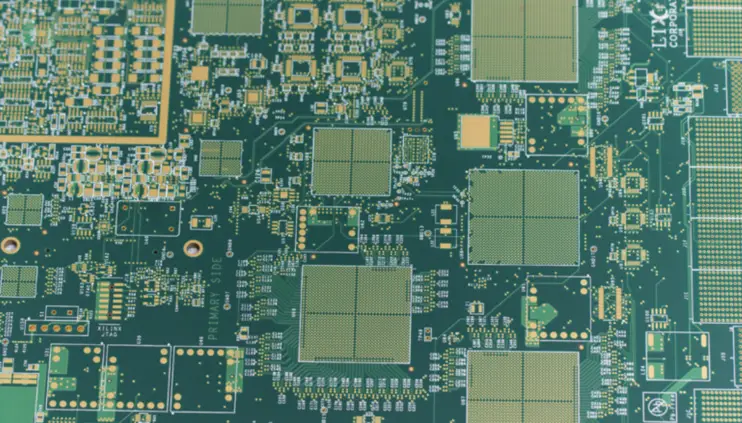
The visible part of the residue is the vehicle: rosin, resin or a synthetic polymer, which may be hard, sticky, transparent or opaque, and which is generally insulating. The part that causes the damage is the ionic material, which is invisible: the halides and the organic acids from the activators that remain after the soldering reaction, and the salts that they form with the metal surfaces.
Ionic contamination is what promotes electrochemical migration. In the presence of moisture and a bias voltage, the ions allow metal to dissolve from one conductor and deposit on another, forming a dendrite that grows until it bridges. The failure takes time, is often intermittent, and is the reason a board can pass every test at manufacture and fail in the field after a season of high humidity.
Methods And What They Suit
Aqueous cleaning uses water with a saponifier or a detergent, sprayed or immersed, and is the most common method for a modern assembly. It removes both the vehicle and the ionic material, provided the water reaches every surface, and its weakness is that water can be trapped under a component where it cannot be rinsed or dried.
A solvent process uses a hydrocarbon or a modified alcohol, either in a vapour phase or by spraying, and it is effective on rosin residues that water alone will not remove. It needs enclosed equipment for the vapour and a distillation step to recover the liquid, and it is less effective on the polar ionic material than water. Semi aqueous processes combine a solvent wash with a water rinse and are used where the residue is difficult, at the cost of two pieces of equipment and more floor space.
Rinsing And Drying
Cleaning is only as good as the rinse. The wash removes the residue into the cleaning fluid, and if the fluid is not replaced or rinsed away, it leaves the same ions on the board in a different form. Rinsing with deionised water and monitoring its resistivity is the standard method, and the resistivity at the outlet is the measurement that shows whether the board is clean.
Drying has to remove the water from the places that the rinse could not easily reach, which means under the components and inside any cavity. Convection and infrared drying are used, and the temperature is limited by the parts. A board that is dried incompletely will show corrosion around the joints within days, and the corrosion is often blamed on the flux rather than on the rinse.
Test And Acceptance
The accepted test is the measurement of ionic contamination, either by a resistivity of extract test or by an ion chromatography analysis of the extract. The first gives a single figure in micrograms of sodium chloride equivalent per square centimetre, and the second identifies which ions are present. The first is used for routine control and the second for a problem investigation.
The limits are set by the product class and by the customer, and a common figure for a general purpose product is around 1.5 micrograms per square centimetre, with tighter values for high reliability work. The test is made on a sample from each lot or from each cleaning bath change, and the result is recorded. Related process choices are described under PCBA development process and the coating that often follows the cleaning under conformal coating and board protection.
When Not To Clean
A no clean process is a valid choice where the residue is qualified as benign, where the product operates in a controlled environment and where the circuit is not sensitive to leakage. It avoids the cost of the equipment, the water and the drying, and it removes the risk of trapping water under a component, which is a real cause of failure in a badly designed cleaning process.
The choice has to be made consistently, however. A residue that is acceptable when it is thin and even may not be acceptable when it is thick, and the amount that remains depends on the paste, the stencil and the profile rather than on the flux alone. Where the decision is no clean, the process has to be controlled so that the residue stays within the limits that were assessed, and the assessment should be based on a test rather than on the label. The assembly sequence that produces the residue is described under PCB design and fabrication.
Design Rules That Make Cleaning Possible
A board that has to be cleaned should be designed so that the cleaning fluid can reach every surface and leave again. That means leaving a gap under a component that does not sit flat on the board, avoiding a mask dam that traps liquid, and keeping low standoff parts away from the areas where a high impedance circuit sits.
Vias that are tented, cavities between a component and the board, and connectors that are not sealed all trap fluid. Where a part must be mounted flush, the fluid has to be able to enter and leave from the sides, and the rinse time has to be long enough to exchange the liquid in that gap. The rules for component clearance are described under manufacturable design guidelines.
FAQ
Is cleaning always better than not cleaning? No. A cleaning process that leaves water under a component can cause more damage than a no clean residue, and a residue that is benign in a dry environment does not need to be removed.
How is a board checked for cleanliness? By extracting the ionic material and measuring the conductivity of the extract, which gives a figure per unit area that is compared with a limit. Ion chromatography identifies the specific ions when the source of a problem has to be found.
Does cleaning remove the need for a coating? No. Cleaning removes the contamination that would promote corrosion, while the coating keeps moisture away from the surface. A product that needs one usually needs both.