
Copper Surface Finish Selection For PCBs
The surface finish on a printed circuit board is the thin layer between the copper and everything that happens to it afterwards: the storage, the solder, the connector contact, the probe and the coating. It is chosen for the assembly process, but it also changes the shelf life, the cost and the reliability of the finished product.
This article covers what the finish has to do, how the common types differ, and how the choice is made.
What The Finish Has To Do
The copper beneath a finish oxidises within hours of being exposed, and an oxidised surface does not wet with solder. The finish exists to prevent that oxidation while remaining solderable itself, and it has to do so through the storage interval between fabrication and assembly, which may be weeks or months.
Beyond solderability, the finish has three other jobs in different applications. It provides the contact surface where a connector or a probe touches the board. It has to survive the thermal excursion of reflow, in some cases several times. And it has to be compatible with the flux chemistry, with the cleaning process and with any conformal coating that will be applied afterwards. A finish that is chosen only for solderability may fail one of these. The way the finish interacts with the assembly sequence is described under lead free versus leaded solder.
Hot Air Solder Levelling
Hot air solder levelling coats the copper with solder and levels it with a blast of hot air. It is the cheapest and the most forgiving finish in terms of storage, and it is the most robust for a board that will be handled repeatedly before assembly. Its weaknesses are a non uniform surface, which makes it unsuitable for fine pitch pads and for a flat land required by a ball grid array, and the thermal shock that the board receives during the process.
The uneven surface is a real constraint. A pad that is domed or has a thick edge does not hold a flat paste deposit, and a fine pitch footprint printed on such a surface has a variable deposit volume. Where the design has a ball grid array or a fine pitch device, the finish is normally changed for that reason alone. The thermal shock also stresses the laminate, which is a consideration on a thin or a very dense board.
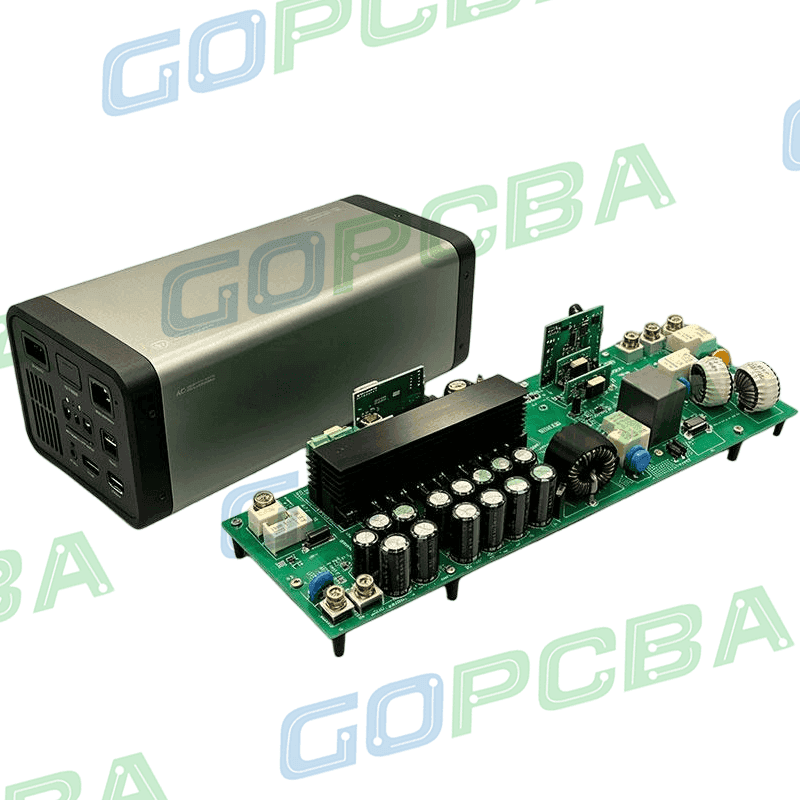
ENIG
Electroless nickel immersion gold deposits a nickel layer by chemical reduction and then a thin gold layer over it by displacement. The result is a flat surface that is ideal for fine pitch printing and for ball attachment, and the nickel provides a barrier that keeps the copper from diffusing into the gold. The gold is thin, typically a small fraction of a micrometre, and it exists to protect the nickel rather than to provide the contact surface.
Its failure modes are well known. A nickel layer that is too thin or has been over-treated can allow the gold to become porous, and the copper beneath then corrodes through the pores, a condition known as black pad. The mechanism is a corrosion of the nickel at the grain boundaries, and it appears after assembly as a joint that fails at the interface with the pad. The control is in the plating bath and the immersion time, and the condition is detected by a pull test or by a section rather than by inspection.
Immersion Silver And Immersion Tin
Immersion silver deposits a thin layer of silver on the copper by displacement. It is flat, it is inexpensive relative to gold, and it is very solderable, which makes it popular for fine pitch assemblies. Its weakness is its sensitivity to the environment: silver tarnishes in the presence of sulphur, and the tarnish is difficult to remove and can reduce solderability. Storage in sulphur free packaging, with the boards separated, is essential.
Immersion tin is similar in principle and deposits a thin tin layer. Because tin and copper form intermetallic compounds, the tin layer is consumed over time and its shelf life is finite, which is a limitation for a product that is stored for a long period before assembly. The finish also has to be thick enough that the intermetallic does not reach the surface, and the silver migration behaviour of a tin finish in a humid environment is a consideration for fine pitch. Where the product must remain solderable after a long storage, neither immersion finish is the best choice.

Comparing The Options
The choice is usually between flatness and cost, with shelf life as a third axis. A design with a ball grid array or a fine pitch footprint needs a flat finish, which rules out hot air levelling. A design with a long storage interval needs a finish that does not degrade, which favours gold over silver and tin. A design with a large number of connector contacts may need hard gold on those contacts, applied selectively over another finish.
Selective finishes are common, and they introduce their own requirements. A gold finger area plated with hard gold over a nickel barrier, with the rest of the board finished in another way, needs masking between the operations and a check that the two finishes do not interfere. The requirement should be stated per area on the drawing rather than as one global note, because a supplier that applies one finish everywhere produces a board that fails in the area that needed the other. The requirements around protection after assembly are described under conformal coating as board protection.
Specifying And Verifying
The drawing should state the finish by name, the thickness of each layer where it matters, and any requirement on the nickel barrier in the case of ENIG. It should also state the areas where a different finish applies, and the storage and packaging requirement where the finish is sensitive. Vague terms should be avoided, because they are interpreted differently by different suppliers.
Verification is by thickness measurement on a coupon, which for a thin finish requires an X-ray fluorescence gauge rather than a cross section, and by a solderability test after the specified storage. The solderability test is the one that matters most, because it exercises the property the finish exists to provide. Where a finish is changed, the test should be repeated on the new finish in the same conditions, including the storage interval, rather than on a freshly plated sample. The fabrication rules that surround these requirements are collected under design guidelines for manufacturability.
FAQ
Which finish is best for a ball grid array? One with a flat surface, which means ENIG, immersion silver or immersion tin rather than hot air levelling. ENIG is the most common where a long shelf life is also needed.
Why does a gold finish sometimes fail to solder? If the nickel beneath the gold is defective or the gold is porous, the copper can corrode through it. The failure is in the nickel layer, not in the gold, and it is detected by a pull test rather than by inspection.
How long can a finished board be stored? It depends on the finish and on the packaging. A gold finish stores well for a long period, while silver and tin finishes are sensitive to the environment and to time, and both should be assembled within the interval the supplier states.