What Is a High Tg PCB?
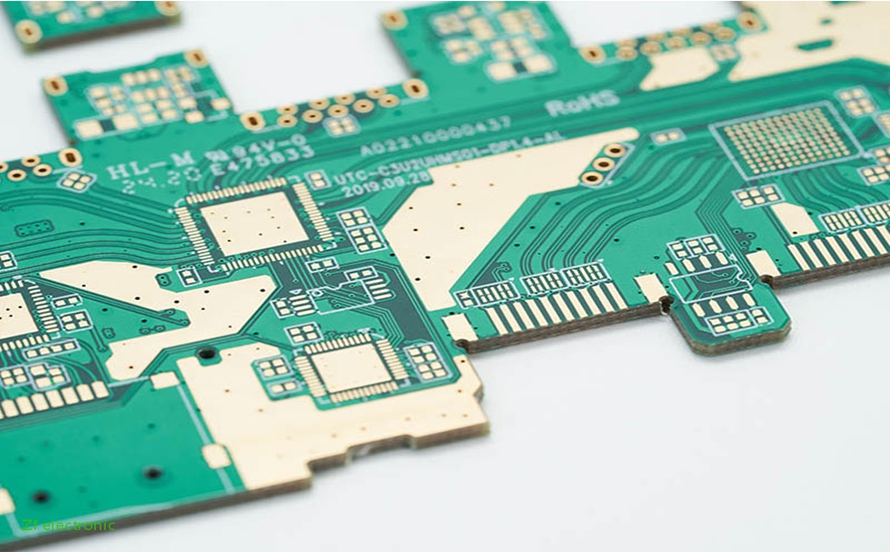
A High Tg PCB is a printed circuit board manufactured with laminate materials that have a higher glass transition temperature (Tg) than standard PCB materials. Tg is an important material parameter used to evaluate the thermal behavior of the resin system used in a PCB laminate.
The glass transition temperature is the point at which the polymer resin changes from a relatively rigid, glass-like state to a softer, more rubber-like state. When a PCB operates close to or above its material Tg, the resin’s mechanical properties and dimensional stability can change significantly.
A High Tg PCB is therefore designed for applications where the circuit board may experience elevated temperatures or repeated thermal cycling. Common high-Tg laminates may have Tg values above approximately 170°C, with some specialized materials reaching significantly higher values.
It is important to understand that Tg is not the same as the maximum operating temperature of a PCB. The actual operating limit depends on the complete material system, copper structure, soldering process, component ratings, thermal management, reliability requirements, and other design factors.
Compared with standard FR-4 materials, High Tg PCB materials generally provide better resistance to thermal degradation and improved dimensional stability at elevated temperatures.
Materials and Composition of High Tg PCBs
The performance of a High Tg PCB depends heavily on its resin system, reinforcement materials, copper construction, and laminate architecture. Common materials include the following.
High Tg Epoxy Resin
High-Tg epoxy resin systems are widely used in advanced FR-4 laminates. Compared with standard epoxy systems, they are formulated to provide higher thermal stability and improved resistance to thermal cycling.
These materials are commonly selected for multilayer boards, lead-free assembly, automotive electronics, power electronics, and other applications where higher thermal reliability is required.
Polyimide
Polyimide is a high-performance polymer known for its excellent thermal stability and chemical resistance. Polyimide-based materials are used when the application requires higher temperature capability than conventional epoxy laminates can provide.
Depending on the material system, polyimide can be used in rigid, flexible, and rigid-flex circuit board structures.
Ceramic-Filled Polymer Materials
Ceramic fillers can be incorporated into resin systems to modify thermal conductivity, dielectric properties, dimensional stability, or other performance characteristics.
These materials can be useful for specialized High Tg PCB designs where thermal management and electrical performance must be balanced.
Metal-Core Structures
Metal-core PCBs use materials such as aluminum or copper as a thermal management layer. They are not simply another type of high-Tg resin, but they can be combined with suitable dielectric systems when improved heat dissipation is required.
The choice of substrate should therefore be based on the application’s actual thermal and electrical requirements rather than Tg alone.
Benefits of High Tg PCBs
A High Tg PCB can provide important advantages when a circuit board must operate under elevated temperatures or repeated thermal cycling.
Enhanced Thermal Stability
The primary advantage of a High Tg PCB is improved material stability at elevated temperatures.
When a conventional resin system approaches its Tg, its mechanical properties can change rapidly. A higher-Tg laminate provides a larger thermal margin before these changes become significant.
This can be especially valuable in automotive electronics, industrial equipment, power electronics, aerospace systems, and other applications exposed to elevated operating temperatures.
Improved Thermal Cycling Reliability
Electronic equipment may experience repeated heating and cooling during normal operation. These temperature changes cause materials within the PCB structure to expand and contract.
A suitable high-Tg laminate can provide improved dimensional stability and resistance to thermal stress. This may help reduce the risk of problems such as delamination, cracking, and interconnection fatigue when the entire PCB construction is properly designed.
However, thermal cycling reliability depends on more than Tg. Copper thickness, board thickness, Z-axis CTE, resin content, via construction, material selection, and assembly conditions must also be considered.
Better Mechanical Stability at Elevated Temperatures
High-Tg laminate systems generally maintain their mechanical properties better at elevated temperatures than standard low-Tg materials.
This can help maintain the dimensional stability of multilayer structures and improve reliability during high-temperature processing and operation.
Improved Resistance to Moisture and Environmental Stress
Many advanced high-Tg laminate systems are engineered with improved thermal and environmental performance. Depending on the specific material grade, they may provide good resistance to moisture, chemical exposure, and thermal stress.
Material selection should always be based on the manufacturer’s specified data rather than assuming that every high-Tg laminate has identical moisture or chemical resistance.
High Reliability
The combination of thermal stability, mechanical performance, and resistance to thermal cycling makes High Tg PCBs suitable for reliability-critical applications.
When properly designed and manufactured, they can help extend product service life and reduce failures associated with thermal degradation and repeated temperature changes.
Suitable for Lead-Free Assembly
Lead-free soldering processes generally use higher reflow temperatures than traditional leaded solder processes.
High-Tg laminate systems can provide additional thermal margin during PCB assembly. However, Tg alone does not determine whether a PCB is suitable for lead-free assembly. Decomposition temperature (Td), coefficient of thermal expansion (CTE), thermal stress, and laminate construction are also important parameters.
Design Flexibility for Demanding Applications
High-Tg materials are available in different resin systems, dielectric thicknesses, copper weights, and laminate constructions. This allows designers to select a material that matches the thermal, electrical, mechanical, and reliability requirements of a specific application.
Challenges of High Tg PCBs
Although High Tg PCBs offer excellent thermal performance, they also introduce several considerations during design and manufacturing.
Higher Material Cost
High-Tg laminates generally cost more than standard FR-4 because they use specialized resin systems and material formulations.
For products that do not require elevated-temperature performance, standard FR-4 may provide a more economical solution.
More Complex Manufacturing Requirements
High Tg PCB Manufacturing requires careful control of lamination, drilling, plating, curing, and thermal processing.
The laminate’s resin system may have different processing characteristics from conventional FR-4. Manufacturers must therefore control temperature, pressure, heating rates, curing conditions, and other process parameters carefully.
Material Availability
Certain specialized high-Tg laminates may have more limited availability than common FR-4 materials.
For large-volume production, designers should confirm material availability, approved material alternatives, and supply-chain stability before finalizing the PCB design.
Thermal Expansion Considerations
A high Tg does not automatically mean that a PCB has a low coefficient of thermal expansion.
For multilayer and high-reliability applications, designers should also evaluate the laminate’s X/Y and Z-axis CTE. Excessive Z-axis expansion during thermal cycling can increase stress on plated through-holes and interconnections.
High-Frequency Performance Must Be Evaluated Separately
A common misconception is that high-Tg materials automatically cause signal loss at high frequencies.
In reality, high-frequency performance depends on dielectric constant (Dk), dissipation factor (Df), copper roughness, stackup structure, trace geometry, impedance control, and operating frequency.
Therefore, if a High Tg PCB is also intended for high-speed or RF applications, designers should select a material specifically characterized for the required electrical performance.
Limited Flexibility for Rigid High-Tg Materials
Most high-Tg epoxy PCB laminates are rigid materials. They are not intended to provide the repeated bending capability of flexible PCB materials.
If an application requires repeated bending or dynamic movement, a suitable flexible or rigid-flex material system should be considered instead.
Applications of High Tg PCBs
The thermal stability and reliability of High Tg PCBs make them suitable for a wide range of industries.
Automotive Electronics
Automotive electronic systems can experience elevated temperatures, vibration, thermal cycling, and mechanical stress.
A High Tg PCB can be used in selected automotive control units, power electronics, sensors, engine-related electronics, battery management systems, and other modules where thermal reliability is important.
Oil and Gas Equipment
Downhole electronics used in oil and gas exploration may be exposed to high temperatures, pressure, vibration, and chemically aggressive environments.
For these applications, specialized high-temperature PCB materials can provide improved thermal stability and help maintain electrical and mechanical reliability under demanding operating conditions.
Aerospace and Defense
Aerospace and defense electronics often require high reliability across wide temperature ranges and demanding environmental conditions.
High Tg PCBs can be used in selected avionics, communication equipment, control systems, radar-related electronics, power systems, and other applications where thermal reliability is important.
For mission-critical applications, however, material selection must also consider relevant qualification, reliability, and industry requirements.
Industrial Electronics
Industrial equipment such as motor drives, power supplies, converters, inverters, automation controllers, and robotic systems can generate significant heat during continuous operation.
A High Tg PCB can provide greater thermal margin and improved dimensional stability for these demanding environments.
Medical Electronics
Medical equipment often requires stable and reliable electronic performance over long operating periods.
High-Tg materials may be used in selected medical electronics such as diagnostic equipment, imaging systems, laboratory instruments, and high-power medical devices where thermal reliability is an important design factor.
The exact material selection depends on the equipment architecture and applicable regulatory requirements.
Electronic Test and Measurement Equipment
Test and measurement equipment such as oscilloscopes, signal analyzers, data acquisition systems, and industrial measurement instruments can benefit from stable PCB materials when internal temperatures rise during continuous operation.
A suitable High Tg PCB can help maintain dimensional and mechanical stability under thermal stress.
High-Performance Computing and Consumer Electronics
High-performance processors, power management circuits, graphics systems, and compact computing equipment can generate substantial heat.
High-Tg laminate materials may be selected for certain high-density computing and consumer electronic products when thermal cycling, assembly temperature, or long-term reliability requirements justify their use.
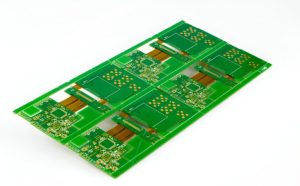
High Tg PCB Manufacturing Process
High Tg PCB Manufacturing follows many of the same fundamental stages as conventional PCB production, but process control becomes particularly important because the laminate may have different thermal and mechanical characteristics.
1. Material Selection
The manufacturer selects a suitable high-Tg laminate based on Tg, Td, CTE, Dk, Df, thermal conductivity, copper compatibility, layer count, and reliability requirements.
2. PCB Layer Preparation
Copper-clad laminates and prepreg materials are prepared according to the required stackup. Resin content and dielectric thickness must be controlled to achieve the required final board thickness and electrical performance.
3. Lamination
Multilayer boards are laminated under controlled temperature and pressure.
The lamination profile must be matched to the selected high-Tg material to achieve proper resin flow and curing while minimizing internal stress and voids.
4. Drilling
Mechanical drilling or laser drilling may be used depending on the PCB structure.
High-Tg materials can require appropriate tool selection and drilling parameters to maintain hole quality and minimize mechanical damage.
5. Copper Plating
After drilling and desmear, the hole walls are prepared for electroless copper and subsequent electroplating.
Reliable plated-through-hole construction is particularly important for boards exposed to repeated thermal cycling.
6. Circuit Pattern Formation
The required circuit patterns are formed through imaging, etching, and plating processes.
For high-density designs, manufacturing tolerances must be carefully controlled to maintain trace width, spacing, and impedance requirements.
7. Surface Finish and Solder Mask
A suitable solder mask and surface finish are applied according to the assembly and application requirements.
The selected surface finish must be compatible with the intended soldering, wire bonding, or assembly process.
8. Inspection and Testing
Finished boards should undergo appropriate visual, dimensional, electrical, and reliability inspections.
For demanding applications, testing may include thermal cycling, solderability testing, insulation resistance, dielectric withstand, and other application-specific reliability tests.
High Tg PCB vs. Standard FR-4 PCB
The main difference between a High Tg PCB and standard FR-4 is the thermal performance of the laminate resin system.
| Feature | High Tg PCB | Standard FR-4 PCB |
|---|---|---|
| Tg | Higher | Lower |
| Thermal stability | Better at elevated temperatures | Suitable for general applications |
| Thermal cycling capability | Generally improved with suitable construction | Application-dependent |
| Material cost | Higher | Lower |
| Manufacturing | Requires tighter process control | Mature and economical |
| Lead-free assembly | Good thermal margin | Material-dependent |
| High-temperature applications | Suitable | More limited |
| High-frequency performance | Material-dependent | Material-dependent |
| Flexibility | Generally rigid | Generally rigid |
| Typical applications | Automotive, power, industrial, aerospace | General electronics |
The decision should not be based on Tg alone. Engineers should consider Tg, Td, CTE, Dk, Df, thermal conductivity, copper construction, layer count, operating temperature, and reliability requirements together.
How to Choose the Right High Tg PCB Material
Choosing the correct High Tg PCB material requires a complete evaluation of the application.
Key parameters include:
- Tg (glass transition temperature)
- Td (decomposition temperature)
- X/Y and Z-axis CTE
- Dk and Df
- Thermal conductivity
- Moisture absorption
- Copper thickness
- Dielectric thickness
- Layer count
- Operating temperature
- Thermal cycling requirements
- Reflow and assembly temperature
- Signal integrity requirements
- Mechanical requirements
- Expected product lifetime
A higher Tg is not always necessary. The most appropriate material is the one that provides sufficient thermal and reliability margin without introducing unnecessary material cost or manufacturing complexity.
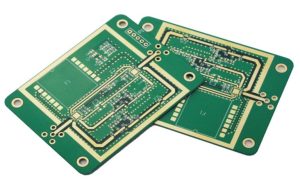
Why Choose Kingda for High Tg PCB Manufacturing?
Manufacturing a High Tg PCB requires appropriate materials, controlled processing, and careful quality management.
Kingda provides professional PCB manufacturing and engineering support for projects requiring high-Tg materials and enhanced thermal reliability. Our approach focuses on material selection, manufacturability, process control, and product consistency.
For High Tg PCB Manufacturing, Kingda can support customers in evaluating laminate selection, layer stackup, thermal requirements, copper construction, drilling, plating, lamination, surface finish, and inspection requirements.
Whether the application involves automotive electronics, industrial equipment, power electronics, aerospace systems, medical equipment, or high-performance computing, the correct PCB material and manufacturing process are essential to achieving reliable long-term performance.
Conclusion
A High Tg PCB is designed for applications where the circuit board must withstand elevated temperatures or repeated thermal cycling while maintaining mechanical and electrical stability.
High-Tg laminate systems can provide improved thermal reliability, dimensional stability, and resistance to thermal stress compared with standard PCB materials. They are particularly valuable in automotive, power electronics, industrial, aerospace, medical, and other demanding applications.
However, Tg should never be considered in isolation. Parameters such as Td, CTE, Dk, Df, thermal conductivity, copper structure, board thickness, and operating conditions are equally important when selecting a PCB material.
With appropriate material selection and controlled High Tg PCB Manufacturing, manufacturers and designers can achieve a reliable balance between thermal performance, electrical characteristics, manufacturability, and overall cost.
Kingda supports customized PCB manufacturing requirements and can help customers evaluate suitable high-Tg solutions based on their specific application and reliability requirements.