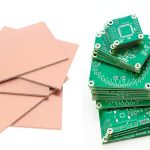
Surface Mount Technology (SMT) has become one of the most widely used manufacturing technologies in modern PCB assembly. By mounting electronic components directly onto the surface of a printed circuit board (PCB), SMT enables manufacturers to produce smaller, lighter, faster, and more reliable electronic products while supporting highly automated production.
Compared with traditional through-hole assembly, SMT assembly offers significant advantages in component density, manufacturing efficiency, electrical performance, and production scalability. It is widely used in consumer electronics, telecommunications, automotive electronics, medical devices, industrial control systems, aerospace equipment, and other advanced electronic applications.
As an experienced PCB manufacturer and PCB assembly service provider, Kingda provides professional PCB prototype manufacturing, quick-turn PCB prototyping, SMT assembly, THT assembly, and complete PCBA solutions. Our manufacturing capabilities support customers from initial design verification and prototype development through small-batch production and volume manufacturing.
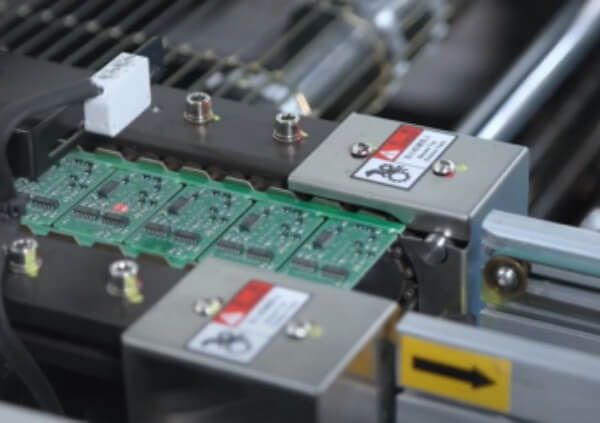
This guide explains what Surface Mount Technology is, how the SMT assembly process works, common surface-mount components, the difference between SMT and SMD, the advantages and limitations of SMT, and how to select the right assembly technology for your PCB project.
What Is Surface Mount Technology (SMT)?
Surface Mount Technology (SMT) is an electronic assembly technology in which components are mounted directly onto solder pads on the surface of a PCB rather than being inserted through drilled holes.
The components used in SMT are called Surface Mount Devices (SMDs). Unlike traditional through-hole components, SMDs generally have short leads, terminals, or solderable contacts designed specifically for surface mounting.
A typical SMT assembly process includes:
- PCB loading and preparation
- Solder paste printing
- Solder Paste Inspection (SPI)
- SMD component placement
- Pre-reflow inspection
- Reflow soldering
- Post-reflow Automated Optical Inspection (AOI)
- X-ray inspection when required
- Electrical testing and functional testing
- Final inspection and packaging
The exact process depends on PCB design, component package types, production volume, soldering requirements, and product reliability requirements.
How Does SMT Assembly Work?
A modern SMT production line combines automated equipment, manufacturing data, process control, and inspection technologies to achieve high placement accuracy and consistent soldering quality.
1. PCB Loading
The process begins with bare PCBs entering the SMT production line. Automatic PCB loaders and conveyors transport individual boards between production stations.
Before production starts, the manufacturing team verifies PCB specifications, board orientation, panelization requirements, assembly drawings, and production data.
Proper PCB handling is important because contamination, warpage, incorrect orientation, or damaged pads can affect subsequent printing and component placement.
2. Solder Paste Printing
Solder paste printing is one of the most critical stages in SMT assembly.
A stainless-steel stencil is aligned precisely with the PCB. A squeegee then moves across the stencil, forcing solder paste through accurately designed apertures onto the PCB’s solder pads.
Solder paste generally consists of solder alloy particles suspended in flux. It temporarily holds SMD components in position before reflow and ultimately forms the solder joints that provide electrical and mechanical connections.
Printing quality depends on several parameters, including:
- Stencil thickness
- Aperture design
- Squeegee pressure
- Squeegee speed
- Printing angle
- PCB support
- Paste viscosity
- Environmental conditions
Poor solder paste deposition can result in insufficient solder, solder bridging, open joints, or inconsistent solder connections.
3. Solder Paste Inspection (SPI)
After solder paste printing, the PCB can pass through a Solder Paste Inspection (SPI) system.
Modern 3D SPI equipment measures solder paste deposition characteristics such as:
- Paste position
- Paste height
- Paste area
- Paste volume
- Printing offset
- Potential bridging
SPI allows manufacturers to identify printing defects before components are placed and soldered.
This early-stage inspection helps reduce rework and prevents printing-related defects from progressing further through the manufacturing process.
4. SMD Component Placement
After SPI, the PCB moves to the pick-and-place stage.
Automated placement machines collect SMD components from reels, trays, or other feeders using specialized nozzles. Vision systems identify component orientation and position before placing each component onto its corresponding solder paste deposit.
Modern placement equipment can handle a wide range of components, from extremely small passive devices to large integrated circuits.
High-speed automated placement provides several advantages:
- High placement accuracy
- High production throughput
- Consistent component orientation
- Reduced manual handling
- Improved manufacturing repeatability
- Support for high-density PCB layouts
For fine-pitch PCB assembly, accurate component placement becomes particularly important because the distance between adjacent pads and component terminals can be extremely small.
5. Pre-Reflow Inspection
Depending on the production requirements, an Automated Optical Inspection (AOI) system can inspect the PCB before reflow.
This inspection can identify issues such as:
- Missing components
- Incorrect component orientation
- Component offset
- Incorrect polarity
- Placement errors
- Incorrect component type
Detecting placement problems before reflow allows engineers to correct them before permanent solder joints are formed.
6. Reflow Soldering
After component placement, the populated PCB enters a reflow soldering oven.
The PCB passes through multiple controlled temperature zones. The temperature profile gradually heats the assembly, activates the flux, melts the solder alloy, and then cools the board to form permanent solder joints.
A typical reflow process includes:
Preheating → Thermal Soaking → Reflow → Cooling
The precise temperature profile depends on the solder alloy, PCB materials, component specifications, thermal mass, and manufacturer’s process requirements.
For lead-free assembly, SAC-based solder alloys are commonly used, although other solder materials may be selected depending on the application.
Proper reflow profile control is essential because excessive heat can damage components or PCB materials, while insufficient heating can lead to poor wetting and weak solder joints.
7. Post-Reflow AOI
After reflow soldering, the PCBA is inspected again using Automated Optical Inspection (AOI).
Post-reflow AOI can identify visible soldering and placement defects, including:
- Solder bridges
- Insufficient solder
- Excessive solder
- Tombstoning
- Component misalignment
- Missing components
- Incorrect polarity
- Lifted leads
- Poor solder joint formation
AOI provides fast and repeatable inspection for high-volume SMT PCB assembly.
8. X-Ray Inspection
Some solder joints cannot be inspected effectively using conventional optical inspection.
For example, BGA, QFN, LGA, and other hidden-joint packages contain solder connections underneath the component body.
X-ray inspection allows manufacturers to examine these hidden solder joints and identify potential defects such as:
- Voids
- Insufficient solder
- Excessive solder
- Bridging
- Misalignment
- Incomplete solder connections
For high-reliability products, X-ray inspection can provide an additional layer of quality assurance beyond AOI.
Types of Surface-Mount Components
The electronic components used in SMT assembly are generally referred to as Surface Mount Devices (SMDs). They are available in numerous package sizes and configurations.
Common SMD components include the following.
SMD Resistors
SMD resistors regulate current and establish appropriate voltage relationships within electronic circuits.
Common packages include 01005, 0201, 0402, 0603, 0805, and 1206.
Smaller resistor packages enable higher component density but require greater placement and soldering precision.
SMD Capacitors
SMD capacitors store electrical energy and are widely used for filtering, decoupling, timing, and energy management.
Common types include:
- Multilayer ceramic capacitors
- Tantalum capacitors
- Aluminum electrolytic capacitors
SMD Inductors
SMD inductors store energy in magnetic fields and are widely used in filtering, power conversion, impedance matching, and electromagnetic interference suppression.
SMD Diodes
SMD diodes control current direction and are used for rectification, protection, switching, voltage regulation, and signal processing.
Examples include:
- Rectifier diodes
- Zener diodes
- Schottky diodes
- LEDs
- TVS protection diodes
SMD Transistors
SMD transistors are used for signal amplification, switching, power control, and other semiconductor functions.
Their compact packages make them suitable for high-density PCB designs.
Integrated Circuits
Integrated circuits (ICs) are among the most important components in modern SMT assembly.
Common SMT IC packages include:
- SOP
- SOIC
- QFP
- QFN
- PLCC
- BGA
- CSP
- LGA
Package selection depends on electrical performance, thermal requirements, pin count, board space, and manufacturing considerations.
SMD Crystal Oscillators
Crystal oscillators provide stable clock signals for microcontrollers, processors, communication circuits, and digital systems.
Other SMD Components
Other surface-mount components include:
- SMD switches
- Ferrite beads
- LED arrays
- Transformers
- Sensors
- Relays
- Resistor networks
- Power modules
- RF components
Common SMD Package Sizes
Component package size has a direct impact on PCB density and assembly difficulty.
| Imperial Size | Metric Size | Approx. Dimensions | Typical Applications |
|---|---|---|---|
| 01005 | 0402 | 0.4 × 0.2 mm | Ultra-compact electronics |
| 0201 | 0603 | 0.6 × 0.3 mm | Portable electronics |
| 0402 | 1005 | 1.0 × 0.5 mm | General electronics |
| 0603 | 1608 | 1.6 × 0.8 mm | General-purpose PCBs |
| 0805 | 2012 | 2.0 × 1.25 mm | General electronics |
| 1206 | 3216 | 3.2 × 1.6 mm | Higher-power applications |
As component dimensions decrease, the requirements for PCB design, stencil design, solder paste printing, component placement, AOI, and process control become increasingly demanding.
SMT vs. SMD: What Is the Difference?
The terms SMT and SMD are closely related but describe different things.
SMT (Surface Mount Technology) refers to the manufacturing technology and assembly process used to mount electronic components onto a PCB surface.
SMD (Surface Mount Device) refers to the physical electronic components designed for surface mounting.
In simple terms:
SMT = the technology and process
SMD = the component
For example, placing an SMD resistor onto a PCB using solder paste printing, pick-and-place equipment, and reflow soldering is part of the SMT assembly process.
Advantages of SMT Surface Mount Technology
1. Higher Component Density
One of the biggest advantages of SMT assembly is its ability to accommodate a large number of components within a relatively small PCB area.
Because SMT components do not require leads to pass through the PCB, manufacturers can use both sides of the board and achieve significantly higher component density.
This makes SMT particularly suitable for:
- Smartphones
- Wearable devices
- IoT products
- Communication equipment
- Portable medical devices
- Compact industrial electronics
2. High-Speed Automated Production
SMT is highly compatible with automated manufacturing.
Automated solder paste printers, pick-and-place machines, reflow ovens, SPI, AOI, and other equipment can work together as an integrated production line.
This enables manufacturers to achieve high throughput while maintaining consistent assembly quality.
3. Excellent Electrical Performance
SMD components generally have shorter electrical paths than traditional through-hole components.
The reduced lead length can lower parasitic inductance and capacitance, which is beneficial for:
- High-frequency circuits
- RF applications
- High-speed digital interfaces
- Signal integrity
- Communication equipment
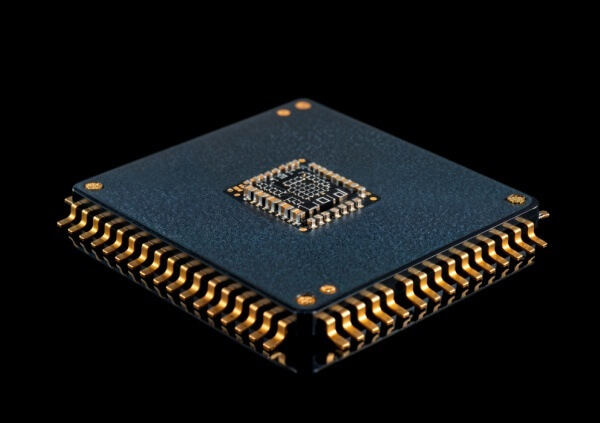
4. Smaller and Lighter Electronic Products
SMT supports miniaturization by reducing component size and increasing PCB utilization.
This is one of the primary reasons why SMT has become fundamental to modern electronics manufacturing.
5. Cost Advantages in Volume Production
Although establishing an SMT production line requires significant capital investment, automated SMT manufacturing can reduce labor requirements and improve production efficiency.
For medium- and high-volume production, these advantages can result in lower unit manufacturing costs.
6. Suitable for Double-Sided Assembly
SMD components can be mounted on both sides of a PCB, allowing designers to make better use of available board space.
This provides greater flexibility when designing complex electronic systems.
Limitations of SMT Assembly
Despite its advantages, SMT is not suitable for every application.
Higher Equipment Investment
An automated SMT line requires specialized equipment, including:
- Solder paste printers
- SPI systems
- Pick-and-place machines
- Reflow ovens
- AOI systems
- X-ray inspection equipment when required
This makes SMT infrastructure more expensive than basic manual assembly.
Rework Can Be More Difficult
Small SMD packages and fine-pitch components can be challenging to repair manually.
Packages such as BGA and QFN may require specialized rework equipment and inspection methods.
Thermal Processing Requirements
SMT components must withstand the thermal profile used during reflow soldering.
Sensitive components require careful process planning to prevent thermal damage.
Not Ideal for Every High-Power Component
Some large transformers, connectors, power components, relays, and mechanically stressed components may benefit from Through-Hole Technology (THT) because through-hole leads provide stronger mechanical anchoring.
For this reason, many modern PCBAs use a mixed SMT and THT assembly process.
SMT vs. Through-Hole Assembly
| Feature | SMT Assembly | Through-Hole Assembly |
|---|---|---|
| Component Density | Very High | Lower |
| Board Size | More Compact | Generally Larger |
| Production Speed | Very High | Moderate |
| Automation | Excellent | Moderate to High |
| Mechanical Strength | Good | Excellent |
| High-Power Applications | Good | Excellent |
| Repairability | More Difficult | Easier |
| Fine-Pitch Components | Excellent | Limited |
| Large Components | Limited | Excellent |
| Double-Sided Assembly | Excellent | More Limited |
| High-Volume Production | Excellent | Suitable depending on design |
| Typical Applications | Consumer, telecom, medical, industrial | Power, industrial, automotive, aerospace |
In many real-world products, SMT and THT are not competing technologies. Instead, they are complementary.
A mixed-technology PCB assembly may use SMT for processors, memory, resistors, capacitors, and other compact components while using THT for connectors, transformers, switches, relays, and high-power components.
Applications of SMT Assembly
SMT PCB assembly is used across a broad range of industries.
Consumer Electronics
SMT is widely used in smartphones, tablets, wearable devices, home appliances, smart devices, and other compact electronic products.
Telecommunications
Communication equipment requires high component density and strong high-frequency performance, making SMT suitable for routers, switches, wireless devices, networking equipment, and communication modules.
Automotive Electronics
Automotive electronics increasingly rely on compact, high-performance PCB assemblies for control systems, infotainment, sensors, battery management, power electronics, and advanced driver assistance systems.
Medical Electronics
Medical equipment requires precise and reliable PCB assemblies for monitoring devices, diagnostic instruments, laboratory equipment, imaging systems, and other electronic medical products.
Industrial Electronics
Industrial control systems, automation equipment, sensors, instrumentation, motor controllers, and power management systems frequently combine SMT and THT technologies.
Aerospace and Defense
Aerospace and defense electronics require stringent reliability, traceability, environmental resistance, and manufacturing controls. SMT can provide high-density assembly while THT can be used for mechanically demanding components.
SMT Assembly Quality Control
Reliable SMT PCBA manufacturing requires quality control throughout the entire production process rather than relying only on final inspection.
A comprehensive quality system may include:
Design for Manufacturing
DFM analysis identifies potential manufacturing problems before production begins.
Engineers review:
- Component spacing
- Pad dimensions
- Component orientation
- PCB tolerances
- Thermal considerations
- Fiducial locations
- Fine-pitch requirements
- Assembly clearances
Solder Paste Inspection
SPI verifies solder paste volume, height, position, and coverage.
Automated Optical Inspection
AOI checks component placement and visible soldering defects.
X-Ray Inspection
X-ray inspection is used for hidden solder joints, particularly BGA, QFN, and other bottom-terminated packages.
Electrical Testing
Depending on the product, manufacturers may use:
- In-Circuit Testing (ICT)
- Flying Probe Testing (FPT)
- Functional Testing (FCT)
- Power-up testing
- Communication interface testing
Traceability
For demanding applications, production records can include PCB lot information, component batches, inspection results, test data, and manufacturing parameters.
Traceability helps manufacturers investigate quality issues and support continuous process improvement.
Why Choose Kingda for SMT PCB Assembly?
As an experienced PCB manufacturer and PCB assembly service provider, Kingda provides integrated manufacturing solutions covering PCB fabrication, prototype development, component sourcing, SMT assembly, THT assembly, inspection, testing, and production support.
Professional PCB Manufacturing and Assembly
Kingda provides both PCB manufacturing and PCB assembly services, helping customers reduce coordination between different suppliers and simplify the transition from PCB prototype to PCBA production.
PCB Prototype and Quick-Turn Manufacturing
For new electronic products, Kingda supports PCB prototype manufacturing and quick-turn PCB prototyping, helping engineers verify circuit designs, component selection, assembly processes, and product functionality before volume production.
DFM Engineering Support
Kingda can provide engineering review before production to identify potential manufacturing and assembly issues.
DFM/DFA analysis can help optimize:
- Component placement
- PCB layout
- Pad design
- Manufacturing tolerances
- Assembly clearances
- Soldering requirements
- Component availability
Early engineering review can reduce design iterations and improve the transition from prototype to production.
SMT and THT Assembly
Kingda supports both SMT assembly and through-hole PCB assembly, allowing customers to manufacture mixed-technology PCBAs through a coordinated production process.
This is particularly valuable for products containing both fine-pitch SMD components and large or mechanically demanding through-hole components.
Comprehensive Inspection and Testing
A reliable PCBA requires inspection at multiple stages.
Kingda can integrate appropriate inspection and testing processes according to project requirements, including SPI, AOI, X-ray inspection, electrical testing, functional testing, and final inspection.
Flexible Production
Kingda provides PCB and PCBA solutions for different production stages, from PCB prototypes and small-batch production to volume manufacturing.
This allows customers to maintain continuity as their products move from engineering validation to commercial production.
One-Stop PCBA Solutions
Kingda’s integrated capabilities can cover the complete manufacturing chain:
PCB Design Review → PCB Prototype Manufacturing → Component Sourcing → SMT Assembly → THT Assembly → Inspection & Testing → PCBA Optimization → Small-Batch Production → Volume Manufacturing
This one-stop approach can help simplify supplier management, shorten production cycles, and improve manufacturing consistency.
How to Choose the Right SMT Assembly Partner
When selecting an SMT PCB assembly manufacturer, price should not be the only consideration.
Important factors include:
- SMT production capability – Check placement accuracy, production capacity, component range, and equipment capabilities.
- Engineering support – Evaluate whether the supplier can provide DFM/DFA analysis and manufacturing recommendations.
- Quality control – Confirm the availability of SPI, AOI, X-ray, ICT, FPT, and functional testing when required.
- Component sourcing – A reliable supply chain can reduce counterfeit, obsolete, and shortage risks.
- Prototype support – Prototype and small-batch capabilities are important for new product development.
- THT capability – Mixed SMT/THT assembly may be necessary for many industrial and power electronics products.
- Traceability – Production records and material traceability are important for high-reliability applications.
- Production scalability – The supplier should be able to support the transition from prototype to volume production.
Conclusion
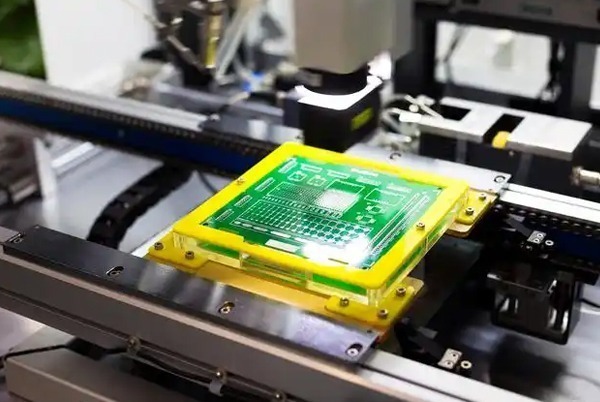
Surface Mount Technology (SMT) has transformed modern electronics manufacturing by enabling high-density, compact, lightweight, and highly automated PCB assembly. From solder paste printing and SPI to component placement, reflow soldering, AOI, X-ray inspection, and electrical testing, each stage contributes to the quality and reliability of the finished PCBA.
Although SMT has become the dominant assembly technology for many electronic products, Through-Hole Technology (THT) remains valuable for large, high-power, mechanically stressed, or frequently serviced components. In many applications, combining SMT and THT provides the optimal balance between miniaturization, electrical performance, mechanical strength, and manufacturing efficiency.
As an experienced PCB manufacturer and PCB assembly service provider, Kingda offers integrated PCB prototype manufacturing, quick-turn PCB prototyping, SMT assembly, THT assembly, inspection, testing, and PCBA manufacturing solutions. From initial design verification to small-batch and volume production, Kingda helps customers improve manufacturability, control production quality, and accelerate the transition from prototype to reliable finished products.