Bend Test Methods for Flexible Printed Circuits A flexible printed circuit is specified with a bend life, and that number is only meaningful if the test used to obtain it is the same as the test used to qualify the part. Two suppliers can quote very different numbers for the…
Pressure Sensor Interface Circuit Design A pressure sensor turns a mechanical deflection into an electrical signal, and the circuit that follows has to remove a set of errors that are larger than the signal itself. Offset, span, temperature drift and nonlinearity are all specified separately on the datasheet, and a…
Copper Pour: What It Does And Which Form To Use Copper pour is the practice of filling the unused area of a board with copper and connecting it, usually to the ground net. It is one of the simplest things a designer can add and one of the easiest to…
Conductive Adhesive Versus Soldering for High Frequency Boards Soldering attaches a component by forming an alloy with the pad. Conductive adhesive attaches it by suspending metal particles in a polymer that cures around the joint. The two mechanisms produce joints with different resistances, different temperature limits and very different process…
FPC Copper Thickness And Line Width: Working Limits On a flexible printed circuit, or FPC, the copper is doing three jobs at once. It carries the current, it provides the mechanical strength that lets the part be handled and bent, and it has to survive repeated flexing without cracking. Copper…
Inner Layer Registration: Scaling, Tooling and Annular Ring Every layer in a multilayer board is imaged on its own sheet of copper, and every sheet changes size during the processes that follow. The artwork is therefore scaled before imaging, so that the pattern arrives at the right size after the…
Edge Plating and Gold Fingers: Process and Design Edge plating places metal on the side wall of a printed circuit board, either as a continuous ground connection or as a gold contact surface for an edge connector. Both are used to remove a connector, to improve shielding or to make…
Solder Resist Ink Selection for High Reliability Boards Solder resist is the thin polymer layer that decides where solder may flow, and it is also the layer that protects the copper from moisture, contamination and mechanical damage for the whole life of the product. On an automotive controller or a…
Backdrilling: Removing the Via Stub to Recover Signal Integrity A via that connects the top layer to an inner layer leaves a length of plated barrel below the connection. That leftover barrel is a via stub, and at high frequency it behaves as a resonant transmission line branch that pulls…
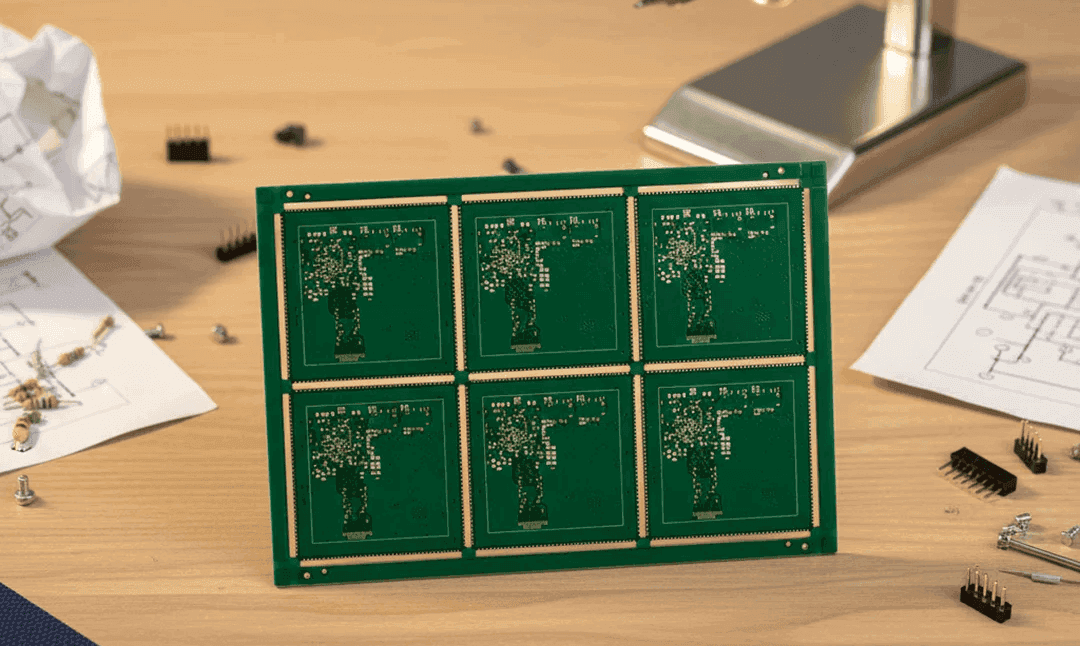
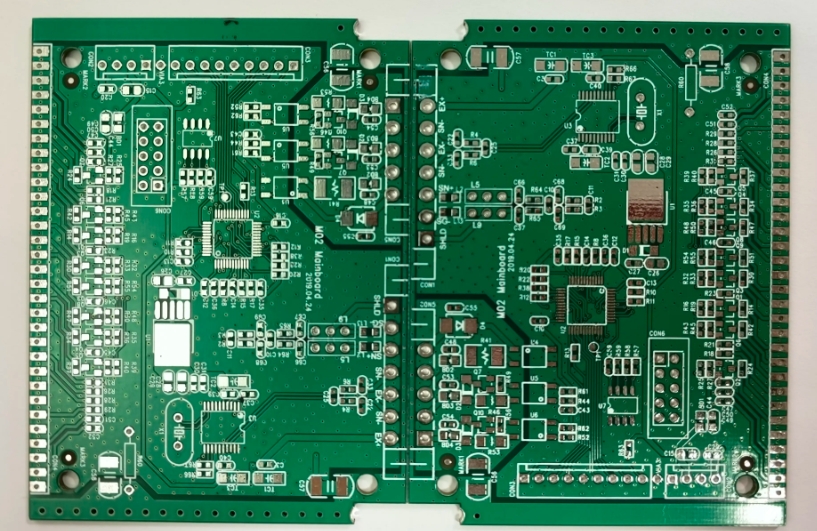
Castellated Holes: Design Rules and Process Limits Castellated holes are plated holes cut in half along the edge of a board so that the remaining semicircle can be soldered to a parent board, a technique used by almost every radio module, sensor module and power module on the market. The…