Blind Slot and Open Slot Routing in PCBs: Depth, Tolerance and Sequence A slot in a printed circuit board is usually there for a mechanical reason: to seat a connector, to separate two circuits, to let air move or to give a daughter card somewhere to sit. Whether that slot…
High Voltage PCB: Design and Fabrication Guide A high voltage board looks like an ordinary board that has been stretched. The traces are wider, the clearances are larger and there is a lot of empty laminate, and the empty space is the point. On a high voltage PCB the distance…
LNA RF Module PCB Design: Noise Figure and Grounding A low noise amplifier sits at the front of a receive chain and carries an unusual burden. Everything downstream adds noise on top of the noise it contributes, and the gain it provides cannot recover signal to noise ratio that has…
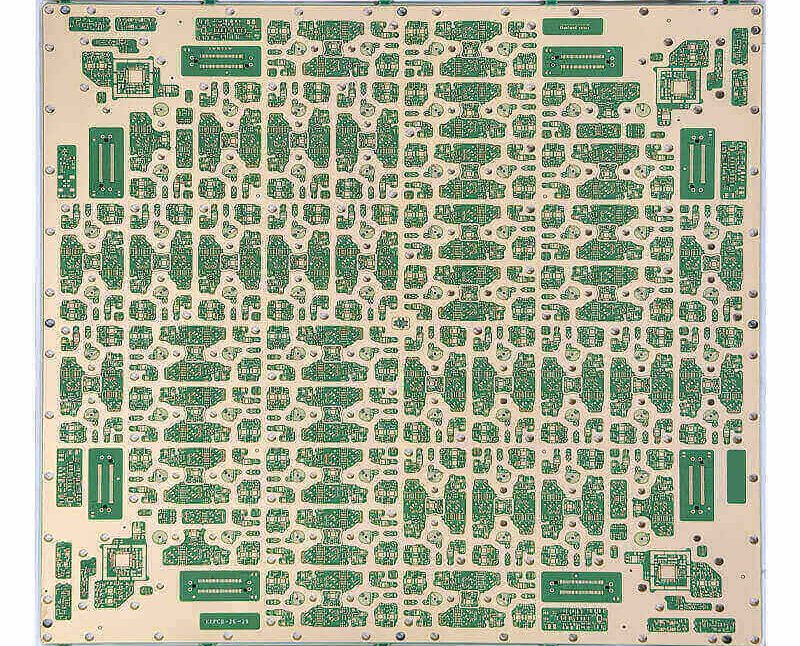
Long PCB Design: Handling, Warpage and Signal Integrity A long PCB is a board whose dimensions exceed the working envelope of the equipment that has to make and assemble it. Communications antenna panels, satellite arrays, lighting rails and instrument backplanes all fall into this category. The circuits themselves are often…
Copper Plating and Nickel Plating in PCB Fabrication Two metals do most of the work in PCB plating. Copper forms the conductors and lines every hole, while nickel appears as a thin barrier layer under gold on pads and edge contacts. They are deposited for different reasons, by different processes,…
Prepreg vs Core: The Two Materials Behind Every Multilayer PCB A multilayer board is not one material but a stack of two. The cores carry the circuits; the prepreg glues them together and forms the dielectric between them. Designers often treat the two as interchangeable because both are made of…
Dielectric Constant of PCB Materials: Measurement and Use Dielectric constant is the property that links a laminate datasheet to the width of a trace. It describes how much the material slows an electric field and how much capacitance a given geometry produces, and it is the input that most impedance…
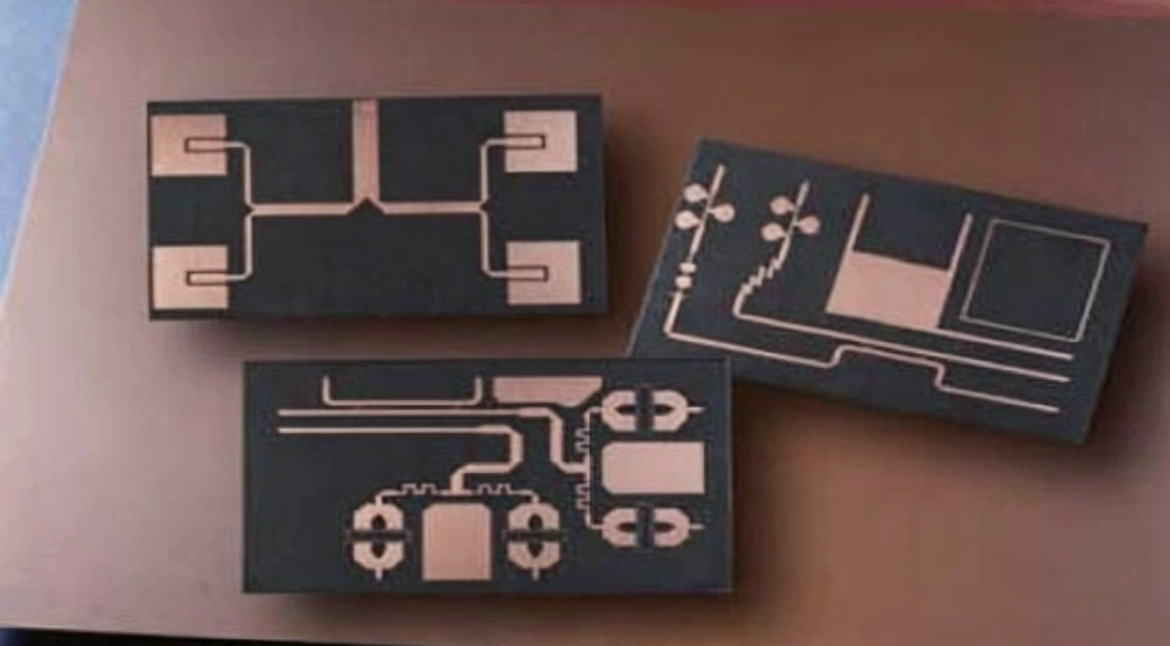
Radar PCB Design: Materials, Phase Matching and Thermal Path A radar board is a mixed-signal assembly at the extreme end of the spectrum. It carries microwave transmit and receive paths, high-speed digital processing, and a power stage, often on a single multilayer stack inside a sealed module. The design problem…
Glucometer PCB Design: Precision Analog in a Handheld Device A glucometer PCB measures an electrochemical reaction in a single-use test strip and converts it into a reading that a patient will act on. The current it measures is in the nanoampere to microampere range, the device runs for months on…
Automotive Radar PCB: Materials for 77 GHz Designs An automotive radar module works at 24, 77 or 79 GHz, and at those frequencies the circuit board stops being a passive carrier and becomes part of the radio. Trace geometry, dielectric behaviour and copper surface finish all change the insertion loss…