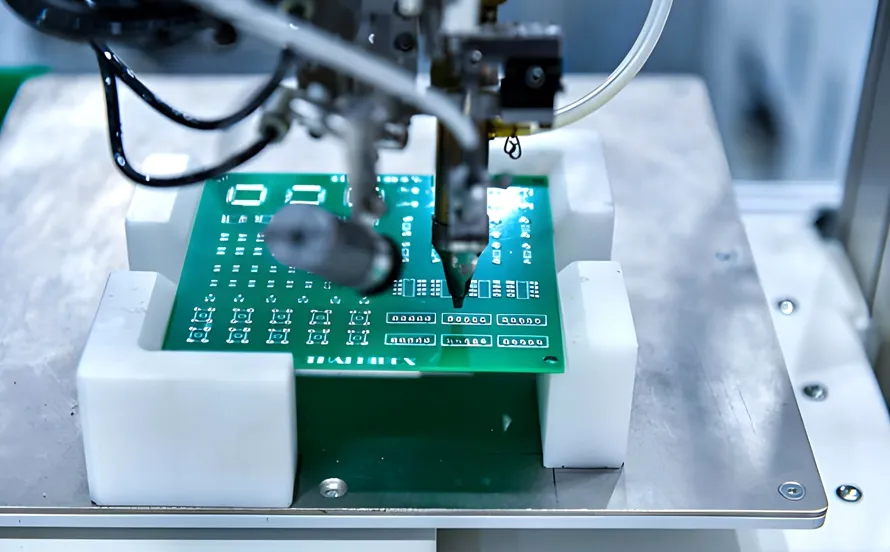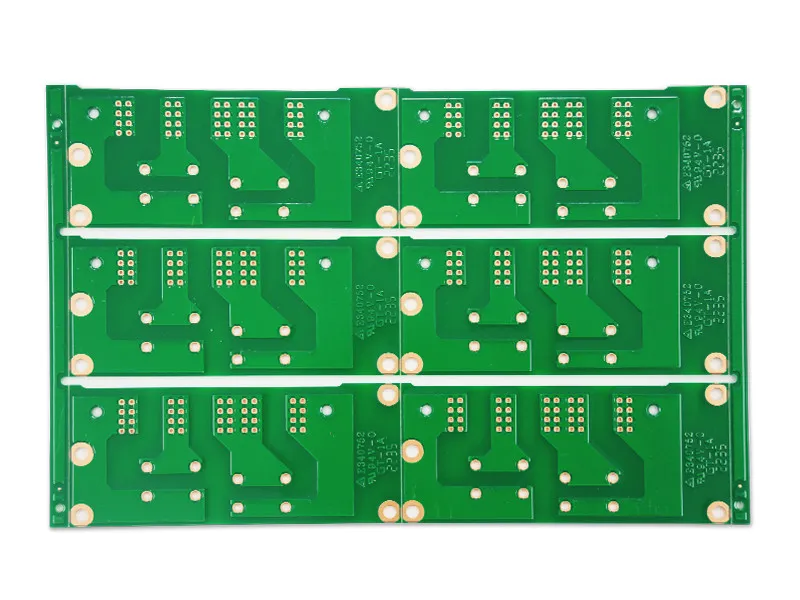
Pressure Foot and Drill Support: Fixturing for Hole Accuracy The pressure foot is the part of a drilling or routing spindle that presses down on the panel and holds it against the backup plate while the tool cuts. It looks like a simple clamp, but it sets the reference surface…

Print to Reflow Hold Time: How Long Printed Paste Can Wait Hold time is the interval between printing a board and reflowing it, and it is one of the least controlled variables in a surface mount line. It is invisible on the process sheet, it changes with the queue, and…
Peck Drilling and Retract Rate Control for Deep PCB Holes Peck drilling breaks a deep hole into a series of short advances, retracting the bit between them so that chips leave the hole instead of packing around the flutes. It is the standard answer when the aspect ratio climbs past…
Feeder Calibration: Pick Position, Tape Lift and Pitch Feeders are the largest population of moving parts on a placement machine, and they are the ones most often excluded from the calibration schedule. A feeder that picks reliably is assumed to be correct, even when its pick position has drifted a…
Conformal Coating Cure: 6 Rules for a Full Cure Schedule A conformal coating cure schedule is the combination of temperature and time that turns a wet film into the protective layer the design assumed. It is written on the coating data sheet, and it is verified far less often than…
Solder Paste Shelf Life: Cold Chain, Thaw and Working Time Solder paste is a suspension of solder powder in flux, and it is chemically active from the moment it is manufactured. Its shelf life is the time over which that activity stays inside a usable range, and every step from…
Plating Filter Pump: 4 Checks for Bath Turnover A plating filter pump moves the bath through a housing where the particulate is captured and returns the clean solution to the tank. It is the least glamorous piece of equipment on a plating line, and it is the one that quietly…
Component Height and Clearance Verification Component height is a mechanical parameter that decides whether an assembly can be built at all, and it is usually verified with a drawing rather than with a measurement. A part that is 0.3 mm taller than its nominal value can collide with a placement…
Flux Density and Specific Gravity Control in Wave Soldering Flux density is the parameter that decides how much active chemistry reaches the joint, and it is also the parameter most often checked with a single hydrometer reading taken at the start of a shift. A wave soldering machine running on…
Auto-Insertion Process Control for Through-Hole Assembly Auto-insertion is the mechanised placement of through-hole parts, and it succeeds or fails on mechanical tolerances rather than on electrical ones. The machine pushes a lead into a hole with a defined force, and if the lead span, the hole position and the clinch…