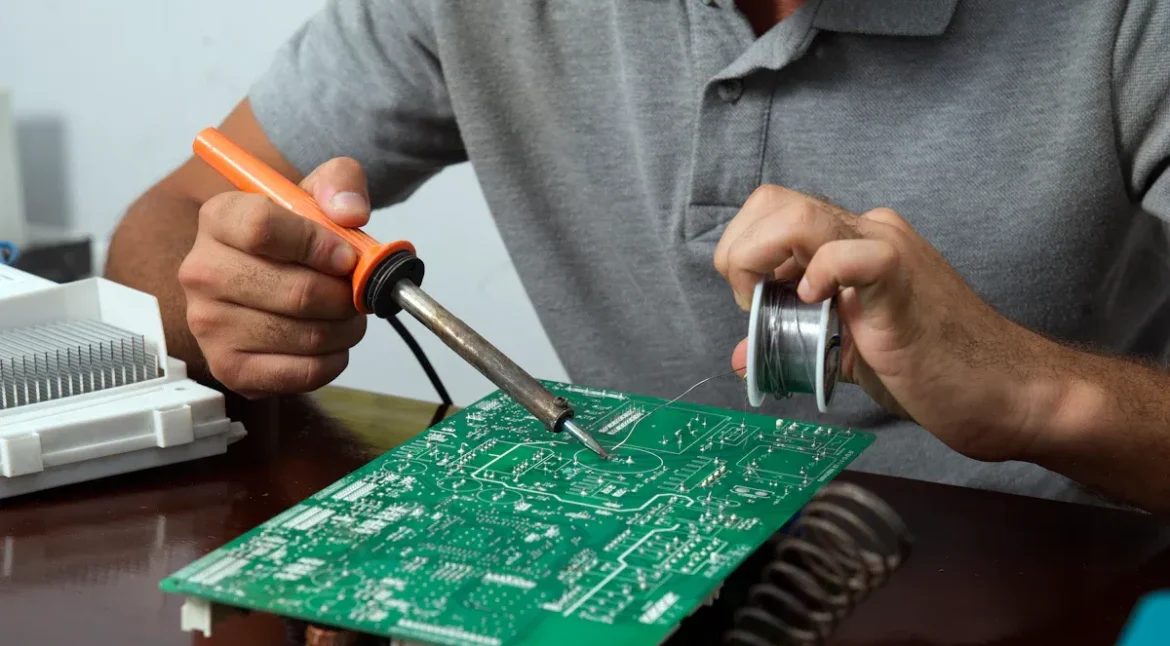
Lead Trimming and Clinch Control After Wave Soldering Lead trimming and clinching look like finishing operations, but they apply mechanical loads to joints that have just been soldered. A blade that shears instead of cutting, or a clinch that is bent too tightly, can crack a fillet or lift a…
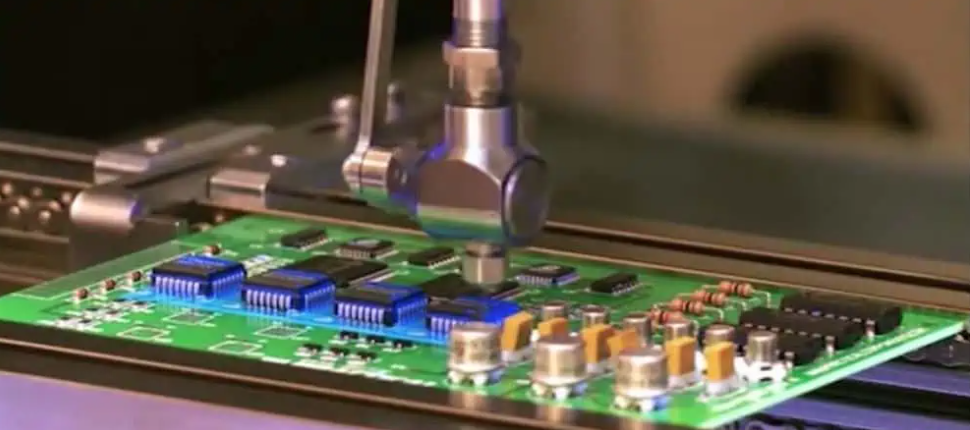
Micro-Hardness Testing of Plated Copper in PCB Fabrication Micro-hardness is one of the few measurements that describes the quality of plated copper rather than its quantity. Thickness tells you how much metal was deposited, while hardness tells you how the deposit will behave when the board is drilled, routed, thermally…
Solder Paste Hot Slump and Reflow Preheat Control Hot slump is the movement of a solder paste deposit after printing but before the alloy melts, and it is caused by the paste softening as it warms rather than by anything mechanical. A deposit that was well formed at the printer…
Direct Metallization Control for PCB Plated Through Holes: 6 Rules Direct metallization is a family of processes that make a drilled hole conductive without the electroless copper step that traditionally followed desmear. The hole wall is treated with a conductive material, usually a carbon or graphite dispersion or a conductive…
Megasonic Cleaning Control for PCB Assemblies: 6 Rules Megasonic cleaning uses sound in the range of several hundred kilohertz to several megahertz to remove particles from a surface. It is a different mechanism from the ultrasonic baths used for heavier soils: where ultrasound relies on the violent collapse of cavitation…
LDI Exposure Energy Control for PCB Imaging: 6 Rules Laser direct imaging writes a pattern onto a photoresist with a modulated beam instead of a film artwork, and exposure energy is the parameter that decides whether that pattern develops faithfully. Too little energy leaves resist that dissolves in the developer,…
Corona Treatment Adhesion for PCB Surfaces: 5 Process Rules Corona treatment raises the surface energy of a plastic or a coated surface by exposing it to a high-voltage discharge. The discharge breaks bonds at the surface and leaves polar groups behind, and those groups are what allow a coating, an…
Dam and Fill Encapsulation Control for PCB Assemblies: 7 Rules Dam and fill is a two-step encapsulation method used to protect components on an assembled board. A high-viscosity material is dispensed first to form a wall, or dam, around the area to be protected, and a lower-viscosity material is then…
Micro Drill Small Hole Control in PCB Fabrication: 6 Rules A micro drill is a bit small enough that its own stiffness becomes a process variable. Below roughly 0.3 mm the shank deflects under the thrust of the drill, the flutes fill faster, and the margin between a sound hole…
Tape Splice Control: Keeping Feeders Running Without Losing Parts A tape splice joins the end of one reel of components to the start of the next so that the feeder does not have to be reloaded in the middle of a run. It saves a line stop of several minutes…