EMC Routing Practices for High-Speed PCB Layout Electromagnetic compatibility is decided by the physical arrangement of the board long before the enclosure is chosen. The layout determines how much energy a signal radiates, how much it picks up from its neighbours, and whether the return current takes a short path…
RF Circuit PCB Design: Printed Elements, Materials, and Stackup Radio frequency design returns to PCB engineering whenever a product needs a wireless link, a radar front end, or a transmission line with a defined impedance. Engineers trained on digital systems usually recognise the components but not the reasoning: an RF…
RF PCB Layout: Partitioning and Isolation Measures That Work RF layout is where a design that simulates correctly either becomes a working product or becomes a receiver that hears its own transmitter. The difficulties are rarely subtle: a digital section that shares a supply with an analog front end, a…
High-Frequency Laminate Selection for RF and Microwave PCBs At radio and microwave frequencies the choice of laminate stops being a cost decision and becomes a performance decision. The dielectric constant sets the physical dimensions of every transmission line, and the loss tangent determines how far a signal travels before it…
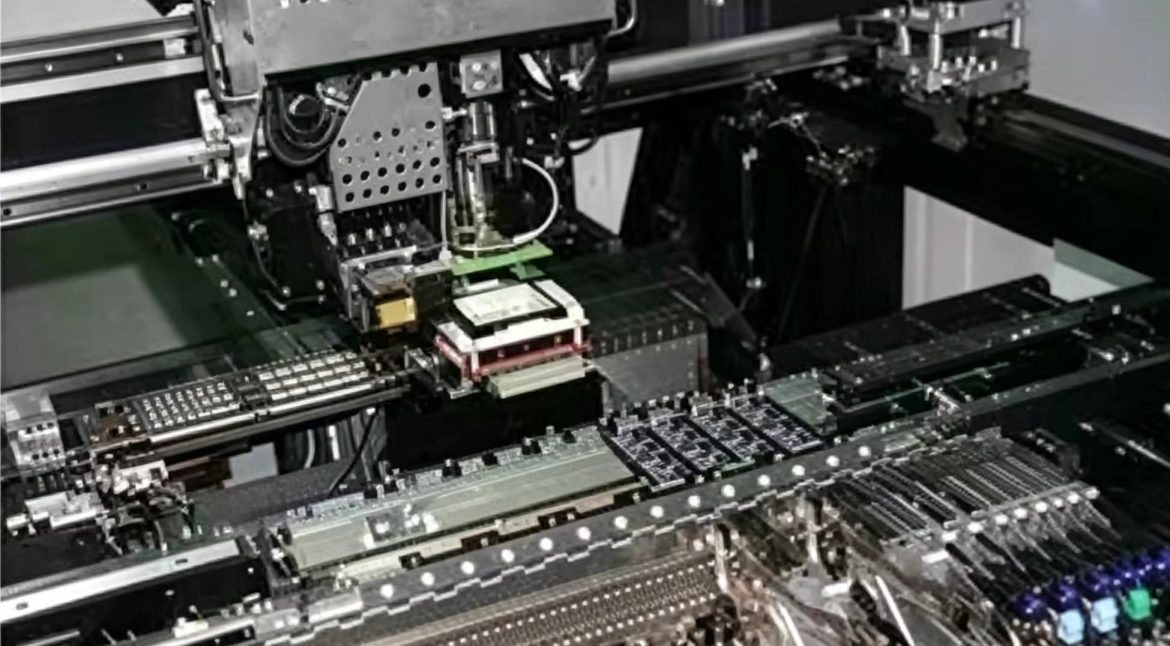
Process Edge Design for PCB Panels: Width, V-Cut, and Stamp Holes Panels do not go through the assembly line by themselves. They are carried, clamped, and registered by the equipment, and the strip of board reserved for that purpose is the process edge. Its width, its integrity, and what is…
Band-Pass Filter Bode Plots: Reading Resonance on the Bench A band-pass filter is one of the first circuits an engineer meets, and one of the easiest to misread. Its behaviour is fully described by a transfer function, and the standard way to visualise that function is a Bode plot: a…
Additive Process in PCB Manufacturing: Design Notes Subtractive processes have defined printed circuit board fabrication for decades: copper is etched away and solder mask is applied, exposed and developed. An additive process builds the coating where it is needed instead of removing what is not. That change sounds like a…
Can a PCB Carry 100 A? PCB Current Capacity in Copper Most boards never see more than a couple of amperes. Consumer electronics typically run below 2 A continuously, and even a dense industrial board rarely exceeds 5 A or 10 A on any one net. Then a motor drive…
Flexible Circuit Board Soldering: Method and Precautions Flexible circuits tolerate heat and mechanical stress differently from rigid boards, and the same technique that produces a clean joint on FR-4 can lift a pad from a polyimide film. The sequence below covers flexible circuit board soldering of a fine-pitch device and…
High-Frequency PCB Material Selection and Processing Above roughly 1 GHz the laminate stops being a passive carrier and becomes part of the circuit. Losses in the dielectric, variation in the dielectric constant from batch to batch, and the quality of the copper surface all show up directly in insertion loss…