Backplane and Modular Structures in Industrial Control PCB Design An industrial controller can be built as one large board or as a set of smaller boards that plug into a common backplane, and the choice between backplane and modular structures is usually made early, because it determines the mechanical design,…
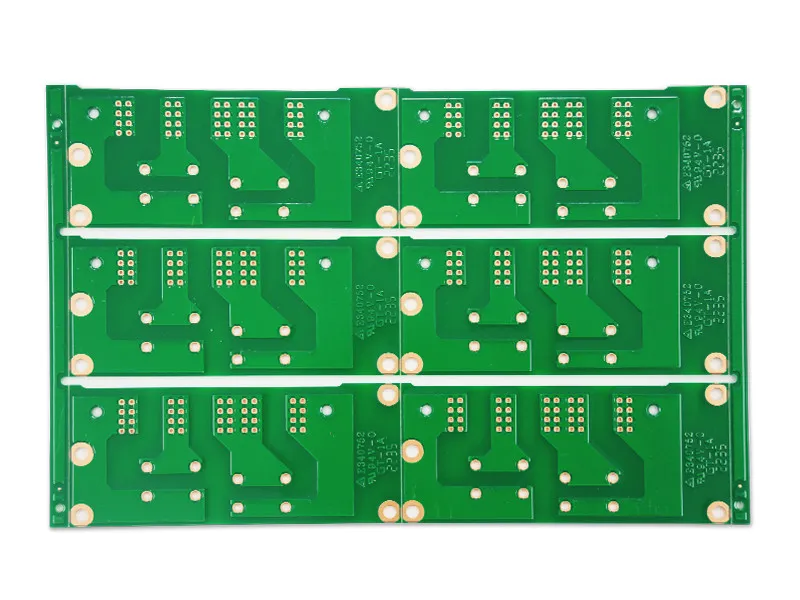
Metal Core PCB Design and Fabrication Basics When a board has to move heat rather than carry signals, ordinary FR-4 stops being the right material. A metal core PCB replaces the usual insulating base with aluminium or copper, separated from the circuit by a thin dielectric that conducts heat but…
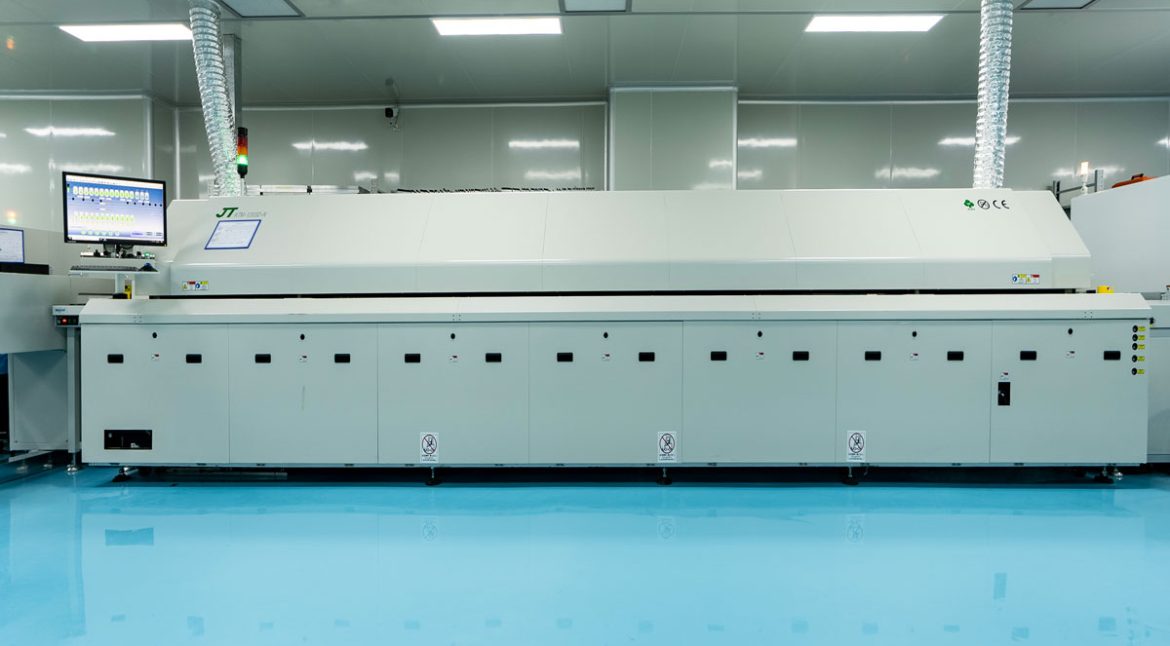
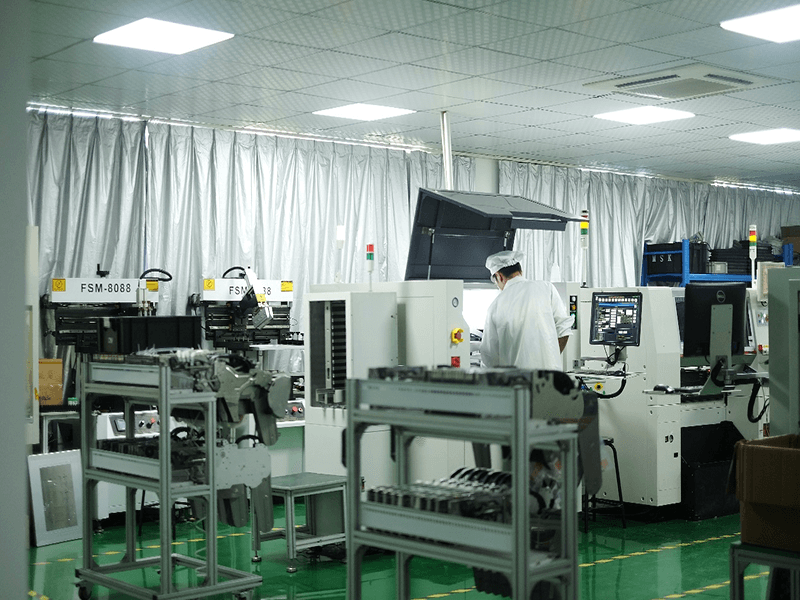
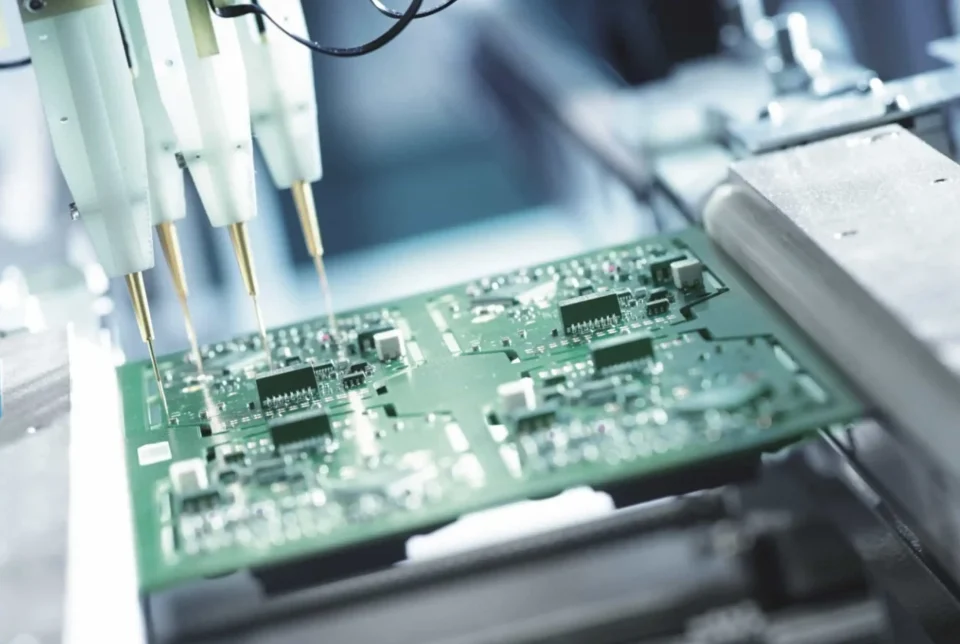
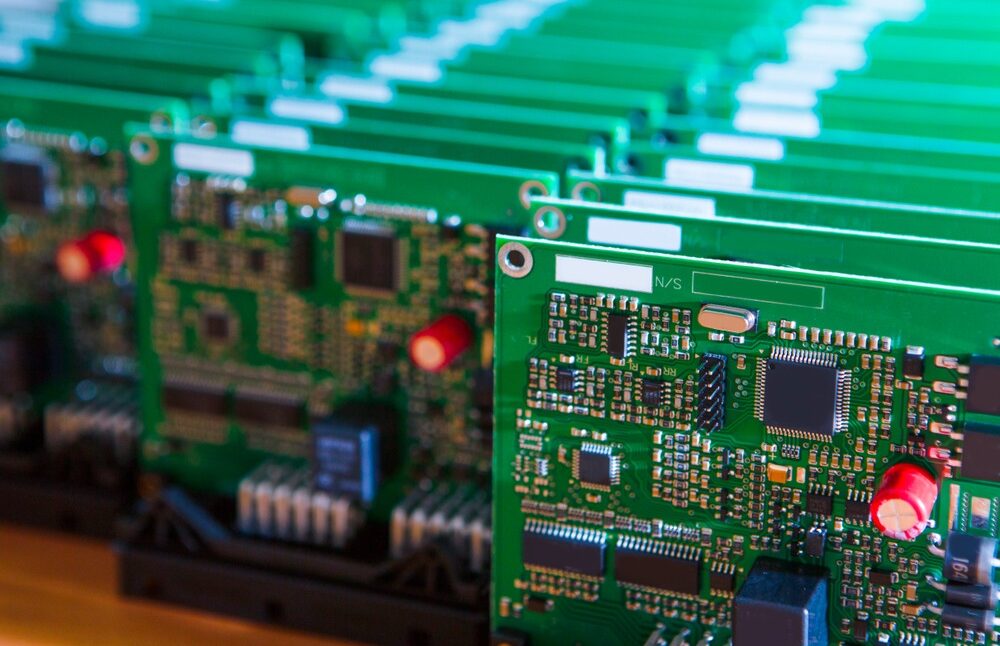
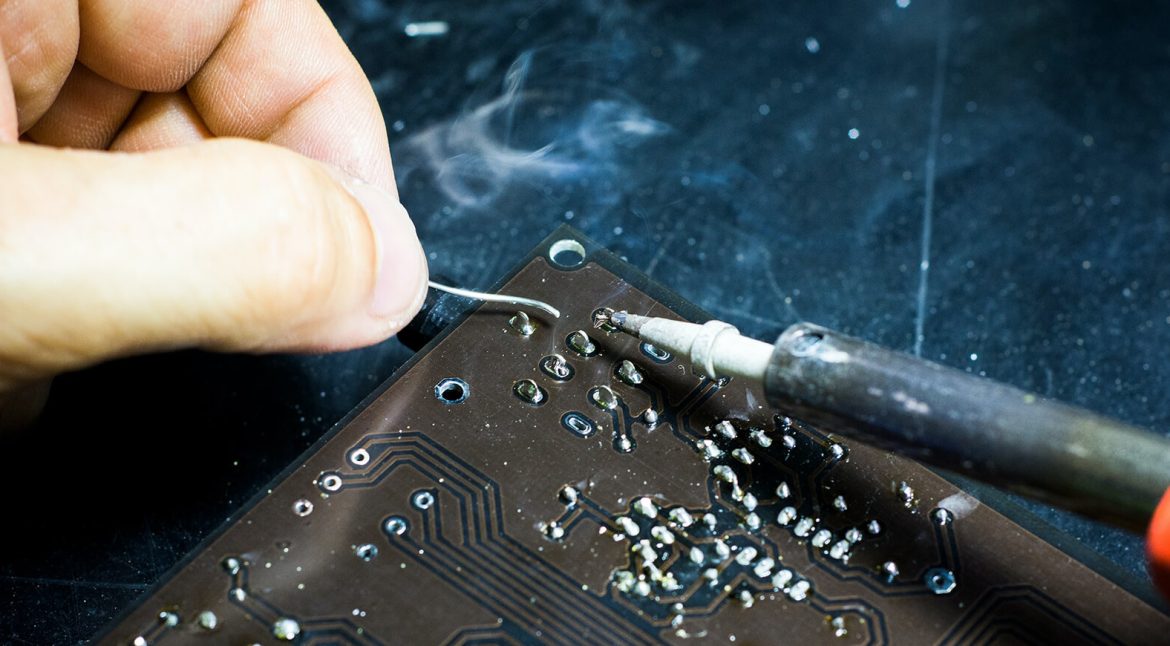
PCBA Production Flow from Bare Board to Finished Assembly A bare printed circuit board becomes a functional assembly through a sequence of steps that each add material, components or information. The sequence matters because the order is fixed by physics: paste must be printed before parts are placed, parts must…
Resistor Selection in Circuit Board Design A resistor is the simplest component on the board and the one most often chosen without thought. The value is calculated, a familiar part number is reached for and the design moves on. That habit works until a circuit drifts at temperature, a part…
EMC Design Principles: Loop Area, Grounding and Stackup Electromagnetic compatibility is often presented as a list of prohibitions, which makes it hard to remember and harder to apply. The underlying physics is much smaller: current radiates, loop area determines how efficiently, and common mode current is what leaves the board…
PCB Safety Spacing: Electrical and Non-Electrical Gaps Spacing rules are the part of a design rule set that gets the least attention and causes the most avoidable rework. Most of them are not electrical at all; they exist because the fabricator needs room to etch, the assembler needs room to…
Board Edge Isolation: Pulling Ground Back From the Edge Traces that run along the board edge behave differently from traces in the middle, and the difference is not caused by the absence of laminate. It is caused by the ground plane. Every plane has to be pulled back from the…
Through, Blind and Buried Vias in PCB Fabrication A printed circuit board is a stack of copper layers separated by insulating material, and the layers cannot connect to each other on their own. The plated hole that bridges them is the via, and its three forms, through, blind and buried,…
Copper Anode Balls in PCB Plating: Why Phosphorus Matters Electroplated copper is the backbone of every plated through hole and every plated feature on a circuit board, and the raw material for that copper is the anode. Most PCB plating lines use copper anode balls rather than solid plates, and…
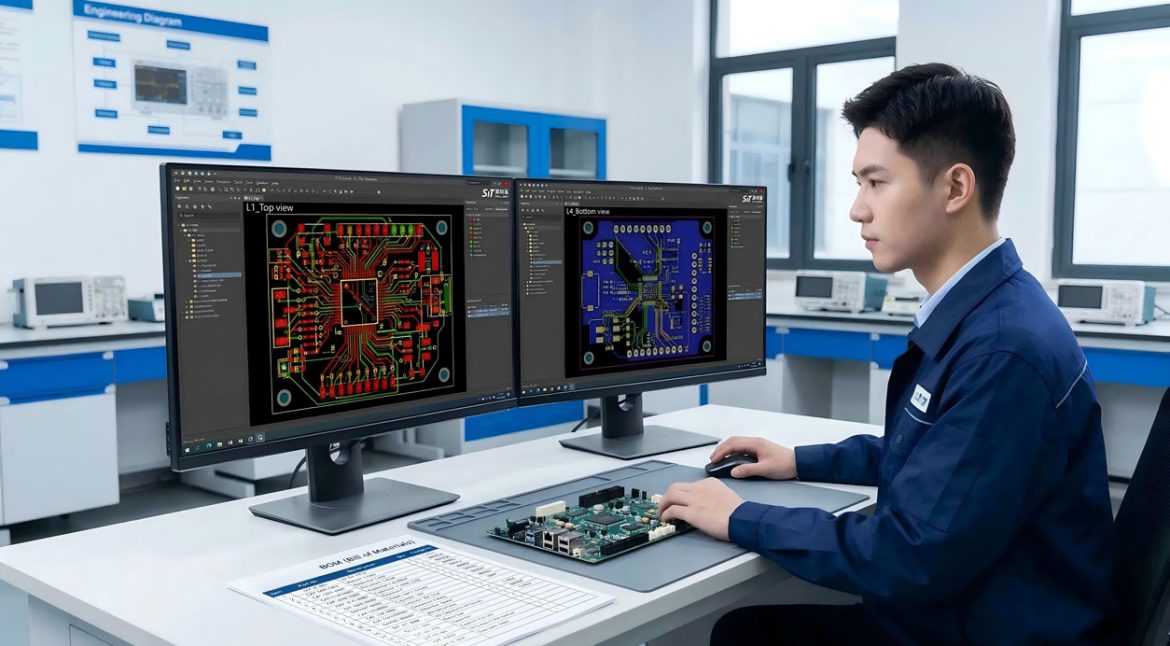
PCB Design in Product Development: Why Layout Decides Performance Hardware projects are usually described in terms of their architecture: the processor chosen, the interfaces supported, the software stack. The board that carries all of it is treated as an implementation detail until something goes wrong. That assumption worked when clocks…