Micro-Component Batches: Where They Are Used and What They Cost The smallest passives in production have moved from being an experiment to being a component that appears in ordinary designs. A part measuring two tenths of a millimetre by one tenth is now used where board area and thickness are…

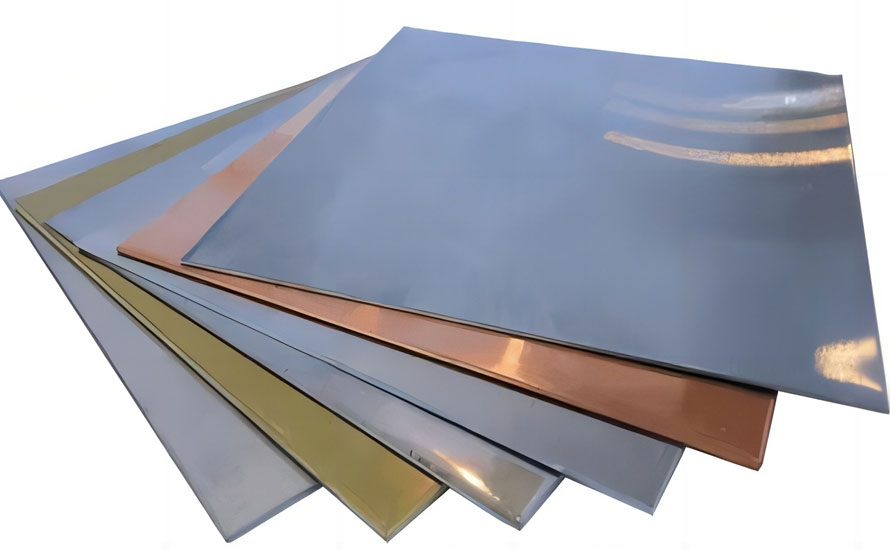
High-Frequency Material Systems and Lamination Control When a design moves into the range where signal behaviour matters, the board stops being a mechanical support with copper on it and becomes part of the circuit. The dielectric properties of the material, the geometry of the traces and the way the layers…
Prototype Lead Time: Where the Days Actually Go A prototype schedule is usually quoted as a single number of days, and the number is treated as a property of the supplier. In practice it is the sum of several steps, each with its own floor, and knowing which of them…
Small Orders Deserve Full Process Control There is a particular failure in batch assembly that rarely appears on a formal list: the board that would have been built correctly if the order had been large. Where a supplier’s schedule is organised around volume, a small quantity can be treated as…
Ultra-Small Passives: Building Boards With 008004 Parts Each generation of portable and wearable electronics moves a step further in the same direction: less space, less thickness, more function. The component families follow, and the smallest passives now in volume production are around two tenths of a millimetre in length and…
Point Count: How Placement Work Is Measured Placement is usually priced by counting. The coordinate file contains a position for every device, the positions are totalled, and the total is multiplied by a rate that depends on the class of work. It is a transparent method and it has the…
Deliverables to Ask For: DFM Report, Inspection Scope and Traceability A supplier’s capability is judged by what they produce, and for assembly that is not only the boards. The documents and records that accompany the work are what allow a customer to check that the order was made the way…
Capability Boundary: What a Line Can and Cannot Build Every line has an edge. Beyond it, the equipment is not accurate enough, the feeders cannot hold the number of parts, the oven cannot shape the profile finely enough, or the inspection cannot see what needs to be seen. Most of…
What a Local Supplier Changes in an Assembly Project Choosing an assembly partner on distance alone is a shortcut, and it is not a bad one, but the reasoning behind it is usually stated too simply. A local supplier is not automatically better than a distant one; what proximity changes…
Reading a PCBA Quotation Line by Line Two figures for the same board can differ by a factor of two, and the difference is rarely a matter of margin. Assembly is a process with several distinct costs, and a quotation that presents them as one number conceals which of them…