8 Layer PCB Quick Turn: Prototype Build and Lead Time Why Eight Layers Arrives So Early A four layer board with a solid ground plane handles a surprising amount of digital design, and six layers handles more. Then a design shows up with a BGA that needs two rows of…
RF Test Equipment PCB: Design and Manufacturing Guide The Board Sets the Noise Floor A spectrum analyser, a signal generator or an EMC receiver is judged by measurements it makes at the edge of its own sensitivity. The front end amplifier, the mixer and the ADC usually get the credit…
PCB Via Structures: Through, Blind, Buried and Microvia A Hole Is Not Just a Hole Almost every net on a multi layer board changes layers at least once, and every one of those transitions is a hole. The shape of that hole decides how much routing space it consumes, how…
PCB Solder Mask Color Options and What They Cost More Than a Paint Job Solder mask is a photoimageable epoxy coating that sits over the copper, opening only at the pads. It stops solder from bridging between adjacent pads, keeps the copper from oxidising, raises surface insulation resistance and protects…
PCB Plating Thickness Guide: Copper, Nickel and Gold Three Metals, Three Jobs Plating thickness is one of the few numbers on a fabrication drawing that reaches into electrical performance, mechanical life and cost at the same time. Copper carries current and holds the barrel together, nickel stops copper from diffusing…
Impedance Discontinuity in PCB Manufacturing: Causes and Fixes What an Impedance Discontinuity Really Is Every high speed net carries a target impedance: 50 or 75 ohm single ended for most RF and clock nets, 90 ohm for USB, 100 ohm for PCIe, HDMI and differential pairs, 120 ohm for some…
PCB Manufacturing Cost Per Board: Quantity, Layers and Charges The Number Everyone Wants and Nobody Can Give Simply Cost per board is the question every project starts with, and it is impossible to answer without three other numbers: the layer count, the material, and the quantity. The same board can…
Low Volume PCB Manufacturing: 10 to 500 Boards The Middle Ground Between Prototype and Mass Production Volume manufacturing rewards predictability: a fixed design, a large order and a long lead time. Prototyping rewards speed. Neither suits a product that is still being refined, or a market that does not yet…
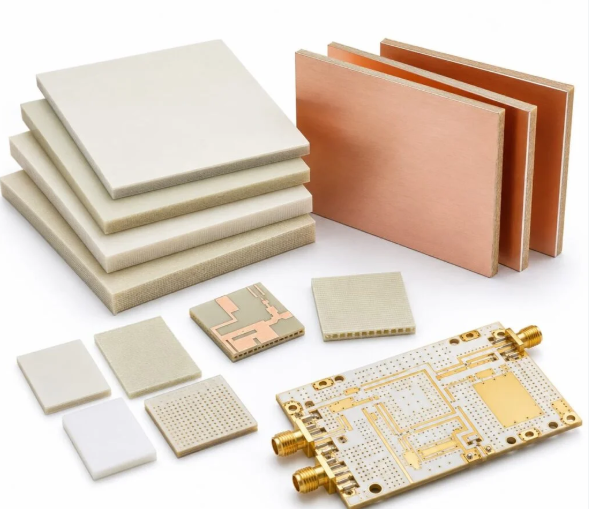
Ceramic PCB Price: Substrates, Process and Volume Why Ceramic Boards Cost What They Do A ceramic substrate replaces FR-4 or a metal core with alumina, aluminium nitride or silicon nitride. The result is thermal conductivity several times that of FR-4, excellent high frequency behaviour, high insulation resistance and dimensional stability…
Gold Finger Connector Design: Plating, Bevel and Durability The Interface That Has to Survive Being Used Most connections on a circuit board are made once and never touched again. A gold finger connector is different: it slides into a socket, is removed, reseated and sometimes exchanged while the system is…