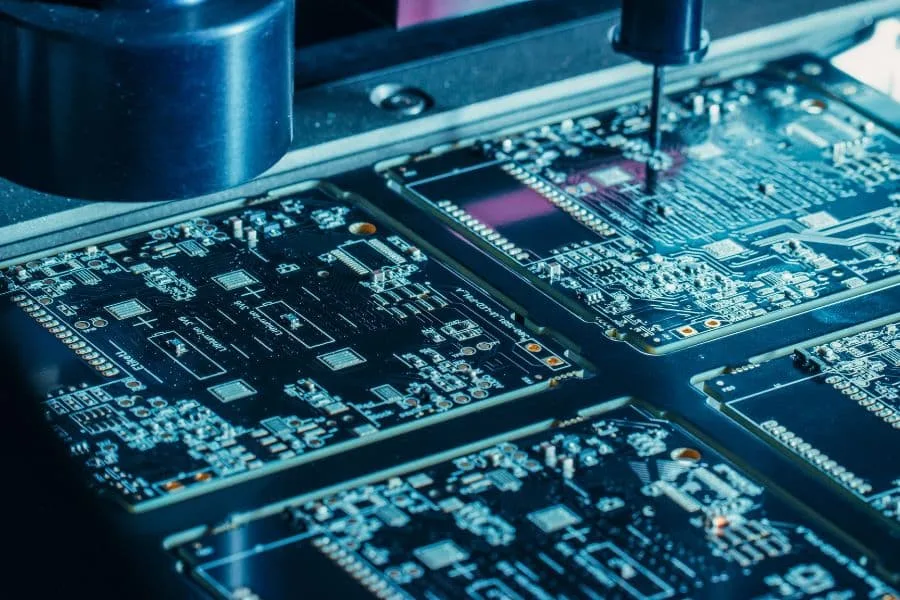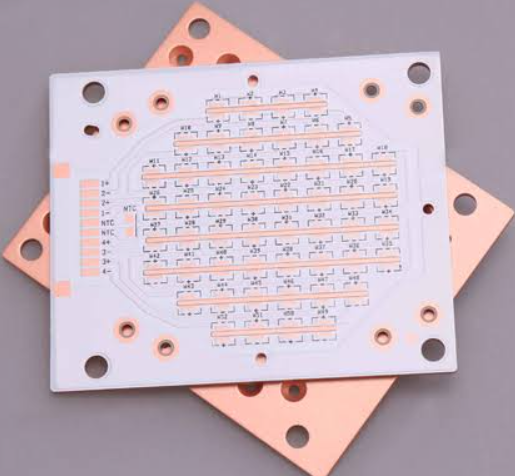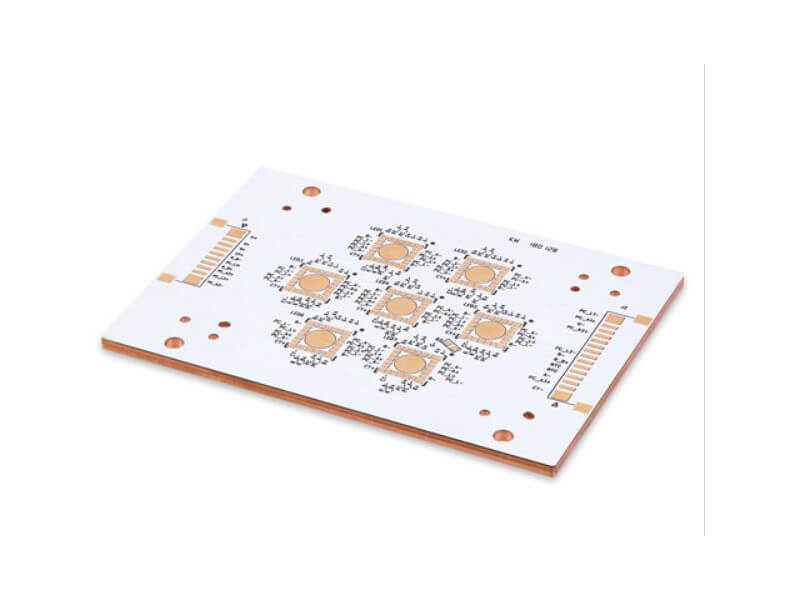
Nelco PCB Materials: Properties, Selection and Performance When Standard FR-4 Runs Out of Headroom For most products, standard FR-4 is the right answer. It is cheap, well understood and easy to process. Push into high speed serial links, dense backplanes, 5G infrastructure, server platforms, aerospace systems or precision industrial control,…
Via in Pad Plated Over: Design Rules for Dense BGA Assembly The Problem With an Ordinary Via in a BGA Pad Fine pitch ball grid arrays force a design decision that has no clean answer in conventional fabrication. Routing escapes from a dense BGA often requires vias placed directly in…
Blind Via PCB Manufacturing: Stackup, Process and Cost The Interconnect That Makes High Density Possible As products shrink and their silicon becomes denser and faster, the wiring capacity of a conventional multilayer board runs out. Through-holes consume routing area on every layer they pass through, and once a design needs…
Radar PCB Assembly: RF Materials, Process Control and Cost Where High Frequency Meets High Consequence Radar systems sit at the intersection of microwave engineering, precision signal processing and very high reliability requirements. Whether the application is defence surveillance, automotive ADAS, aerospace or industrial sensing, the platform demands far more from…
Satellite Communication PCBA Cost: Factors, Ranges and Lead Time Cost, Reliability and Schedule in One Decision Satellite communication hardware operates in high vacuum, under sustained radiation, and through repeated thermal cycling. Once in orbit there is effectively no repair or replacement option, so the assembly cost of a satellite communication…
Gold Finger PCB Manufacturing: Hard Gold, Bevel and Thickness The Interface That Decides Product Life In any product where a board is inserted into a slot, the electrical connection is made across a set of plated contacts on the board edge. PCIe add-in cards, memory modules, GPU and FPGA boards,…
High Voltage PCB Design: Creepage, Clearance and Materials Above 500 V, the Design Rules Change Most PCB guidance assumes that the limiting factors are trace geometry, impedance and layer count. Push the working voltage past roughly 500 volts and those concerns move to the background. The limiting factors become creepage…
Custom PCB Manufacturing for Space Exploration Programs Small Volumes, High Value, No Tolerance for Failure Space electronics operate in an environment that has no commercial equivalent: hard vacuum, ionising radiation, repeated thermal cycling across a very wide range, and mechanical loads during launch that the board must survive without degradation.…
PCB Design for Fire Alarm Sensors: Power, Noise and Reliability Why This Board Is Judged by Different Rules A smoke detector is a product that must work after years of sitting untouched, and must not raise a false alarm while it waits. Those two requirements, long unattended life and low…
Avionics PCB Design for Aircraft Landing Gear Actuation The Subsystem Where Electronics Meets Flight Safety The landing gear is one of the most heavily loaded and most safety critical subsystems on any aircraft. It supports the airframe during taxi, take-off and touchdown, and it has to do so reliably across…