High-Speed PCB Design, Manufacturing, and Assembly

Industrial VR Equipment: DFM, PCB Design, Testing & Manufacturing

Industrial Virtual Reality Equipment: DFM, Supply Chain, Calibration, Testing, and Quality Control Industrial virtual reality (VR) equipment is moving beyond entertainment and gaming into manufacturing, industrial training, maintenance, simulation, digital twins, logistics, healthcare, and other professional applications. Compared with consumer VR products, industrial VR headsets must deliver higher reliability, better…
pcb

LiDAR PCB vs Millimeter Wave Radar PCB: Differences and Applications

LiDAR PCB vs. Millimeter Wave Radar PCB: Differences, Features, and Applications Introduction to LiDAR PCB and Millimeter Wave Radar PCB With the rapid development of autonomous driving, advanced driver assistance systems (ADAS), intelligent transportation, and industrial automation, sensing technologies such as LiDAR and millimeter wave radar have become increasingly important.…
PCB

RF PCB Design Guide: Principles, Layout, Materials, and Manufacturing Best Practices

RF PCB Design Guide: Principles, Layout, Materials, and Manufacturing Best Practices When electronic systems operate at high frequencies, conventional PCB design methods are often not sufficient. High-frequency applications require careful control of signal integrity, impedance, grounding, material properties, component placement, and transmission-line geometry. An RF PCB is specifically designed to…
Manual PCBA cleaning

Manual vs. Automated PCBA Cleaning: Methods, Benefits, and Best Practices

Manual vs. Automated PCBA Cleaning: Methods, Benefits, and Best Practices Choosing the right PCBA cleaning method is an important part of maintaining the quality, reliability, and long-term performance of electronic assemblies. Depending on production volume, PCB complexity, contamination type, equipment investment, and quality requirements, manufacturers may choose between manual cleaning…
RoHS Compliance for PCB Design

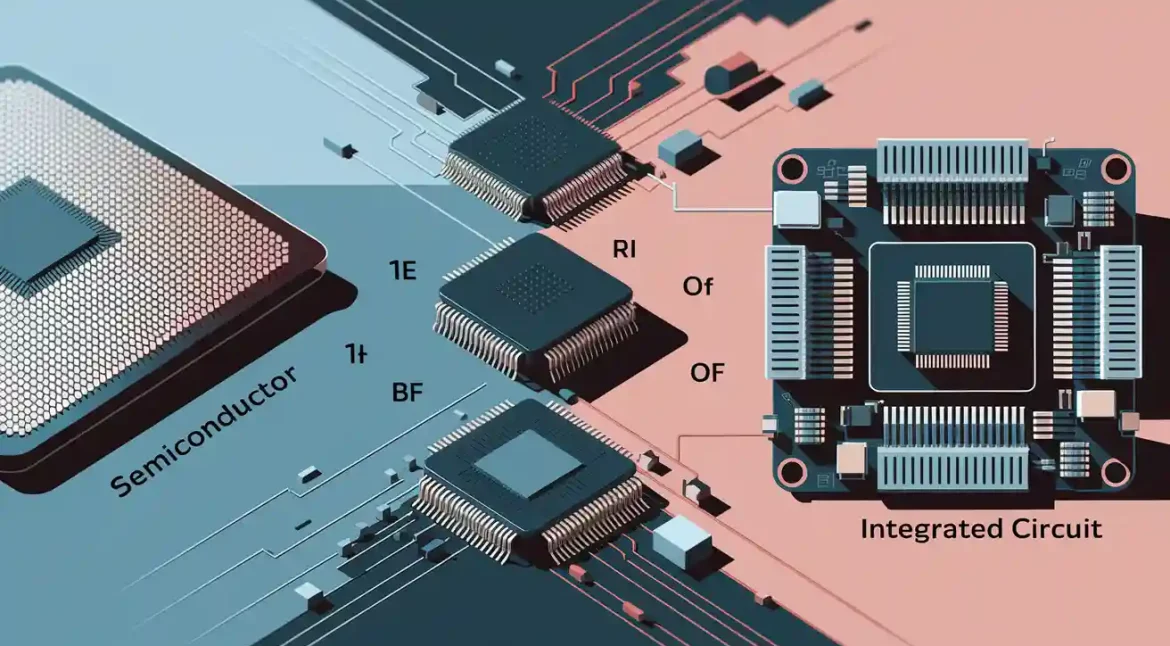
Semiconductor vs. Chip vs. Integrated Circuit: Differences, Relationship, Manufacturing Process and Applications

Semiconductors, Chips, and Integrated Circuits: Differences, Relationships, Manufacturing Processes, and Applications Semiconductors, chips, and integrated circuits (ICs) are the fundamental technologies behind modern electronics. They are widely used in smartphones, computers, automotive electronics, industrial equipment, communication systems, artificial intelligence infrastructure, and Internet of Things (IoT) devices. Semiconductor vs. Wafer vs.…
RoHS Compliance for PCB Design

R4 Dielectric Properties: Dielectric Constant, Dielectric Strength and PCB Performance

RF PCB Design Guide: Key Principles, Layout Techniques, Materials, and Best Practices When electronic systems operate at high frequencies, RF PCB design requires much greater attention to signal integrity, impedance control, grounding, materials, and component placement than conventional PCB design. As operating frequencies increase, even small changes in trace geometry,…
pcb

IC Substrate vs PCB: Key Differences, Manufacturing, Applications, and How to Choose

IC Substrate, PCB, IC Substrate vs PCB, IC Substrate Manufacturing, PCB Manufacturing, Semiconductor Packaging, HDI PCB, PCB Assembly Google TDK Title: IC Substrate vs PCB: Key Differences, Materials, Manufacturing & Applications Meta Description: Learn the key differences between IC Substrate and PCB, including structure, materials, manufacturing, performance, cost, applications, and…
RoHS Compliance for PCB Design

What is the PCB manufacturing process?

What Is the PCB Manufacturing Process? A Complete Guide to PCB Fabrication Printed Circuit Boards (PCBs) are the foundation of modern electronic products and play a critical role in almost every electronic device, including consumer electronics, automotive systems, industrial equipment, medical devices, aerospace applications, and communication systems. As the physical…