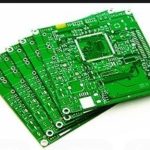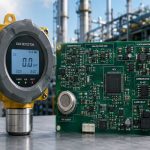
Automotive PCB Manufacturing: Materials, Processes and Quality Control
As automotive intelligence, connectivity, electrification, and advanced driver assistance systems continue to develop, electronic systems have become essential to vehicle performance, safety, and user experience. As the core platform for signal transmission and power distribution, the quality of an Automotive PCB directly affects the stability and reliability of vehicle electronic systems.
Compared with conventional electronic products, automotive applications operate under demanding conditions, including temperature fluctuations, continuous vibration, humidity, electrical noise, and long service cycles. Therefore, professional Automotive PCB Manufacturing requires strict quality control, advanced fabrication technologies, reliable materials, and consistent production processes.
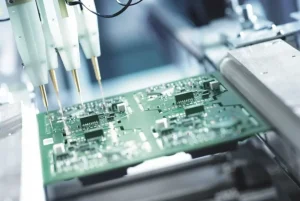
For applications requiring complex multilayer structures, high-density routing, controlled impedance, or high-current power distribution, manufacturers must evaluate electrical, mechanical, thermal, and manufacturing requirements throughout the entire PCB production process.
Automotive electronics require PCBs that can maintain stable performance throughout long operating cycles and under demanding environmental conditions. The manufacturing process must therefore address several critical requirements.
Automotive PCBs may be exposed to high and low temperatures, thermal cycling, vibration, mechanical shock, humidity, and other environmental stresses. Any manufacturing defect can potentially lead to electrical failure or reduced service life.
For this reason, material selection, lamination quality, copper adhesion, solder mask performance, hole reliability, and overall board structure must be carefully controlled. A High-Reliability PCB should be designed and manufactured according to the actual operating environment and expected lifetime of the vehicle system.
Modern vehicles increasingly incorporate radar, ADAS, cameras, vehicle networking, infotainment, high-speed communication, and other electronic systems. These applications place higher demands on PCB signal integrity.
Trace geometry, dielectric thickness, copper thickness, stack-up configuration, and impedance control can all affect high-speed signal transmission. For demanding high-speed applications, PCB stack-up design and manufacturing parameters should be evaluated together rather than treated as independent processes.
GOPCBA provides technical support for stack-up design, impedance calculation, high-speed PCB design, multilayer structures, HDI, and other advanced PCB requirements through its PCB Design & Layout Services.
Electric vehicles, hybrid vehicles, battery management systems, motor control units, and other power electronics require PCBs capable of handling relatively high currents and dissipating heat efficiently.
Heavy copper structures, appropriate copper thickness, thermal vias, optimized layer structures, and suitable materials can help improve current-carrying capability and thermal performance. Manufacturing accuracy is especially important because variations in copper thickness, via quality, or lamination can affect electrical and thermal performance.
For demanding power electronics applications, Automotive Electronics PCB designs should consider current distribution, heat dissipation, dielectric properties, and mechanical reliability from the initial engineering stage.
Quality is one of the most important considerations in Automotive PCB Manufacturing. A reliable manufacturing process should establish quality controls from material procurement through final inspection.
The reliability of an automotive PCB starts with the selection of appropriate raw materials. Depending on the application, manufacturers may use standard FR-4, high-TG laminates, high-frequency materials, heavy-copper structures, or other specialized PCB materials.
Incoming materials should be inspected according to defined specifications. Important parameters may include laminate thickness, copper thickness, dielectric characteristics, material certification, and dimensional consistency.
Selecting stable materials helps reduce potential failures caused by thermal stress, moisture absorption, delamination, or dimensional instability.
Automotive PCB production requires strict control over drilling, imaging, etching, lamination, copper plating, solder mask application, surface finishing, and electrical testing.
Depending on the board structure, inspection methods may include first-article inspection, automated optical inspection, X-ray inspection, dimensional inspection, electrical testing, and final quality inspection.
Traceability is also important for automotive supply chains. Production records, material information, process parameters, inspection results, and batch information should be properly maintained so that potential quality issues can be investigated efficiently.
GOPCBA provides a broad range of PCB Manufacturing Services, including multilayer, HDI, high-frequency, controlled-impedance, heavy-copper, and other advanced PCB technologies.
Automotive electronic systems vary significantly in electrical complexity and mechanical requirements. Therefore, PCB manufacturers need to provide multiple fabrication technologies to accommodate different vehicle subsystems.
Complex automotive electronic systems often require multiple routing, power, and ground layers. A carefully engineered Automotive Multilayer PCB can provide greater routing density while allowing different functional circuits to be separated across the stack-up.
Multilayer structures can be used for vehicle control units, infotainment systems, communication modules, ADAS electronics, power management systems, and other applications.
For demanding designs, GOPCBA supports advanced multilayer PCB fabrication and a broad range of PCB structures through its PCB Capabilities.
As automotive electronic modules become smaller while integrating more functions, conventional through-hole structures may not provide sufficient routing density.
HDI technology uses fine lines, microvias, blind vias, buried vias, and sequential buildup structures to increase interconnection density while reducing PCB size.
These technologies are particularly useful for compact automotive control modules, advanced driver assistance systems, communication modules, and high-density electronic assemblies.
GOPCBA also provides HDI PCB Manufacturing Solutions for high-density automotive and other advanced electronic applications.
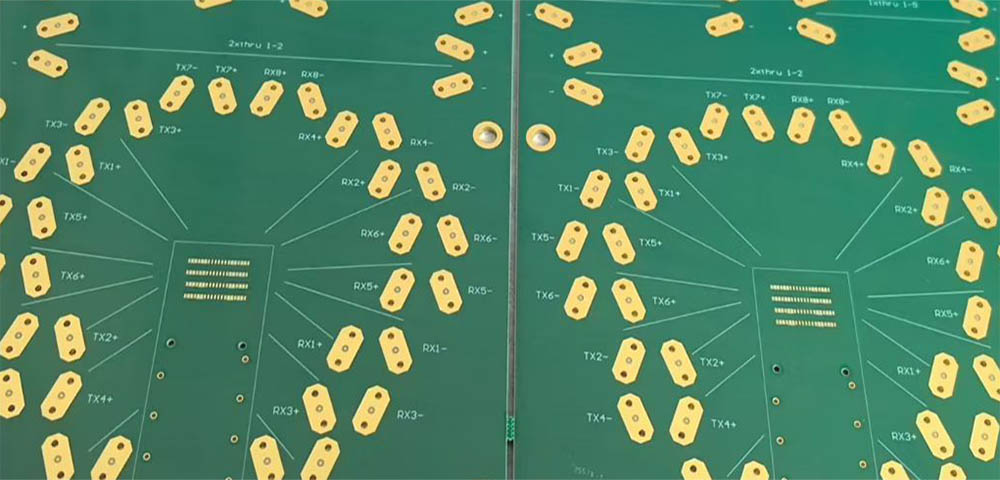
High-speed automotive systems require carefully controlled signal paths. Radar, automotive Ethernet, high-speed cameras, communication modules, and other applications may require controlled-impedance transmission lines and carefully engineered stack-ups.
The PCB design should consider trace width, spacing, dielectric thickness, copper surface characteristics, reference planes, and material properties.
For advanced high-speed applications, PCB stack-up design must also be compatible with the actual manufacturing process. Lamination parameters, layer registration, drilling accuracy, copper plating, and finished dielectric thickness can all influence final electrical performance.
GOPCBA’s High-Speed PCB Stack-Up Design Services support high-speed, high-frequency, multilayer, HDI, and controlled-impedance PCB applications.
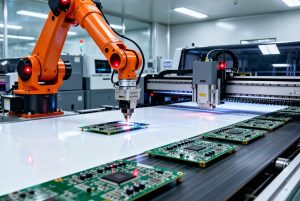
Automotive manufacturers operate under strict development and production schedules. PCB suppliers therefore need to provide not only stable manufacturing quality but also efficient engineering communication, production management, and delivery support.
A professional supplier should be capable of supporting projects from prototype development through volume production while maintaining consistent manufacturing specifications.
Engineering support is particularly important when a new automotive PCB moves from initial design to production. DFM analysis can identify potential manufacturing problems before fabrication, including insufficient spacing, unsuitable via structures, difficult stack-up configurations, copper distribution problems, and other production risks.
An integrated manufacturing workflow can also reduce communication gaps between PCB design, fabrication, component procurement, assembly, testing, and final delivery.
As vehicles become increasingly intelligent, connected, and electrified, the requirements for Automotive PCB Manufacturing continue to increase. Automotive PCBs must provide reliable performance under temperature fluctuations, vibration, humidity, electrical noise, high-speed signaling, and high-current operating conditions.
A successful Automotive PCB manufacturing process therefore requires the coordinated control of material selection, multilayer construction, impedance control, HDI technology, thermal management, copper structures, inspection, and production traceability.
From conventional vehicle control electronics to ADAS, radar, battery management, power electronics, and high-speed communication systems, a reliable High-Reliability PCB provides an essential foundation for stable automotive electronic performance.
By combining appropriate materials, advanced manufacturing technologies, rigorous quality management, and professional engineering support, manufacturers can provide reliable Automotive Electronics PCB and Automotive Multilayer PCB solutions for increasingly sophisticated vehicle electronics.