What PCB Material Is Best for Downhole Detection Equipment?
Downhole detection equipment operates in some of the most demanding environments in the industrial electronics sector. In addition to high humidity and dust, equipment installed or deployed underground may experience mechanical vibration, impact, temperature fluctuations, and exposure to corrosive gases or liquids.
These conditions place much higher demands on PCB materials than those found in conventional consumer electronics. Selecting the appropriate Downhole PCB material requires a comprehensive evaluation of thermal resistance, moisture resistance, mechanical strength, electrical stability, corrosion resistance, and long-term reliability.
The PCB substrate, copper foil, solder mask, and silkscreen all contribute to the reliability of the finished board. Therefore, material selection should be based on the actual operating environment rather than simply choosing a commonly used PCB material.
For demanding industrial applications, GOPCBA provides PCB Manufacturing Services supporting multilayer, high-Tg, high-frequency, controlled-impedance, HDI, and other advanced PCB technologies.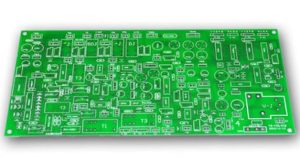
The substrate is the structural foundation of a PCB, and its properties directly affect how well the board can withstand the underground environment.
Downhole equipment may experience significant temperature changes as it moves between different depths or operates in areas with elevated temperatures. At the same time, underground environments can contain high levels of humidity, and groundwater infiltration may expose equipment to prolonged moisture.
For these applications, substrate materials should provide good thermal stability, low moisture absorption, dimensional stability, and sufficient mechanical strength.
Standard FR-4 is widely used for general electronic applications because of its balance between cost, electrical performance, and manufacturability. However, not every FR-4 material has the same thermal and reliability characteristics.
For demanding industrial equipment, engineers may consider modified FR-4 or High-Tg PCB materials. High-Tg materials provide greater thermal stability and can better withstand repeated thermal cycling and elevated operating temperatures.
GOPCBA’s PCB Material Selection Guide explains how Tg, CTE, dielectric properties, thermal conductivity, and moisture sensitivity should be considered when selecting PCB materials.
The glass transition temperature (Tg) is an important parameter when selecting a PCB laminate for demanding environments.
When the operating temperature approaches the material’s Tg, the resin system can lose mechanical rigidity and dimensional stability. This may affect layer registration, via reliability, and overall board durability.
High-Tg FR-4 materials, typically with Tg values around 170°C or higher, provide improved thermal stability compared with standard FR-4 grades. They can be particularly useful for industrial equipment exposed to elevated temperatures or repeated thermal cycling.
However, Tg should not be considered in isolation. Engineers should also evaluate decomposition temperature (Td), coefficient of thermal expansion (CTE), moisture absorption, dielectric characteristics, copper adhesion, and the expected service temperature.
GOPCBA’s High-Tg FR-4 PCB Material Guide provides additional information about High-Tg FR-4 materials and their application in high-reliability PCB designs.
Downhole detection equipment can be subjected to mechanical shocks during transportation, installation, deployment, and operation.
Vibration generated by drilling equipment, geological movement, mechanical systems, or other underground machinery can place repeated stress on the PCB.
The selected substrate therefore needs sufficient mechanical strength and dimensional stability to reduce the risk of cracking, delamination, or component connection failure.
Board thickness, glass-fiber structure, resin system, copper distribution, and overall PCB construction should be considered together. For multilayer boards, good interlayer bonding is especially important because repeated mechanical stress can affect the integrity of the laminated structure.
Copper foil provides the primary conductive paths for current and electrical signals. In underground environments, however, moisture and potentially corrosive gases can accelerate copper oxidation and corrosion.
Certain mining and geological environments may contain sulfur-containing gases or other corrosive substances. If exposed copper surfaces are inadequately protected, corrosion can gradually increase resistance, reduce conductor reliability, and eventually cause circuit failure.
For a high-reliability Industrial PCB, copper selection and surface protection should therefore be considered according to the actual environmental conditions.
Standard electrolytic copper foil can be suitable for many applications, but demanding environments may require additional surface protection and appropriate PCB surface finishing.
Copper adhesion to the laminate is equally important. Repeated vibration and thermal cycling can place mechanical stress on the copper-to-substrate interface. Poor adhesion may increase the risk of copper lifting or delamination.
Therefore, material selection should be combined with proper lamination and copper-treatment processes to establish a reliable bond between copper foil and dielectric materials.
The solder mask protects exposed copper, provides electrical insulation, and helps prevent accidental short circuits. In downhole applications, it also acts as an additional barrier against moisture, dust, and potentially corrosive substances.
A solder mask system used in a demanding underground environment should provide good chemical resistance, moisture resistance, adhesion, and mechanical durability.
Humidity is particularly important because absorbed moisture can affect insulation performance and contribute to long-term electrical degradation.
A low-moisture-absorption solder mask can help reduce these risks. The solder mask should also maintain strong adhesion to the PCB surface during thermal cycling and mechanical vibration.
For equipment exposed to abrasive dust or repeated mechanical contact, wear resistance is another consideration. Damage to the solder mask can expose copper conductors to environmental contaminants and accelerate corrosion.
Silkscreen ink is used for component references, polarity markings, test points, warning labels, and other identification information on the PCB.
Although silkscreen does not normally determine the electrical performance of the circuit, it plays an important role in maintenance and field servicing.
Downhole equipment may be exposed to dust, moisture, temperature fluctuations, and mechanical friction. Under these conditions, low-quality silkscreen markings may fade, crack, or detach over time.
For this reason, the selected silkscreen system should provide good abrasion resistance, environmental stability, adhesion, and resistance to temperature changes.
Clear and durable markings make it easier for technicians to identify components, connectors, test points, and circuit functions during inspection and maintenance.
Material selection for downhole equipment should not focus only on mechanical and environmental durability. Electrical characteristics are equally important.
The dielectric constant (Dk), dissipation factor (Df), moisture absorption, and dimensional stability of the laminate can influence impedance, signal propagation, and overall electrical performance.
If the equipment includes high-speed digital interfaces, RF circuits, sensors, or precision measurement systems, material selection becomes even more important.
For high-frequency or high-speed signal paths, conventional FR-4 may not always provide the required electrical stability. Specialized low-loss materials may be appropriate when signal attenuation or impedance stability becomes a major design consideration.
GOPCBA’s High-Frequency Multilayer PCB guide explains how material properties, multilayer construction, impedance control, and manufacturing tolerances affect high-frequency PCB performance.
For a conventional control circuit, however, a properly selected high-Tg FR-4 may provide a more practical balance of electrical performance, thermal reliability, manufacturability, and cost.
Moisture is one of the most important environmental factors affecting underground electronics.
Water and humidity can penetrate materials, reduce insulation resistance, accelerate corrosion, and contribute to delamination or other reliability problems.
When selecting a PCB material, engineers should therefore consider moisture absorption together with dielectric properties and thermal stability.
The laminate, solder mask, surface finish, and assembly process should all be evaluated as part of the environmental protection strategy.
Proper material storage and handling are also important. Moisture-sensitive materials may require controlled storage conditions before PCB fabrication and assembly.
GOPCBA’s PCB Materials and Specifications Guide provides a broader comparison of PCB material parameters, including Tg, Dk, Df, CTE, thermal conductivity, and moisture absorption.
There is no single PCB material that is ideal for every downhole detection application.
The appropriate construction should be determined by the actual operating conditions, including:
For example, a relatively low-speed sensor board operating at moderate temperatures may use a high-quality FR-4 construction. A high-temperature measurement system may require High-Tg materials, while an RF sensing module may require low-loss high-frequency laminates.
For complex multilayer designs, the material must also be compatible with the intended lamination process. Resin flow, dielectric thickness, CTE, and layer registration should be considered during stack-up development.
Selecting a high-performance laminate alone does not guarantee a reliable PCB.
The final reliability of a High-Reliability PCB depends on the interaction between materials, design, fabrication processes, assembly, and environmental conditions.
Important manufacturing factors include:
For multilayer PCBs, lamination quality is particularly important because internal defects may not be visible during conventional visual inspection.
Voids, delamination, resin separation, or layer misalignment can become serious reliability problems when the board is exposed to thermal cycling and mechanical stress.
Therefore, material selection should always be evaluated together with the manufacturer’s actual process capabilities.
A practical material-selection process for downhole detection equipment can be divided into several stages.
Step 1: Define the environmental conditions.
Determine the maximum and minimum operating temperatures, humidity level, potential water exposure, vibration intensity, shock conditions, and presence of corrosive substances.
Step 2: Define the electrical requirements.
Identify the signal frequency, data rate, impedance requirements, insulation requirements, current levels, and thermal load.
Step 3: Select the substrate.
Choose between standard FR-4, High-Tg FR-4, low-loss high-frequency materials, or other specialized materials according to the application requirements.
Step 4: Evaluate mechanical reliability.
Consider board thickness, layer count, glass-fiber structure, CTE, copper adhesion, and via reliability.
Step 5: Select protection systems.
Evaluate solder mask, surface finish, conformal coating, enclosure protection, and other environmental protection measures when necessary.
Step 6: Validate the complete PCB.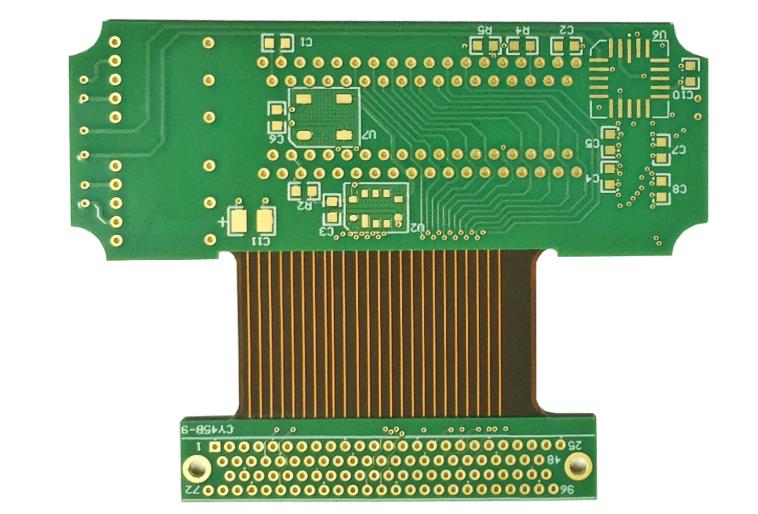
Prototype testing should verify thermal performance, electrical insulation, mechanical durability, dimensional stability, and other application-specific reliability requirements.
Selecting the right material for a Downhole PCB requires more than simply choosing a standard FR-4 laminate. The PCB must withstand the combination of temperature variation, humidity, vibration, impact, dust, and potentially corrosive substances encountered in underground environments.
The substrate should provide appropriate thermal and mechanical stability. Copper structures should maintain reliable conductivity and adhesion. The solder mask should provide durable insulation and environmental protection, while silkscreen materials should maintain clear identification throughout the equipment’s service life.
For temperature-intensive applications, High-Tg PCB materials can provide improved thermal stability. For demanding industrial systems, a properly engineered High-Reliability PCB construction should combine suitable materials with controlled manufacturing processes.
Ultimately, effective PCB Material Selection should be based on the complete operating environment, electrical requirements, mechanical conditions, and expected service life. With the right combination of materials, PCB structure, manufacturing processes, and reliability validation, an Industrial PCB can provide the stable long-term performance required by downhole detection equipment.