Imagine discovering a defective electronic component after shipment but being unable to determine which supplier provided it, which production batch used it, or which products may contain the same component. Or imagine finding a PCB assembly failure without knowing which manufacturing process, machine, material lot, or production shift may have caused it.
These situations can result from incomplete manufacturing traceability.
In modern electronics manufacturing, traceability in electronics manufacturing provides a structured way to connect materials, components, production processes, inspection results, testing records, and finished products. It helps manufacturers control quality, investigate defects, reduce production risks, meet applicable requirements, and provide better after-sales support.
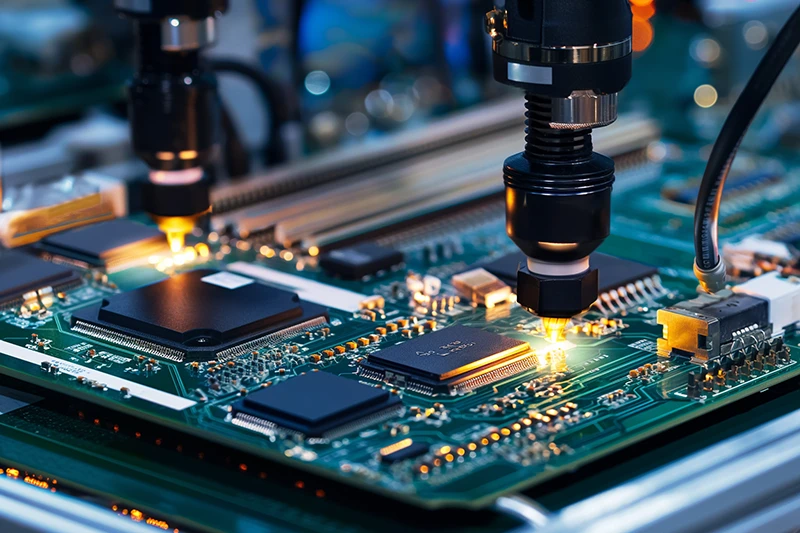
This is particularly important for PCB Assembly (PCBA) because a single PCBA can contain hundreds or thousands of components and pass through numerous manufacturing processes.
For companies developing complex electronics, working with a PCB Assembly Manufacturer with full product traceability can provide greater visibility from component sourcing to final shipment.
What Is Traceability in Manufacturing?
Manufacturing Traceability is the ability to identify and track materials, components, processes, products, and relevant production information throughout the manufacturing lifecycle.
A complete traceability system connects the product’s history from:
Supplier → Raw Materials → Inventory → Production → Inspection → Testing → Final Product → Shipment
Traceability generally includes three directions.
Upstream Traceability
Upstream Traceability identifies where materials and components came from.
Records may include:
- Supplier
- Manufacturer
- Part number
- Lot number
- Date received
- Certificate information
- Incoming inspection results
This helps manufacturers identify the source of materials and components used in a product.
Internal Traceability
Internal Traceability follows what happens inside the factory.
It can include:
- Material storage
- Production orders
- Assembly lines
- Machines
- Operators
- Process parameters
- Inspection
- Testing
- Rework
Downstream Traceability
Downstream Traceability follows finished products through:
- Final inspection
- Packaging
- Warehousing
- Shipment
- Customer delivery
Together, these three levels provide a complete picture of the manufacturing lifecycle.
What Is Traceability in Electronics Manufacturing?
Traceability in Electronics Manufacturing applies these principles specifically to electronic products, including PCB assemblies, electronic modules, and complete systems.
A typical electronics traceability system may connect:
Component Lot → PCB Assembly → Testing → Box Build → Finished Product → Shipment
The purpose is not merely to collect large amounts of data. The goal is to make manufacturing information usable for:
- Quality control
- Root-cause analysis
- Supplier management
- Production optimization
- Regulatory compliance
- Warranty support
- Recall management
- Continuous improvement
For complex products, this visibility can significantly reduce the time required to investigate manufacturing problems.
Why Traceability Is Important
As electronic products become more complex and supply chains become more global, electronics manufacturing traceability has become an important production-control tool.
1. Improved Quality Monitoring
Traceability allows quality teams to connect defects with:
- Components
- Material batches
- Suppliers
- Machines
- Production lines
- Operators
- Process parameters
- Test equipment
For example, if multiple PCBAs fail during functional testing, engineers can determine whether the affected boards share the same component lot or production process.
This turns quality investigation into a data-driven process rather than relying on assumptions.
2. Faster Root-Cause Analysis
When a problem appears, every minute spent searching for records can increase production losses.
With PCBA traceability, teams can quickly review the manufacturing history of an affected unit and investigate:
What was used? → Where was it assembled? → Which process was applied? → Which tests were performed?
This can accelerate corrective action and reduce unnecessary production holds.
3. Counterfeit Component Risk Reduction
Component traceability can help manufacturers identify the source and history of purchased parts.
By maintaining records of:
- Supplier
- Manufacturer
- Part number
- Lot number
- Purchase order
- Receiving inspection
manufacturers can strengthen supplier accountability and reduce risks associated with unauthorized or questionable components.
IPC-1782B includes guidance for traceability and explicitly addresses anticounterfeit use within electronics manufacturing and supply chains. (electronics.org)
4. Regulatory and Customer Requirements
Traceability can support quality-management and customer-specific requirements in industries such as:
- Automotive
- Medical
- Aerospace
- Telecommunications
- Industrial electronics
IPC-1782B establishes traceability requirements based on risk and includes traceability data for materials, processes, inspection, testing, rework, and shipping. (electronics.org)
5. Faster Post-Market Resolution
If a field issue occurs, a traceable manufacturer can determine which products were affected.
Instead of inspecting an entire production history, teams can identify:
Affected Material Lot → Affected Production Batch → Affected Serial Numbers → Affected Shipments
This can make containment and corrective action more targeted.
6. Enhanced Customer Confidence
A comprehensive traceability system demonstrates that manufacturing is controlled throughout the product lifecycle.
Customers can have greater confidence that:
- Approved components were used
- Production processes were controlled
- Required inspections were completed
- Testing was performed
- Nonconformities were recorded
- Finished products were properly released
How Does Traceability Work in Electronics Manufacturing?
A modern traceability system generally involves four major stages:
Identification → Verification → Data Capture → Data Management and Analysis
Step 1: Assigning Product and Material Identity
Materials, components, PCBs, assemblies, and finished products are assigned identification codes.
Common identification methods include:
- Barcodes
- QR codes
- Serial numbers
- RFID
- Laser marking
- Direct part marking
- Human-readable labels
The identification method depends on the product, manufacturing environment, and required traceability level.
Step 2: Verifying Identity
The identification code must be read and verified at appropriate production points.
Modern equipment can use:
- Industrial cameras
- Barcode scanners
- Vision systems
- RFID readers
Verification helps prevent:
- Wrong material
- Wrong component
- Incorrect PCB revision
- Incorrect product routing
Step 3: Capturing Manufacturing Data
Once the product or material is identified, relevant manufacturing information can be associated with that ID.
This may include:
- Process parameters
- Machine ID
- Operator
- Production time
- Inspection results
- Test values
- Rework information
Step 4: Centralized Data Management
The collected information can then be stored within manufacturing software.
Common systems include:
- MES (Manufacturing Execution System)
- ERP (Enterprise Resource Planning)
- Quality-management systems
- Warehouse-management systems
- Manufacturing databases
The value comes from connecting the data rather than storing isolated records.
Traceability Technologies in Electronics Manufacturing
Barcodes and QR Codes
Barcodes and QR codes are among the most common traceability technologies.
They can be used to identify:
- Components
- Material lots
- PCBs
- PCBAs
- Finished products
- Packaging
They are inexpensive and easy to integrate into production systems.
Direct Part Marking
Direct Part Marking (DPM) applies an identifier directly to a component, PCB, or mechanical part.
Methods may include:
- Laser marking
- Engraving
- Specialized printing
DPM can be useful when removable labels are not practical.
RFID
RFID (Radio Frequency Identification) can identify items without requiring direct line-of-sight scanning.
RFID is useful for certain inventory and logistics applications where automatic identification is beneficial.
Industrial Vision Systems
Vision systems can automatically read and verify codes during production.
They can also inspect:
- Component orientation
- PCB markings
- Labels
- Product appearance
MES and ERP Systems
Software is the backbone of an effective electronics manufacturing traceability system.
MES can focus on real-time production execution, while ERP commonly connects:
- Orders
- Purchasing
- Inventory
- Production
- Quality
- Logistics
Integrating these systems creates a broader view of the product lifecycle.
What Data Should Be Captured?
A comprehensive traceability system may capture information across five major categories.
| Traceability Area | Typical Data |
|---|---|
| Sourcing | Supplier, manufacturer, part number, lot number |
| Inventory | Batch, storage location, quantity, date |
| Production | Machine, operator, process, time, materials |
| Quality | Inspection, test results, failures, rework |
| Distribution | Serial number, packaging, shipment, destination |
The exact depth of traceability should be based on the product’s risk, customer requirements, and applicable standards.
IPC-1782B defines multiple traceability levels and provides specific data structures for processes such as stencil printing, automated paste inspection, SMT placement, reflow, AOI, X-ray, ICT, functional testing, rework, packaging, and shipping. (electronics.org)
Traceability in PCB Assembly
PCB Assembly Traceability is particularly important because PCBA production contains many connected manufacturing steps.
A typical PCB assembly traceability flow can be:
Component Procurement → IQC → Solder Paste → SMT Placement → Reflow → AOI → X-Ray → ICT → FCT → Final Inspection → Shipment
Component Traceability
The manufacturer records:
- Component manufacturer
- Part number
- Supplier
- Lot number
- Purchase information
PCB Traceability
PCB information may include:
- PCB manufacturer
- PCB part number
- Revision
- Lot number
- Fabrication date
SMT Traceability
Production records may identify:
- SMT line
- Placement equipment
- Program revision
- Production time
- Material lots
Reflow Traceability
Reflow records may include:
- Oven
- Thermal profile
- Production batch
- Process time
AOI and X-Ray Traceability
Inspection records can be associated with the PCB or product serial number.
This creates a connection between:
Product → Assembly Process → Inspection Result
ICT and Functional Test Traceability
Test records may include:
- Test equipment
- Test program
- Software revision
- Test values
- Pass/fail result
- Failure code
- Retest history
Traceability in Box Build Assembly
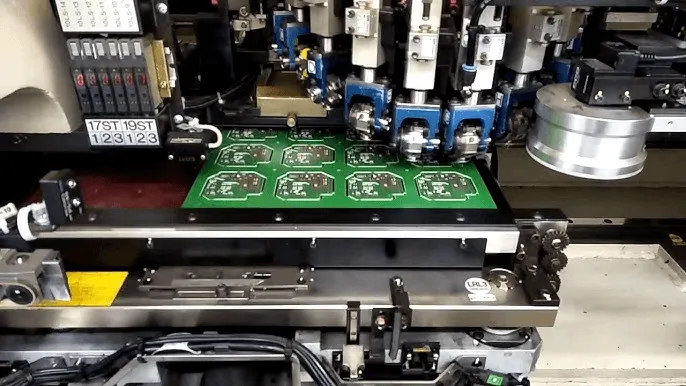
Traceability becomes even more important when PCBAs are integrated into complete systems.
A Box Build Assembly may contain:
- Multiple PCBAs
- Cable assemblies
- Wire harnesses
- Power supplies
- Sensors
- Displays
- Mechanical parts
- Firmware
A complete traceability chain can therefore look like:
Component Lot → PCBA Serial Number → Cable Assembly → Box Build Serial Number → Firmware → Functional Test → Shipment
This allows manufacturers to determine not only which component was used, but also which final systems contain that component.
How Traceability Helps with Quality Problems
Consider a situation where 50 finished products fail during testing.
Without traceability, engineers may need to examine the entire production process.
With traceability, they can compare the affected products and search for common factors.
For example:
| Parameter | Affected Units |
|---|---|
| Component lot | Same |
| PCB lot | Same |
| SMT line | Same |
| Production date | Same |
| Firmware | Same |
| Test fixture | Same |
A common factor may reveal the likely source of the problem much faster.
This is one of the main reasons PCBA manufacturing traceability is valuable: it converts production history into actionable engineering information.
Traceability and Corrective Action
Traceability does not end when a defect is discovered.
A strong system supports:
Detection → Containment → Root-Cause Analysis → Corrective Action → Verification → Prevention
For example, if a component lot is found to be defective, the manufacturer can identify all affected production batches and finished products.
This can reduce unnecessary quarantine and allow the manufacturer to focus resources on the affected population.
Traceability and Continuous Improvement
Historical manufacturing data can also support long-term improvement.
By analyzing traceability information, manufacturers can identify recurring patterns such as:
- Repeated solder defects
- Higher failure rates from specific component suppliers
- Production variation between lines
- Test failures associated with specific process conditions
- Recurring rework operations
This information can support:
- Process optimization
- Supplier improvement
- Equipment maintenance
- Operator training
- Design improvement
- Preventive action
Traceability therefore has value beyond quality inspection; it can support continuous improvement in electronics manufacturing.
Standards Related to Electronics Manufacturing Traceability
IPC-1782B
IPC-1782B is an important standard for manufacturing and supply-chain traceability of electronic products.
The 2023 revision establishes different traceability levels and provides specific traceability structures covering materials and processes across printed-board manufacturing and assembly. Its listed process areas include stencil printing, solder-paste inspection, SMT placement, reflow, AOI, X-ray, ICT, functional testing, rework, labeling, packaging, and shipping. (electronics.org)
ISO 9001
ISO 9001 provides a quality-management framework that supports controlled processes, documentation, and continual improvement.
IATF 16949
For automotive electronics, IATF 16949 provides an automotive quality-management framework. The IATF continues to maintain and update interpretations and customer-specific requirements around the standard. (国际汽车工作组)
ISO 13485
For medical-device manufacturing, ISO 13485 establishes quality-management requirements specific to medical devices.
The exact traceability requirements should always be determined based on the applicable product, customer, and regulatory environment.
What Should Companies Look for in a Traceable PCB Manufacturer?
When evaluating a PCB Assembly Manufacturer, asking whether it “has traceability” is not enough.
Companies should evaluate the depth and usability of the traceability system.
Material Traceability
Can the manufacturer trace components from supplier lot to finished product?
Production Traceability
Can it identify the production line, equipment, and process history associated with a PCBA?
Test Traceability
Can testing records be connected to individual boards or finished products?
Revision Control
Can the manufacturer determine which:
- BOM
- PCB revision
- Assembly program
- Firmware
- Work instruction
was used?
Rework Traceability
Can the system record what was repaired, when it was repaired, and who performed the rework?
Multi-Product Traceability
Can the manufacturer support multiple PCB models and production batches without mixing production records?
Kingda Electronics Manufacturing Traceability
Kingda provides a one-stop electronics manufacturing model integrating PCB fabrication, component sourcing, SMT, DIP/THT, finished-product assembly, testing, and related manufacturing services. Kingda’s official website states that its customized ERP system can realize traceability across the entire product process. (Kingda)
This capability is particularly relevant for customers requiring structured visibility from material procurement through PCBA and final product delivery.
ERP-Based Whole-Process Traceability
Kingda states that its tailored ERP system supports whole-product-process traceability.
Its broader manufacturing workflow covers:
Component Sourcing → PCB Manufacturing → SMT/DIP → Inspection → Testing → Finished-Product Assembly → Delivery
This creates a connected manufacturing record rather than relying only on individual paper or spreadsheet records. (Kingda)
Component Procurement and Traceability
Kingda provides component sourcing services with supplier management and inventory support.
Its published services emphasize stable component suppliers, procurement management, and inventory visibility. (Kingda)
This creates the foundation for component-level traceability.
PCB Assembly Traceability
Kingda’s PCB assembly quality process includes:
IQC → SPI → SMT/THT → AOI → X-Ray → ICT/FCT → OQC
These inspection and testing stages generate production-quality information that can form part of the product history. (Kingda)
Advanced Inspection
Kingda provides multiple inspection technologies, including:
- SPI
- AOI
- X-Ray
- First Article Inspection
- ICT
- FCT
These inspection points help identify defects throughout production rather than relying exclusively on final inspection. (Kingda)
Box Build and Finished Product Traceability
Kingda integrates PCB assembly, finished-product assembly, and testing, allowing traceability to extend beyond the PCBA level and into completed electronic systems. (Kingda)
For products containing PCBAs, cables, mechanical parts, and other subassemblies, this broader traceability can make root-cause analysis and after-sales support more efficient.
Quality Certifications
Kingda reports certifications including:
- IATF 16949:2016
- ISO 13485:2016
- ISO 9001:2015
- ISO 14001:2015
- UL
Kingda also states that it is an IPC member. (Kingda)
These management systems provide an important foundation for controlled and traceable manufacturing.
Applications of Traceable Electronics Manufacturing
Automotive Electronics
Traceability is valuable for automotive applications where components, PCBAs, and production processes may need detailed records.
Kingda reports IATF 16949:2016 certification and serves automotive customers. (Kingda)
Medical Electronics
Medical electronics may require extensive documentation, process control, and product history.
Kingda reports ISO 13485:2016 certification and serves medical customers. (Kingda)
Industrial Automation
Traceability helps industrial-electronics manufacturers investigate field failures and support long product lifecycles.
AI and Communication Equipment
Complex AI, networking, and communications equipment may contain high-density PCBAs and multiple system-level components, making integrated traceability particularly valuable.
Benefits of Working with a Traceable Manufacturing Partner
Better quality control
Production data can be connected across materials, processes, inspections, and testing.
Faster root-cause analysis
Engineers can identify common factors among failed products more efficiently.
Better supplier management
Component quality issues can be linked to supplier and lot information.
More precise containment
Affected products can be isolated using actual production records.
Improved customer support
Product history can support warranty and field-service activities.
Better production scalability
Structured traceability becomes increasingly valuable as production volume increases.
Conclusion
Traceability in Electronics Manufacturing is more than simply recording a serial number or labeling a finished product. A mature traceability system creates an unbroken connection between materials, components, production processes, inspections, testing, final products, and shipment information.
For PCB and PCBA manufacturing, traceability can cover:
The benefits include faster root-cause analysis, improved quality control, better counterfeit-risk management, stronger supplier accountability, more precise containment, and improved customer confidence.
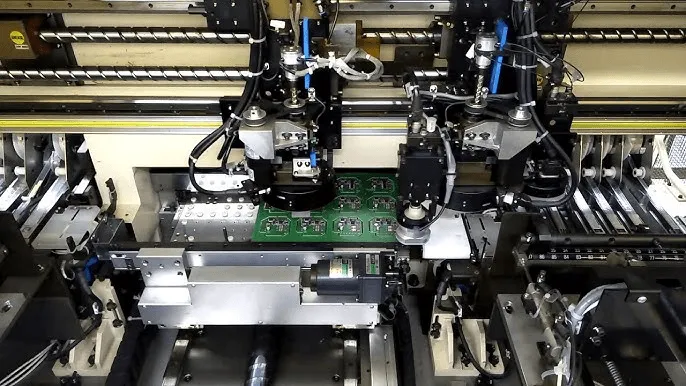
IPC-1782B provides a risk-based framework for traceability in electronics manufacturing and specifically addresses manufacturing processes ranging from SMT placement and reflow to AOI, X-ray, ICT, functional testing, rework, packaging, and shipping. (electronics.org)
Kingda provides an integrated manufacturing model covering PCB fabrication, component procurement, SMT/THT assembly, inspection, testing, finished-product assembly, and an ERP system designed to support whole-product-process traceability. (Kingda)
With IATF 16949, ISO 13485, ISO 9001, ISO 14001, and UL qualifications, Kingda provides traceability and quality-management capabilities for demanding automotive, medical, industrial, AI, communication, and other electronics applications. (Kingda)