Through-Hole PCB Assembly
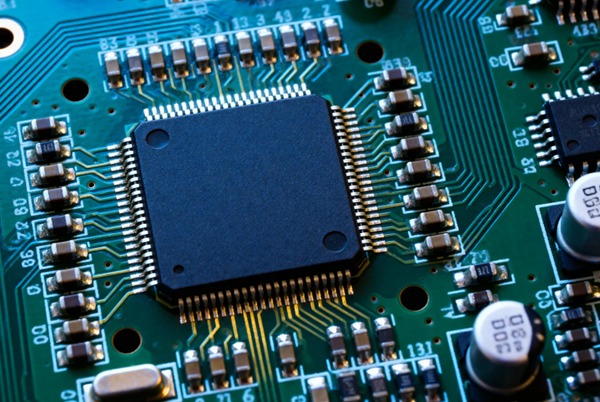
GOPCBA provides reliable Through-Hole PCB Assembly services for electronic products that require strong mechanical connections, high-current capability, long-term durability, and stable electrical performance. Our THT assembly solutions support prototypes, small-batch production, and volume manufacturing, with manual and automated component insertion, wave soldering, selective soldering, inspection, and testing.
As a one-stop electronics manufacturing partner, GOPCBA can integrate PCB fabrication, component sourcing, assembly, testing, and related manufacturing services into one streamlined process. Our capabilities cover both traditional through-hole assembly and modern mixed-technology production, allowing customers to select the most appropriate assembly method for their product requirements.
For customers requiring a complete manufacturing solution, our PCB Assembly service can combine engineering review, SMT, THT, inspection, testing, and final production into one coordinated workflow.
What Is Through-Hole PCB Assembly?
Through-hole PCB assembly, also known as Through-Hole Technology (THT) assembly or PTH assembly, is a method of mounting electronic components by inserting their leads through holes in a printed circuit board. The component leads extend through the PCB and are soldered to conductive pads on the opposite side.
Compared with surface-mount technology, through-hole assembly creates a strong mechanical connection between the component and PCB. This makes the technology particularly suitable for components that experience mechanical stress, high current, high voltage, thermal cycling, vibration, or demanding operating conditions.
Through-hole components remain widely used for connectors, transformers, inductors, large capacitors, power components, relays, switches, and other components where mechanical strength and durability are important.
Common Through-Hole Component Lead Formats
Two common lead configurations are used in THT components:
- Axial leads: The leads extend from opposite ends of the component body. Diodes and certain resistors are typical examples.
- Radial leads: The leads extend from the same side of the component body. Capacitors, LEDs, and many transistor packages commonly use radial configurations.
Dual in-line packages (DIP) are another familiar through-hole package type. DIP components contain multiple leads arranged in parallel rows, allowing them to be inserted directly into corresponding PCB holes.
Through-Hole PCB Assembly Process
A reliable THT PCB Assembly process requires careful control from component insertion through soldering, cleaning, inspection, and final testing. The exact process depends on PCB design, component type, production volume, soldering requirements, and whether the board also contains SMT components.
Step 1: Component Insertion
The first step is to insert through-hole components into the designated PCB holes. Depending on the component type, production volume, and product complexity, insertion may be performed manually or with automated insertion equipment.
Before insertion, production engineers verify component specifications, polarity, orientation, reference designators, and placement requirements. Correct component preparation and insertion are essential because incorrect orientation or placement can cause electrical and functional failures later in the manufacturing process.
Manual insertion is particularly useful for prototypes, complex assemblies, large components, and low-volume production. Automated insertion can improve efficiency and consistency for suitable components and higher production volumes.
Step 2: Wave Soldering
Wave soldering is one of the most widely used soldering methods for through-hole assemblies. During this process, the assembled PCB passes over a controlled wave of molten solder. The exposed component leads contact the solder wave, creating solder joints between the component leads and PCB pads.
The typical wave soldering process includes several stages:
- Flux application: Flux is applied to remove oxides and improve solder wetting.
- Preheating: The PCB is gradually heated to activate the flux and reduce thermal shock.
- Soldering: The PCB passes over molten solder to form reliable solder joints.
- Cooling: The board is cooled under controlled conditions to stabilize the solder joints.
For boards containing both SMT and THT components, selective soldering can be used to solder through-hole components while minimizing thermal exposure to nearby SMT components. GOPCBA supports both through-hole and mixed-technology assembly processes.
Step 3: Cleaning
After soldering, flux residues may remain on the PCB surface. Depending on the soldering process and flux type, cleaning may be required to remove residues that could affect appearance, reliability, insulation resistance, or long-term product performance.
Cleaning requirements are determined according to the PCB design, materials, flux chemistry, product application, and customer specifications.
Step 4: Inspection and Testing
Inspection is an essential part of through-hole assembly. Production teams check component presence, orientation, solder joints, lead formation, solder coverage, and other potential defects.
Depending on project requirements, inspection and testing can include visual inspection, automated optical inspection, electrical testing, X-ray inspection, in-circuit testing, functional testing, and first article inspection. GOPCBA’s manufacturing workflow incorporates inspection and testing throughout production to help identify defects before shipment.
Advantages of Through-Hole PCB Assembly
Although SMT has become the dominant technology for highly miniaturized electronics, through-hole assembly remains an important manufacturing solution for applications requiring strong mechanical and electrical connections.
High Mechanical Strength
Through-hole components are mechanically anchored to the PCB because their leads pass through the board before being soldered. This provides greater resistance to vibration, shock, mechanical stress, and repeated insertion or removal.
This characteristic makes THT particularly useful for connectors, switches, transformers, large capacitors, and other components that experience significant mechanical loads.
Suitable for High-Power Applications
Many large power components are available in through-hole packages. Their larger leads and stronger solder connections can support applications involving relatively high current and power requirements.
For this reason, through-hole technology continues to be used in power electronics, industrial equipment, automotive electronics, aerospace systems, and other demanding applications.
Easy Prototyping and Rework
Through-hole components can be relatively easy to install, remove, replace, and inspect during prototype development. This can simplify engineering validation and troubleshooting, especially for larger components and low-volume products.
For rapid development, GOPCBA also provides Prototype PCB Assembly services supporting both SMT and through-hole assembly.
Reliable Long-Term Performance
A properly designed and manufactured THT assembly can provide strong component retention and reliable solder connections. This is particularly valuable for products exposed to vibration, thermal cycling, mechanical stress, and demanding operating environments.
Challenges of Through-Hole Assembly
Despite its advantages, THT assembly also presents several manufacturing challenges that should be considered during PCB design and production planning.
Component Size and Board Space
Through-hole components generally require larger PCB footprints and drilled holes than surface-mount components. This can increase board size and reduce routing flexibility.
Manual Labor Requirements
Some complex THT assemblies require manual component insertion, soldering, inspection, or rework. This can increase production time and labor requirements compared with highly automated SMT manufacturing.
Component Lead Deformation
Component leads may become bent or deformed during transportation, insertion, handling, or forming. Incorrect lead length or angle can affect component positioning and solder joint quality.
Soldering Defects
Potential THT soldering defects include insufficient solder, excessive solder, solder bridging, incomplete wetting, voids, lifted components, and other solder joint irregularities.
Effective process control, appropriate soldering parameters, operator training, and systematic inspection are therefore important for maintaining consistent assembly quality.
Through-Hole vs. SMT PCB Assembly
THT and SMT are not necessarily competing technologies. The appropriate solution depends on the product design and component requirements.
Through-hole assembly is generally preferred when mechanical strength, high-current capability, component durability, or large components are important.
SMT assembly is generally preferred when miniaturization, high component density, automated production, and compact PCB design are primary requirements.
Many modern electronic products use both technologies. SMT components can be installed on the PCB surface while selected connectors, power components, transformers, or mechanically stressed components are assembled using THT.
For products requiring both technologies, GOPCBA provides SMT PCB Assembly and through-hole manufacturing within an integrated production workflow. This allows engineers to select the most appropriate technology for each component rather than relying on a single assembly method.
Mixed SMT and Through-Hole PCB Assembly
Mixed-technology assembly combines surface-mount and through-hole components on the same PCB. This approach is widely used when a product requires compact SMT components together with mechanically robust THT components.
A typical mixed assembly process may include SMT solder paste printing, component placement, reflow soldering, THT component insertion, wave or selective soldering, inspection, and functional testing.
The advantage of mixed assembly is flexibility. Designers can use small SMT packages for high-density circuits while retaining through-hole components where stronger mechanical or electrical connections are required.
GOPCBA provides Mixed Technology PCB Assembly for products combining SMT and THT technologies.
Applications of Through-Hole PCB Assembly
Through-hole technology continues to serve a broad range of industries where durability, reliability, and robust component connections are important.
Industrial Electronics
Industrial control systems, automation equipment, robotics, power supplies, sensors, controllers, and instrumentation may use through-hole components because of their mechanical robustness and long-term reliability.
Aerospace and Defense Electronics
Aerospace and defense equipment can require PCB assemblies capable of operating under vibration, thermal cycling, and demanding environmental conditions. Through-hole components can provide strong mechanical connections for selected applications.
Automotive Electronics
Automotive control systems, power electronics, sensors, relays, connectors, and other vehicle electronics can use THT components where mechanical strength and reliable connections are required.
Power Electronics
Power supplies, converters, motor controllers, battery systems, energy management equipment, and other power electronics can benefit from larger through-hole components designed for higher current and power levels.
Consumer and Commercial Electronics
Although compact consumer electronics are heavily dominated by SMT, through-hole components remain useful for connectors, switches, transformers, audio equipment, power supplies, and other applications where component size is less critical than mechanical durability.
Common Through-Hole PCB Assembly Defects
Quality control is essential because THT assemblies can experience different types of manufacturing defects depending on component design, soldering conditions, PCB layout, and process parameters.
Lifted or Displaced Components
Components may move during soldering if they are not properly secured or if lead lengths and component geometry are not adequately controlled.
Missing Components
A missing component occurs when a required component is not installed in its designated position. This can result from incorrect component preparation, insertion errors, or production setup problems.
Incorrect Component Orientation
Polarity-sensitive components such as diodes, electrolytic capacitors, LEDs, and certain ICs must be installed in the correct orientation. Incorrect placement can result in immediate functional failure.
Solder Bridging
Excessive solder or unsuitable soldering parameters can create unintended connections between adjacent pads or leads. Process optimization and inspection help reduce this risk.
Insufficient Solder or Poor Wetting
Insufficient solder volume or poor wetting can weaken the electrical and mechanical connection. Flux application, preheating, solder temperature, conveyor speed, and PCB surface condition all influence solder quality.
How to Prevent THT Assembly Defects
A reliable PCB Manufacturing and assembly process should incorporate defect prevention rather than relying only on final inspection.
Effective quality control typically includes:
- Engineering review and DFM analysis before production
- Correct component identification and material verification
- Controlled component insertion
- Appropriate soldering parameters
- Operator training and standardized work instructions
- Visual and automated inspection
- Electrical and functional testing
- Process monitoring and defect analysis
- Root-cause analysis and continuous improvement
- Production traceability and documentation
GOPCBA integrates engineering review, manufacturing, assembly, inspection, and testing into its one-stop production model. Its capabilities include PCB fabrication, component procurement, SMT/THT assembly, testing, and final product integration.
Why Choose GOPCBA for Through-Hole PCB Assembly?
Choosing a THT assembly partner requires more than comparing assembly prices. Manufacturing experience, engineering support, process control, component sourcing, inspection capabilities, and delivery performance all affect the final result.
GOPCBA provides a one-stop manufacturing solution covering PCB design and fabrication, component procurement, SMT and THT assembly, inspection, testing, and related electronics manufacturing services. The company supports prototype, low-volume, and higher-volume production requirements.
Integrated Manufacturing Capabilities
Instead of coordinating multiple suppliers for PCB fabrication, component sourcing, and assembly, customers can consolidate these processes through one manufacturing partner. This can simplify communication, reduce coordination effort, and improve production consistency.
Engineering and Quality Control
Engineering teams review production requirements and manufacturing data before assembly. Quality procedures include process inspection and testing designed to identify problems before finished assemblies are released.
Flexible Production
Different products require different assembly approaches. GOPCBA supports manual and automated through-hole assembly, wave soldering, selective soldering, SMT assembly, and mixed-technology assembly according to project requirements.
Prototype to Production
The same manufacturing partner can support projects from prototype development through low-volume and production manufacturing. This helps reduce the transition risk that can occur when a project is transferred between different suppliers.
Get a Through-Hole PCB Assembly Quote
Whether you need a few prototype boards, a small production run, or a larger manufacturing program, GOPCBA can provide a customized through-hole assembly solution based on your PCB design, BOM, component requirements, production quantity, and testing specifications.
For a faster quotation, prepare your Gerber files, BOM, PCB drawings, assembly drawings, component information, quantity requirements, and testing requirements. Our engineering team can review the project and recommend an appropriate manufacturing process.
Frequently Asked Questions
What is through-hole PCB assembly?
Through-hole PCB assembly is a component mounting process in which component leads are inserted through drilled holes in a PCB and soldered to conductive pads.
What is THT PCB assembly?
THT stands for Through-Hole Technology. THT PCB assembly is another common term for through-hole component assembly.
What are the advantages of through-hole assembly?
The main advantages include strong mechanical connections, good durability, suitability for larger components, and support for applications requiring higher mechanical or electrical performance.
Is through-hole assembly better than SMT?
Neither technology is universally better. SMT is generally more suitable for compact, high-density electronic designs, while THT is advantageous for components requiring strong mechanical connections or higher power capability. Many products use both technologies.
Can SMT and through-hole components be assembled on the same PCB?
Yes. Mixed-technology PCB assembly combines SMT and THT components on the same board and is widely used in modern electronic products.
Does GOPCBA provide both SMT and THT assembly?
Yes. GOPCBA provides SMT, through-hole, and mixed-technology PCB assembly services for prototype, low-volume, and production applications.
Can through-hole PCB assembly include testing?
Yes. Depending on project requirements, testing can include visual inspection, AOI, X-ray inspection, electrical testing, ICT, functional testing, and other customer-specific verification procedures.
What files are needed for a through-hole PCB assembly quotation?
Typical quotation documents include Gerber files, BOM, PCB assembly drawings, component specifications, production quantity, and testing requirements. Additional documentation may be required for specialized products.
Can GOPCBA manufacture the PCB and assemble the components?
Yes. GOPCBA provides integrated PCB fabrication and PCBA manufacturing services, allowing PCB manufacturing, component sourcing, assembly, inspection, and testing to be coordinated through one supplier.
How do I start a through-hole PCB assembly project?
Send your PCB design files, BOM, assembly drawings, required quantity, and technical requirements to GOPCBA. The engineering team can evaluate the project, review manufacturing requirements, and provide a quotation and production recommendation.