SMT PCB Assembly Services
Since 2007, GOPCBA has provided reliable electronic manufacturing solutions for customers worldwide. Our SMT PCB Assembly services support single-sided and double-sided boards, prototype builds, low-volume production, and volume manufacturing.
We offer flexible manufacturing options ranging from customer-supplied components to partial turnkey and complete turnkey production. Our capabilities combine automated SMT equipment, experienced engineers, controlled soldering processes, and comprehensive inspection and testing to deliver consistent assembly quality.
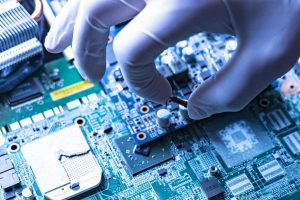
For customers looking for an integrated manufacturing partner, our PCB Assembly Services cover the complete process from component sourcing and assembly to inspection and final delivery.
What Is SMT Assembly?
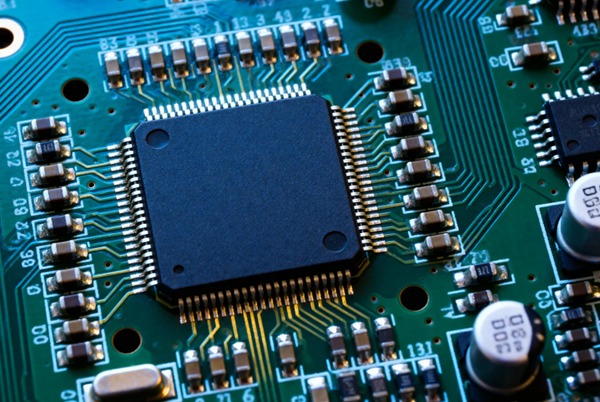
Surface Mount Technology (SMT) assembly is an electronic manufacturing process in which components are mounted directly onto the surface of a printed circuit board rather than inserted through drilled holes.
During SMT Assembly Services, solder paste is deposited onto the PCB pads using a stencil. Automated pick-and-place equipment then positions electronic components accurately onto the solder paste. The populated board subsequently passes through a controlled reflow oven, where the solder paste melts and forms reliable electrical and mechanical connections.
Compared with traditional through-hole technology, SMT PCB Assembly enables smaller component packages, higher component density, reduced board size, and highly automated production. SMT is therefore widely used in consumer electronics, industrial equipment, communications, automotive electronics, medical devices, IoT products, and other advanced electronic systems.
Benefits of SMT PCB Assembly
PCB Miniaturization
One of the major advantages of SMT Manufacturing is its ability to support compact PCB designs. SMT components can be significantly smaller than many traditional through-hole components, allowing engineers to increase circuit density while reducing overall product size and weight.
This is particularly valuable for portable electronics, embedded systems, wearable devices, IoT products, and other applications where space is limited.
Improved Electrical Performance
SMT components generally have shorter electrical paths than comparable through-hole components. Reduced lead length can help minimize parasitic inductance and capacitance, making SMT suitable for high-speed and high-frequency electronic designs.
Proper PCB layout, component selection, soldering control, and manufacturing precision are essential for maintaining signal integrity and reliable electrical performance.
Faster and More Efficient Production
Automated SMT production lines can place large numbers of components at high speed and repeatable accuracy. Because SMT components are mounted directly onto PCB surfaces, the process can also reduce the need for through-hole drilling and manual insertion.
This combination of automation and process control makes SMT PCB Assembly highly suitable for both prototype development and scalable production.
Common SMT Assembly Defects
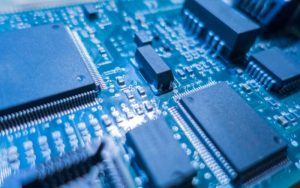
Achieving defect-free production requires close control of solder paste printing, component placement, reflow parameters, inspection, and material handling. As electronic products become smaller and component pitches become finer, manufacturing processes must be carefully optimized.
Insufficient Solder Coverage
Insufficient solder coverage can result in weak or intermittent connections between components and PCB pads. Common causes include inadequate solder paste volume, poor wetting, inappropriate stencil aperture design, printing misalignment, and an unsuitable reflow temperature profile.
Accurate stencil design and controlled solder paste printing are therefore essential for reliable solder joints.
Tombstoning
Tombstoning occurs when one end of a small two-terminal component lifts from the PCB during reflow, leaving the component standing vertically or at an angle.
This defect can be associated with uneven solder paste deposition, differences in pad wetting, thermal imbalance, pad geometry, or an unsuitable reflow profile. Proper PCB land-pattern design and process optimization can significantly reduce the risk.
Solder Bridging
Solder bridging occurs when molten solder unintentionally connects two adjacent conductive pads or component terminals, potentially creating an electrical short circuit.
Excessive solder paste deposition, insufficient spacing, component misalignment, and an inappropriate thermal profile can contribute to bridging. Fine-pitch PCB designs require particularly careful stencil and printing control.
Solder Balls
Solder balls are small, unintended spheres of solder that may become separated from the main solder joint during the SMT process. Because solder is electrically conductive, uncontrolled solder balls can create reliability concerns or potential short circuits.
Possible contributing factors include excessive solder paste, moisture, inadequate flux performance, printing problems, and improper reflow conditions.
Key SMT PCB Assembly Processes
A reliable PCB Assembly process requires each manufacturing stage to be controlled and verified. From solder paste printing through final testing, process parameters should be established according to PCB design, component technology, materials, and production requirements.
Solder Paste Printing
Solder paste printing is the first major SMT production operation. A precision stencil is positioned over the PCB, and a squeegee distributes solder paste across the stencil apertures.
The aperture pattern determines where solder paste is deposited onto the PCB pads. Paste volume, printing pressure, squeegee speed, stencil alignment, and paste condition must be carefully controlled to produce consistent deposits.
For advanced PCB assemblies, solder paste inspection can be used to verify paste volume, area, height, and alignment before components are placed.
Pick-and-Place
Automated pick-and-place machines use feeders, precision positioning systems, nozzles, and vision cameras to place components onto the solder-pasted PCB.
Placement accuracy is especially important for miniature components and fine-pitch packages such as BGA, QFN, CSP, LGA, and other high-density component technologies.
Modern SMT Assembly Services can support very small component packages and complex double-sided PCB designs while maintaining repeatable placement accuracy.
Reflow Soldering
After component placement, the PCB passes through a controlled reflow soldering oven. The thermal profile normally includes preheating, soaking, reflow, and cooling stages.
The objective is to activate the flux, melt the solder alloy, form reliable solder joints, and cool the assembly under controlled conditions. Reflow profiles should be developed according to the solder paste manufacturer’s recommendations, component specifications, PCB characteristics, and assembly requirements.
Nitrogen reflow can also be used where the project requires an inert production environment.
Automated Optical Inspection
Automated Optical Inspection (AOI) uses cameras and image-processing technology to inspect PCB assemblies for manufacturing defects.
AOI can identify issues such as missing components, incorrect component orientation, placement deviations, solder bridging, and other visible assembly defects. Proper programming, calibration, maintenance, and process validation are important for minimizing false calls while maintaining inspection effectiveness.
X-Ray Inspection
X-ray inspection provides a non-destructive method for examining solder joints and structures that cannot be reliably inspected from the PCB surface.
It is particularly useful for BGA, QFN, CSP, and other packages containing hidden solder connections. Depending on the equipment, 2D or 3D X-ray inspection can provide information about solder joint geometry and internal assembly structures.
Electrical Testing
Electrical testing verifies the functional and electrical performance of the completed PCB assembly.
In-Circuit Testing (ICT) uses a fixture and test points to evaluate specific electrical characteristics and is generally suitable for repeat production where dedicated fixtures can be justified.
Flying probe testing uses programmable probes that move across the PCB, making it more flexible for prototypes and lower-volume production. Functional testing can also be performed by operating the assembly under conditions representative of its intended application.
SMT Assembly Capabilities
GOPCBA provides advanced SMT Manufacturing capabilities for a wide range of PCB designs and production requirements.
Typical capabilities include:
- Single-sided and double-sided SMT assembly
- Prototype, low-volume, and high-volume production
- Fine-pitch component assembly
- BGA, QFN, CSP, LGA, and PoP packages
- Miniature components down to 01005
- BGA pitch from approximately 0.35 mm
- Lead-free and RoHS-compliant assembly
- Precision solder paste printing
- High-speed automated component placement
- Reflow soldering
- SPI and AOI inspection
- X-ray inspection
- ICT and functional testing
- Rigid, flexible, rigid-flex, multilayer, HDI, high-TG, high-frequency, and controlled-impedance PCB assembly
For projects requiring both surface-mount and through-hole technologies, Mixed Technology PCB Assembly combines SMT and THT processes within one manufacturing workflow.
Component Procurement for SMT Assembly
Component availability and authenticity are important factors in the success of an SMT project. GOPCBA provides component sourcing and supply-chain support to help customers manage material availability, cost, and production schedules.
Customers can provide a complete BOM, partial component inventory, or procurement requirements. The manufacturing team can then coordinate sourcing and assembly according to the approved specifications.
Our Components Procurement service supports inventory management and component purchasing as part of a broader one-stop PCBA manufacturing solution.
Quality Control and Testing
Quality control should be integrated throughout the SMT production process rather than performed only at the end.
A typical quality workflow can include incoming material inspection, solder paste inspection, SMT assembly, AOI, X-ray inspection, ICT or functional testing, and final quality inspection.
Engineering verification, process monitoring, manufacturing documentation, and production traceability help identify potential problems early and reduce manufacturing variation.
GOPCBA’s manufacturing approach follows structured quality-management procedures and supports inspection technologies including SPI, AOI, X-ray, FAI, ICT, and FCT.
Why Choose GOPCBA for SMT PCB Assembly?
Advanced Manufacturing Capability
GOPCBA combines automated SMT production equipment, engineering support, inspection systems, and controlled manufacturing processes to handle complex PCB assembly requirements.
Our capabilities extend from prototype and low-volume production to larger manufacturing programs, allowing customers to use one manufacturing partner as their products move from development into production.
Engineering Support
Successful SMT production begins before the first PCB enters the assembly line. Engineering review of Gerber files, BOMs, pick-and-place data, component availability, and manufacturability can identify potential production problems before manufacturing begins.
Design for Manufacturing (DFM) and Design for Assembly (DFA) reviews can help improve manufacturability, reduce rework, and control production costs.
Flexible Turnkey Solutions
Customers can choose from customer-supplied materials, partial turnkey manufacturing, or complete turnkey PCB assembly according to their project requirements.
A one-stop manufacturing model can simplify supplier management by integrating PCB fabrication, component sourcing, SMT/THT assembly, testing, and final product integration.
Consistent Quality
Quality control is integrated into every stage of production. Automated inspection and electrical testing provide additional verification of soldering, component placement, electrical performance, and overall assembly quality.
For more information about manufacturing standards, capabilities, certifications, and production advantages, visit Why Choose Us.
From SMT Assembly to Complete PCBA Manufacturing
SMT is only one part of a complete electronics manufacturing process. Depending on the product, customers may also require PCB fabrication, component procurement, through-hole assembly, testing, conformal coating, cable integration, or box-build assembly.
GOPCBA provides integrated manufacturing solutions designed to simplify this workflow and help customers move efficiently from prototype to production.
For projects requiring a complete manufacturing partner, our PCB Assembly Solutions combine assembly, inspection, testing, and manufacturing support under one service structure.
Start Your SMT PCB Assembly Project
Whether you are developing a prototype, launching a new electronic product, or scaling an established design, GOPCBA can provide SMT assembly support tailored to your technical and production requirements.
Prepare your Gerber files, BOM, pick-and-place files, PCB drawings, and other relevant manufacturing documentation for engineering review. Our team can evaluate your requirements, identify production considerations, and provide a customized quotation.
To discuss your project requirements, contact the PCB Assembly Team and submit your PCB or PCBA files for review.
SMT PCB Assembly FAQ
What types of PCB assembly does GOPCBA provide?
GOPCBA provides SMT, THT, mixed-technology, prototype, low-volume, high-volume, turnkey, rigid, flexible, rigid-flex, multilayer, HDI, and other specialized PCB assembly solutions.
Can you assemble prototypes and small production runs?
Yes. SMT assembly can be configured for prototype, low-volume, and larger-scale production requirements, depending on PCB complexity, component availability, and project specifications.
Can you assemble BGA and fine-pitch components?
Yes. Advanced SMT capabilities support BGA, QFN, CSP, LGA, PoP, and other fine-pitch packages. X-ray inspection can be used to evaluate hidden solder joints where required.
What files are needed for an SMT assembly quotation?
A typical quotation package includes Gerber files, BOM, pick-and-place/Centroid data, PCB drawings, assembly drawings, and any special manufacturing or testing requirements.
Do you provide component sourcing?
Yes. Component sourcing can be integrated into the PCB assembly process, including full or partial procurement according to the customer’s BOM and production requirements.
How can I request an SMT PCB assembly quote?
Submit your PCB design files and manufacturing requirements through the Contact Us page. The engineering team can review the project and prepare a quotation based on the PCB design, component requirements, quantity, testing, and other specifications.