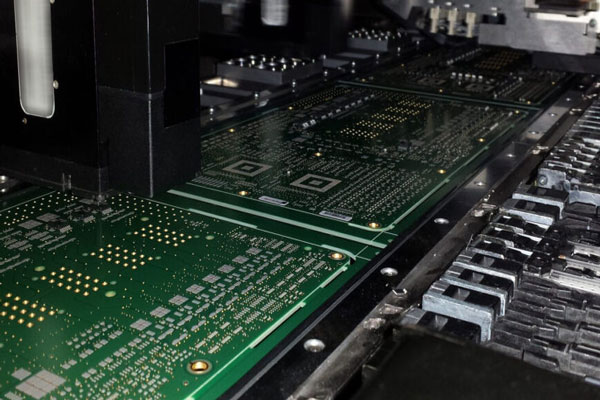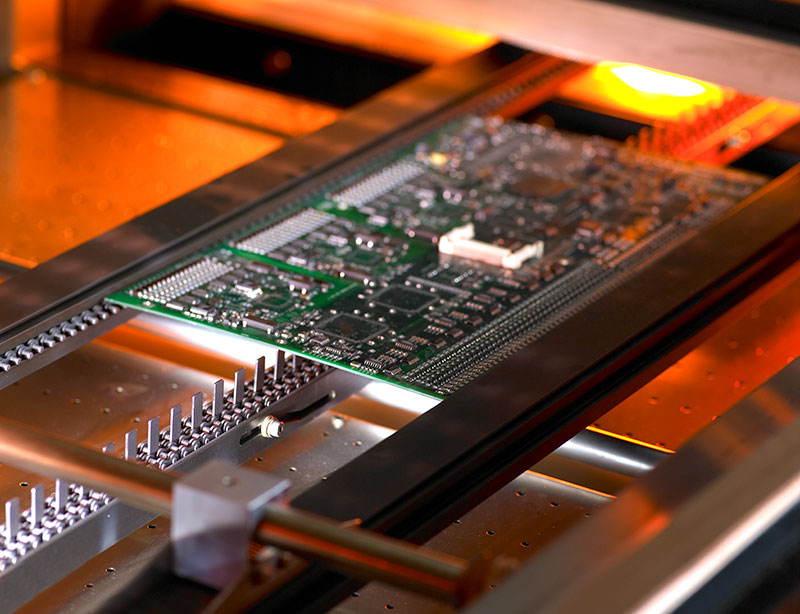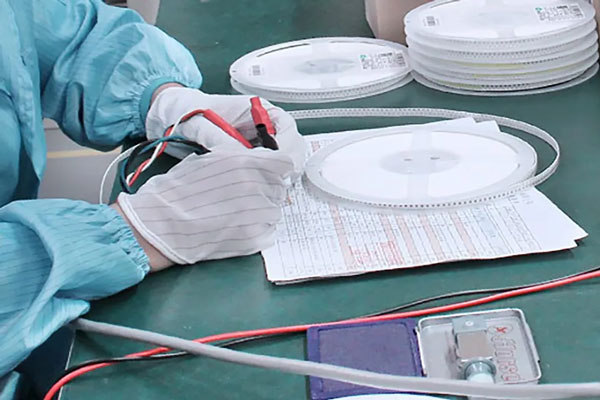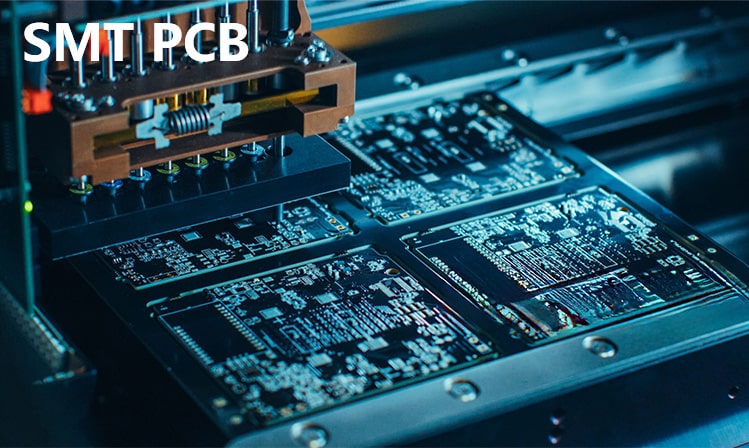
PCBA Development Process: From Requirements to Production A printed circuit board assembly is rarely a product in itself. It is the part that makes a product function, and it sits between a set of requirements and a physical object that has to be built in quantity at a price. The…

PCB Routing Techniques: Microstrip, Stripline and Impedance Every trace on a board is a transmission line, whether the designer treats it as one or not. Once the edge rate of a signal is fast enough that the rise time approaches the propagation delay of the route, the trace stops behaving…
PCB Impedance Coupon Placement: Where to Measure Modern electronics depend on boards that are assembled correctly the first time. Every product – a phone, a charger, a medical instrument or an industrial controller – relies on thousands of solder joints that must conduct current for years. This article explains PCB…
EMI Reduction Through Stackup and Layout Choices Controlling emissions is usually discussed in terms of filters, chokes and shielding, all of which are applied to a finished design. The measures that decide the outcome, however, are taken before any of those components are considered. They are geometric: which layer a…
PCB Coupon Design on A Production Panel: A Sample to Destroy Buyers and engineers often focus on the finished product and forget the production line behind it. In practice, most field failures can be traced back to process decisions made during assembly. Understanding PCB coupon design on a production panel…
PCB Scaling Factor for Lamination Shrinkage: Allowing for the Press Modern electronics depend on boards that are assembled correctly the first time. Every product – a phone, a charger, a medical instrument or an industrial controller – relies on thousands of solder joints that must conduct current for years. This…
PCB Registration Control on Multilayer Boards: Lining Up the Layers Buyers and engineers often focus on the finished product and forget the production line behind it. In practice, most field failures can be traced back to process decisions made during assembly. Understanding PCB registration control on multilayer boards gives you…
Multilayer PCB Prototype Requirements Before Production The prototype is the step where a design stops being a description and becomes an object. It is also the last inexpensive opportunity to find a problem: after the design enters volume production, every correction carries the cost of tooling, re-qualification and inventory. The…
PCB Lamination Cycle for Thick Boards: Pressing a Heavy Stack Buyers and engineers often focus on the finished product and forget the production line behind it. In practice, most field failures can be traced back to process decisions made during assembly. Understanding PCB lamination cycle for thick boards gives you…
PCB Slot Design Rules and Edge Routing A slot is a cut in the board that is not a hole and not the outline. It may separate a high-voltage section from a low-voltage one, allow air to move across a hot component, provide a mounting feature, or define a breakaway…