Analog Digital Partitioning and Ground Strategy on Mixed Boards Analog and digital circuits share a board happily as long as they are not allowed to share return currents. Most mixed signal problems are not caused by the analog signal itself but by the reference it is measured against, which has…
RF Board Fabrication Control for Repeatable Performance A microwave board can pass every electrical check in the design office and still miss its performance target after fabrication. The difference between a simulation and a finished board comes from tolerances that matter little at low frequency but dominate at gigahertz: line…
Multicore Processor Board Layout for Embedded Systems A multicore processor board looks like a single core board with more pins, and that assumption is what makes the first prototypes misbehave. Several cores running at once change the current profile, the thermal load and the way peripherals contend for memory, so…
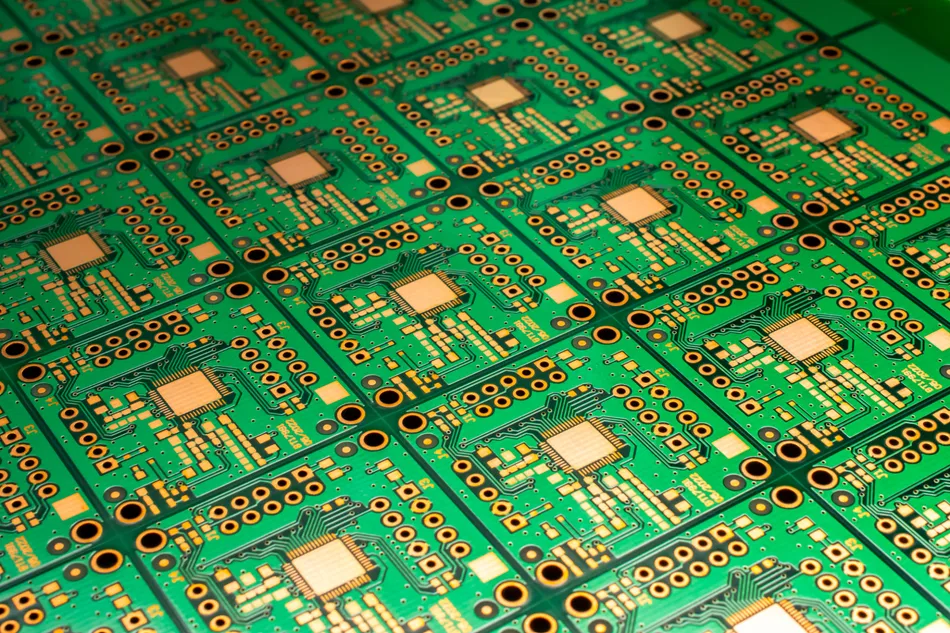
Pcb Panelization: Design Rules and Process Limits PCB panelization is the step where a single board becomes a production panel. The panel is what the pick and place machine handles, what the printer clamps and what the assembly line moves from station to station. A panel that is designed only…
Deburring And Brushing Of PCB Panels Cuts and holes in a printed circuit board leave material that should not be there. Drilling pushes a small lip of copper out of every hole on the exit side, routing leaves a burr along the outline, and the edges of both carry resin…
Selective Soldering Nozzle and Process Control Selective soldering exists because a board can be too complex for a wave and too populated for a hand iron. A nozzle delivers a small wave to one joint at a time, which gives the process the control of hand soldering and the repeatability…
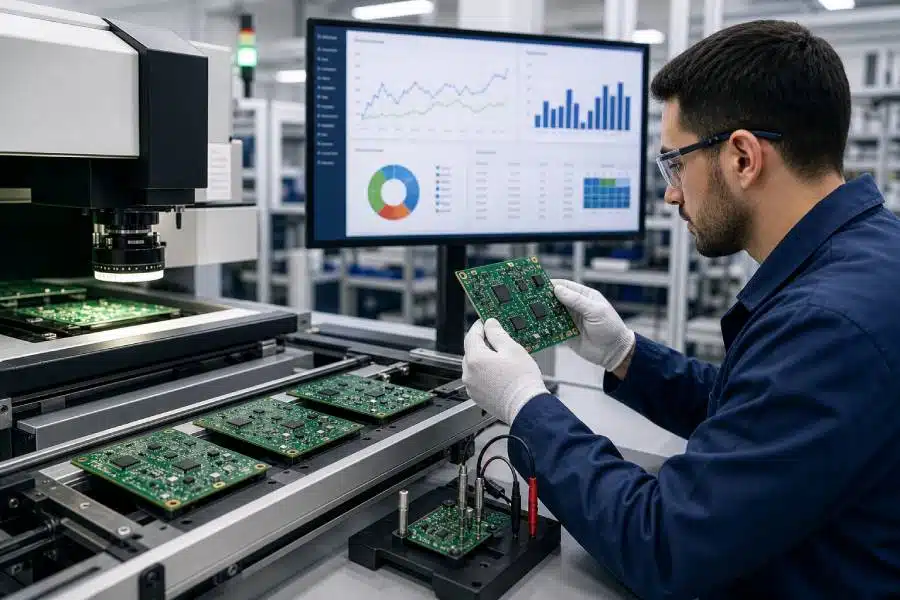
PCB Inspection Methods for Prototype and Production Boards No single test verifies a printed circuit board. Each inspection method sees a different class of defect, and a program that relies on only one of them will release boards with defects that the method cannot detect. Building an inspection plan means…
Printed Circuit Board Advantages over Alternative Wiring Hand wired circuits still exist in laboratories, but every product that must be manufactured more than once ends up on a printed circuit board. The reasons go beyond convenience: a board gives repeatable geometry, controlled electrical characteristics, mechanical support and a surface that…
Board Edge Plating And Routing Quality Control The edge of a printed circuit board is the last surface to be produced and the first to be handled. It is cut from a panel that contains several boards, and the way it is cut decides whether the laminate delaminates, whether the…
Edge Plating Requirements for PCB Fabrication Edge plating is copper that wraps from the top side of a board around the cut edge to the bottom side. It is used for shielding continuity, for high current paths between layers, for soldering a board into a metal frame and for the…