Press Fit Connector Design Guide A press fit connector joins a board to a backplane or to a mating part without a single drop of solder. The connection is purely mechanical, and it depends on a pin that is slightly larger than the hole and on a barrel that is…
Solder Paste Viscosity Measurement and Control Viscosity is the property of solder paste that everyone quotes and almost nobody measures under the conditions the printer actually uses. A single figure on a certificate tells you that the batch is within a range, not that it will roll, release and slump…
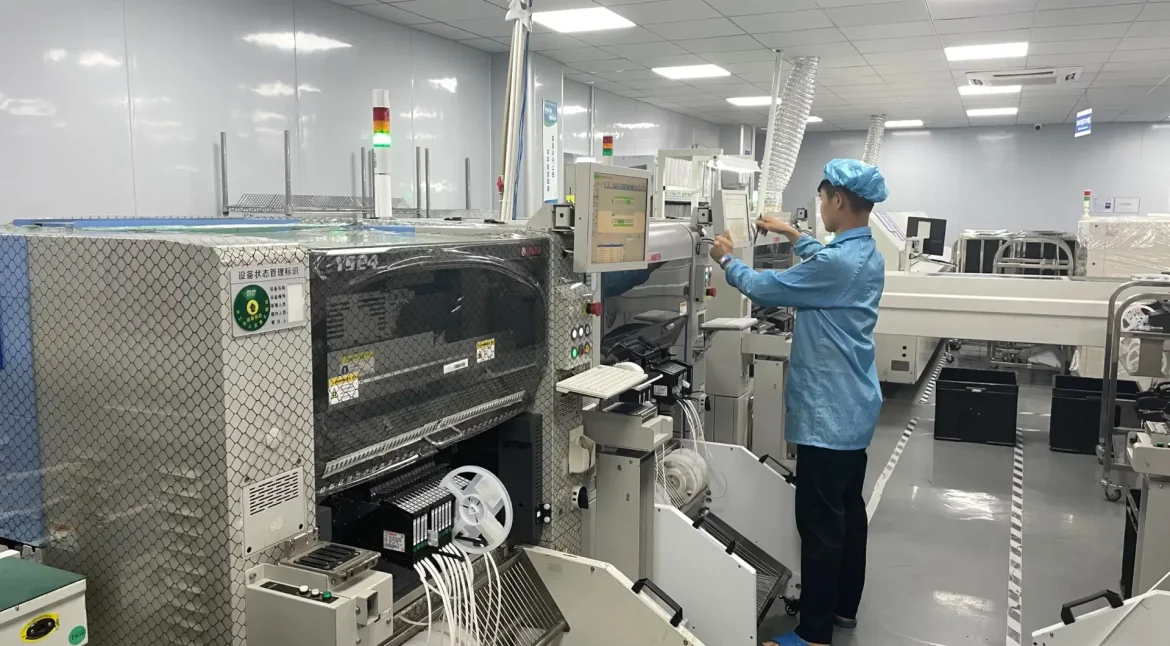
PCB Stencil Environment: Where It Happens Modern electronics depend on boards that are assembled correctly the first time. Every product – a phone, a charger, a medical instrument or an industrial controller – relies on thousands of solder joints that must conduct current for years. This article explains PCB stencil…
Trace Fusing Current and Overload Behaviour in PCB Design Every trace has a current at which it stops behaving like a conductor and starts behaving like a fuse. That value is far above the normal working current, but it decides what happens during a fault, and it often decides whether…
Solder Preform Selection And Use A solder preform is a piece of solid alloy shaped to fit a particular joint. It is used where the paste cannot supply enough metal, where the joint geometry cannot be stencilled, or where a sequence of soldering steps requires an alloy that will not…
Moisture Bake Schedules for Boards Before Assembly Laminate absorbs water from the air, and the amount it holds depends on the resin system, the storage history and the humidity of the room. When that water is heated quickly it turns to steam, and steam inside a board has nowhere to…
PCB Stencil Specification: Writing It Down Precisely Electronics manufacturing has become a discipline of small details. Solder paste volumes, placement accuracy, temperature profiles and inspection limits all add up to the final result. This guide looks at PCB stencil specification from the perspective of a PCBA factory floor, covering specifying…
PCB Stencil Handover: Passing It On Buyers and engineers often focus on the finished product and forget the production line behind it. In practice, most field failures can be traced back to process decisions made during assembly. Understanding PCB stencil handover gives you a practical advantage when you choose a…
Reflow Profile and Zone Verification on the Line The numbers on the oven display describe the oven, not the board. A profile is the temperature history of a specific assembly at a specific point, and it changes when the board changes even though every setpoint stays where it was. Zone…
Solder Sleeve Splices and Heat Shrink Termination Methods Where a wire has to be joined permanently and then survive vibration, moisture and repeated handling, a solder sleeve is often the most reliable answer. It combines a measured ring of solder, a thermoplastic sealing insert and a heat shrink outer tube…