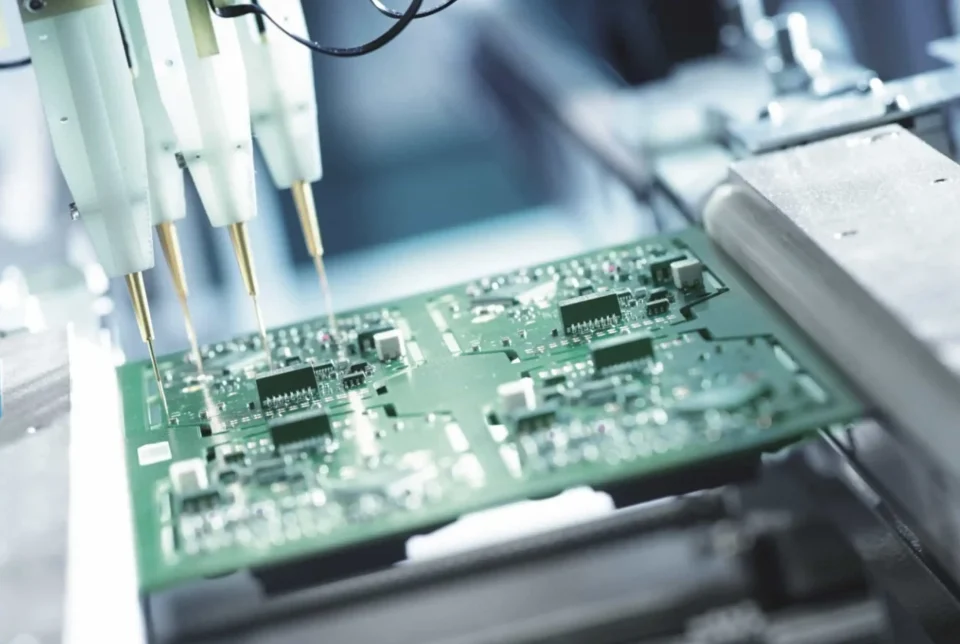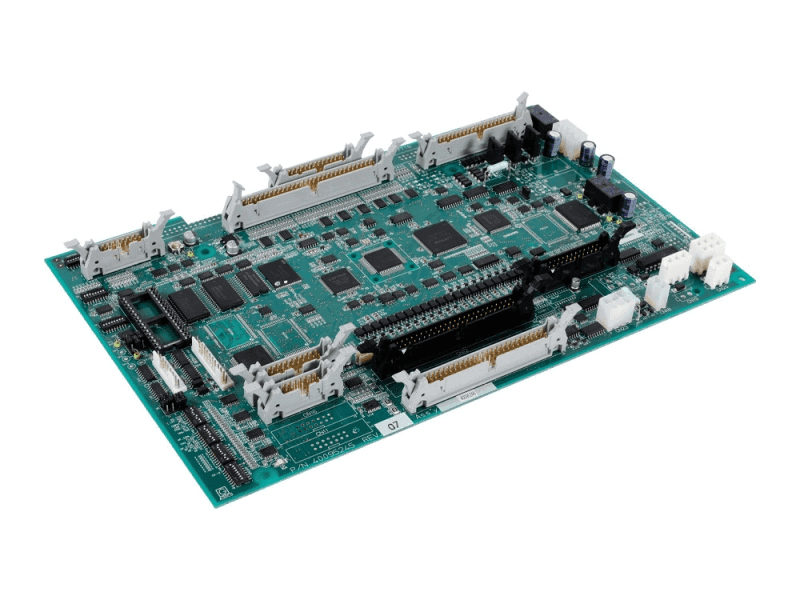
Placement Machine Accuracy: What the Specifications Mean A placement machine is usually selected on the basis of a specification sheet, and the specification sheet is usually written in a way that makes comparison difficult. Accuracy, repeatability, resolution and speed are quoted in different units by different manufacturers, at different confidence…
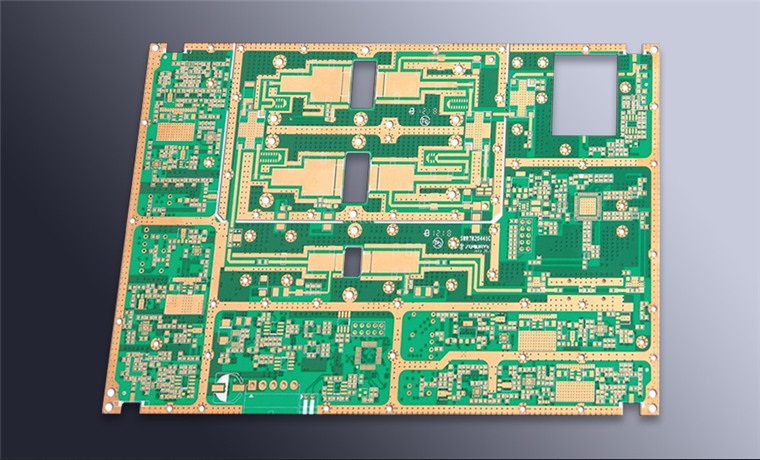
High Speed PCB Design: What Actually Changes Engineers often ask at what clock frequency a board becomes high speed, and the honest answer is that the frequency is not the deciding factor. What matters is whether the interconnections behave as transmission lines, and that depends on how fast the signal…
PCB LNA Layout: A Very Quiet Amplifier Modern electronics depend on boards that are assembled correctly the first time. Every product – a phone, a charger, a medical instrument or an industrial controller – relies on thousands of solder joints that must conduct current for years. This article explains PCB…
Microsection Analysis of a PCB: What a Cross Section Proves When a board fails and the cause is not on the surface, the cross section is what settles the argument. A microsection takes several hours to prepare and destroys the sample, which is why it is often deferred, and why…
PCB Stripline Design: A Line Buried Inside Buyers and engineers often focus on the finished product and forget the production line behind it. In practice, most field failures can be traced back to process decisions made during assembly. Understanding PCB stripline design gives you a practical advantage when you choose…
High Speed ADC Clock Design: Jitter and Sampling Stability In a high speed data conversion system the clock is not a support function, it is part of the measurement. An adc samples the input at the instant the clock edge arrives, so any uncertainty in that instant becomes uncertainty in…
Impedance Mismatch In High Speed Routing: What Causes It A high speed link is designed as a transmission line, and a transmission line only behaves as designed when its impedance is the same from end to end. Every place where that uniformity breaks becomes a source of signal reflection, and…
Statistical Process Control on SMT Assembly Lines An SMT line produces thousands of joints an hour, and inspecting them all is neither possible nor economic. Statistical process control takes the opposite approach: measure a small sample often, compare it with what the process normally does, and act when the pattern…
Registration Budget: Keeping PCB Layers Aligned in Production Every layer in a multilayer board has to line up with the layers above and below it, and the permitted error is set by the smallest feature in the design. Registration is the budget that covers film stretch, drill shift, laminate movement…
Copper Clad Laminate: The Base of Every PCB Every rigid printed circuit board starts as a sheet of copper clad laminate: a woven glass cloth impregnated with resin, cured, and bonded to copper foil on one or both faces. The laminate is the dielectric, the mechanical structure and the thermal…