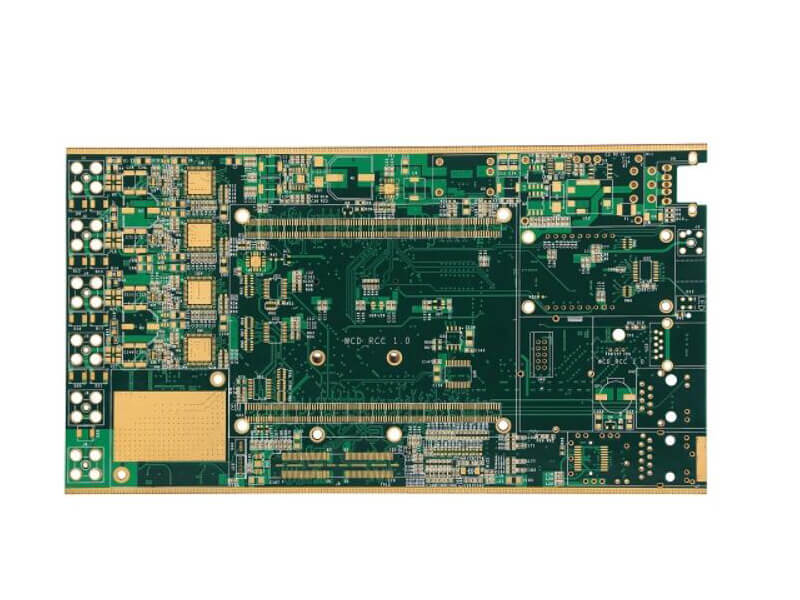
Engineering Change Control for PCB Designs An engineering change is any modification to a released design, and the way it is controlled decides whether it corrects a problem or creates one. The discipline costs a few minutes per change and prevents the situation in which two versions of the same…

High Speed PCB Layout Principles That Matter High speed layout advice usually arrives as a list of prohibitions, and lists are hard to apply because they do not explain which rule matters in a given situation. A more useful approach is to understand the small number of physical facts that…
Selective Soldering Process Guide for Mixed Assemblies Mixed-technology assemblies place fine-pitch surface mount parts on the same board as a handful of through-hole connectors, and those pins still need solder. A full wave can damage the earlier work, while hand soldering is slow and inconsistent, so selective soldering fills the…
Electromagnetic Simulation: Design Rules and Process Limits Electromagnetic simulation entered the PCB flow for one practical reason: the behaviour that breaks a board, coupling, reflections and resonances, is invisible on a schematic and expensive to discover on fabricated copper. A simulator lets a designer ask what the fields will do…
HDI Build Cycles and PCB Lead Time An HDI board is not simply a multilayer board with smaller holes. It is built in cycles, and every additional cycle adds a lamination, a drilling operation and an inspection step that cannot be compressed by working faster. Understanding hdi build cycles is…
Why The Stackup Should Name The Copper Foil A stackup drawing usually lists the layers, the dielectric thicknesses and the finished board thickness. It rarely says which copper foil is used, and that omission is one of the more common reasons a board measures worse than the model predicted. Foil…
Press-Fit Connector Assembly for PCB Backplane Boards Backplanes carry connectors that would be impossible to solder reliably, so the industry presses them in instead. A compliant pin deforms inside a plated hole and creates a gas-tight connection without any alloy, which removes an entire thermal process from the assembly flow.…
Quick Turn PCBA: What Fast Assembly Really Involves Fast assembly is a scheduling achievement rather than a manufacturing one. The placement and reflow processes take roughly the same time however urgent the order is, so a quick turn pcba service compresses the queue, the preparation and the approval rather than…
Resin Plugging Versus Copper Filled Vias A via that must not wick solder away from a pad, or that must remain flat under a ball grid array, cannot simply be drilled and plated. The barrel has to be closed, and there are two established ways to close it: filling with…
Wetting Balance Testing for Solderability Assessment Solderability is easy to state and hard to quantify. A surface either wets within the time available in the process or it does not, and visual inspection of a test coupon cannot tell how much margin exists. The wetting balance turns that question into…