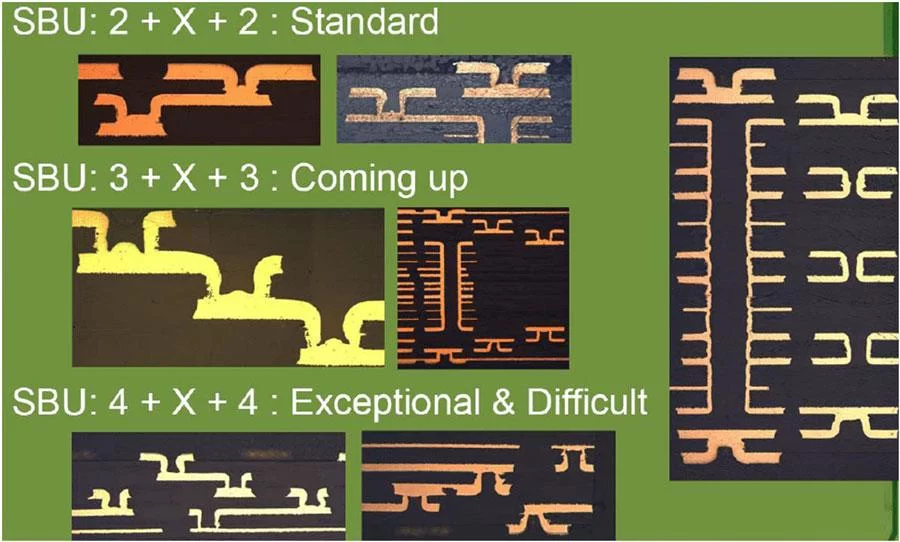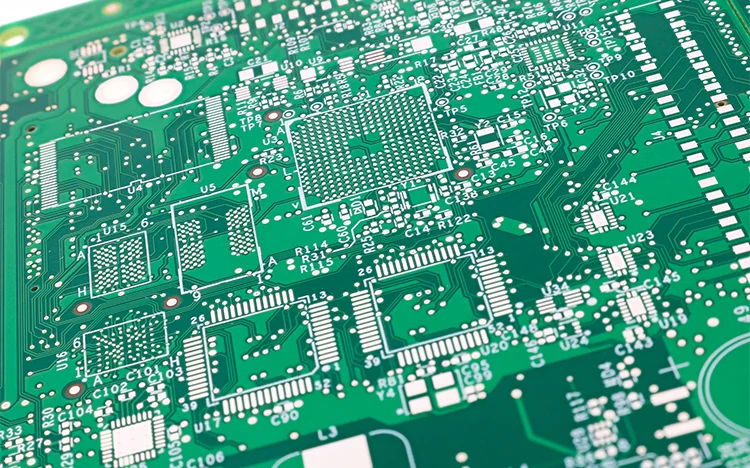
Via-in-Pad Solder Wicking: Causes and Prevention Putting a via directly inside a component pad is one of the most effective ways to escape a dense BGA or a fine pitch package, and it is now routine in high density interconnect work. It also creates a path for molten solder to…

Acidic vs Alkaline Etching for PCB: Chemistry Compared Once the pattern has been imaged and developed, the panel still has to give up the copper that the resist does not protect, and that step is done in a wet chemistry bath. Two families dominate production: acidic etching, built around cupric…
How Many Layers Does a High-Speed PCB Need? Layer count is the first number a high-speed PCB team has to commit to, and it is the one that is hardest to change later. Too few layers and the routing, the return paths and the power delivery all compete for the…
PCB Manufacturing Parameters and Standards Explained A fabrication drawing is only useful if every number on it means the same thing to the designer and to the shop that builds the board. That is what a parameter list is for. Registration, hole tolerance, copper thickness, impedance and finish thickness all…
BGA Rework: Equipment, Profiles and Yield A ball grid array hides its joints underneath the package, so it cannot be inspected or repaired in the way a leaded part can. When one of those joints fails, the board is not necessarily scrap: it can be taken back to the reflow…
High Frequency PCB Price: What Drives the Cost A high frequency PCB costs more than an ordinary board for reasons that are easy to state and harder to quantify: the laminate is expensive, the geometry has to be controlled tightly, and the test programme is heavier. What buyers usually lack…
Impedance Controlled PCB vs Standard: Cost Comparison Two four layer boards of the same size can differ in price by a factor of three, and the difference is usually impedance control. One board connects components and passes a continuity test; the other has to deliver a defined characteristic impedance at…
Blind and Buried Via Production at Volume A conventional multilayer board connects its layers with through holes: a single drill that passes from top to bottom and plates every layer it crosses. This works, but it consumes space on every layer it traverses, and on a dense design that space…
SMT Programming: Offline Preparation and Online Debugging SMT programming looks like data entry, but it is where the assembly process is actually defined. Every decision made here, about which component goes where, how it is oriented and how the machine recognises the board, determines whether the first article passes or…
FR4 Sheet Material: Grades, Standards and Machining Methods FR4 is familiar as the laminate under every ordinary circuit board, but the same material has a second life as an engineering sheet. Cut, drilled and machined into parts, it becomes stiffeners, insulating spacers, drilling backup boards and test fixtures. Understanding the…