PCB Thermocouple Amplifier Layout: A Very Small Signal Electronics manufacturing has become a discipline of small details. Solder paste volumes, placement accuracy, temperature profiles and inspection limits all add up to the final result. This guide looks at PCB thermocouple amplifier layout from the perspective of a PCBA factory floor,…
PCB Accelerometer Layout: Where to Put the Sensor Modern electronics depend on boards that are assembled correctly the first time. Every product – a phone, a charger, a medical instrument or an industrial controller – relies on thousands of solder joints that must conduct current for years. This article explains…
PCB Ground Plane for An Antenna: The Other Half of the Aerial Modern electronics depend on boards that are assembled correctly the first time. Every product – a phone, a charger, a medical instrument or an industrial controller – relies on thousands of solder joints that must conduct current for…
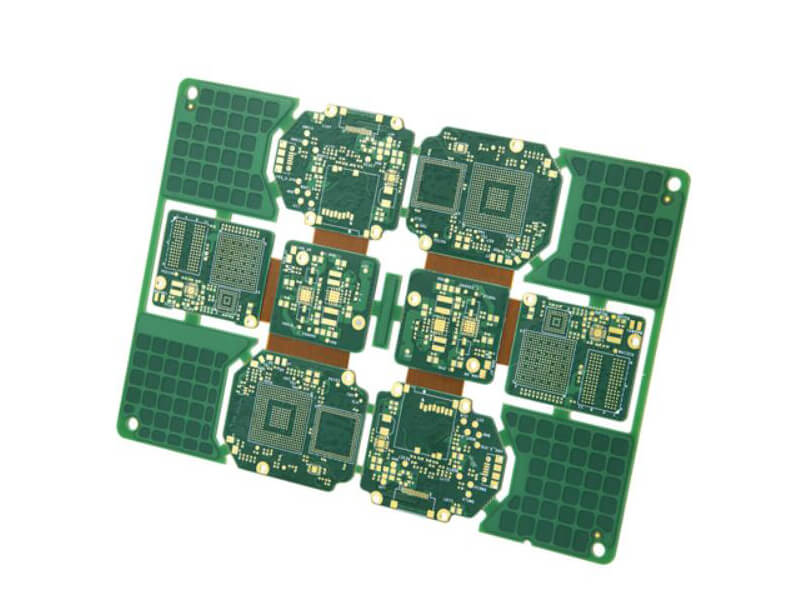
Custom Shape PCB: Outline Design and Milling Tolerance Not every board is a rectangle, and once the outline stops being a rectangle it becomes a manufactured feature with tolerances rather than a boundary. A custom shape PCB is used when the enclosure, the mounting arrangement or the optical path dictates…
PCB Load Cell Interface: Reading a Weight Modern electronics depend on boards that are assembled correctly the first time. Every product – a phone, a charger, a medical instrument or an industrial controller – relies on thousands of solder joints that must conduct current for years. This article explains PCB…
Short Slot Fabrication and Drilling Parameters Not every hole on a board is round. Connectors, switches, mounting hardware and high-current terminals often need an elongated opening, and the usual way to make one is to route it or drill it as a slot rather than drill a larger circle. Slots…
PCB Surface Finish Options Compared Every copper surface that will be soldered needs a finish, and the choice is made on solderability, flatness, shelf life, and cost rather than on electrical performance. The industry has converged on a small set of options, and each one is the right answer for…
What Copper Traces Do in a PCB: Signal, Power and Ground Everything a board does happens through copper. The traces etched from the copper foil carry signals between devices, distribute power from the regulators, provide the return path for both and, on most modern designs, conduct a meaningful share of…
Immersion Silver and the Galvanic Effect on Copper Immersion silver is a popular final finish: flat, solderable, free of the nickel layer that immersion gold requires, and inexpensive compared with gold. It is also the finish with the most interesting failure mode, because the deposition chemistry can attack the copper…
PCB Copper Pour: Grounding, Vias and Thermal Relief A copper pour is the area of metal left on a signal layer after the traces have been routed. It is often added at the end of a layout as a habit, but it is an electrical structure with a defined purpose,…