What Is a Cable Assembly?
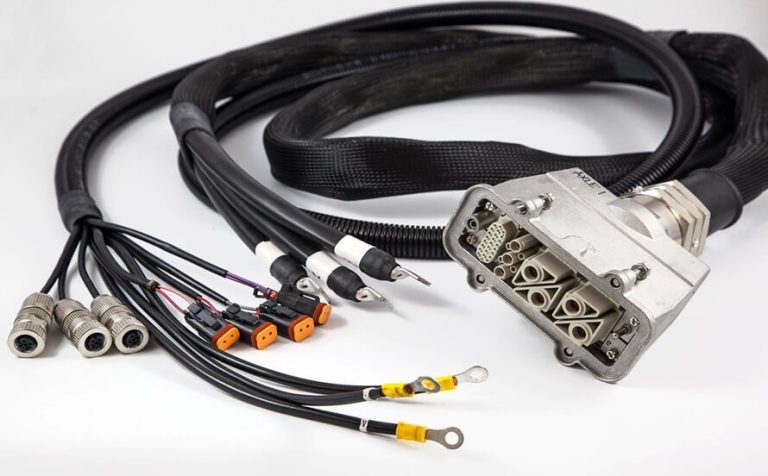
A Cable Assembly is a group of two or more wires, cables, connectors, terminals, and protective components assembled into an integrated electrical connection system. It is designed to transmit electrical power, control signals, or data between circuit boards, electronic modules, sensors, power supplies, and other system components.
In modern electronic systems, a properly designed Cable Assembly simplifies internal wiring and provides a reliable, organized connection between different parts of a product. Depending on the application, a cable assembly may include wires, connectors, terminals, contacts, shielding, protective sleeving, strain relief, labels, and other mechanical components.
A cable assembly is different from a simple loose cable because it is manufactured according to a defined configuration and is normally terminated, tested, and prepared for installation. A more complex Cable Harness may combine numerous wires and branches into one organized assembly.
The appropriate design helps protect conductors from abrasion, moisture, chemicals, vibration, temperature changes, and mechanical stress. As a result, cable assemblies are widely used in automotive electronics, telecommunications, industrial equipment, aerospace systems, medical devices, consumer electronics, and power systems.
Types of Cable Assemblies
Different cable structures are selected according to electrical requirements, available space, signal characteristics, mechanical conditions, and operating environment.
Ribbon Cable
Ribbon cables consist of multiple conductors arranged in parallel within a flat structure. Their compact profile makes them useful for internal connections between circuit boards, controllers, drives, and other electronic modules.
They are particularly suitable where multiple low-voltage signals must be routed in an organized and space-efficient configuration.
Coaxial Cable
Coaxial cables contain a central conductor, dielectric insulation, shielding layer, and outer jacket. Their controlled construction provides effective protection against electromagnetic interference and supports high-frequency signal transmission.
They are commonly used in telecommunications, RF systems, test equipment, antennas, networking equipment, and other applications where signal integrity is important.
Multiconductor Cable
Multiconductor cables contain several individually insulated conductors within a common outer jacket. They can carry power, control signals, or multiple electrical connections through a single cable.
These cables are widely used in industrial automation, instrumentation, audio equipment, control systems, and electronic equipment.
Complex Cable Harness
A complex Cable Harness can contain numerous wires, connectors, branches, terminals, shielding elements, protective sleeves, and fastening components.
Complex harnesses are frequently used in automotive and aerospace systems, where large numbers of electrical connections must be routed through limited installation space while remaining protected from vibration, temperature changes, and mechanical stress.
Cable Assembly Design Considerations
Effective Cable Assembly Design begins with a clear understanding of the electrical, mechanical, environmental, and installation requirements.
Cable Length and Routing
Cable length should be carefully determined during the design stage. An excessively long cable can increase voltage drop, electromagnetic coupling, signal attenuation, weight, and installation complexity.
An excessively short cable can create mechanical stress at the connectors and make installation or maintenance difficult.
The design should therefore provide sufficient routing length while avoiding unnecessary cable slack.
Connector Selection
Connectors are critical to cable assembly performance. Selection should consider:
- Number of contacts
- Current and voltage ratings
- Signal frequency
- Mating cycles
- Locking mechanism
- Environmental sealing
- Temperature range
- Available installation space
- Contact and plating requirements
Connectors should be electrically compatible with the equipment and mechanically suitable for the intended environment.
Wire and Cable Selection
Wire selection depends on current, voltage, signal characteristics, temperature, flexibility, insulation requirements, and installation conditions.
For power applications, conductor size must provide adequate current-carrying capability and acceptable voltage drop. For high-speed or high-frequency signals, impedance, shielding, geometry, and crosstalk should also be considered.
Jacket and Protective Materials
The outer jacket protects conductors from mechanical and environmental damage. Common materials include PVC, polyethylene, polyurethane, rubber, and thermoplastic elastomers.
The appropriate material depends on temperature, chemical exposure, flexibility, abrasion resistance, flame requirements, and other application-specific conditions.
Cable Assembly Manufacturing Process
Professional Cable Assembly Manufacturing typically follows a controlled sequence to ensure dimensional accuracy, electrical performance, and repeatability.
| Step | Process | Description |
|---|---|---|
| 1 | Cutting | Wires or cables are cut to the specified length. |
| 2 | Stripping | Insulation is carefully removed from designated areas without damaging conductors. |
| 3 | Terminal Preparation | Terminals, contacts, or other termination components are prepared for attachment. |
| 4 | Crimping or Termination | Conductors are connected to terminals using controlled crimping, soldering, or other approved methods. |
| 5 | Connector Assembly | Terminated wires are inserted into the correct connector positions according to the wiring documentation. |
| 6 | Harness Assembly | Wires are bundled, routed, labeled, and secured according to the assembly drawing. |
| 7 | Protection | Sleeves, braids, tapes, conduits, strain reliefs, or other protective components may be added. |
| 8 | Inspection | Dimensions, routing, connector orientation, terminals, and physical workmanship are inspected. |
| 9 | Electrical Testing | Continuity, resistance, insulation, and other required electrical tests are performed. |
| 10 | Final Inspection | The completed assembly is verified against the approved drawings and specifications. |
Cutting and Wire Preparation
Accurate cutting is essential for consistent cable assembly production. Automated cutting equipment can help maintain repeatable wire lengths, particularly in medium- and high-volume production.
During stripping, the insulation must be removed without nicking, cutting, or deforming the conductor. Incorrect stripping can reduce mechanical strength and create potential electrical reliability problems.
Crimping and Termination
Crimping is widely used to attach terminals and contacts to conductors. A properly controlled crimp creates both mechanical retention and a reliable electrical connection.
Crimp quality can depend on conductor size, terminal geometry, tooling condition, crimp height, crimp force, and material characteristics.
For critical assemblies, manufacturers may use crimp-force monitoring or periodic cross-section analysis to verify process capability.
Connector Assembly and Harness Routing
After termination, wires are inserted into their specified connector cavities. Correct pin assignment and connector orientation are essential because an incorrect connection can cause system malfunction or, in power circuits, potentially create safety risks.
For complex assemblies, wires may then be bundled and secured using clips, ties, sleeves, conduits, tapes, or other mechanical methods.
Clear labeling and controlled work instructions are particularly important for assemblies containing many branches and connectors.
Cable Assembly Testing and Quality Assurance
Cable Assembly Testing is an important part of the manufacturing process. Testing should be based on the electrical and mechanical requirements of the finished assembly.
Continuity Testing
Continuity testing verifies that each conductor is electrically connected between its designated endpoints. It can also help identify open circuits and incorrect connections.
Short-Circuit Testing
Short testing checks whether unintended electrical connections exist between conductors or specified circuit points.
This is particularly important for assemblies containing multiple closely routed conductors.
Resistance Testing
Resistance measurements can be used to verify conductor and connection characteristics. Excessive resistance may indicate an incorrect wire size, poor termination, damaged conductor, or defective contact.
Insulation Resistance Testing
Insulation resistance testing evaluates the electrical isolation between specified conductors and other conductive elements.
The test voltage and acceptance criteria should be established according to the product design, applicable standards, and customer requirements.
High-Potential Testing
For suitable applications, high-potential testing can be used to verify insulation withstand capability. The test conditions must be carefully controlled according to applicable safety and product requirements.
Not every cable assembly requires the same electrical test sequence, so the test plan should be based on the intended application.
Environmental and Mechanical Testing
In demanding applications, Cable Assembly Testing may extend beyond basic electrical verification.
Depending on the product requirements, testing may include:
- Temperature cycling
- High- and low-temperature exposure
- Humidity testing
- Vibration testing
- Mechanical shock
- Flexing or bend testing
- Abrasion testing
- Chemical resistance testing
- Salt-spray testing
- Connector mating-cycle testing
These tests help determine whether the assembly can maintain electrical and mechanical performance under its expected operating conditions.
Applications of Cable Assemblies
Cable assemblies are used across a wide range of industries because they provide organized, repeatable, and application-specific electrical connections.
Telecommunications
In telecommunications equipment, cable assemblies are used for power distribution, signal transmission, networking, RF connections, and connections between electronic modules.
For high-speed or high-frequency systems, cable construction, shielding, impedance, connector quality, and routing can directly affect signal integrity.
Ribbon cables and other compact cable configurations can also be useful inside servers, networking equipment, and data-center hardware.
Automotive Electronics
Automotive systems contain a large number of electrical connections for power distribution, sensors, lighting, infotainment, control modules, and advanced driver-assistance systems.
Automotive cable assemblies may need to withstand vibration, temperature cycling, moisture, chemicals, and mechanical movement. Proper routing, strain relief, connector locking, and protective materials are therefore important parts of automotive Cable Assembly Design.
Aerospace
Aerospace systems place demanding requirements on weight, reliability, vibration resistance, temperature performance, and environmental durability.
Cable assemblies may be used in cockpit instrumentation, avionics, communication systems, sensors, power distribution, and engine-related systems.
For aerospace applications, material selection, traceability, termination quality, routing, and inspection requirements may be significantly more stringent than those used in general-purpose electronics.
Medical Equipment
Cable assemblies are widely used in medical imaging systems, patient monitoring equipment, diagnostic instruments, laboratory equipment, and treatment systems.
Medical cable assemblies may require high reliability, controlled materials, appropriate cleaning compatibility, mechanical flexibility, and careful connector design.
For patient-connected or specialized medical applications, the complete cable assembly must be evaluated according to the applicable product and regulatory requirements.
Industrial Equipment
Industrial automation and control systems use cable assemblies to connect sensors, actuators, motors, controllers, power supplies, and communication modules.
Industrial applications may expose cables to vibration, oil, chemicals, dust, temperature fluctuations, and repeated movement. The cable structure and protective materials should therefore be selected according to the actual operating environment.
Cable Assembly Manufacturing Challenges
| Challenge | Description | Recommended Approach |
|---|---|---|
| Design complexity | Complex assemblies may contain many wires, connectors, branches, and installation constraints. | Use controlled drawings, wiring tables, 3D routing data, and design reviews. |
| Material selection | Incorrect wire, connector, jacket, or terminal materials can reduce electrical or environmental performance. | Evaluate electrical ratings, temperature, chemicals, flexibility, and mechanical requirements. |
| Manufacturing precision | Variations in cutting, stripping, crimping, and connector insertion can affect assembly reliability. | Use controlled tooling, work instructions, inspection, and process monitoring. |
| Supply chain complexity | Connectors, terminals, cables, and specialty materials may have different availability and lead times. | Establish qualified sources and maintain appropriate material planning. |
| Regulatory requirements | Different applications may require specific material, safety, environmental, or industry requirements. | Identify applicable requirements early and maintain appropriate documentation and traceability. |
Common Cable Assembly Defects
Several manufacturing problems can affect cable assembly quality:
- Incorrect wire length
- Damaged conductors
- Excessive or insufficient stripping
- Improper crimping
- Loose terminals
- Incorrect connector pin assignment
- Missing seals or strain relief
- Poor labeling
- Damaged insulation
- Inadequate shielding
- Open circuits
- Short circuits
- Excessive electrical resistance
Many of these problems can be reduced through standardized work instructions, controlled tooling, operator training, automated testing, and appropriate inspection.
How to Improve Cable Assembly Reliability
A reliable Custom Cable Assembly should be designed and manufactured with the complete application in mind.
Key practices include:
- Define electrical and mechanical requirements before design release.
- Select wires and connectors according to actual operating conditions.
- Control conductor length and routing.
- Use appropriate strain relief to reduce mechanical stress.
- Maintain accurate connector pin assignments.
- Verify crimping and termination processes.
- Protect assemblies against expected environmental exposure.
- Perform electrical testing appropriate to the product.
- Maintain revision-controlled drawings and wiring documentation.
- Establish traceability for materials and production records.
Custom Cable Assembly vs. Standard Cable
A Custom Cable Assembly is manufactured according to specific customer or system requirements rather than using a standard off-the-shelf cable.
Custom assemblies can integrate specific wire lengths, connector combinations, pin configurations, shielding structures, protective sleeves, labels, and mechanical features.
| Feature | Standard Cable | Custom Cable Assembly |
|---|---|---|
| Configuration | Fixed | Application-specific |
| Connector options | Limited to standard products | Can be selected according to system requirements |
| Length | Standard lengths | Defined by design |
| Routing | General-purpose | Optimized for equipment |
| Protection | Standard | Can be customized |
| Testing | Supplier-dependent | Can be defined according to requirements |
| Integration | Requires additional wiring | Designed for direct system integration |
Cable Assembly Design for PCB Connections
When a cable assembly connects directly to a PCB, designers should consider both the PCB and cable interfaces.
Important factors include connector footprint, pin assignment, current capacity, signal integrity, grounding, shielding, mechanical retention, mating direction, and service access.
For high-speed connections, uncontrolled cable geometry or poor grounding can introduce impedance discontinuities, crosstalk, electromagnetic interference, or signal loss.
For power connections, conductor size, terminal ratings, temperature rise, and voltage drop should be evaluated.
A well-designed interface can reduce assembly errors and simplify maintenance.
Kingda Cable Assembly Services
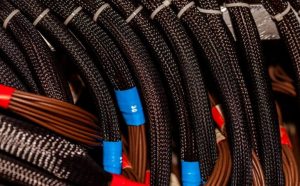
Kingda can support cable and wire harness requirements as part of electronic manufacturing projects. The appropriate Cable Assembly Manufacturing solution should be determined according to the customer’s drawings, wiring specifications, connector requirements, electrical characteristics, environmental conditions, and production requirements.
Depending on the project, the manufacturing process may include wire cutting and stripping, terminal crimping, connector assembly, harness routing, protective sleeving, labeling, visual inspection, and electrical testing.
For PCB-related projects, cable assembly requirements can also be considered together with PCB fabrication and PCB assembly to improve interface compatibility and manufacturing coordination.
Choosing a Cable Assembly Manufacturer
When selecting a Cable Assembly manufacturer, companies should evaluate more than the quoted unit price.
Important considerations include:
- Manufacturing and engineering capability
- Wire and connector processing capability
- Crimping and termination control
- Electrical testing capability
- Material sourcing
- Process documentation
- Quality management
- Traceability
- Production flexibility
- Ability to handle custom configurations
- Communication and engineering support
For complex or high-reliability applications, it is particularly important to confirm that the manufacturer can understand the technical requirements and maintain consistent production quality.
Conclusion
Cable assemblies provide an essential connection between PCBs, electronic modules, sensors, power systems, and other components. From simple ribbon cables to complex automotive and aerospace harnesses, different cable structures are designed to meet specific electrical, mechanical, and environmental requirements.
A successful Cable Assembly Design requires careful consideration of wire selection, cable length, connectors, shielding, protection, routing, and installation conditions. During Cable Assembly Manufacturing, accurate cutting, stripping, termination, connector assembly, inspection, and testing are essential for maintaining consistent quality.
With appropriate Cable Assembly Testing, environmental validation, process control, and material selection, manufacturers can improve connection reliability and reduce field failures. For customized electronic systems, working with an experienced manufacturing partner such as Kingda can help integrate cable assembly requirements into the broader PCB and electronic manufacturing process.