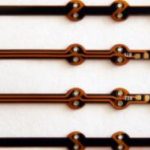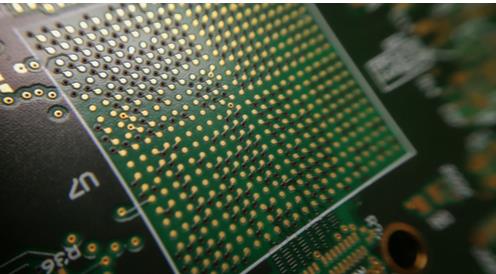
The basic principles of Flexible PCB Assembly are similar to those used for rigid PCB assembly. However, the flexible nature of FPC materials introduces additional requirements for handling, positioning, soldering, inspection, and mechanical reliability.
During production, manufacturers select appropriate assembly processes according to the structure of the flexible circuit, component type, production volume, and product requirements. Common processes include SMT assembly, soldering, inspection, testing, and final forming.
Unlike a rigid PCB, a flexible circuit can easily deform during assembly. Therefore, proper support and positioning are essential for achieving consistent assembly quality.
Key Characteristics of Flexible PCB Assembly
1. Flexible PCB Requires Proper Mechanical Support
One of the most important differences between Flexible PCB Assembly and conventional rigid PCB assembly is the mechanical stability of the substrate.
A flexible circuit cannot normally be processed in exactly the same way as a rigid FR-4 board because the FPC may bend, shift, or deform during component placement and soldering.
To improve assembly accuracy, the flexible circuit is often supported by a dedicated carrier, tooling fixture, or temporary stiffener. This allows the FPC to maintain a relatively stable and flat condition during SMT processing.
The quality of the support system directly affects:
- Component placement accuracy
- Solder-paste printing
- Fiducial recognition
- Solder-joint quality
- Automated optical inspection
- Production consistency
For high-density FPC Assembly, fixture design should therefore be considered as part of the overall manufacturing process rather than as an optional accessory.
2. Flatness and Positioning Accuracy Are Critical
Flatness is particularly important during solder-paste printing and component placement.
If a flexible circuit is not adequately supported, unevenness may cause inconsistent solder-paste deposition. Excessive movement can also affect component positioning and create soldering defects.
A suitable fixture should provide stable support while avoiding excessive mechanical stress on the flexible circuit.
Fiducial marks and accurate tooling references are also important for automated assembly. The manufacturer should ensure that the FPC is correctly positioned before printing and placement operations begin.
For high-precision SMT Assembly, the combination of FPC dimensional stability, fixture accuracy, and equipment capability determines the final placement quality.
3. Flexible PCB Assembly Often Has Lower Component Density
Many flexible circuits are primarily used as interconnection solutions between different functional modules.
For example, FPCs are widely used in:
- Smartphones
- Digital cameras
- Wearable devices
- Displays
- Consumer electronics
- Automotive electronics
- Medical equipment
- Compact industrial products
In many of these applications, the flexible circuit contains fewer components than a conventional rigid PCB. Connectors, sensors, passive components, and selected ICs may be mounted directly onto the FPC, while other processing electronics remain on rigid circuit boards.
However, low component density should not be considered a universal characteristic of flexible circuits.
Advanced flexible circuits can support fine-pitch components, high-density interconnects, and complex SMT structures. In rigid-flex products, both rigid and flexible sections may contain high-density components.
Therefore, assembly complexity depends on the specific FPC structure and application rather than component count alone.
4. Panelization Improves Flexible PCB Assembly Efficiency
Because individual flexible circuits are often relatively small, processing them one by one may reduce production efficiency.
Panelization allows multiple FPC units to be assembled together as a production panel.
A suitable panel design can improve:
- SMT equipment utilization
- Component placement efficiency
- Solder-paste printing efficiency
- Inspection efficiency
- Material utilization
- Overall production throughput
After assembly, individual circuits can be separated using an appropriate depanelization method.
The separation method must be selected according to the FPC material, stiffener structure, copper pattern, component location, and mechanical requirements.
For example, routing, laser cutting, punching, or controlled scoring may be used depending on the product structure. V-scoring is not universally suitable for every flexible circuit because the mechanical behavior of FPC materials differs from rigid PCB materials.
5. Higher Quality Requirements for Flexible PCB Assembly
A Flexible Circuit may be subjected to bending, folding, vibration, thermal cycling, or repeated mechanical movement during its service life.
Consequently, the quality requirements for flexible circuit assembly can be more demanding than those for standard rigid PCB assembly.
Important quality-control areas include:
- Surface cleanliness
- Solder-joint quality
- Component placement accuracy
- FPC positioning
- Solder-mask condition
- Copper integrity
- Pad quality
- Stiffener bonding
- Connector reliability
- Mechanical stress control
- Electrical testing
For applications involving repeated flexing, the assembly process must also ensure that solder joints and component interfaces are not exposed to unnecessary mechanical stress.
Components should generally be positioned outside dynamic bending zones whenever possible.
6. Lead-Free Assembly Creates Additional Challenges
The widespread use of lead-free soldering has introduced additional thermal and process-control requirements for FPC Assembly.
Compared with some traditional soldering processes, lead-free solder typically requires a higher reflow temperature. This can increase thermal stress on flexible materials, adhesives, stiffeners, and other structures.
The reflow profile should therefore be developed according to the actual FPC material system and component requirements.
Important parameters include:
- Preheat rate
- Soak temperature
- Peak temperature
- Time above liquidus
- Cooling rate
- Total thermal exposure
The objective is to achieve reliable solder joints without exceeding the temperature limitations of the flexible substrate and its associated materials.
7. SMT Process Control for Flexible PCBs
The basic FPC SMT process can include:
- FPC loading and fixture positioning
- Solder-paste printing
- Solder-paste inspection
- Component placement
- Reflow soldering
- Automated optical inspection
- Electrical testing
- Final inspection
Each step requires additional consideration because the flexible substrate does not have the mechanical rigidity of a conventional PCB.
Solder-Paste Printing
Stable support is particularly important during solder-paste printing.
Insufficient support can cause variations in stencil-to-pad contact and lead to inconsistent solder-paste volume.
Component Placement
The placement machine must accurately identify fiducials and compensate for the dimensions and positioning characteristics of the FPC.
Reflow Soldering
The thermal profile should be optimized to achieve reliable solder joints while protecting the flexible materials.
Inspection
AOI and other inspection methods can be used to identify component-placement errors, solder bridges, insufficient solder, open joints, and other defects.
8. Flexible PCB Assembly Requires Specialized Fixtures
Special fixtures are one of the major differences between flexible and rigid PCB Assembly.
The fixture must provide sufficient support while allowing the assembly equipment to access the required component locations.
Depending on the product, the fixture may need to support:
- FPC flatness
- Fiducial alignment
- Connector positioning
- Component placement areas
- Bending zones
- Stiffened regions
- Multiple FPC units in a panel
Fixture design should also consider production volume.
For prototypes and small batches, a relatively simple reusable fixture may be sufficient. For high-volume production, dedicated tooling can provide better throughput and repeatability.
9. Assembly Cost Can Be Higher
Compared with conventional rigid PCB assembly, Flexible PCB Assembly can involve additional manufacturing costs.
These costs may come from:
- Flexible substrate materials
- Specialized fixtures
- Additional handling requirements
- Panelization constraints
- Lower equipment utilization in certain applications
- Additional inspection
- Special stiffeners
- Higher process-control requirements
- Increased material handling complexity
However, the overall product cost should not be evaluated by PCB assembly cost alone.
A flexible circuit can eliminate cables, connectors, wire harnesses, and multiple interconnection components. It can also reduce product weight, save internal space, and simplify three-dimensional assembly.
As a result, a higher FPC assembly cost at the board level may still produce a lower total system cost.
10. Design for Flexible PCB Assembly
Manufacturing considerations should be incorporated into the FPC design stage.
A good PCB Design for flexible assembly should consider:
- Component placement
- Pad geometry
- Fiducial locations
- Stiffener requirements
- Bend zones
- Component-to-bend distance
- Solder-joint reliability
- Panelization
- Tooling requirements
- Inspection accessibility
Components should generally be kept away from areas that experience repeated bending.
The transition between rigid and flexible sections should also be carefully designed to avoid excessive mechanical stress.
For dynamic-flex applications, the bend radius, copper type, copper thickness, layer count, and neutral-axis design can have a significant effect on service life.
11. Reliability Testing for FPC Assembly
Reliability requirements depend heavily on the application.
For consumer products with occasional flexing, static-bend performance may be sufficient. For automotive, industrial, medical, or wearable applications involving repeated movement, additional reliability testing may be necessary.
Potential tests include:
- Bend testing
- Repeated flex testing
- Thermal cycling
- Humidity testing
- Solder-joint reliability testing
- Electrical continuity testing
- Connector insertion and extraction testing
- Mechanical stress testing
The test method should be developed according to the actual operating environment and expected service life.
12. Flexible PCB Assembly Applications
The advantages of a Flexible PCB make it particularly valuable when conventional rigid boards, cables, or wire harnesses cannot provide an efficient solution.
Typical applications include:
Consumer Electronics
FPCs are widely used in smartphones, tablets, cameras, displays, and other compact electronic products where internal space is limited.
Automotive Electronics
Flexible circuits can be used in displays, lighting, sensors, control modules, and other automotive systems requiring compact interconnections and resistance to vibration.
Medical Devices
Flexible circuits can support compact medical devices and instrumentation where lightweight construction and space efficiency are important.
Wearable Electronics
Wearable products require lightweight and conformable interconnections. FPC technology can help integrate electronic circuits into compact and curved product structures.
Kingda Flexible PCB Manufacturing and Assembly
Kingda supports PCB manufacturing and assembly requirements for flexible and rigid-flex circuit applications.
For Flexible PCB Assembly, key manufacturing considerations include FPC material selection, circuit structure, component placement, fixture design, soldering profile, inspection, testing, and mechanical reliability.
Kingda can also coordinate PCB fabrication and assembly requirements to help ensure that the flexible circuit design is compatible with the intended assembly process.
By considering manufacturability early, customers can reduce tooling changes, improve production consistency, and minimize potential assembly defects.
Conclusion
The basic principles of Flexible PCB Assembly are similar to conventional PCB assembly, but the flexible nature of the substrate introduces additional requirements for mechanical support, positioning, thermal management, soldering, inspection, and reliability.
FPCs are often used to connect compact electronic modules, but modern flexible circuits can also support high-density component placement and advanced SMT structures.
The key to successful FPC Assembly is to treat PCB fabrication, mechanical design, assembly, and reliability as an integrated process.
Proper fixture design, accurate positioning, optimized soldering profiles, appropriate panelization, and careful component placement can significantly improve assembly efficiency and product reliability.
As electronic products continue to become smaller, lighter, and more integrated, flexible circuit technology is expected to play an increasingly important role. With improvements in materials, manufacturing processes, automation, and assembly technology, Flexible PCB solutions can provide an effective combination of electrical performance, mechanical flexibility, space efficiency, and product reliability.