As electronic devices continue to become smaller, lighter, and more integrated, engineers are increasingly looking for circuit board technologies that can accommodate complex mechanical structures and demanding electrical requirements.
The two fundamental categories of printed circuit boards are rigid PCBs and flexible PCBs. A rigid PCB maintains a fixed shape, while a flexible PCB is manufactured on a bendable substrate that allows the circuit to fold, bend, or conform to a three-dimensional product structure.
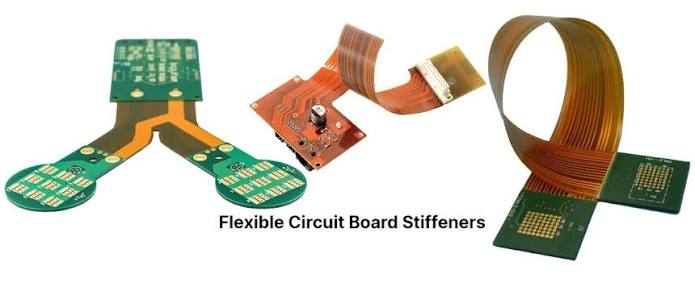
Flexible circuits are widely used in smartphones, wearable electronics, medical devices, automotive electronics, industrial equipment, aerospace systems, and other applications where space, weight, reliability, and mechanical movement are important.
However, flexible PCBs do not replace rigid PCBs in every application. The right solution depends on electrical requirements, mechanical constraints, production volume, reliability requirements, and overall cost.
As an experienced PCB manufacturer and PCB assembly provider, Kingda supports customers with PCB fabrication, flexible PCB manufacturing, rigid PCB production, rigid-flex PCB solutions, PCB assembly, prototyping, and production support through GOPCBA.
This article explains the major advantages of flexible circuit boards and when they may be a better choice than conventional rigid PCBs.
What Is a Flexible PCB?
A flexible PCB, also known as a flexible printed circuit board, is a circuit board manufactured using flexible insulating materials, typically polyimide or similar high-performance materials.
Unlike conventional FR-4 rigid PCBs, flexible circuits can be bent or folded within their specified mechanical limits.
A typical flexible PCB may consist of:
- Flexible copper foil
- Polyimide substrate
- Coverlay
- Adhesive or adhesive-less construction
- Surface finish
- Stiffeners
- Plated through holes or microvias
- Component mounting areas
Depending on the application, a flexible circuit can be designed as a single-sided, double-sided, or multilayer structure.
The key advantage is that the circuit does not have to occupy a flat rectangular space. Instead, it can follow the shape of the final product.
9 Advantages of Flexible PCB Technology
1. Excellent Mechanical Flexibility
The most obvious advantage of a flexible PCB is its ability to bend and conform to different mechanical structures.
Rigid PCBs are normally installed in a fixed position. Flexible circuits, in comparison, can be folded or bent to accommodate limited installation space.
This provides engineers with greater freedom when designing compact electronic products.
Flexible circuits can be used for:
- Foldable electronics
- Wearable devices
- Display connections
- Camera modules
- Medical equipment
- Sensors
- Automotive electronics
- Industrial control systems
- Compact consumer electronics
The mechanical flexibility of the circuit can also reduce the need for multiple rigid boards and separate wire harnesses.
However, flexibility should not be interpreted as unlimited bending capability. The allowable bend radius, copper thickness, layer structure, material selection, and whether the application involves static or dynamic bending all need to be considered during design.
For applications involving repeated movement, engineers should pay particular attention to the dynamic bend radius and flexing cycles required by the product.
2. Simplified Electrical Connectivity
One of the important benefits of flexible circuit boards is their ability to connect components or rigid PCBs without relying on conventional cable assemblies.
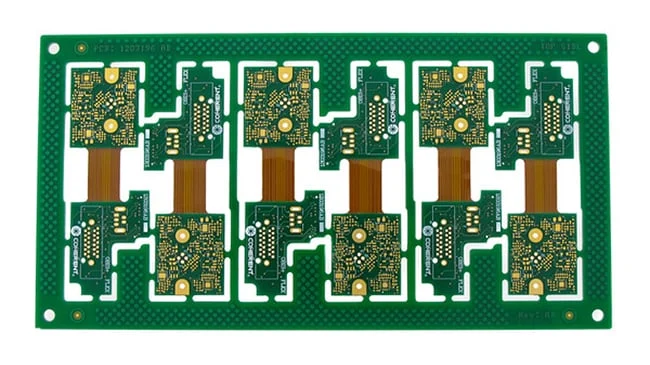
A flexible circuit can integrate electrical connections directly into the product structure.
Compared with traditional:
- Wire harnesses
- Cable assemblies
- Connectors
- Separate rigid PCBs
a properly designed flexible circuit can reduce the number of interconnections required.
This can simplify the internal architecture of an electronic product.
For example, a flexible circuit can connect a display module to the main PCB while following the shape of the enclosure.
This is particularly useful in:
- Laptop displays
- Smartphones
- Cameras
- Automotive dashboards
- Medical instruments
- Industrial displays
By combining electrical connectivity with mechanical flexibility, flex PCB manufacturing can help engineers create cleaner and more compact product designs.
3. Reduced Weight
Weight reduction is another important advantage of flexible PCBs.
A flexible circuit generally requires less mechanical space than a comparable assembly based on multiple rigid boards, cables, and connectors.
This can help reduce the overall weight of the electronic assembly.
Weight reduction is particularly important in:
- Wearable electronics
- Portable medical equipment
- Drones
- Aerospace electronics
- Automotive systems
- Battery-powered devices
- Portable industrial equipment
For aerospace and portable electronics, even a relatively small reduction in weight can contribute to improvements in system-level efficiency.
However, the final weight depends on the complete construction of the PCB, including copper thickness, number of layers, stiffeners, connectors, shielding, and components.
Therefore, engineers should evaluate the entire assembly rather than comparing substrate materials alone.
4. Improved Resistance to Vibration and Mechanical Stress
Flexible circuits can provide useful mechanical advantages in environments where conventional rigid connections may experience vibration or movement.
Because the circuit can flex slightly, it can help accommodate mechanical displacement between connected components.
This is valuable in applications exposed to:
- Continuous vibration
- Mechanical movement
- Shock
- Thermal expansion
- Repeated assembly movement
- Limited installation space
For example, automotive electronics can experience continuous vibration and temperature changes throughout the operating life of the vehicle.
Similarly, industrial equipment and aerospace systems may require circuit connections that can tolerate mechanical movement.
The reliability of a flexible circuit still depends heavily on its design and manufacturing quality. Copper grain structure, bend radius, layer construction, coverlay design, plating quality, and stress concentration all influence long-term performance.
5. Excellent Environmental and Thermal Performance
Many flexible PCBs use polyimide-based materials that provide good thermal stability compared with some conventional flexible substrates.
This makes flexible circuits suitable for applications where the circuit may experience elevated temperatures or repeated temperature changes.
Potential applications include:
- Automotive electronics
- Industrial sensors
- Aerospace systems
- Medical equipment
- Energy systems
- Oil and gas electronics
However, material selection should always be based on the actual operating environment.
Engineers should consider:
- Operating temperature
- Thermal cycling
- Chemical exposure
- Humidity
- Mechanical stress
- Required service life
A professional flexible PCB manufacturer should evaluate these conditions before selecting the appropriate substrate, copper, coverlay, adhesive system, and surface finish.
6. Support for Miniaturized Electronics
The continuing trend toward smaller electronic products is one of the strongest drivers behind flexible PCB technology.
Traditional rigid boards require a certain amount of physical space and often need connectors or cables to connect different modules.
A flexible circuit can occupy irregular spaces and bend around mechanical structures.
This allows designers to integrate electronics into smaller products.
Typical examples include:
- Smartwatches
- Smartphones
- Wearable devices
- Hearing devices
- Medical sensors
- Camera modules
- Portable electronics
- Compact industrial equipment
Flexible circuits can also reduce the amount of space required for cable routing.
This is particularly valuable when product designers are trying to increase functionality without increasing enclosure size.
7. High-Density Circuit Integration
A flex PCB is not simply a thin version of a rigid PCB.
With appropriate material selection and manufacturing processes, flexible circuits can support sophisticated multilayer designs and high-density interconnections.
Depending on the design requirements, engineers may use:
- Fine-pitch components
- Microvias
- Multilayer flexible circuits
- Stiffened component areas
- Controlled impedance structures
- Fine-line routing
- High-density interconnects
This makes flexible PCB technology suitable for compact products where conventional wiring would consume too much space.
For more complex applications, rigid-flex PCB technology can combine the advantages of both technologies.
8. Potential Reduction in Assembly Complexity
A flexible circuit can sometimes replace multiple components of a traditional interconnection system.
For example, a conventional assembly may require:
PCB + connector + cable + connector + second PCB
A rigid-flex or flexible circuit solution may integrate some of these functions into a single circuit structure.
This can potentially reduce:
- Connector count
- Cable count
- Assembly operations
- Mechanical interfaces
- Potential connection points
Fewer mechanical interfaces can simplify product assembly and potentially improve system reliability.
However, this advantage depends on the product architecture. A flexible PCB is not automatically cheaper or simpler than a rigid PCB.
The design should be evaluated at the system level, rather than based solely on PCB unit price.
9. Greater Design Freedom
Perhaps the biggest engineering advantage of flexible circuits is design freedom.
Rigid PCBs generally require designers to work within a flat board outline.
Flexible PCBs can be designed to:
- Fold
- Bend
- Wrap around components
- Follow curved surfaces
- Connect multiple PCB sections
- Occupy irregular spaces
This creates new possibilities for three-dimensional electronic packaging.
For example, a rigid-flex PCB can use rigid sections for component mounting and flexible sections for electrical connections.
This allows engineers to replace separate cables and connectors with an integrated PCB structure.
Flexible PCB vs. Rigid PCB: Which Should You Choose?
Although flexible PCBs offer many advantages, they should not automatically replace rigid circuit boards.
The choice should depend on the application.
| Factor | Rigid PCB | Flexible PCB |
|---|---|---|
| Mechanical flexibility | Limited | Excellent |
| Typical substrate | FR-4 and similar rigid materials | Polyimide and flexible materials |
| Weight | Generally higher | Generally lower |
| Installation space | Flat structure | Can conform to complex shapes |
| Vibration accommodation | Good with proper mounting | Very good for suitable applications |
| Manufacturing cost | Generally lower | Generally higher |
| Design complexity | Lower for conventional designs | Higher |
| Dynamic bending | Not suitable | Suitable with proper design |
| Miniaturization | Good | Excellent for space-constrained applications |
| Cable replacement | Limited | Strong advantage |
| High-density integration | Excellent | Excellent with appropriate design |
| Best use case | Conventional electronics | Compact, flexible, or moving electronics |
The most important point is that rigid PCBs and flexible PCBs are complementary technologies.
A rigid PCB may be the better choice for a conventional control board, while a flexible PCB may be more suitable for a display connection or compact wearable device.
When Should You Use a Rigid-Flex PCB?
A rigid-flex PCB combines rigid PCB sections with flexible circuit sections in one integrated structure.
It can be a strong option when the product requires both:
- Rigid areas for mounting components
- Flexible areas for bending or connecting different sections
Rigid-flex PCBs are commonly considered for:
- Medical devices
- Aerospace electronics
- Automotive electronics
- Portable electronics
- Cameras
- Industrial equipment
- High-density electronic assemblies
The main advantage is that the PCB itself can perform some of the functions traditionally handled by cables and connectors.
This can simplify mechanical integration while maintaining rigid mounting areas for components.
Flexible PCB Manufacturing Considerations
Designing a flexible PCB requires different considerations from designing a conventional rigid PCB.
Material Selection
Material selection should consider:
- Polyimide type
- Copper thickness
- Adhesive or adhesive-less construction
- Coverlay
- Stiffeners
- Surface finish
- Operating temperature
- Flexing requirements
The material system should match the expected mechanical and environmental conditions.
Bend Radius
Bend radius is one of the most important parameters in flexible circuit design.
A bend radius that is too small can create excessive mechanical stress on the copper and dielectric layers.
The acceptable radius depends on:
- Number of layers
- Copper thickness
- Material construction
- Static or dynamic bending
- Required flexing cycles
For dynamic applications, the design should be reviewed specifically for repeated flexing rather than relying on a generic bend-radius value.
Copper Selection
Copper thickness also affects flexibility.
Thicker copper generally provides greater current-carrying capability but can increase mechanical stiffness.
Therefore, designers need to balance:
Current capacity + electrical performance + mechanical flexibility + reliability
This is particularly important for power-carrying flexible circuits.
Stiffener Design
Stiffeners can be added to selected areas of a flexible circuit to improve mechanical support.
They are commonly used around:
- Connectors
- Component mounting areas
- ZIF connector interfaces
- Screw mounting locations
- Assembly areas
A well-designed stiffener improves mechanical stability without unnecessarily restricting the flexibility of the rest of the circuit.
What Determines Flexible PCB Cost?
One common misconception is that flexible PCB pricing is determined simply by board size.
In reality, many factors influence the cost of a flexible PCB.
These include:
- Number of layers
- PCB dimensions
- Copper thickness
- Material selection
- Coverlay requirements
- Stiffeners
- Surface finish
- Hole count
- Microvias
- Fine-line requirements
- Controlled impedance
- Component density
- Production quantity
- Testing requirements
- Special mechanical requirements
Flexible PCB manufacturing may have a higher unit cost than standard rigid PCB production because of specialized materials, additional engineering requirements, and more complex manufacturing processes.
However, the PCB unit price should not be evaluated independently.
A flexible or rigid-flex solution may eliminate:
- Separate cables
- Connectors
- Assembly operations
- Mechanical brackets
- Additional interconnection points
Therefore, the total system cost can sometimes be competitive even when the PCB itself has a higher unit price.
Common Applications of Flexible PCBs
The application range of flexible circuit boards continues to expand.
Consumer Electronics
Flexible PCBs are widely considered for:
- Smartphones
- Tablets
- Wearable devices
- Cameras
- Laptops
- Portable electronics
Their compact size and ability to conform to complex structures make them suitable for modern consumer products.
Medical Electronics
Flexible circuits can be used in:
- Medical sensors
- Diagnostic equipment
- Wearable medical devices
- Portable medical instruments
- Imaging systems
Medical applications often require careful material selection, reliability validation, and traceability.
Automotive Electronics
Flexible circuits can be used in:
- Displays
- Sensors
- Camera systems
- Lighting modules
- Instrument clusters
- Battery-related electronics
The design must account for vibration, temperature cycling, humidity, and long-term reliability.
Aerospace and Industrial Electronics
Flexible and rigid-flex PCBs can also support:
- Aerospace equipment
- Industrial controls
- Sensors
- Communication equipment
- Instrumentation
- Compact electronic modules
These applications may require additional reliability testing and documentation.
Why Choose Kingda for Flexible PCB Manufacturing?
Choosing the right manufacturing partner is important when developing a flexible PCB, especially when the design involves fine features, multilayer construction, tight mechanical requirements, or PCB assembly.
Kingda, through GOPCBA, provides PCB manufacturing and assembly support for customers developing prototypes, low-volume products, and production electronics.
PCB Manufacturing Support
Kingda can support different PCB technologies according to project requirements, including:
- Rigid PCBs
- Flexible PCBs
- Rigid-flex PCBs
- Multilayer PCBs
- HDI PCB solutions
- Custom PCB manufacturing
This allows customers to evaluate different PCB structures according to electrical, mechanical, and cost requirements.
Prototype and Small-Batch Production
For new electronic products, Kingda supports customers from initial prototype development through production.
This can help engineering teams:
- Validate PCB designs
- Identify manufacturing risks
- Evaluate component placement
- Test mechanical integration
- Optimize the design before volume production
A controlled prototype process can reduce the risk of discovering major manufacturing problems after mass production has already started.
PCB Assembly Services
In addition to bare PCB manufacturing, Kingda provides PCB assembly support, including:
- SMT assembly
- Through-hole assembly
- Component sourcing
- Assembly inspection
- PCB testing
- Prototype assembly
- Small-batch production
Combining PCB fabrication and assembly through one manufacturing partner can simplify project communication and reduce coordination between multiple suppliers.
Engineering and Manufacturing Support
Flexible PCB projects often require closer cooperation between PCB designers and manufacturers.
Kingda can support customers with manufacturing-oriented considerations such as:
- PCB design review
- DFM analysis
- Material selection
- Manufacturing optimization
- Assembly considerations
- Production planning
The objective is not simply to manufacture the PCB, but to help ensure that the design can be produced consistently.
Frequently Asked Questions About Flexible PCBs
Are flexible PCBs better than rigid PCBs?
Not necessarily.
Flexible PCBs are better suited to applications requiring bending, compact packaging, lightweight construction, or complex three-dimensional routing.
Rigid PCBs are generally more economical and remain the preferred choice for many conventional electronic products.
Are flexible PCBs more expensive?
In many cases, yes.
Flexible PCB manufacturing can involve specialized materials, coverlay, stiffeners, additional engineering work, and more complex manufacturing processes.
However, a flexible PCB may reduce total system cost by replacing cables, connectors, and additional mechanical components.
Can flexible PCBs be used for high-speed signals?
Yes.
Flexible circuits can be designed for high-speed and controlled-impedance applications when the appropriate materials, stack-up, trace geometry, and manufacturing controls are used.
High-speed applications should be reviewed for:
- Impedance control
- Dielectric properties
- Trace geometry
- Crosstalk
- Signal loss
- Connector design
Can flexible PCBs be assembled with SMT components?
Yes.
Flexible PCB assembly can use SMT components and, depending on the design, through-hole components as well.
Because flexible circuits are mechanically less rigid than conventional PCBs, temporary carriers, stiffeners, or other manufacturing methods may be required during assembly.
What is the difference between flexible PCB and rigid-flex PCB?
A flexible PCB is primarily constructed as a flexible circuit.
A rigid-flex PCB combines rigid board sections with flexible sections within one integrated PCB structure.
Rigid-flex technology is particularly useful when components need to be mounted on rigid areas while the circuit must bend between different sections of the product.
Conclusion
The growing demand for smaller, lighter, and more integrated electronic products is increasing the importance of flexible PCB technology.
The main advantages of flexible circuit boards include:
- Mechanical flexibility
- Reduced weight
- Compact packaging
- Three-dimensional routing
- Reduced cable requirements
- High-density integration
- Vibration accommodation
- Design flexibility
- Potential system-level cost savings
However, flexible PCBs are not a universal replacement for rigid PCBs. The best PCB technology depends on the product’s electrical requirements, mechanical structure, operating environment, production volume, reliability requirements, and target cost.
For applications requiring both rigid mounting areas and flexible interconnections, rigid-flex PCB technology can provide an effective alternative.
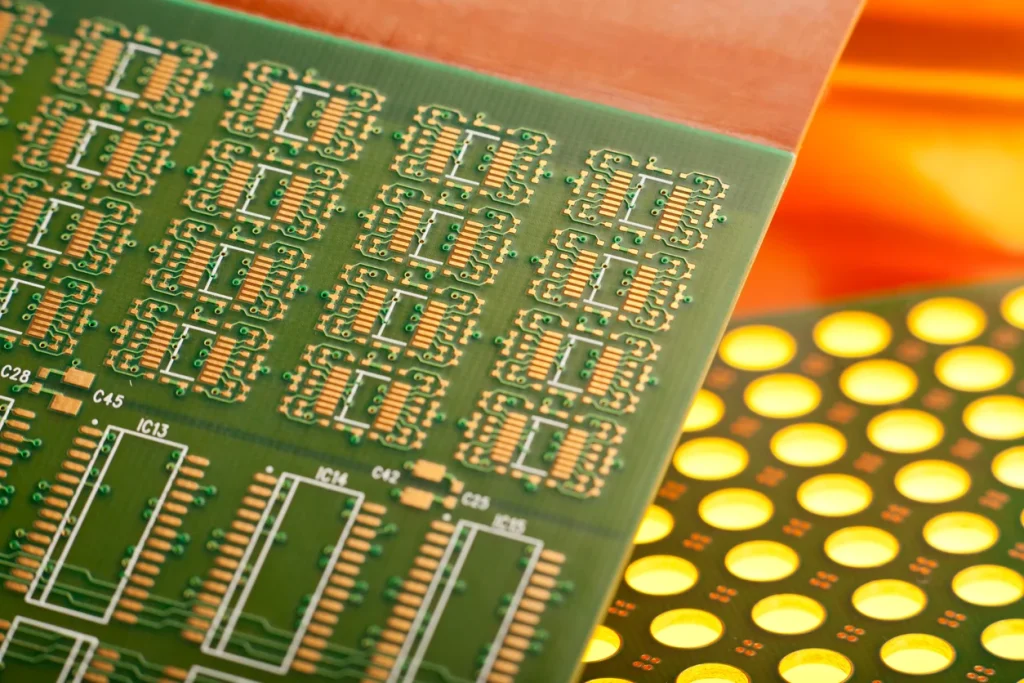
With PCB manufacturing, flexible PCB, rigid-flex PCB, PCB assembly, prototyping, and production support, Kingda aims to help OEMs, electronics manufacturers, and engineering teams move from PCB design to reliable production more efficiently.
Looking for a flexible PCB manufacturer for your next project? Contact Kingda through GOPCBA to discuss your PCB requirements, prototype needs, and production plans.