High Tg FR4 PCB Material: Complete Technical Specifications and Selection Guide (2026)
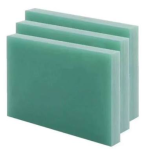
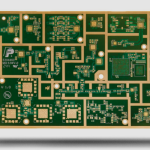
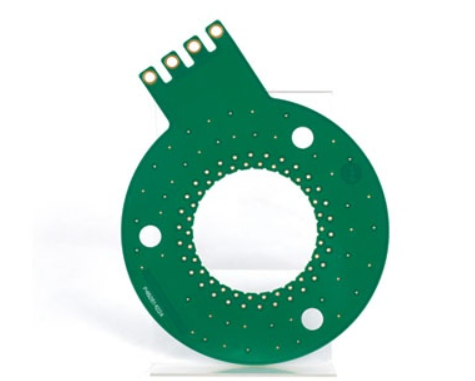
High Tg FR4 PCB material is an enhanced glass-reinforced epoxy laminate with a glass transition temperature of 170–180°C, specifically engineered to withstand lead-free assembly processes and high-temperature operating environments. Standard FR4 (Tg 130–140°C) softens during 260°C lead-free reflow, while high Tg FR4 maintains dimensional stability through multiple thermal cycles. For reliable lead-free assembly, specify materials with Tg ≥170°C and Td ≥340°C.
What Is High Tg FR4 PCB Material?
High Tg FR4 is a thermoset composite within the FR-4 family that significantly raises the glass transition temperature—the point at which the epoxy resin transitions from a rigid, glassy state to a rubbery, flexible state. Standard FR4 typically has a Tg of 130–140°C, while high Tg FR4 raises this threshold to 170°C or more.
The material is composed of woven E-glass fiber reinforcement bonded with a high-performance epoxy resin system, often phenolic-cured rather than the standard dicy-cured formulation. This advanced resin chemistry provides the thermal robustness required for modern electronics manufacturing. High Tg FR4 typically costs 10–20% more than standard FR4 for Tg170 grades, with premium grades like Isola 370HR commanding a 25–40% premium.
Key Technical Specifications of High Tg FR4
Understanding the technical specifications of high Tg FR4 PCB material is essential for proper material selection. The table below compares high Tg FR4 with standard FR4 across all critical parameters.
| Property | Standard FR4 | High Tg FR4 (170–180°C) | Engineering Significance |
|---|---|---|---|
| Glass Transition Temperature (Tg) | 130–140°C | 170–180°C | Thermal stability ceiling; higher = better |
| Decomposition Temperature (Td) | ~300°C | 340–350°C | Chemical breakdown threshold; critical for lead-free |
| Z-axis CTE (below Tg) | 50–60 ppm/°C | 40–50 ppm/°C | Lower expansion reduces via stress |
| Z-axis CTE (above Tg) | 250–300 ppm/°C | 200–230 ppm/°C | Critical for reflow survival |
| Thermal Stress (288°C) Survival | 10–15 minutes | 30+ minutes | T288 rating; rework capability |
| Dielectric Constant (Dk @ 1GHz) | 4.2–4.7 | 4.3–4.5 | Impedance control |
| Dissipation Factor (Df @ 1GHz) | 0.015–0.020 | 0.015–0.016 | Signal loss |
Recent industry data shows that high Tg FR4 materials deliver 3× better T288 endurance than standard FR4—30+ minutes versus 10 minutes at 288°C before delamination occurs. This margin is critical for boards that must survive rework and multiple reflow cycles.
Why High Tg FR4 Matters for Lead-Free Assembly
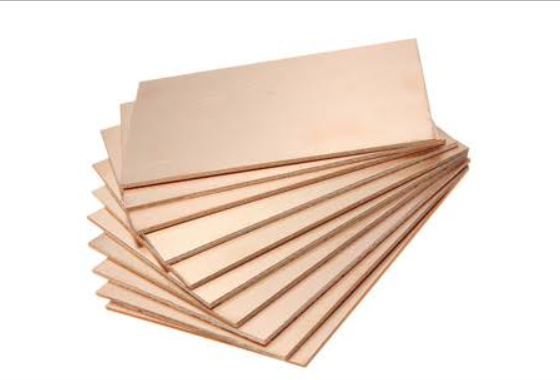
With the global transition to RoHS-compliant lead-free soldering, reflow temperatures regularly reach 260°C peak. When a PCB exceeds its Tg, the coefficient of thermal expansion in the Z-axis spikes dramatically—by 4–6×. This expansion places immense tensile stress on plated through-hole barrels and microvias, often causing barrel cracking and intermittent open circuits.
High Tg FR4 PCB material solves this problem by keeping the resin in its rigid, glassy state for a larger portion of the reflow profile. During the critical 60–90 seconds above Tg in a 260°C reflow oven, a Tg170 material gives you approximately 15% less Z-axis expansion than a Tg150 material—and the difference compounds multiplicatively across multiple reflow exposures.
For reliable lead-free assembly, engineers should specify materials with Tg ≥170°C and Td ≥340°C. IPC-4101/126 (filled) and /129 (unfilled) are the most common choices for lead-free compatible FR-4 materials.
High Tg FR4 vs. Standard FR4: When to Upgrade
The decision to upgrade from standard FR4 to high Tg FR4 PCB material depends on several factors. Here is a practical decision framework:
- Layer count: 2–6 layers → Standard FR4 acceptable; 8+ layers → High Tg FR4 required
- Lead-free reflow cycles: Single → Standard FR4 OK; multiple or rework expected → High Tg FR4 required
- PTH aspect ratio: < 8:1 → Standard FR4 OK; > 8:1 → High Tg FR4 required
- Board thickness: < 1.6mm → Standard FR4 OK; > 1.6mm → High Tg FR4 required
- Service temperature: < 130°C → Standard FR4 OK; 130–150°C → High Tg FR4 required
- Via reliability class: IPC Class 2 → Standard FR4 OK; IPC Class 3 → High Tg FR4 required
High Tg FR4 is the smart choice for reliable high-temperature PCBs, offering superior thermal stability, lower Z-axis CTE, and reduced warpage compared to standard FR4. It excels in lead-free assembly and demanding environments such as automotive, industrial, and 5G infrastructure applications.
For high-volume PCB assembly requiring consistent material properties through lead-free processes, our high-volume assembly services support all high Tg FR4 grades with full traceability.
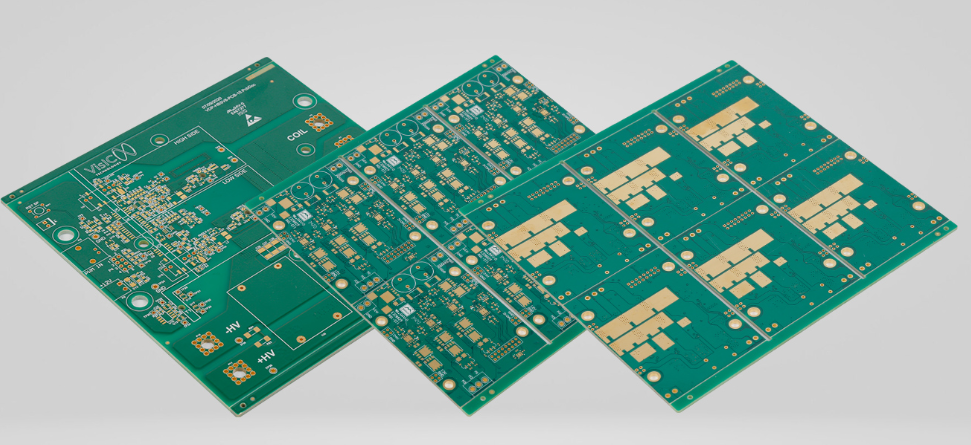
Major High Tg FR4 Products and Manufacturers
Several leading manufacturers offer high Tg FR4 PCB material grades. Understanding the differences helps in making the right selection.
ITEQ IT-180A
ITEQ IT-180A is arguably the most widely used high Tg FR4 material globally. It is a multifunctional, phenolic-cured, filled epoxy system designed for high-layer count PCBs and lead-free assembly. Key specifications: Tg (DSC) 175°C, Td 350°C, with exceptional Z-axis CTE (typically 2.7% from 50°C to 260°C). Applications include servers, networking, automotive control units, and heavy copper boards.
Isola 370HR
Isola 370HR is the undisputed industry standard for thermal reliability, sequential lamination, and Conductive Anodic Filament (CAF) resistance. It achieves a high Tg of 180°C (DSC) and an exceptional Td of 340°C. It maintains complete compatibility with standard FR-4 fabrication processes, requiring no exotic plasma desmear or specialized lamination cycles. Isola 370HR offers thermal conductivity of 0.4 W/m·K.
Kingboard KB-6165
Kingboard KB-6165 is a high Tg FR-4 copper clad laminate with a Tg of 170–180°C and Td of 340°C. It provides a nearly 80°C buffer above lead-free reflow peak temperatures, allowing for multiple reflow cycles and intensive manual rework without delamination. Z-axis CTE below Tg is 45 ppm/°C, rising to 220 ppm/°C above Tg.
Shengyi S1000-2M
Shengyi S1000-2M is arguably the most widely used laminate globally, offering a near-perfect balance of cost and reliability. It is a high Tg FR-4 with anti-CAF performance and excellent through-hole reliability.
At gopcb, we work with all major high Tg FR4 manufacturers to ensure consistent material quality and availability for your projects across prototype PCB assembly and PCB manufacturing.
High Tg FR4 vs. Mid-Tg and Standard Grades
FR-4 materials are categorized by Tg into three tiers:
- Standard FR4 (Tg 130–140°C): Suitable for low-layer count boards and consumer electronics
- Mid-Tg FR4 (Tg 150°C): A bridge material for improved reliability in handheld devices and industrial PCs
- High Tg FR4 (Tg ≥170°C): The standard for multilayer boards, automotive electronics, and anything undergoing lead-free reflow
ITEQ IT-180A and Isola 370HR sit in the “enhanced FR-4” tier—above standard Tg 130–140°C material but below true high-performance laminates like Megtron 6. Engineers reach for this tier when standard FR-4 fails thermal cycling requirements or when the design operates above 100°C ambient, but the signal integrity budget does not justify premium low-loss materials.
IPC-4101 Classification for High Tg FR4
FR-4 is a flammability grade, not a material specification. The document that carries specific requirements is IPC-4101, the base material specification for rigid and multilayer boards. Key slash sheets for high Tg FR4 PCB material include:
- IPC-4101/26: High Tg FR-4, Tg ≥170°C, brominated flame retardant
- IPC-4101/126: High Tg FR-4 with inorganic fillers, brominated flame retardant—the most common choice for lead-free compatible FR-4 materials
- IPC-4101/129: High Tg FR-4, no fillers, brominated flame retardant
- IPC-4101/99: High Tg FR-4 with inorganic fillers, brominated flame retardant
- IPC-4101/101: High Tg FR-4, no fillers, brominated flame retardant
Writing “FR4” alone on a drawing lets the fabricator choose any material in the family. Always specify the appropriate IPC-4101 slash sheet number to ensure consistent material properties. High Tg FR-4 (Tg 170-180°C) under IPC-4101/26, /126 is required for multilayer (>6 layers), automotive, servers, high-reliability, and IPC Class 3 applications.
For turnkey PCB assembly projects requiring specific IPC-4101 slash sheet compliance, our turnkey assembly services ensure full material traceability and certification.
Manufacturing Considerations for High Tg FR4
High Tg FR4 PCB material requires specific manufacturing considerations due to its enhanced thermal and mechanical properties.
Drilling and Machining
High Tg resins are generally harder and more abrasive than standard FR-4. Drill bit wear is slightly higher, and drill bit replacement cycles must be optimized to prevent nail-heading and hole wall roughness. High-Tg materials like S1000 are physically harder than standard FR-4.
Lamination and Curing
High-Tg FR-4 often requires longer cure times to achieve full cross-linking of the epoxy. Press temperatures typically run 170–185°C for 175°C Tg systems, with extended cure dwell compared to standard FR-4.
Desmear and Surface Preparation
Filled resin systems like S1000-2M are slightly more resistant to traditional chemical desmearing, requiring careful process optimization. The higher cross-link density that gives high Tg FR-4 its thermal robustness also means resin smear in drilled holes is harder to remove.
Common Applications for High Tg FR4 PCB Material
High Tg FR4 PCB material is the preferred choice for applications requiring thermal reliability and lead-free assembly compatibility:
- Automotive ECUs: Must survive under-hood temperatures and thermal cycling
- Industrial motor drives: Sustained 85°C operation with high reliability requirements
- Telecom infrastructure: Boards requiring 20-year field life
- Medical devices: Needing IPC Class 3 reliability
- Server and networking equipment: High-layer count designs with lead-free assembly
- 5G infrastructure: High-temperature operation and reliability demands
- LED power modules: High thermal stress environments
When your design requires flexible circuits or rigid-flex constructions, note that flex PCB assembly typically uses polyimide rather than high Tg FR4 due to FR4’s rigidity.
Frequently Asked Questions About High Tg FR4 PCB Material
What is the Tg of high Tg FR4 PCB material?
High Tg FR4 PCB material has a glass transition temperature of 170–180°C, compared to 130–140°C for standard FR4.
Why is high Tg FR4 required for lead-free assembly?
Lead-free reflow temperatures reach 260°C peak. When a PCB exceeds its Tg, Z-axis expansion increases dramatically, stressing plated through-holes. High Tg FR4 keeps the resin rigid for a larger portion of the reflow profile, reducing barrel cracking risk.
What is the difference between Tg150 and Tg170 FR4?
Tg170 FR4 offers 3× better T288 endurance (30+ minutes vs. 10 minutes) and 15% lower Z-axis CTE above Tg compared to Tg150 materials. Choose Tg170 for lead-free assemblies exceeding 260°C peak reflow, boards thicker than 1.6mm with 8+ layers, and any design requiring multiple reflow cycles.
Which IPC-4101 slash sheet covers high Tg FR4?
IPC-4101/126 (filled) and /129 (unfilled) are the most common choices for high Tg FR4 materials. IPC-4101/26 also specifies high Tg FR-4 with Tg ≥170°C.
How much more does high Tg FR4 cost than standard FR4?
High Tg FR4 typically costs 10–20% more than standard FR4 for Tg170 grades. Premium grades like Isola 370HR command a 25–40% premium. High-Tg PCBs manufactured intelligently cost 18–38% more than standard FR4 while delivering full 150–175°C reliability.
Can high Tg FR4 be processed with standard FR4 fabrication equipment?
High Tg FR4 maintains compatibility with standard FR-4 fabrication processes. However, drill bit wear is higher, cure times are longer, and desmear processes may require optimization.
Key Takeaways
- High Tg FR4 PCB material (Tg 170–180°C) is the industry-standard choice for lead-free assembly and high-reliability applications.
- Specify IPC-4101/126 or /129—not just “FR4″—to ensure consistent high Tg material properties.
- High Tg FR4 delivers 3× better T288 endurance (30+ minutes) than standard FR4, enabling reliable rework and multiple reflow cycles.
- Major high Tg FR4 products include ITEQ IT-180A (Tg 175°C), Isola 370HR (Tg 180°C), Kingboard KB-6165 (Tg 170–180°C), and Shengyi S1000-2M.
- High Tg FR4 costs 10–40% more than standard FR4 but provides essential thermal reliability for automotive, industrial, telecom, and 5G applications.
- For boards with 8+ layers, thickness >1.6mm, or multiple lead-free reflow cycles, high Tg FR4 is not optional—it is required.
Get Expert Assistance with Your High Tg FR4 PCB Project
Selecting the right high Tg FR4 PCB material grade for your specific application requires careful consideration of thermal, mechanical, and electrical requirements. Our engineering team can help you specify the optimal material for your design.
Contact our technical team for a free material consultation and DFM analysis. We support all high Tg FR4 grades—from IT-180A to 370HR—across turnkey PCB assembly, PCB manufacturing, and component procurement services.