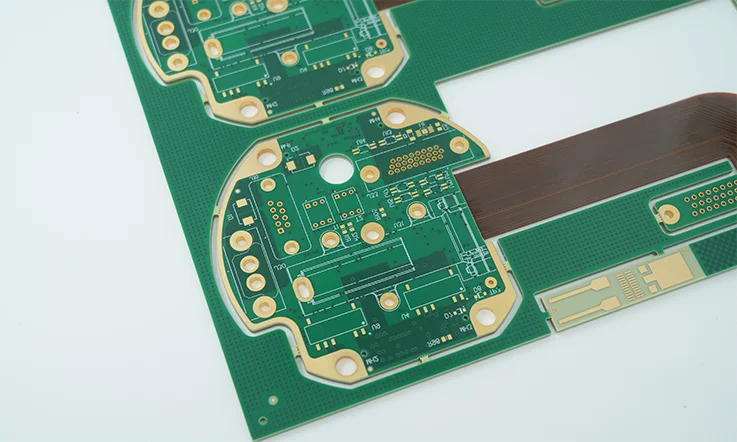
High Tg Laminate Selection And What It Buys
The glass transition temperature of a laminate is the point at which the resin changes from a hard, glassy material into a softer, rubbery one. Below it the board is stiff and its dimensions are stable; above it the resin expands much faster, its mechanical properties fall and its dielectric constant changes. A high Tg laminate raises that point, and the question for a designer is whether the product needs it.
This article explains what the figure means, when it matters, what a high Tg material costs, and how the choice is documented and verified.
What Tg Measures
The glass transition is a property of the polymer, and it is measured by a thermal analysis method as a change in heat capacity, in mechanical stiffness or in expansion. Several methods give slightly different values, so a figure is only comparable with another measured the same way, and the method should be quoted alongside the number.
An ordinary FR-4 has a Tg between about 130 and 140 degrees Celsius. A mid grade material reaches 150 to 160, and a high Tg laminate is quoted above 170, with some products above 180. The figure is a property of the cured resin, and it is affected by the cure cycle as well as by the chemistry, so a laminate that is not fully cured can measure lower than its specification.
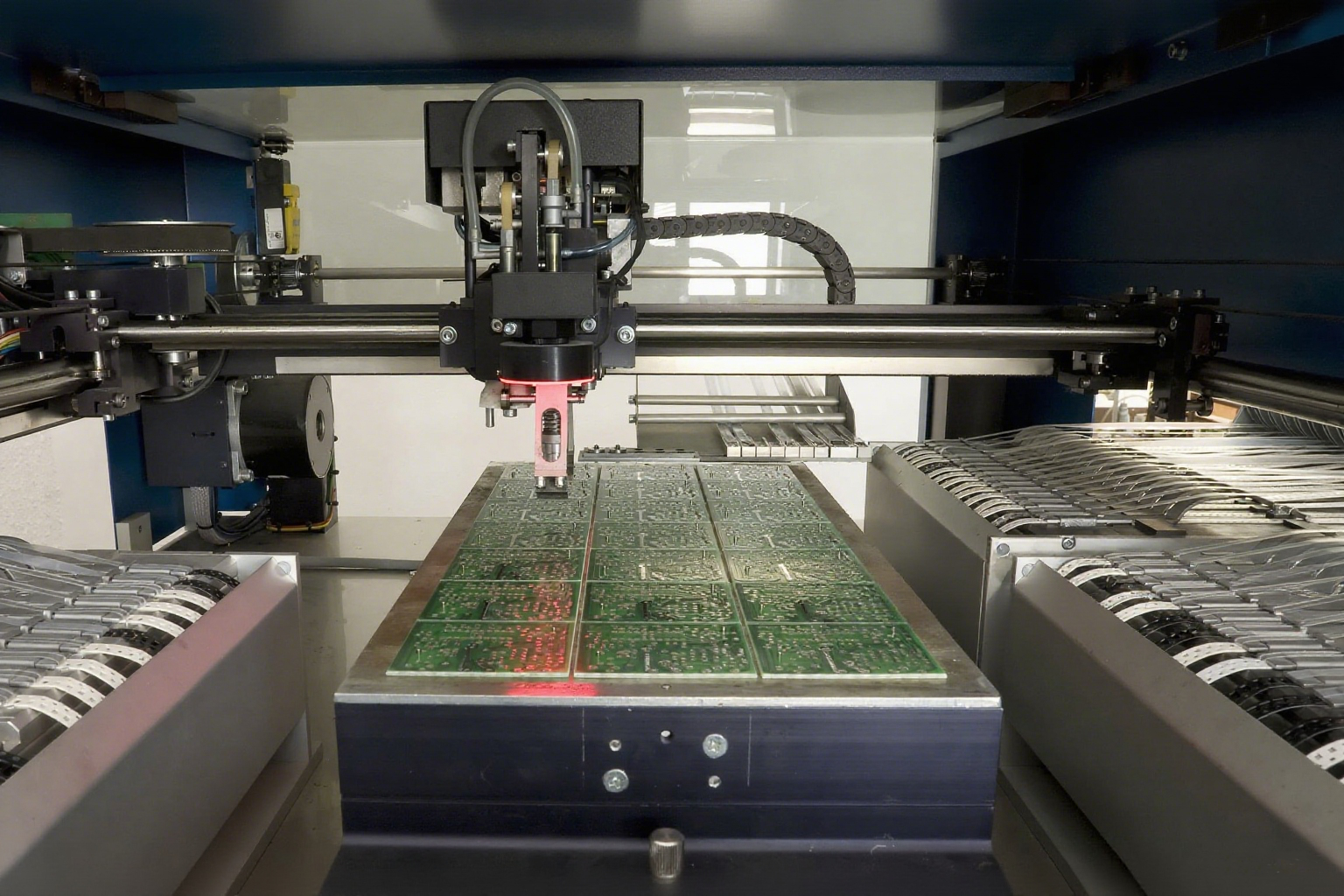
When A High Tg Material Is Needed
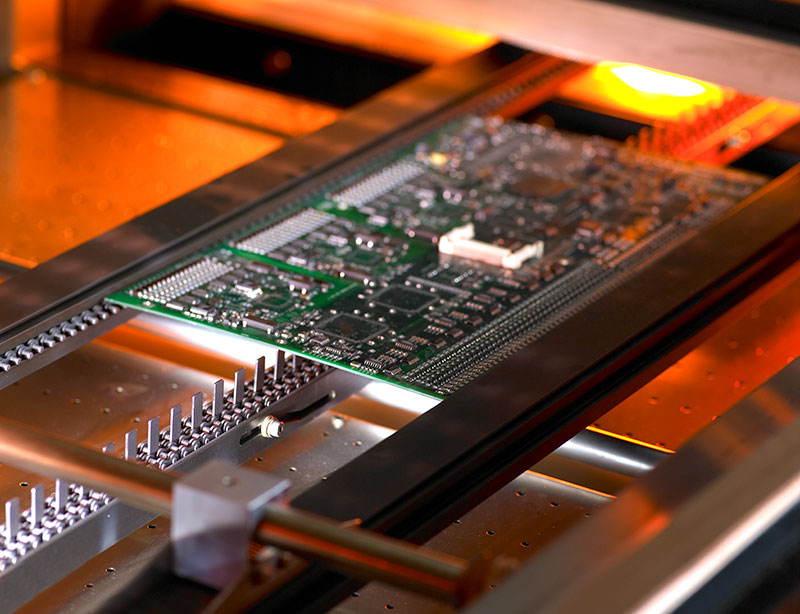
The first reason is the assembly temperature. A lead free reflow takes the board to a peak of 240 to 250 degrees, which is well above the transition of an ordinary FR-4, so the board is soft during the operation. It expands, it can sag between the supports, and the holes and the pads move relative to one another. A laminate with a higher transition is stiffer at that temperature and the movement is smaller.
The second reason is the operating environment. A product that runs hot, or that has to survive a thermal cycle in service, spends time near its transition, and the expansion above the transition is several times that below it. The third reason is the number of assembly passes: a board that is reflowed twice, reworked and then baked accumulates thermal exposure, and each pass degrades a low Tg material a little further.
The Decomposition Temperature
The glass transition is not the only thermal limit. The decomposition temperature is the point at which the resin begins to break down chemically, and it matters at the surface of the board during reflow, where the temperature is higher than in the bulk and where the material is exposed to air. A laminate with a low decomposition temperature can show discolouration, delamination and a loss of adhesion around the holes after several passes.
A common specification for a lead free compatible laminate includes both a high Tg and a decomposition temperature above about 340 degrees. The two are related but not the same, and a material with a high Tg and a low decomposition temperature is not suitable for a lead free process no matter what its transition figure suggests. The interaction of the material with the process is described under lead free versus leaded solder.
Other Properties That Change
A high Tg material is not simply a stiffer version of the standard one. Its dielectric constant and loss are usually slightly different, its coefficient of expansion is lower above the transition, and its moisture uptake and its adhesion to copper may differ as well. Those differences propagate into the impedance of every transmission line and into the dimensional behaviour of the board, which is described under PCB dimensional stability and expansion.
The practical consequence is that a change of laminate is a change of the electrical design as well as of the process. Traces may need to be re-sized to keep the same impedance, the stackup may need to be re-balanced and the drill parameters may need to be adjusted because the material cuts differently. A substitution made for cost reasons without re-checking those items is a common cause of a product that no longer meets its specification.
Cost And Process Consequences
A high Tg laminate costs more per square metre than a standard one, and it also costs more to process. It is harder to drill, so the tool wear is higher and the hit count per bit is lower; it needs a longer press cycle to cure fully; and its surface is often more sensitive to the mechanical preparation steps before plating. Those costs are real and they should be counted before the material is chosen.
The counter argument is yield. On a large, thick board with fine features, the loss from warpage, from hole movement and from rework of a low Tg material can easily exceed the cost difference. The decision is therefore product specific, and it belongs with the stackup design rather than with the purchasing department. The stackup that results is described under layer stackup from one to eight layers.
Documentation And Verification
The laminate belongs on the fabrication drawing, together with its Tg, its decomposition temperature and the standard it is qualified to. A drawing that names only a thickness and a copper weight leaves the material to be chosen by the shop, and the shop will choose the one that suits its inventory. Where the product needs a specific material, the requirement has to be explicit and the material has to be traceable in the certificate of conformity.
Verification is by certificate and by test. The certificate states what the manufacturer measured, and a periodic check on a sample confirms that the material behaves as expected. The checks that matter most in production are the dimensional behaviour through the press and the drift of the hole positions after reflow, since both respond to the transition temperature and both are visible without destroying the board.
Process Control and Verification
On a design of this kind, glass transition is the item that decides how the rest of the board is arranged. The process window is set by the narrowest step in the flow, so an improvement anywhere else shows up as margin rather than as yield until that step is addressed. A short note on the drawing about handling, storage or packaging is often worth more than an extra decimal place on a tolerance.
Process Control and Verification
On a design of this kind, glass transition is the item that decides how the rest of the board is arranged. The process window is set by the narrowest step in the flow, so an improvement anywhere else shows up as margin rather than as yield until that step is addressed. A short note on the drawing about handling, storage or packaging is often worth more than an extra decimal place on a tolerance.
FAQ
Is a high Tg laminate always better? No. It costs more and it is harder to process, and a product that is assembled at a low temperature and operates cool gains nothing from it. The choice should follow the thermal exposure of the application.
Does a high Tg material stop warpage? It reduces the movement at temperature, which reduces one cause of warpage, but a stackup that is unbalanced will still bow. Both have to be right.
Can the laminate be substituted without requalification? It cannot. The dielectric constant, the expansion and the drilling behaviour all change, and the process has to be re-established before the first production lot rather than after it.