Creating High Volume PCB Assembly is not simply a matter of taking a prototype PCB assembly process and running it more times. Once production reaches tens of thousands, hundreds of thousands, or even millions of boards, the manufacturing strategy must change.
At high production volumes, even a small defect rate can create a substantial number of defective units. A component shortage can interrupt an entire production schedule. A minor design weakness can become a major cost issue when multiplied across thousands of products.
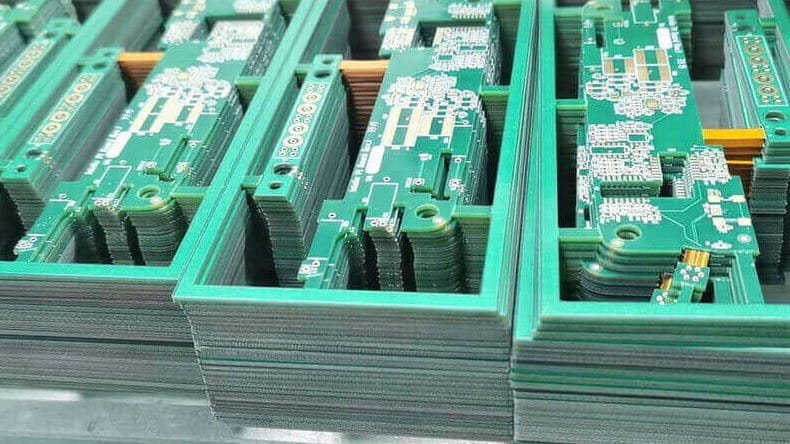
For this reason, successful High Volume PCB Assembly depends on coordinated DFM, DFA, DFT, automated production, component management, traceability, inspection, testing, process control, and supply-chain management.
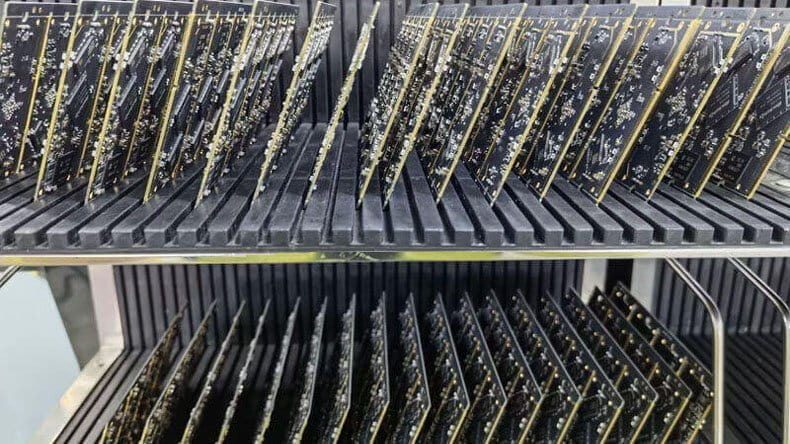
Kingda defines high-volume PCB assembly as bulk PCBA production of 10,000 pieces or more in a production cycle, supported by DFM and DFT processes. Its published services cover high-volume PCB assembly from prototype and low-volume development through larger-scale production. (Kingda)
What Is High Volume PCB Assembly?
High Volume PCB Assembly refers to the production and assembly of large quantities of printed circuit boards using highly automated, repeatable, and controlled manufacturing processes.
Unlike prototype or low-volume production, high-volume manufacturing emphasizes:
- Production consistency
- High first-pass yield
- Automated assembly
- Stable component supply
- Process repeatability
- Automated inspection
- Automated testing
- Full production traceability
- Cost optimization
- Scalable manufacturing capacity
A typical high-volume PCBA workflow can be summarized as:
PCB Design → DFM/DFA/DFT → Prototype Validation → Component Procurement → PCB Fabrication → Solder Paste Printing → SMT Placement → Reflow → AOI/X-Ray → THT Assembly → Testing → Final Inspection → Packaging → Shipment
The objective is not simply to make more boards. It is to manufacture large numbers of consistent boards with predictable quality and cost.
When Do You Need High Volume PCB Assembly?
The appropriate production volume depends on the application, product lifecycle, demand forecast, and business model.
Kingda currently describes 10,000+ boards per production cycle as high-volume PCB assembly. (Kingda)
Typical high-volume applications include:
- Automotive electronics
- Consumer electronics
- Smart-home devices
- Telecommunications
- Industrial controls
- Medical electronics
- Power electronics
- IoT devices
- Computing equipment
- AI hardware
- Security equipment
Automotive applications can require particularly large production volumes because the same control board may be installed across multiple vehicle models or production platforms.
Why High Volume PCB Assembly Is Different
A prototype can often tolerate manual intervention and engineering adjustments.
A high-volume production line cannot rely on manual decisions for every board.
When production reaches hundreds of thousands of units, the key question becomes:
Can the same process produce the same result repeatedly?
A reliable high-volume manufacturing system therefore needs to control the complete production chain.
1. Design for High Volume Manufacturing
A design that works well for one prototype may not necessarily be optimized for mass production.
Before moving to volume production, the PCB design should undergo:
DFM + DFA + DFT
Design for Manufacturability
Design for Manufacturability (DFM) evaluates whether the PCB can be manufactured reliably and economically.
Typical DFM considerations include:
- Trace width and spacing
- Hole sizes
- PCB thickness
- Via structures
- Copper thickness
- Pad geometry
- Solder-mask clearance
- Layer registration
- Surface finish
- Panel utilization
The goal is to reduce fabrication variation and prevent avoidable production problems.
Design for Assembly
Design for Assembly (DFA) focuses on how efficiently components can be mounted and soldered.
It can evaluate:
- Component spacing
- Component orientation
- Fiducial placement
- Pick-and-place accessibility
- Soldering requirements
- THT/SMT interaction
- Panelization
Kingda provides DFM and DFA engineering services as part of its one-stop PCBA manufacturing model. (Kingda)
Design for Test
Design for Test (DFT) ensures that the board can be tested efficiently once it enters volume production.
A high-volume board may require:
- Test points
- Programming interfaces
- ICT access
- Functional-test interfaces
- Boundary-scan access
- Dedicated test fixtures
Designing test access early can significantly reduce production testing time.
2. PCB Panelization and Production Optimization
In prototype manufacturing, a PCB may be manufactured individually.
In high-volume production, multiple PCB units are normally arranged on production panels to improve equipment utilization and reduce handling.
A well-designed panel can optimize:
- SMT placement area
- Solder-paste printing
- Reflow throughput
- PCB utilization
- Depanelization
- Material consumption
- Production handling
Panelization should be considered alongside assembly equipment and depanelization requirements rather than treated as a final production step.
For complex boards, the panel design must also consider PCB warpage, component placement, tooling holes, fiducials, copper balance, and mechanical separation.
3. Component Selection for Mass Production
Component sourcing becomes substantially more important as production volume increases.
Finding a component that works electrically is only the beginning.
A high-volume design also needs components that have:
- Stable supply
- Long-term availability
- Multiple sourcing options
- Consistent specifications
- Competitive volume pricing
- Reliable quality
- Appropriate lifecycle status
A component that suddenly becomes unavailable can interrupt production of thousands of finished products.
Component Lifecycle Management
Before approving a component for mass production, engineers should evaluate:
Availability + Lifecycle + Supplier Stability + Alternative Sources + Cost
Where possible, qualified second-source components should be considered during the engineering phase.
BOM Optimization
A production-ready Bill of Materials (BOM) should contain:
- Manufacturer
- Manufacturer part number
- Supplier
- Quantity
- Package
- Approved alternatives
- Lifecycle information
- Special requirements
Kingda provides component procurement and supply-chain management as part of its integrated PCBA service, helping customers manage component availability, quality, and production requirements. (Kingda)
4. Automated PCB Production
Manual assembly becomes impractical when production reaches high volumes.
A modern High Volume PCB Assembly Line typically integrates automated equipment for:
Solder Paste Printing → Component Placement → Reflow → Inspection → Testing
Kingda states that it uses automated SMT and THT production lines to support prototype, low-volume, and medium-to-high-volume manufacturing. Its published rapid-production information lists 8 fully automatic production lines. (Kingda)
Automated Solder Paste Printing
The solder-paste printing stage must maintain consistent:
- Paste volume
- Stencil alignment
- Aperture performance
- Printing pressure
- Printing speed
For high-volume production, small variations in paste deposition can become systematic defects.
Solder Paste Inspection (SPI) can therefore be used to detect printing problems before component placement.
Automated Pick-and-Place
Modern SMT placement equipment can place thousands of components rapidly.
The process must maintain consistency in:
- X/Y position
- Rotation
- Polarity
- Package recognition
- Placement force
Advanced components such as BGA, QFN, CSP, LGA, and 01005 devices require especially careful process control.
Kingda publishes support for advanced SMT component packages including 01005 and BGA-related applications. (Kingda)
Reflow Soldering
After component placement, assemblies pass through a controlled reflow profile.
The process must control:
- Preheat
- Soak
- Peak temperature
- Time above liquidus
- Cooling rate
A stable thermal profile helps maintain consistent solder-joint quality across production batches.
5. Automated Traceability
At high volumes, traceability is no longer simply a recordkeeping activity.
It becomes an important part of production control.
A PCB Traceability System can connect:
Component Lot → PCB → Assembly Process → Operator/Equipment → Inspection → Testing → Shipment
Possible identification methods include:
- Barcodes
- QR codes
- Serial numbers
- Laser marking
- Date codes
- Lot numbers
- Panel identifiers
Traceability is particularly valuable in automotive, medical, aerospace, industrial, and other high-reliability markets.
If a component lot is later found to have a problem, traceability can help identify which products were affected instead of requiring the entire production volume to be treated as defective.
Kingda states that its ERP-based manufacturing systems support whole-product-process traceability, with manufacturing records maintained through the production lifecycle. (Kingda)
6. Automated PCB Inspection
Manual inspection is difficult to scale when production reaches tens or hundreds of thousands of boards.
Automated PCB Inspection provides consistent inspection at production speed.
SPI
3D Solder Paste Inspection (SPI) checks solder-paste deposition before components are mounted.
It can detect:
- Insufficient paste
- Excessive paste
- Offset
- Bridging risk
- Printing inconsistencies
AOI
Automated Optical Inspection (AOI) can identify:
- Missing components
- Incorrect components
- Polarity errors
- Placement errors
- Solder defects
Kingda lists 3D SPI and AOI among its PCB assembly inspection capabilities. (Kingda)
X-Ray Inspection
X-Ray PCB Inspection is useful for hidden solder joints, especially:
- BGA
- QFN
- Bottom-terminated components
- Internal connections
Kingda lists X-ray inspection for BGA and hidden solder joints among its inspection capabilities. (Kingda)
7. Automated PCB Testing
Inspection can identify visible or structural defects, but electrical testing is necessary to confirm functional performance.
High-volume PCBA commonly uses:
- ICT
- FCT
- Flying probe for selected applications
- Programming verification
- Customized functional testing
In-Circuit Testing
ICT can verify electrical characteristics at predefined test points.
Typical checks include:
- Shorts
- Opens
- Component values
- Electrical connections
Functional Testing
Functional Circuit Testing (FCT) verifies whether the assembled product performs its intended functions.
Depending on the product, FCT may check:
- Power-up behavior
- Communications
- Sensors
- Motors
- Displays
- Inputs and outputs
- Wireless interfaces
- Firmware behavior
Kingda publishes both ICT and FCT capabilities and supports customized testing procedures. (Kingda)
High Volume PCB Assembly Quality Control
High-volume production requires quality control throughout the manufacturing process rather than relying only on final inspection.
A typical quality structure can include:
IQC → SPI → SMT → AOI → X-Ray → THT → ICT/FCT → OQC
Where:
- IQC = Incoming Quality Control
- SPI = Solder Paste Inspection
- AOI = Automated Optical Inspection
- ICT = In-Circuit Test
- FCT = Functional Circuit Test
- OQC = Outgoing Quality Control
This layered approach helps identify defects as early as possible.
Advantages of Contract High Volume PCB Assembly
Companies sometimes consider building their own high-volume PCB assembly lines.
For many organizations, however, outsourcing to a specialized High Volume PCB Assembly Manufacturer can be more practical.
1. Lower Capital Investment
A high-volume PCBA facility requires significant investment in:
- SMT equipment
- Reflow ovens
- SPI
- AOI
- X-ray systems
- Testing equipment
- Fixtures
- Tooling
- ESD infrastructure
- Production software
- Maintenance
Outsourcing allows OEMs to access this infrastructure without building an entire manufacturing operation themselves.
2. Specialized Engineering Expertise
High-volume production requires expertise in:
- PCB layout
- DFM
- DFA
- DFT
- SMT
- THT
- Thermal management
- Testing
- Supply-chain management
- Quality engineering
An experienced contract manufacturer can provide these disciplines under one manufacturing structure.
3. Faster Production Scaling
An established manufacturer already has:
- Production equipment
- Trained personnel
- Supplier relationships
- Quality systems
- Manufacturing processes
- Production planning
This can make it easier to move from prototype through pilot production and volume manufacturing.
Kingda explicitly describes its service model as supporting prototype, low-volume, and high-volume production, giving customers a path from initial development to volume manufacturing. (Kingda)
4. Supply-Chain Advantages
High-volume PCB assembly requires stable material supply.
A manufacturing partner can consolidate procurement and use established supplier networks to manage:
- Component availability
- Volume purchasing
- Lead time
- Alternative components
- Inventory
Kingda identifies global component procurement and supply-chain management as part of its PCBA service. (Kingda)
5. Scalable Quality Control
A professional manufacturer can integrate automated inspection and testing directly into the production line.
This is more scalable than creating a large manual inspection team.
In-House vs. Contract High Volume PCB Assembly
| Factor | In-House High Volume PCBA | Contract High Volume PCBA |
|---|---|---|
| Initial investment | Very high | Lower |
| Equipment | Customer-funded | Manufacturer-provided |
| Engineering team | Customer-funded | Existing manufacturer team |
| Supply chain | Internally managed | Manufacturer-supported |
| Production scalability | Requires additional investment | Usually easier |
| Quality systems | Must be developed and maintained | Existing system |
| Maintenance | Customer responsibility | Manufacturer responsibility |
| Manufacturing flexibility | Depends on internal capacity | Generally higher |
| Time to production | Longer setup | Faster for established suppliers |
| Best suited for | Very large, strategically controlled programs | Most OEM and product-development programs |
Why Vertical Integration Matters
High-volume PCBA becomes more efficient when multiple manufacturing stages are coordinated.
An integrated supplier can manage:
PCB Fabrication → Component Procurement → PCBA → Testing → Box Build → Packaging
This reduces handoffs between suppliers and simplifies production communication.
Kingda describes itself as a one-stop electronics manufacturing provider integrating PCB design, PCB manufacturing, component procurement, SMT, DIP, finished-product assembly, and testing. (Kingda)
High Volume PCB Assembly Cost Optimization
The lowest unit price is not necessarily the lowest total manufacturing cost.
The actual cost of high-volume PCBA is influenced by:
- PCB material
- Layer count
- Copper weight
- Component costs
- Assembly time
- Placement density
- Soldering process
- Inspection
- Testing
- Panelization
- Scrap
- Rework
- Logistics
- Inventory
Reduce Unnecessary PCB Complexity
Reducing unnecessary:
- Layers
- Vias
- Tight tolerances
- Special materials
- Complex finishes
can lower production costs when the application permits.
Optimize Component Selection
Standard, widely available components can often improve:
- Price
- Availability
- Assembly compatibility
- Lifecycle stability
Optimize Panel Utilization
Proper panelization can reduce:
- Material waste
- Handling time
- Setup time
and improve equipment utilization.
Control Defects Early
A defect discovered after shipment is significantly more expensive than one identified during SPI, AOI, or ICT.
This is why Automated Quality Control is central to high-volume manufacturing.
High Volume PCB Assembly for Different Industries
Automotive Electronics
Automotive PCBA can involve extremely demanding requirements for:
- Reliability
- Traceability
- Temperature
- Vibration
- Supply stability
- Long-term component availability
Typical applications include:
- ECUs
- BMS
- ADAS
- Infotainment
- Vehicle networking
- Power electronics
Kingda reports IATF 16949 certification and automotive electronics experience. (Kingda)
Consumer Electronics
High-volume manufacturing is particularly important for:
- Smartphones
- Wearables
- Smart-home devices
- Consumer appliances
- Personal electronics
These products typically emphasize cost, compactness, production speed, and consistent quality.
Industrial Electronics
Industrial controllers, automation systems, sensors, and data-acquisition products require long-term reliability and stable component supply.
Medical Electronics
Medical products can require strict:
- Traceability
- Process control
- Inspection
- Documentation
- Quality management
Kingda reports ISO 13485 certification for medical-device quality management. (Kingda)
Kingda High Volume PCB Assembly Advantages
Kingda’s published high-volume PCBA services include production at 10,000 pieces or more per production cycle, with DFM and DFT incorporated into the manufacturing process. (Kingda)
Automated Production Capability
Kingda uses automated SMT/THT production lines and publishes support for high-volume and medium-to-high-volume manufacturing. Its rapid-production information lists 8 fully automatic production lines. (Kingda)
Complete Inspection and Testing
Kingda supports:
3D SPI + AOI + X-Ray + FAI + ICT + FCT
This creates multiple quality gates throughout production. (Kingda)
Component Procurement
Kingda provides global component procurement and supply-chain management, supporting stable sourcing and production planning. (Kingda)
Full Traceability
Its ERP-driven manufacturing system supports full production traceability, connecting incoming materials with manufacturing, inspection, testing, and delivery records. (Kingda)
Prototype-to-Mass-Production Support
Kingda supports:
Prototype → Low Volume → Volume Production → Finished Product
This can simplify the transition from product development to mass manufacturing. (Kingda)
One-Stop EMS Capability
Beyond PCB assembly, Kingda provides:
- PCB design
- PCB fabrication
- Component sourcing
- SMT
- DIP/THT
- Testing
- Cable assembly
- Box build
- Finished-product assembly
This integrated model can reduce supplier coordination and simplify project management. (Kingda)
International Quality Certifications
Kingda reports:
- IATF 16949
- ISO 13485
- ISO 9001
- ISO 14001
- UL
- IPC membership
These certifications support its manufacturing services across automotive, medical, industrial, communications, AI, and other electronics sectors. (Kingda)
How to Choose a High Volume PCB Assembly Supplier
Before selecting a manufacturing partner, evaluate more than the quoted unit price.
A capable supplier should provide:
1. Sufficient Production Capacity
Ask whether its equipment and production lines can support your projected annual volume.
2. Automated Manufacturing
Confirm the availability of automated:
Solder Paste Printing + SMT Placement + Reflow + AOI + Testing
3. Engineering Support
Look for DFM, DFA, DFT, BOM optimization, and process engineering support.
4. Component Procurement
Evaluate supplier networks, lifecycle management, alternative sourcing, and component authenticity.
5. Testing Capability
Confirm support for SPI, AOI, X-ray, ICT, FCT, and application-specific testing.
6. Traceability
The supplier should be able to track materials, production batches, inspection results, testing data, and shipments.
7. Quality Certifications
Check certifications relevant to your industry and product requirements.
8. Prototype-to-Production Capability
A supplier that supports both prototypes and high-volume production can reduce technology-transfer risk during production ramp-up.
Conclusion
High Volume PCB Assembly requires a fundamentally different manufacturing strategy from prototype and low-volume PCBA.
At large production volumes, success depends on more than assembly capacity. A reliable manufacturing system must combine:
DFM + DFA + DFT + Component Management + Automated SMT + Automated Inspection + Automated Testing + Traceability + Quality Control + Supply-Chain Management
The objective is to manufacture thousands or millions of boards with consistent electrical performance, mechanical reliability, predictable production costs, and stable delivery.
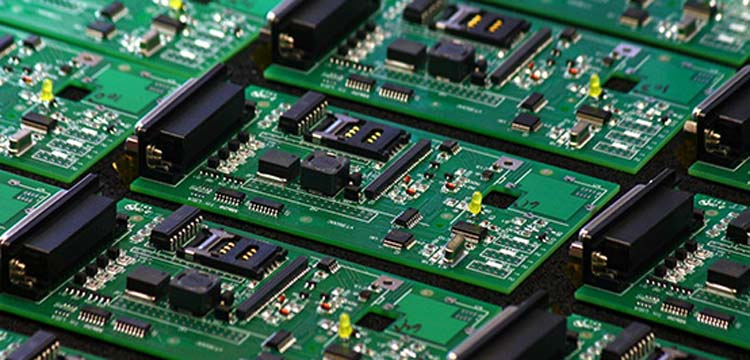
For OEMs, outsourcing high-volume production to an experienced High Volume PCB Assembly Manufacturer can also reduce capital expenditure, shorten production ramp-up, improve supply-chain management, and provide access to specialized engineering and quality resources.
Kingda supports high-volume PCBA programs at 10,000 pieces or more per production cycle, while providing DFM/DFT support, automated SMT/THT assembly, component procurement, SPI, AOI, X-ray, ICT, FCT, traceability, and finished-product integration. (Kingda)
Its one-stop manufacturing model allows customers to move from prototype and low-volume production to high-volume manufacturing and final product assembly under one coordinated supplier. (Kingda)
For automotive electronics, industrial controls, medical devices, consumer electronics, communications, AI hardware, and other products requiring scalable electronics production, selecting the right High Volume PCB Assembly Supplier is an important part of building a reliable and cost-effective manufacturing strategy.