IC Programming Services
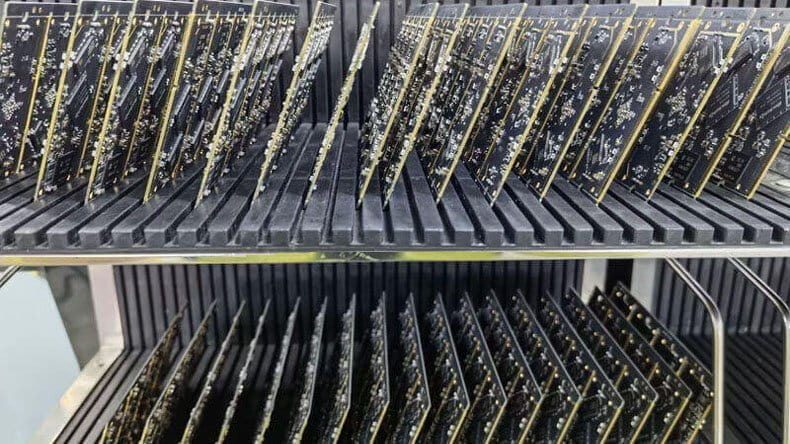
IC Programming Services are used to load firmware, configuration data, or application code into programmable integrated circuits such as microcontrollers, FPGAs, CPLDs, memory devices, and processors. The programming process enables an otherwise unconfigured IC to perform its intended functions within an electronic product.
IC programming can be performed before component assembly or directly on an assembled PCB. The appropriate method depends on the IC package, programming interface, production volume, firmware requirements, and product design. For manufacturers, a controlled IC Programming Process helps ensure consistent firmware loading, reliable verification, and efficient production.
For projects that require complete electronics manufacturing, programming can be integrated with PCB Assembly to create a streamlined production workflow from bare PCB fabrication through programmed and tested assemblies.
What Is IC Programming?
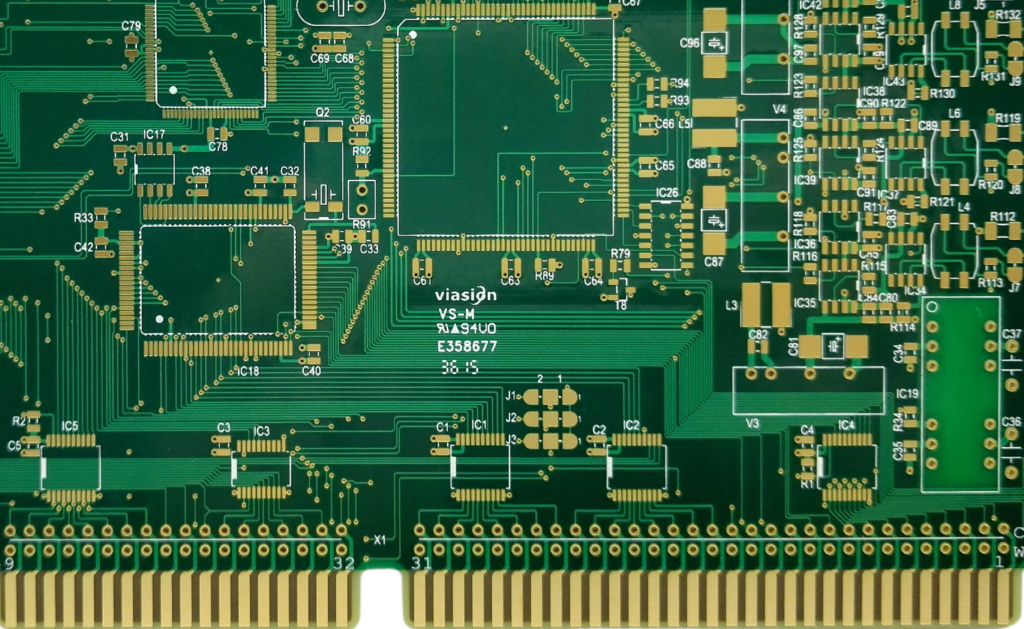
IC programming is the process of writing firmware, configuration data, or instructions into an integrated circuit so that it can perform a defined function.
Many programmable ICs are supplied without the final application firmware. During production, a programmer transfers the required data from a computer or programming system to the target IC. The data is then verified to confirm that the programmed contents match the original source file.
The process may involve dedicated programming hardware, sockets, adapters, test fixtures, or PCB-based interfaces. Depending on the device, programming may use JTAG, SWD, SPI, I2C, UART, or other manufacturer-specific interfaces.
When programming is part of a larger production process, it should be considered during PCB Design and Layout so that suitable test points, connectors, programming interfaces, and access areas are included in the PCB design.
Types of Programmable ICs
Different IC technologies require different programming methods and tools. Common programmable devices include the following.
CPLD
Complex Programmable Logic Devices (CPLDs) contain configurable logic elements that can be programmed to perform specific digital logic functions. They are commonly used in control systems, interface logic, industrial equipment, and customized digital circuits.
FPGA
Field-Programmable Gate Arrays (FPGAs) contain configurable logic blocks and programmable interconnections. FPGA Programming allows developers to configure the internal hardware architecture for applications such as signal processing, communications, industrial control, imaging, and embedded computing.
Flash Memory ICs
Flash memory devices store digital information using non-volatile memory technology. They may be programmed with firmware, configuration data, boot information, or other application-specific data.
Microcontrollers
Microcontrollers integrate processing, memory, and peripheral functions into a single IC. MCU Programming loads application firmware into the microcontroller so it can control sensors, motors, displays, communication interfaces, and other electronic functions.
Why Do ICs Need Programming?
Programming determines how a programmable IC operates within a finished electronic product. Common reasons for programming include:
- Firmware loading: Install the software required for the device to operate.
- Functional configuration: Set device parameters and application-specific functions.
- Boot configuration: Load bootloader or startup instructions.
- Device identification: Store product IDs, serial numbers, addresses, or configuration data.
- Communication settings: Configure parameters such as baud rates and communication addresses.
- Performance optimization: Apply firmware or configuration changes to improve system performance.
- Security: Enable device security features and restrict unauthorized access.
- Product customization: Configure different versions of the same hardware for specific applications.
For production electronics, programming can be combined with PCBA Testing to verify that the programmed device and the assembled circuit operate correctly.
IC Programming Interfaces
The programming interface determines how data is transferred between the programming equipment and the target IC.
JTAG
JTAG is a widely used interface for programming, debugging, and testing programmable devices. It is commonly found on FPGAs, CPLDs, processors, and other advanced digital ICs.
SWD
Serial Wire Debug (SWD) is commonly used for programming and debugging ARM-based microcontrollers. It requires fewer connections than traditional JTAG and is widely used in embedded development and production.
I2C
I2C is a two-wire communication interface commonly used for configuration and programming of compatible memory devices, sensors, controllers, and peripheral ICs.
SPI
SPI provides high-speed serial communication and is frequently used to program external flash memory and other compatible devices.
UART
UART interfaces can be used for bootloader-based programming, firmware updates, debugging, and communication with microcontrollers.
IEEE 1149.1
IEEE 1149.1, commonly associated with JTAG boundary-scan technology, provides standardized methods for device testing and programming in compatible systems.
IC Programming Methods
There are two primary approaches to IC Programming in electronics manufacturing.
Offline IC Programming
With offline programming, ICs are programmed before they are installed onto the PCB. The components are placed into dedicated sockets or adapters connected to a programming machine.
This approach is useful when large quantities of identical components must be programmed efficiently. Automated equipment can handle component loading, programming, verification, marking, and sorting.
On-Board IC Programming
On-board programming takes place after the IC has been installed on the PCB. The programming equipment connects to dedicated test points, connectors, pogo pins, or programming headers.
This method eliminates the need to remove the component from the PCB and is particularly useful for microcontrollers, processors, FPGAs, and other devices that support in-circuit programming.
For production projects requiring complete manufacturing, Prototype PCB Assembly can be used to validate programming interfaces and firmware loading procedures before moving into larger-scale production.
IC Programming File Formats
The programming file format depends on the target device and programming software.
HEX Files
HEX files are widely used for microcontrollers and memory devices. They typically contain firmware data represented in a structured hexadecimal format.
BIN Files
Binary files contain raw programming data without the additional address and formatting information found in some other file formats. They are commonly used for flash memory and embedded firmware programming.
BIT Files
BIT files are commonly associated with FPGA configuration data and are used with compatible FPGA development and programming tools.
JEDEC Files
JEDEC files are commonly used for programmable logic devices such as CPLDs and related devices. They contain device configuration information required by compatible programmers.
Other Programming Files
Depending on the manufacturer and device family, programming systems may also support ELF, S-record, proprietary image formats, configuration files, and other firmware packages.
The programming file should always match the target device, memory architecture, programming tool, and production requirements.
IC Programming Equipment
Different production environments require different programming equipment.
Automated Programming Systems
Automated programmers are designed for high-volume manufacturing. Robotic handling systems can load ICs, program them, verify the contents, mark the components, and move them to the next production stage.
Desktop Programmers
Desktop programmers are suitable for development, engineering validation, prototypes, and lower-volume production. They typically use interchangeable sockets and adapters for different IC packages.
In-Circuit Programming Systems
In-circuit programming systems connect directly to the PCB through test fixtures, pogo pins, connectors, or dedicated programming headers. They are useful when programming is integrated into the assembly and production test process.
Specialized Programming Systems
Some applications require dedicated programming equipment designed for specific device families, packages, security requirements, or field-service applications.
IC Programming Process
A controlled IC Programming Process normally includes several important stages.
1. Select the IC
The correct programmable device is selected according to the PCB design, processor requirements, memory capacity, package type, voltage, programming interface, and application requirements.
2. Prepare the Firmware
The required firmware or configuration file is prepared and checked before production. Version control is important when multiple firmware revisions are used.
3. Connect the Programming Equipment
The target IC is connected to the programmer through a socket, adapter, JTAG interface, SWD interface, pogo-pin fixture, or another supported connection method.
4. Load the Programming Data
The programming software transfers the firmware or configuration data to the target IC. Programming parameters must be configured according to the device manufacturer’s requirements.
5. Verify the Programmed Data
After programming, the contents are verified against the original programming file. Verification helps identify incomplete programming, communication errors, incorrect device selection, or damaged components.
6. Mark and Track the Device
For production applications, serial numbers, firmware versions, barcodes, or other identification information may be recorded for traceability.
7. Perform Functional Testing
The programmed IC is evaluated as part of the complete electronic assembly. Functional testing confirms that the firmware, hardware, interfaces, and connected components operate as expected.
For projects requiring a complete production solution, Turnkey PCB Assembly can integrate component procurement, PCB fabrication, assembly, programming, inspection, and testing into a coordinated manufacturing process.
IC Programming Preparation
Before starting production programming, several factors should be checked:
- Confirm that the programming file matches the exact IC model.
- Verify firmware version and revision control.
- Check the programming voltage and electrical requirements.
- Confirm that the programming adapter matches the IC package.
- Check all programming cables and connections.
- Verify programming software and device libraries.
- Confirm the correct programming interface and pin assignment.
- Test the programming procedure with sample devices.
- Establish data recording and traceability requirements.
- Confirm that programmed devices pass the required functional tests.
IC Programming Quality Control
Quality control is essential because an incorrectly programmed IC can cause an otherwise correctly manufactured PCB to fail.
A reliable programming operation should include device identification, firmware verification, programming result verification, operator controls, programming fixture inspection, and production traceability.
Programming data should also be protected from unauthorized modification. Production personnel should use controlled firmware versions and clearly defined programming procedures.
For projects that require integrated manufacturing and inspection, PCB Manufacturing can be combined with assembly and programming to maintain greater control over the complete production chain.
IC Programming Services for Production
Professional IC Programming Services can support prototype development, pilot production, and volume manufacturing.
Depending on the project, services may include:
- Offline IC programming
- On-board IC programming
- MCU firmware programming
- FPGA configuration
- CPLD programming
- Flash memory programming
- Firmware verification
- Device serialization
- Barcode and label management
- Programming fixture development
- Functional testing
- Production traceability
Integrating programming into the manufacturing workflow can reduce handling, minimize programming errors, and simplify production management.
Benefits of Professional IC Programming
Reduced Production Time
Automated programming systems can process multiple devices efficiently, reducing manual programming operations and improving production throughput.
Improved Programming Consistency
Standardized programming procedures help ensure that every device receives the correct firmware and configuration.
Better Traceability
Firmware versions, serial numbers, programming results, and production records can be linked to individual products or production batches.
Lower Manufacturing Complexity
Combining programming with assembly and testing reduces the number of external production steps and simplifies project management.
Flexible Production
Programming solutions can support prototypes, low-volume production, and larger manufacturing runs with appropriate equipment and fixtures.
IC Programming for PCB Assembly
Programming is often an important step in modern electronics manufacturing. It can be performed before PCB assembly, during assembly, or after the complete PCB has been assembled, depending on the product architecture.
For prototype and production projects, programming requirements should be considered early in the PCB design stage. Test points, programming connectors, access areas, and debugging interfaces should be incorporated into the design whenever necessary.
For mixed-technology products, Mixed Technology PCB Assembly can combine SMT and through-hole components while supporting downstream programming and testing requirements.
How to Choose an IC Programming Service Provider
When selecting an IC Programming Services provider, consider the following factors:
- Supported IC manufacturers and device families
- Programming equipment and adapters
- Offline and on-board programming capabilities
- Firmware version control
- Programming verification procedures
- Serialization and traceability
- Functional testing capabilities
- Production capacity
- Quality management systems
- Engineering support
- Integration with PCB assembly and manufacturing
A capable electronics manufacturing partner should be able to coordinate programming with PCB fabrication, component sourcing, assembly, inspection, and final testing.
Conclusion
IC Programming is a critical manufacturing step for programmable electronic devices. Whether the project involves microcontrollers, FPGAs, CPLDs, flash memory, or other programmable ICs, the correct programming method ensures that each device receives the required firmware and configuration.
A well-controlled IC Programming Process combines suitable equipment, verified programming files, reliable interfaces, data verification, traceability, and functional testing. When integrated with PCB manufacturing and assembly, programming can become a seamless part of the complete electronics production workflow.
GOPCBA provides integrated electronics manufacturing capabilities covering PCB fabrication, component sourcing, assembly, programming, testing, and production support, helping customers move from prototype development to reliable production with a coordinated manufacturing process.
Frequently Asked Questions
What is IC programming?
IC programming is the process of loading firmware, configuration data, or instructions into a programmable integrated circuit so that it can perform its intended functions.
When should IC programming be performed?
Programming can be performed before component assembly or after the IC has been mounted on the PCB. The appropriate method depends on the device and production requirements.
What ICs can be programmed?
Common programmable devices include microcontrollers, FPGAs, CPLDs, flash memory, processors, and other programmable logic or memory devices.
What interfaces are used for IC programming?
Common interfaces include JTAG, SWD, SPI, I2C, UART, and device-specific programming interfaces.
What files are required for IC programming?
Common programming formats include HEX, BIN, BIT, and JEDEC files, although the required format depends on the target IC and programming software.
Can IC programming be integrated with PCB assembly?
Yes. IC programming can be integrated with PCB assembly, inspection, and functional testing to create a more efficient and traceable manufacturing process.