In today’s fast-moving electronics industry, High Volume PCB Assembly is essential for companies that need to manufacture large quantities of reliable electronic products while maintaining consistent quality and competitive costs.
As demand grows from automotive electronics, telecommunications, consumer electronics, industrial automation, medical devices, AI hardware, and smart-home products, manufacturers need more than basic PCB assembly capacity. They require a production partner with advanced automation, stable component sourcing, rigorous quality control, production traceability, and the ability to scale from product development to mass production.
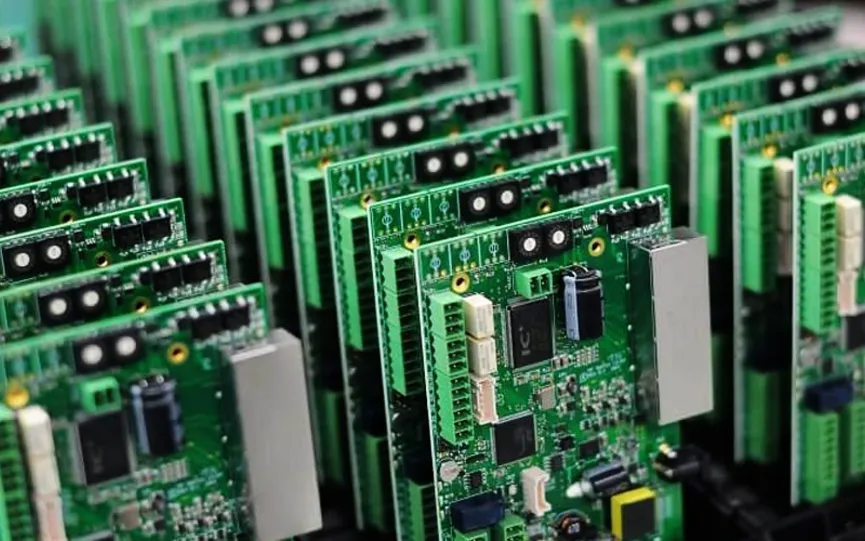
Unlike prototype assembly, where flexibility and engineering iteration are the primary priorities, High Volume PCB Assembly focuses on repeatability, production yield, process stability, automation, cost control, and supply-chain continuity.
Kingda defines High Volume PCB Assembly as bulk PCBA production of 10,000 pieces or more in one production cycle, with DFM and DFT integrated into the manufacturing process. Kingda also supports a production path from prototypes and low-volume manufacturing to high-volume production. (Kingda)
What Is High Volume PCB Assembly?
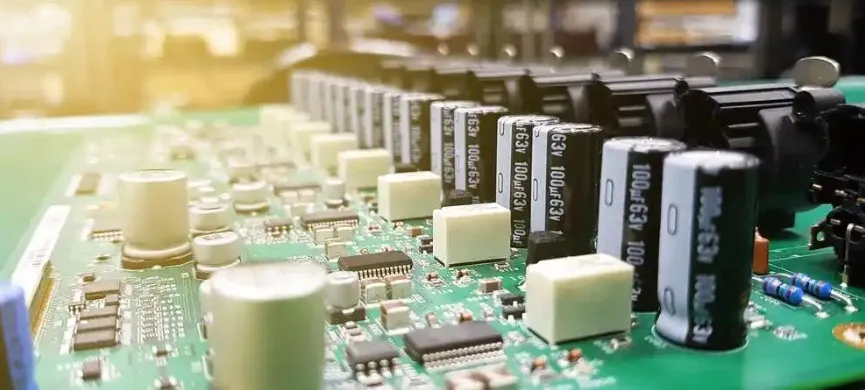
High Volume PCB Assembly refers to the large-scale production of assembled printed circuit boards using highly automated manufacturing processes.
Rather than manufacturing several prototypes or hundreds of boards, high-volume production may involve tens of thousands or significantly more PCB assemblies for a single product program.
A typical High Volume PCB Assembly Process includes:
Design Review → DFM/DFA/DFT → PCB Fabrication → Component Procurement → Solder Paste Printing → SMT Placement → Reflow Soldering → AOI/X-Ray → THT Assembly → Electrical Testing → Functional Testing → Final Inspection → Packaging → Shipment
The primary objectives are:
- High production efficiency
- Consistent quality
- High first-pass yield
- Low defect rates
- Stable component supply
- Automated inspection and testing
- Full traceability
- Predictable production costs
- Reliable delivery
The larger the production volume, the more important each of these factors becomes.
Why High Volume PCB Assembly Matters
High-volume electronics manufacturing creates a different set of challenges from prototype production.
A minor manufacturing variation affecting one prototype may be easy to correct. The same variation repeated across 100,000 boards can become a major financial and quality problem.
For example, a defect rate of only 0.5% across 100,000 assemblies would potentially affect approximately 500 units.
This is why High Volume PCB Manufacturing must focus on preventing defects rather than relying only on final inspection.
Key Benefits of High Volume PCB Assembly
1. Lower Unit Cost
Large production volumes allow manufacturers to distribute fixed costs across more units.
Bulk production can reduce:
- PCB fabrication costs
- Component procurement costs
- Machine setup costs
- Labor costs per unit
- Testing costs per unit
- Packaging costs
However, low unit cost should never be achieved by sacrificing quality.
2. Faster Production
Automated SMT equipment can place large quantities of components quickly and consistently.
Modern Automated PCB Assembly lines can integrate:
- Solder paste printing
- SPI
- Pick-and-place
- Reflow
- AOI
- X-ray
- Electrical testing
This significantly improves production throughput compared with manual assembly.
3. Consistent Quality
Once manufacturing parameters are validated, automated production can reproduce the same process repeatedly.
This is especially important for:
- Automotive electronics
- Medical devices
- Industrial controls
- Telecommunications
- Consumer electronics
4. Scalability
A professional High Volume PCB Assembly Supplier should be capable of supporting the transition from prototype to pilot production and then to mass production.
This helps avoid repeated supplier qualification and reduces technology-transfer risks.
How to Choose a High Volume PCB Assembly Supplier
Before selecting a manufacturing partner, consider several critical factors.
1. Manufacturing Capabilities
A capable supplier should support:
- SMT Assembly
- Through-Hole Assembly
- Mixed Technology Assembly
- Multilayer PCB assembly
- Fine-pitch components
- BGA
- QFN
- CSP
- LGA
- 0201 and 01005 components
- Reflow soldering
- Wave soldering
- Selective soldering
- Conformal coating
- IC programming
- Box build assembly
Kingda’s published capabilities include advanced SMT assembly, component sizes down to 01005, BGA packages, QFN, CSP, LGA and PoP, as well as THT and mixed-technology assembly. (Kingda)
2. Production Capacity
Production capacity should match both current and expected future demand.
Ask the supplier:
- How many production lines are available?
- What is the daily/monthly production capacity?
- Can production be scaled?
- Are dedicated lines available?
- How is production prioritized during peak periods?
Kingda states that it operates 8 fully automatic PCBA production lines and supports prototype, low-volume, and volume production. (Kingda)
3. Engineering Support
High-volume production should begin with engineering review.
Important engineering services include:
DFM + DFA + DFT + BOM Review + Process Optimization
Kingda provides engineering support including DFM, DFT, DFX optimization, and manufacturing process improvement. (Kingda)
High Volume PCB Assembly Process
Step 1: Design Review and DFM/DFT Analysis
Before mass production begins, engineers should review the PCB design for manufacturability and testability.
DFM
Design for Manufacturability (DFM) evaluates:
- Trace width and spacing
- Pad size
- Via structure
- Component spacing
- PCB thickness
- Solder-mask clearance
- Manufacturing tolerance
DFA
Design for Assembly (DFA) considers:
- Component orientation
- Placement efficiency
- Assembly accessibility
- Soldering requirements
- SMT/THT interaction
DFT
Design for Testing (DFT) ensures that the finished PCB can be tested efficiently.
The design may include:
- Test points
- ICT interfaces
- Functional test access
- Programming connectors
- Boundary-scan access
Early DFM/DFA/DFT analysis can substantially reduce production risk.
Step 2: High-Precision PCB Fabrication
A high-volume PCB assembly program requires a stable PCB manufacturing process.
Depending on the application, manufacturers may use:
- FR-4
- High-Tg FR-4
- High-frequency materials
- High-speed laminates
- Polyimide
- Aluminum-backed materials
- HDI structures
- Rigid-flex constructions
Kingda’s published PCB capabilities include multilayer boards, HDI, high-frequency materials, high-Tg FR-4, aluminum-backed PCBs and advanced surface finishes. Its listed PCB capabilities extend to 20 layers standard and up to 100 layers advanced for certain PCB structures. (Kingda)
Step 3: Panelization
PCB Panelization is particularly important for mass production.
Multiple PCB units are arranged on a manufacturing panel to maximize production efficiency.
Proper panelization can improve:
- SMT machine utilization
- Material utilization
- Printing efficiency
- Reflow throughput
- Depanelization
- Handling efficiency
The panel design should also consider:
- Fiducial marks
- Tooling holes
- Component clearance
- PCB warpage
- Copper balance
- Depanelization requirements
Step 4: Component Procurement and BOM Validation
Component sourcing becomes increasingly important as production volume increases.
A component shortage affecting a prototype may delay one engineering build.
The same shortage during mass production can stop an entire manufacturing program.
A professional High Volume PCB Assembly Manufacturer should evaluate:
- Component availability
- Lifecycle status
- Lead time
- Approved suppliers
- Alternative components
- Price stability
- Counterfeit prevention
Kingda provides component procurement and supply-chain management services and states that it works with major component distributors including Digi-Key, Mouser and Element14. (Kingda)
BOM Validation
Before procurement, the BOM should be reviewed for:
- Manufacturer part number
- Supplier
- Package
- Quantity
- Lifecycle status
- Approved alternatives
- Availability
- Customer-specific requirements
This process can prevent unnecessary production delays.
Step 5: Solder Paste Printing
The first major SMT production stage is Solder Paste Printing.
The stencil must be aligned accurately with the PCB.
Important process parameters include:
- Stencil thickness
- Aperture size
- Paste volume
- Squeegee pressure
- Printing speed
- Alignment accuracy
In high-volume production, even small printing variations can become repeated defects.
Step 6: Solder Paste Inspection
SPI (Solder Paste Inspection) verifies the quality of printed solder paste before components are mounted.
It can detect:
- Insufficient solder paste
- Excessive solder paste
- Offset
- Bridging risk
- Printing defects
SPI is valuable because it allows defects to be identified before they move further down the production line.
Step 7: Automated Component Placement
High-speed Pick-and-Place Machines place components at high speed and precision.
Kingda’s published SMT capabilities support:
- 01005 components
- BGA
- QFN
- CSP
- LGA
- PoP
- Fine-pitch devices
Kingda also lists support for BGA packages down to 0.35 mm pitch on its current PCB assembly capability page. (Kingda)
Step 8: Reflow Soldering
After placement, the board passes through a controlled Reflow Soldering process.
The temperature profile must be optimized according to:
- Solder alloy
- PCB thickness
- Copper weight
- Component thermal sensitivity
- Board thermal mass
A stable reflow process reduces the risk of:
- Cold solder joints
- Tombstoning
- Bridging
- Voids
- Component damage
Step 9: THT and Mixed Technology Assembly
Not every product uses SMT exclusively.
Some high-volume products also require Through-Hole Technology (THT).
Kingda supports:
- Manual insertion
- Automated insertion
- Wave soldering
- Selective soldering
- Press-fit connectors
- Mixed SMT + THT assembly
This is useful for products containing large connectors, transformers, power components, and mechanically stressed parts. (Kingda)
Step 10: Automated Inspection and Quality Control
A robust High Volume PCB Assembly Process should include multiple inspection stages rather than depending only on final inspection.
AOI
Automated Optical Inspection (AOI) detects:
- Missing components
- Incorrect components
- Misalignment
- Polarity errors
- Solder defects
X-Ray Inspection
X-Ray Inspection is useful for hidden solder connections, particularly:
- BGA
- QFN
- Bottom-terminated devices
First Article Inspection
FAI (First Article Inspection) validates the first production units before full-volume production continues.
Kingda lists SPI, AOI, X-ray, FAI, ICT, and functional testing among its inspection and testing capabilities. (Kingda)
Step 11: Electrical and Functional Testing
Inspection verifies physical quality, but electrical testing determines whether the board actually works.
ICT
In-Circuit Testing (ICT) can verify:
- Component values
- Opens
- Shorts
- Electrical connections
- Selected circuit characteristics
FCT
Functional Circuit Testing (FCT) simulates operating conditions to verify system-level performance.
Testing can include:
- Power
- Communication
- Sensors
- Displays
- Motors
- Digital interfaces
- Analog signals
- Firmware
Kingda supports both ICT and FCT and can implement customer-specific functional test procedures. (Kingda)
Step 12: Traceability, Packaging, and Logistics
For high-volume manufacturing, PCB Traceability should connect production data with individual boards or production batches.
Traceability may include:
- Serial number
- QR code
- Barcode
- PCB revision
- Component lot
- Production date
- Production line
- Inspection result
- Testing result
Kingda states that its manufacturing records, inspection results, and production data are maintained through a traceability system supporting product lifecycle and quality requirements. (Kingda)
After final approval, PCB assemblies should be protected with:
- ESD-safe packaging
- Moisture protection
- Protective trays
- Custom labeling
- Shipment documentation
Quality Standards for High Volume PCB Assembly
A qualified manufacturing partner should understand the relevant industry standards.
Common standards include:
IPC-A-610
Defines acceptability criteria for electronic assemblies.
IPC-6012
Provides qualification and performance requirements for rigid printed boards.
ISO 9001
Defines requirements for quality-management systems.
ISO 13485
Relevant to medical-device quality-management systems.
IATF 16949
Relevant to automotive quality-management systems.
ISO 14001
Addresses environmental-management systems.
RoHS
Restricts specified hazardous substances in applicable electronic products.
The exact certifications and compliance requirements should always be matched to the product and target market.
Kingda reports IATF 16949:2016, ISO 13485:2016, ISO 9001:2015, ISO 14001:2015 and UL certifications, and states that it is an IPC member. (Kingda)
Challenges in High Volume PCB Assembly
Component Supply Risk
Large-scale production requires predictable supply.
A sudden shortage can interrupt the manufacturing schedule.
The solution is to establish:
Approved Vendors + Alternative Components + Inventory Planning + Lifecycle Monitoring
Defect Multiplication
A small process problem can affect a large number of boards.
This makes:
SPI + AOI + X-Ray + ICT + FCT
important components of a comprehensive quality system.
Production Consistency
Production parameters need to remain stable across:
- Different batches
- Different shifts
- Different production lines
- Different operators
Process monitoring and standardized work instructions help maintain consistency.
Complex PCB Designs
High-volume products may use:
- HDI
- Fine-pitch components
- BGA
- High-speed interfaces
- RF circuits
- Heavy copper
- Flexible or rigid-flex structures
These technologies require advanced manufacturing and engineering capabilities.
Advantages of Contract High Volume PCB Assembly
Building a high-volume PCB assembly operation internally requires significant investment.
Capital Equipment
Companies may need to purchase:
- SMT machines
- SPI
- AOI
- Reflow ovens
- X-ray systems
- Testing equipment
- Production software
- Fixtures
- Tooling
Engineering Resources
An internal operation requires specialists in:
- Electrical engineering
- PCB design
- SMT process engineering
- Mechanical engineering
- Quality engineering
- Test engineering
- Supply-chain management
Maintenance and Utilization
Equipment requires continuous:
- Maintenance
- Calibration
- Spare parts
- Operator training
- Process optimization
For companies whose core business is product development rather than electronics manufacturing, outsourcing can be more flexible.
Kingda High Volume PCB Assembly Advantages
Kingda has positioned itself as a one-stop PCBA manufacturing solution provider, integrating PCB design and development, PCB manufacturing, component procurement, SMT, DIP, finished-product assembly, and testing. (Kingda)
Automated Production
Kingda publishes 8 fully automatic PCBA production lines, supporting prototype, low-volume, and volume manufacturing. (Kingda)
Advanced SMT Capability
Kingda supports:
- 01005 components
- 0.35 mm BGA pitch
- QFN
- CSP
- LGA
- PoP
- Double-sided SMT
- Lead-free assembly
These capabilities support high-density electronic products. (Kingda)
Complete Inspection and Testing
Kingda supports:
SPI + AOI + X-Ray + FAI + ICT + FCT
This multi-stage inspection system helps identify defects throughout production rather than relying solely on final inspection. (Kingda)
Component Procurement
Kingda provides component procurement and supply-chain services, supporting BOM validation and material availability management. (Kingda)
Prototype-to-Volume Manufacturing
Kingda supports:
Prototype → Low Volume → Medium/High Volume → Finished Product
Its current published lead-time information lists volume production at approximately 5–7 days under the stated conditions, although actual lead time depends on project specifications, component readiness, quantity, and testing requirements. (Kingda)
One-Stop Manufacturing
Kingda’s services extend beyond PCB assembly to:
- PCB manufacturing
- Component sourcing
- SMT
- THT
- Mixed technology assembly
- Testing
- Wire harnesses
- Cable assembly
- Box build
- Customized packaging
Its mixed-technology service also lists wire harnesses, cable assemblies, box build assemblies, injection molding, and customized packaging. (Kingda)
International Quality Certifications
Kingda reports:
IATF 16949 + ISO 13485 + ISO 9001 + ISO 14001 + UL
and IPC membership. (Kingda)
These qualifications support applications in automotive, medical, industrial automation, AI, smart-home, security, power, and communications industries. (Kingda)
How to Select the Right High Volume PCB Assembly Partner
Before signing a manufacturing agreement, evaluate the supplier across the complete production lifecycle.
Manufacturing Capacity
Can the supplier support your projected annual volume?
Engineering Capability
Does it provide DFM, DFA, DFT, BOM review, and process optimization?
Component Procurement
Can it maintain a stable supply of authentic components?
Automated Manufacturing
Does it have automated SMT, THT, inspection, and testing capabilities?
Quality System
Does it maintain relevant quality certifications?
Traceability
Can the supplier trace components, production lots, inspections, and testing?
Scalability
Can it support you from prototype through mass production?
Communication
Does the supplier provide fast engineering and production support?
Conclusion
High Volume PCB Assembly is not simply a larger version of prototype PCBA. It requires an integrated manufacturing system built around automation, process control, stable component sourcing, production traceability, inspection, testing, and continuous quality improvement.
A successful High Volume PCB Assembly Manufacturer should be able to control the complete chain:
Kingda supports high-volume PCBA programs of 10,000 units or more per production cycle, while providing automated production, component procurement, engineering support, advanced inspection, electrical testing, traceability, and integrated manufacturing services. (Kingda)
With reported IATF 16949, ISO 13485, ISO 9001, ISO 14001, and UL qualifications, Kingda can support high-volume electronics programs across automotive, medical, industrial automation, telecommunications, AI, smart-home, power, and other industries. (Kingda)
For companies moving from prototype development to large-scale production, selecting a manufacturing partner that can provide consistent quality, scalable capacity, reliable component sourcing, comprehensive testing, and one-stop PCBA services can make the transition significantly more efficient.