IC Programming Services: Applications, Firmware Loading, Challenges, and Selection Guide
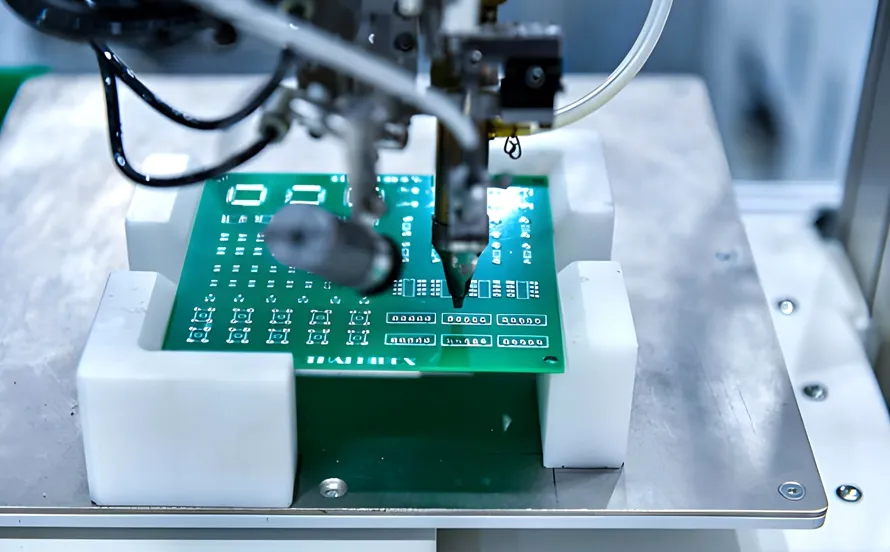
IC programming is an essential manufacturing process for converting blank programmable semiconductor devices into functional electronic components. It involves writing firmware, configuration data, calibration parameters, security credentials, or other application-specific information into programmable memory within an integrated circuit.
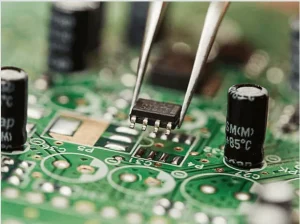
Today, IC Programming Services are widely used across consumer electronics, automotive electronics, industrial automation, medical equipment, telecommunications, and Internet of Things (IoT) products. As electronic products become more connected and security requirements become stricter, reliable IC programming has become an increasingly important part of electronics manufacturing and PCB assembly.
Professional programming providers such as Kingda can integrate programming, verification, serialization, traceability, and secure provisioning into the manufacturing workflow, helping manufacturers improve production efficiency while reducing programming errors and product-quality risks.
Applications of IC Programming
1. Consumer Electronics
Consumer electronics manufacturers require fast and highly repeatable IC Programming processes to support high-volume production.
Smart home devices, wireless earbuds, smartwatches, wearable devices, and other connected products may require firmware, Bluetooth pairing credentials, device configuration parameters, factory test information, and security certificates to be programmed before shipment.
For high-volume production, automated IC Programming Services can be integrated directly into SMT and PCBA production lines. Multi-site and gang programmers allow multiple devices to be programmed simultaneously, making the process suitable for production volumes of millions of units per year.
A properly designed programming workflow can also include:
- Firmware image verification
- Device identification
- CRC or checksum verification
- Unique serial number assignment
- MAC address programming
- Bluetooth or Wi-Fi credential provisioning
- Production test configuration
- Programming result logging
These capabilities help manufacturers maintain consistency across large production batches while reducing manual intervention.
2. Automotive Electronic Control Units
Automotive electronics place particularly demanding requirements on MCU Programming, data security, traceability, and process control.
Engine control units (ECUs), body control modules (BCMs), advanced driver assistance systems (ADAS), battery management systems (BMS), and other automotive controllers may require firmware, calibration parameters, vehicle-specific configuration data, and security credentials.
In automotive manufacturing, the programming process may include:
- Vehicle Identification Number (VIN)-based configuration
- ECU firmware programming
- Calibration data loading
- AUTOSAR software deployment
- Secure boot configuration
- Hardware Security Module (HSM) credential provisioning
- Unique device serialization
- Programming and verification records
Automotive production also requires strict process traceability. Each programmed device should be associated with relevant information such as the device ID, firmware revision, calibration version, programming station, timestamp, and pass/fail result.
For manufacturers operating under automotive quality systems, the IC Programming Services provider should be able to support the required quality-management and traceability procedures throughout the product lifecycle.
3. Industrial IoT and Automation
Industrial IoT products often combine MCUs, FPGAs, sensors, communication processors, and edge-computing devices.
Industrial sensors, edge gateways, PLC-related controllers, industrial communication modules, and automation equipment may require a combination of MCU Programming and FPGA Programming.
For example, an industrial controller may require:
- MCU firmware
- FPGA bitstream
- Device configuration data
- Network parameters
- Calibration coefficients
- Unique serial numbers
- Security credentials
Integrating these operations into a unified IC Programming Automation process can improve production consistency and reduce the risk of loading incorrect software versions.
For industrial equipment, programming can also be combined with functional testing. After programming, the manufacturing system can automatically verify communication interfaces, memory integrity, sensor interfaces, and other critical functions before the PCB assembly moves to the next production stage.
4. Medical Devices
Medical electronics require reliable programming processes because firmware and configuration data can directly affect device functionality and product traceability.
Patient monitors, infusion pumps, diagnostic equipment, portable medical instruments, and laboratory devices may require firmware, calibration coefficients, device certificates, serial numbers, and other application-specific parameters.
Professional IC Programming Services for medical electronics should support:
- Controlled firmware release
- Device-specific calibration
- Secure certificate provisioning
- Serial number assignment
- Programming verification
- Complete production records
- Firmware revision tracking
- Product-level traceability
For regulated medical-device manufacturing, programming records should be retained as part of the overall manufacturing history. This makes it possible to determine which software version, calibration data, and configuration were programmed into a specific device.
IC Programming vs. Firmware Loading
IC Programming and Firmware Loading are closely related but are not necessarily identical processes.
IC programming generally refers to writing data into programmable memory or configuration areas of an integrated circuit. Depending on the device, this may include Flash memory, EEPROM, OTP memory, eFuse configuration, or FPGA configuration memory.
Firmware loading usually refers to transferring application software to a device through an existing bootloader, programming interface, or software update mechanism.
The distinction can be summarized as follows:
| Attribute | IC Programming | Firmware Loading |
|---|---|---|
| Primary operation | Writes firmware, configuration, calibration data, security credentials, or other information into programmable IC memory | Installs or updates application firmware on an already functional device |
| Typical production stage | May occur before PCB assembly, during PCBA production, or after assembly through ISP/JTAG/SWD | Commonly performed after PCB assembly as part of system programming or final production |
| Target memory | Flash, EEPROM, OTP, eFuse, FPGA configuration memory, and other programmable areas | Typically application Flash in an MCU, MPU, SoC, or application processor |
| Common tools | Gang programmers, socket programmers, JTAG programmers, ISP programmers, SWD programmers | USB, UART, JTAG, SWD, bootloader interfaces, or dedicated production tools |
| Verification | Read-back verification, CRC, checksum, device ID, memory comparison | Boot verification, firmware version checking, application startup, or functional testing |
| Typical operator | PCB assembly manufacturer, EMS provider, or dedicated IC programming service provider | OEM engineering team, EMS provider, or production test system |
In practice, these processes can overlap. For example, an MCU can be programmed directly before assembly using a socket programmer and then receive application-specific configuration through JTAG ISP after the PCB has been assembled.
Therefore, manufacturers should define the programming architecture according to the IC type, production process, security requirements, and final product configuration.
IC Programming and Secure Provisioning
Modern connected products increasingly require more than simply loading firmware.
Security-sensitive devices may need cryptographic keys, certificates, device identities, secure-boot parameters, and other credentials to be provisioned during manufacturing.
This process is commonly referred to as Secure Provisioning.
A secure manufacturing architecture may include a Hardware Security Module (HSM), secure key-generation system, encrypted communication channels, role-based access control, and controlled programming stations.
For example, a production workflow may operate as follows:
- The secure manufacturing system generates or retrieves device-specific credentials.
- The programming system establishes an authenticated communication channel.
- The required firmware and configuration data are transferred securely.
- Unique credentials are written into protected areas of the IC or its HSM.
- The programming station verifies the result without exposing sensitive keys.
- The programming record is associated with the individual device serial number.
This architecture is particularly important for products requiring secure boot, hardware roots of trust, encrypted communications, or device authentication.
Unlike conventional firmware loading, secure provisioning must prevent unauthorized personnel or manufacturing systems from accessing sensitive credentials.
Common Challenges in IC Programming
Although IC Programming Services can be highly automated, manufacturers may encounter several challenges during production.
1. Firmware Image Version Control
Using multiple firmware versions during production can create a significant risk of programming the wrong image.
Engineering samples, pilot-production firmware, mass-production releases, and field-update versions may exist simultaneously. Without an effective image-management system, an incorrect firmware image can be loaded onto an entire production batch.
Manufacturers should therefore implement a controlled firmware repository with:
- Revision management
- Approved production images
- Access control
- Release authorization
- CRC or checksum verification
- Programmer-specific configuration
- Automatic image selection
Using spreadsheets or manually selecting firmware files on individual programming stations creates unnecessary production risk.
A controlled IC Programming Automation system can automatically select the approved firmware image according to the product model, production order, hardware revision, or manufacturing stage.
2. Gang Programmer Socket Wear
High-volume programming frequently relies on ZIF or custom socket adapters.
Programming sockets experience repeated insertion and removal cycles. Over time, contact resistance may increase and spring force may decrease, resulting in intermittent electrical contact.
These failures can appear random even though they may consistently occur at specific socket positions.
A preventive maintenance program should therefore include:
- Socket cycle tracking
- Regular contact inspection
- Cleaning procedures
- Periodic replacement
- Position-based failure analysis
- Automatic programming-failure statistics
Maintaining socket quality is particularly important for multi-site programmers because a single defective socket can reduce the effective capacity of the entire programming station.
3. Programming Throughput vs. Production Line Speed
Programming capacity must be matched to the speed of the assembly line.
For example, if a 48-site programmer completes one programming cycle every 45 seconds, its theoretical throughput is approximately:
48 × 3,600 ÷ 45 = 3,840 devices per hour
This theoretical figure does not include loading, unloading, verification, operator handling, fixture changes, or downtime. Therefore, the practical production throughput will normally be lower.
If an SMT or PCBA line produces 5,000 boards per hour, one 48-site programmer may not provide sufficient capacity.
Manufacturers should evaluate:
- Number of programming sites
- Programming time per device
- Verification time
- Loading and unloading time
- Operator efficiency
- Equipment utilization
- Expected downtime
- Required production buffer
This analysis helps prevent programming from becoming a bottleneck in the overall PCB Assembly process.
4. Secure Key Provisioning Infrastructure
Security-sensitive IC programming can require a dedicated HSM infrastructure.
When each device needs a unique encryption key, certificate, or security credential, the manufacturing system must securely generate, transfer, program, and record these credentials.
Many conventional EMS facilities may not have a dedicated HSM infrastructure.
In such cases, manufacturers can either establish their own secure provisioning environment or work with an experienced IC Programming Services provider that already has the required security architecture.
The solution should ensure that sensitive keys are never exposed unnecessarily during manufacturing.
Serialization and Device-Specific Programming
Modern electronic products increasingly require unique device identities.
Examples include:
- Serial numbers
- MAC addresses
- Bluetooth addresses
- Product authentication certificates
- Encryption keys
- Calibration coefficients
- VIN-related configuration
- Customer-specific parameters
This requires Serialization capabilities within the programming workflow.
Instead of loading the same firmware image into every device, the programming system can combine a common firmware image with device-specific data.
For example:
Base Firmware + Serial Number + MAC Address + Calibration Data + Security Credentials = Unique Device Image
The manufacturing system should maintain a database that records the relationship between each device ID and the programmed information.
This provides complete production traceability and makes it easier to investigate field failures, perform software updates, and manage product recalls.
How to Choose an IC Programming Service Provider
Choosing an IC Programming Services provider should involve more than comparing hourly programming costs.
Manufacturers should evaluate programming hardware, software security, socket compatibility, throughput, serialization, traceability, and experience with the specific IC family.
1. Verify Hardware Compatibility
Confirm that the provider supports the specific IC family and package used in your product.
Different packages may require different programming sockets or adapters. Custom adapters may require several weeks for development and validation.
Identifying socket requirements early can prevent delays during pilot production and mass production.
2. Evaluate Firmware Image Security
Ask how firmware images are transmitted, stored, accessed, versioned, and destroyed.
For products containing sensitive intellectual property or security credentials, the provider should consider:
- Encrypted file transfer
- Role-based access control
- Secure image storage
- Version control
- Access logging
- Production image authorization
- Controlled deletion
The firmware repository should clearly distinguish engineering, testing, and approved production images.
3. Require Per-Device Programming Records
A professional programming system should generate a programming record for every device or production unit.
A typical record may contain:
- IC or device ID
- Serial number
- Firmware version
- CRC or checksum
- Programming date and time
- Programmer ID
- Socket or site number
- Operator or station ID
- Programming result
- Verification result
This level of Traceability helps manufacturers identify production problems and correlate programming records with final product serial numbers.
4. Match Programming Throughput to Production Requirements
Provide the programming service provider with your expected weekly or monthly production volume, IC type, programming time, and production-line speed.
The provider should be able to estimate:
- Required number of programmers
- Number of programming sites
- Expected throughput
- Operator requirements
- Equipment redundancy
- Production buffer
- Maintenance requirements
The objective is not simply to achieve the highest programming speed but to create a stable production process that does not become a bottleneck.
5. Confirm Serialization and Custom Data Capabilities
If your product requires unique serial numbers, MAC addresses, calibration parameters, or security credentials, confirm that the provider can support device-level serialization.
The programming system should be capable of retrieving unique data from a controlled database and associating it with the correct physical device.
This is especially important for IoT, networking, automotive, medical, and industrial products.
6. Evaluate Engineering and Production Support
A reliable IC Programming Services provider should support more than the programming operation itself.
Before production begins, the provider should be able to assist with:
- Programming interface selection
- JTAG/ISP/SWD setup
- Socket and fixture selection
- Programming-time optimization
- Firmware image validation
- Serialization design
- Production-line integration
- Automated verification
- Failure analysis
- Mass-production ramp-up
Early engineering involvement can prevent programming problems from appearing after the product has already entered mass production.
IC Programming for PCB Assembly
Integrating IC Programming into the PCB Assembly process can significantly improve manufacturing efficiency.
Depending on the product architecture, programming may be performed at several stages:
Before PCB Assembly:
Bare ICs are programmed using socket-based or gang programming equipment before component placement.
During PCB Assembly:
Programmable devices can be programmed at an intermediate manufacturing stage before final assembly or testing.
After PCB Assembly:
MCUs, processors, FPGAs, and other programmable devices can be programmed through JTAG ISP, SWD, UART, USB, or other in-circuit interfaces.
During Final Testing:
Programming can be combined with functional testing, calibration, device serialization, and security provisioning.
The optimal approach depends on the device architecture, production volume, programming interface, firmware size, security requirements, and manufacturing sequence.
Benefits of Automated IC Programming
Automated IC Programming Automation can provide several important advantages for electronics manufacturers:
- Higher production throughput
- Reduced manual programming errors
- Consistent firmware deployment
- Automatic verification
- Device-level serialization
- Improved production traceability
- Secure firmware management
- Reduced operator workload
- Easier integration with SMT and PCBA production
- Better support for high-volume manufacturing
Automation is especially valuable when multiple products, firmware revisions, and hardware configurations are manufactured on the same production floor.
Best Practices for Reliable IC Programming
To establish a robust programming process, manufacturers should consider the following best practices:
- Use controlled and approved firmware images.
- Verify every programmed device automatically.
- Implement CRC, checksum, or read-back verification where appropriate.
- Track device IDs and serial numbers.
- Monitor programmer socket conditions.
- Maintain programming equipment regularly.
- Match programming capacity to actual production requirements.
- Protect firmware intellectual property through access control and encryption.
- Use HSM-based Secure Provisioning for sensitive credentials.
- Maintain complete programming records for production traceability.
- Validate programming procedures during pilot production.
- Integrate programming with functional testing whenever practical.
Conclusion
IC Programming is a critical step in modern electronics manufacturing because it transforms programmable semiconductor devices into application-ready components.
From consumer electronics and automotive ECUs to industrial IoT controllers and medical equipment, manufacturers increasingly depend on reliable IC Programming Services to load firmware, configure devices, program calibration data, assign unique identities, and provision security credentials.
A well-designed programming process should address more than programming speed. Hardware compatibility, firmware version control, secure provisioning, serialization, verification, traceability, and production throughput all contribute to overall manufacturing quality.
As technologies such as secure boot, hardware roots of trust, HSM-based credential management, and automated production programming become increasingly common, manufacturers should consider IC programming requirements during the early stages of product and PCB Assembly development.
Kingda can support manufacturers with automated IC programming, batch programming, JTAG ISP integration, serialization, secure provisioning, and customized programming solutions for prototype development through high-volume production.
If your production process requires reliable and scalable IC Programming Services, integrating the programming workflow with your PCB assembly and manufacturing system can help improve production efficiency, product security, traceability, and overall quality.