What Is Electro-Mechanical Assembly?
Before modern electrical and electronic components were developed, engineers relied primarily on mechanical systems based on established principles of physics and mechanics. As technology evolved, mechanical structures began to work together with electrical and electronic systems, creating increasingly sophisticated and automated products.
Electro-mechanical assembly is the process of integrating mechanical components with electrical, electronic, and software-controlled systems to create a complete, functional product or subsystem. Unlike a standalone mechanical, electrical, or electronic component, an electro-mechanical assembly combines multiple technologies into one integrated system.
Today, industries such as automotive, industrial automation, aerospace, defense, energy, medical equipment, telecommunications, and consumer electronics increasingly rely on electro-mechanical assembly services to develop compact, reliable, and high-performance products.
This guide explains the major components, manufacturing process, materials, design considerations, advantages, applications, and key factors to consider when selecting an electro-mechanical assembly manufacturer.
Main Components of Electro-Mechanical Assembly
An electro-mechanical assembly combines physical structures with electrical and electronic functionality. Depending on the application, the assembly may contain mechanical mechanisms, power-distribution components, control electronics, sensors, communication interfaces, wiring, and embedded software.
The major components typically include the following.
Mechanical Components
Mechanical components provide the physical structure, movement, positioning, protection, and load-bearing capabilities of an electro-mechanical product.
Common mechanical components include:
- Motors and actuators
- Gears and gearboxes
- Shafts and bearings
- Belts and pulleys
- Brackets and arms
- Frames and mounting plates
- Enclosures and housings
- Springs, fasteners, and mechanical fixtures
These components must be designed with appropriate tolerances, materials, mechanical strength, and environmental resistance to ensure reliable operation throughout the product’s service life.
Electrical Units
Electrical components are primarily responsible for power distribution, switching, protection, and electrical connectivity.
Typical electrical components include:
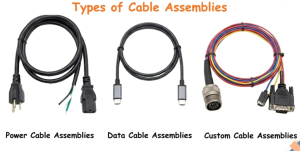
- Wires and cables
- Cable assemblies
- Connectors and terminals
- Relays
- Switches
- Fuses and circuit protection devices
- Power supplies
- Transformers
- Terminal blocks
Proper electrical design is essential for maintaining stable power delivery and preventing issues such as voltage drops, overheating, electrical interference, and intermittent connections.
Electronic Components
Electronic components provide intelligence, sensing, processing, communication, and control functions.
Common electronic components include:
- Integrated circuits (ICs)
- Microcontrollers and processors
- Sensors
- Printed circuit boards (PCBs)
- Displays and indicators
- Communication modules
- Motor-control circuits
- Signal-conditioning circuits
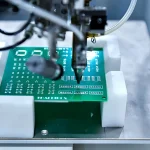
In many modern products, the PCB assembly serves as the central electronic control platform. It receives sensor inputs, processes data, controls actuators, and communicates with other systems.
Electro-Mechanical Assembly Process
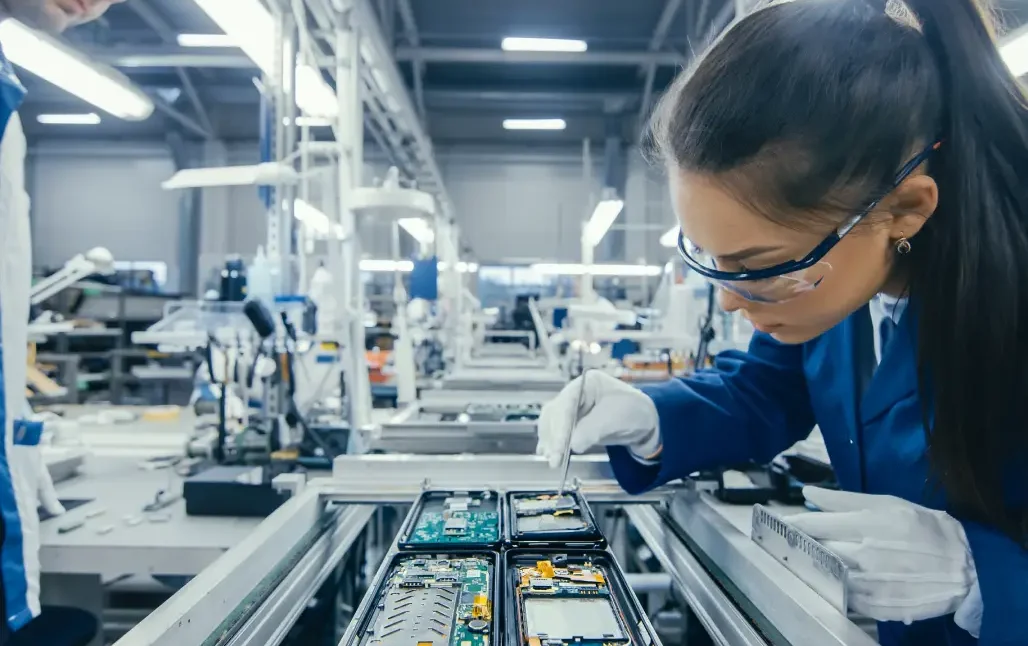
A reliable electro-mechanical assembly process requires close coordination between mechanical engineering, electrical engineering, electronics manufacturing, software development, assembly operations, and quality control.
The exact workflow varies according to product complexity, but a typical process includes the following stages.
Precision Engineering and Product Design
Manufacturing begins with engineering analysis and product design. Engineers develop mechanical drawings, electrical schematics, PCB layouts, wiring diagrams, assembly drawings, and system specifications.
At this stage, manufacturers evaluate:
- Mechanical dimensions and tolerances
- Component compatibility
- Electrical ratings
- Thermal requirements
- Cable routing
- PCB mounting locations
- Interface requirements
- Environmental conditions
- Safety requirements
- Manufacturing feasibility
Design for Manufacturing (DFM) and Design for Assembly (DFA) principles should be incorporated early to simplify assembly, reduce production errors, and control manufacturing costs.
Mechanical Assembly
Mechanical components are normally assembled first to establish the structural foundation of the product.
Depending on the application, this may include installing frames, brackets, motors, gears, shafts, bearings, enclosures, actuators, and other mechanical elements.
Precise alignment is particularly important for moving mechanisms. Incorrect positioning or excessive mechanical tolerance can lead to vibration, noise, premature wear, increased friction, or mechanical failure.
Electrical and PCB Integration
After the mechanical structure is prepared, electrical and electronic components are installed.
This stage may include:
- Installing PCB assemblies
- Mounting control panels
- Installing sensors and actuators
- Connecting power supplies
- Installing connectors and terminals
- Routing wires and cables
- Securing cable assemblies
- Connecting communication interfaces
Proper cable routing is important because cables must be protected from mechanical interference, heat, vibration, electromagnetic interference (EMI), and excessive bending.
Wiring and Cable Assembly
Wiring and cable assembly establish electrical and communication connections between different modules.
Manufacturers must control wire gauge, insulation type, connector configuration, terminal orientation, cable length, current rating, voltage rating, and routing requirements.
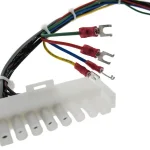
Professional wire harness assembly can significantly improve manufacturing consistency while reducing wiring errors and simplifying field maintenance.
Software and Firmware Installation
Modern electro-mechanical systems increasingly include embedded software or firmware.
After hardware installation, programmers may load:
- Firmware
- Embedded software
- Device drivers
- Configuration parameters
- Communication protocols
- Motion-control programs
- User-interface software
The software must communicate correctly with sensors, controllers, motors, displays, and other electronic and mechanical subsystems.
Electro-Mechanical Testing
Testing is one of the most important stages of the manufacturing process.
Depending on the product, manufacturers may conduct:
- Electrical continuity testing
- Insulation resistance testing
- Functional testing
- Mechanical movement testing
- Power-on testing
- Sensor verification
- Communication testing
- Software and firmware validation
- Safety testing
- Environmental testing
Testing individual modules throughout production, followed by complete system-level testing, helps identify defects before products are shipped.
Materials Used in Electro-Mechanical Assembly
Electro-mechanical products require a wide range of materials because each subsystem has different mechanical, electrical, thermal, and environmental requirements.
Pre-Manufactured Mechanical Components
Many mechanical components can be manufactured separately and integrated during final assembly.
Typical components include gears, motors, shafts, bearings, brackets, belts, pulleys, arms, frames, and mounting plates.
Material selection depends on strength, weight, corrosion resistance, wear resistance, thermal performance, and manufacturing requirements. Aluminum, stainless steel, engineering plastics, copper alloys, and other specialty materials may be used depending on the application.
Control Panels
Control panels integrate electrical and electronic control functions into an accessible interface.
A typical control panel may contain:
- Push buttons
- Switches
- Relays
- Indicators
- Displays
- Circuit boards
- Power supplies
- Terminal blocks
- Communication interfaces
A properly designed control panel improves system usability, maintenance efficiency, and operational safety.
Wire Harnesses and Cable Assemblies
Wire harness assembly is an essential part of many electro-mechanical products.
A wire harness typically contains multiple wires or cables arranged according to predefined lengths, gauges, insulation specifications, connectors, terminals, and routing requirements.
Professional harness assembly helps improve:
- Electrical reliability
- Assembly consistency
- Installation efficiency
- Serviceability
- Signal integrity
- Manufacturing productivity
Embedded Software and User Interfaces
Intelligent electro-mechanical products increasingly incorporate processors, controllers, memory, transmitters, receivers, communication modules, and user interfaces.
Embedded software enables these hardware components to work together. Depending on the application, users may interact with the system through displays, buttons, touchscreens, mobile applications, industrial interfaces, or remote communication platforms.
Key Electro-Mechanical Assembly Design Considerations
A successful electro-mechanical assembly design must account for the interaction between mechanical, electrical, electronic, and software systems.
Internal Component Compatibility
Electro-mechanical products contain components with different electrical, mechanical, thermal, and material characteristics.
Engineers should verify:
- Voltage and current compatibility
- Connector compatibility
- Mechanical dimensions
- Mounting interfaces
- Communication protocols
- Thermal requirements
- Material compatibility
- Operating temperature
- Electromagnetic compatibility
Power distribution and signal communication should also be carefully planned to ensure that all modules operate correctly.
Assembly Precision
Precision is particularly important for complex electro-mechanical products.
Small deviations in mechanical positioning, PCB mounting, cable routing, connector installation, or component alignment can cause system-level failures.
Before mass production, manufacturers should perform prototype assembly, design verification, tolerance analysis, and functional testing.
Thermal Management
Many electro-mechanical products contain motors, power electronics, processors, and other heat-generating components.
Thermal design may require:
- Heat sinks
- Thermal interface materials
- Cooling fans
- Ventilation structures
- Heat-dissipation paths
- Temperature sensors
Effective thermal management helps prevent overheating and extends component life.
Safety and Environmental Protection
Electro-mechanical assemblies may operate in environments involving dust, moisture, vibration, chemicals, temperature fluctuations, or electromagnetic interference.
Depending on the application, designers may need to consider:
- IP protection
- EMI/EMC performance
- Electrical insulation
- Mechanical shielding
- Corrosion protection
- Vibration resistance
- Shock resistance
- Temperature resistance
For demanding applications, environmental and reliability testing should be incorporated into the development process.
Advantages of Electro-Mechanical Assembly
The integration of mechanical, electrical, electronic, and software technologies provides several important advantages.
Customization and Flexible Design
Custom electro-mechanical assembly allows manufacturers to develop products according to specific functional and mechanical requirements.
Individual modules can often be replaced, repaired, upgraded, or redesigned without completely replacing the entire system. Modular architecture can also simplify future product development.
Improved Process Efficiency and Reliability
Integrated electro-mechanical systems can automate repetitive operations and reduce manual intervention.
Sensors and control electronics can continuously monitor operating conditions, while embedded software can automatically adjust system parameters. This can improve productivity, repeatability, and overall equipment reliability.
Cost Optimization
Although a complex electro-mechanical assembly may require a higher initial engineering investment, system integration can reduce long-term operating costs.
A single integrated system can perform functions that would otherwise require multiple independent devices. Efficient power management, automated control, simplified wiring, and reduced maintenance can further improve total cost of ownership.
Easier Maintenance and Upgrades
Modular electro-mechanical architecture can make troubleshooting and maintenance more efficient.
Clearly defined interfaces allow technicians to identify defective modules and replace them without rebuilding the entire system. This can reduce downtime and improve serviceability.
Applications of Electro-Mechanical Assembly
The applications of electro-mechanical assembly continue to expand as industries adopt automation, intelligent control, and connected systems.
Aerospace and Defense
Aerospace and defense systems require high reliability, precise control, and strong resistance to demanding environmental conditions.
Electro-mechanical assemblies may be used in:
- Aircraft control systems
- Actuation systems
- Targeting equipment
- UAV systems
- Surveillance equipment
- Secure communication systems
- Navigation systems
- Ground-support equipment
These products may require strict quality control, environmental testing, electromagnetic compatibility, and traceability.
Automotive
The automotive industry is one of the major users of electro-mechanical technologies.
Applications include:
- Vehicle control systems
- Sensor modules
- Electric actuators
- Intelligent lighting
- HVAC control systems
- Infotainment systems
- Power distribution systems
- Driver-assistance systems
As vehicles become increasingly electrified and software-defined, the integration of electronics, mechanical systems, sensors, and embedded software is becoming even more important.
Energy and Power Systems
Modern energy infrastructure increasingly combines electrical equipment with electronic monitoring, sensors, communication systems, and automated controls.
Electro-mechanical assemblies can support:
- Power distribution equipment
- Energy monitoring systems
- Battery systems
- Power conversion equipment
- Industrial control systems
- Renewable energy equipment
Real-time monitoring enables operators to track power production, distribution, consumption, temperature, and equipment status.
Industrial Automation
Industrial automation is one of the most important application areas for electro-mechanical systems.
Factories use integrated systems containing motors, actuators, sensors, PLCs, PCBs, controllers, communication modules, and software.
These systems can automate production processes, improve manufacturing accuracy, reduce defects, and provide real-time information about machine performance, operating time, production parameters, and maintenance requirements.
Medical Equipment
Medical devices also depend on reliable integration between mechanical structures, electronics, sensors, motors, and embedded control systems.
Examples include diagnostic equipment, laboratory automation systems, patient-monitoring equipment, imaging systems, and automated medical instruments.
For these applications, reliability, traceability, cleanliness, electrical safety, and regulatory compliance are particularly important.
Electro-Mechanical Assembly vs. PCB Assembly
Electro-mechanical assembly and PCB assembly are related but fundamentally different manufacturing processes.
PCB assembly (PCBA) focuses primarily on populating and soldering electronic components onto a printed circuit board. In contrast, electro-mechanical assembly integrates the PCB with mechanical structures, electrical systems, wiring, sensors, actuators, enclosures, and other modules to create a complete functional product.
| Feature | Electro-Mechanical Assembly | PCB Assembly |
|---|---|---|
| Primary focus | Complete integration of mechanical, electrical, electronic, and software systems | Assembly of electronic components onto a PCB |
| Manufacturing process | Mechanical assembly, PCB integration, wiring, cable assembly, software loading, and system testing | SMT, through-hole assembly, soldering, inspection, programming, and functional testing |
| Complexity | Generally higher because multiple technologies are integrated | Depends mainly on PCB design, layer count, component density, and technology |
| Final product | Complete integrated system or functional module | Assembled printed circuit board |
| Main expertise | Mechanical, electrical, electronics, wiring, software, and system integration | PCB fabrication, component assembly, soldering, inspection, and testing |
| Cost | Generally higher due to broader system integration | Depends on PCB complexity, components, quantity, and assembly requirements |
In practice, PCB assembly can be one part of an electro-mechanical assembly rather than an alternative to it.
How to Choose an Electro-Mechanical Assembly Manufacturer
Selecting the right electro-mechanical assembly manufacturer is critical because these projects involve multiple engineering disciplines and require close coordination throughout the production process.
Multi-Disciplinary Engineering Expertise
A qualified supplier should have expertise across mechanical engineering, electrical engineering, electronics, PCB assembly, wiring, embedded systems, and software integration.
An experienced engineering team should be able to review designs, identify potential manufacturing problems, recommend improvements, and support DFM/DFA optimization.
Manufacturing and Quality Management Capabilities
The manufacturer should have suitable production facilities, assembly equipment, inspection systems, testing capabilities, and quality management processes.
Important capabilities may include:
- SMT and PCB assembly
- Mechanical assembly
- Cable and wire harness assembly
- Electrical testing
- Functional testing
- System integration
- Firmware programming
- Final inspection
- Product traceability
Relevant industry certifications and documented quality procedures can provide additional confidence in manufacturing consistency.
Professional Project Management
Effective communication is essential for complex electro-mechanical projects.
A professional manufacturer should provide clear communication regarding:
- Engineering changes
- Material procurement
- Production schedules
- Assembly progress
- Quality inspection
- Testing results
- Packaging
- Shipping documentation
Transparent project management helps reduce delays and ensures that all stakeholders remain aligned.
Cost and Supply Chain Management
Cost should be evaluated beyond the initial assembly quotation.
A reliable supplier should consider material selection, component availability, manufacturing efficiency, assembly time, testing requirements, logistics, maintenance, and long-term production volume.
An optimized supply chain can reduce procurement risks and improve overall project economics.
Why Choose Kingda for Electro-Mechanical Assembly?
Choosing an experienced manufacturing partner can simplify the transition from product design to full-scale production.
Kingda can support customers with integrated manufacturing solutions covering PCB assembly, electronic integration, wiring, mechanical assembly, system integration, and functional testing.
By combining PCB assembly, electrical integration, mechanical assembly, and quality control capabilities, Kingda can help customers develop and manufacture customized electro-mechanical products according to specific technical and production requirements.
From prototype development and DFM optimization to low-volume production and scalable manufacturing, an experienced electro-mechanical assembly service provider can help reduce manufacturing risks while improving product consistency and reliability.
Conclusion
Electro-mechanical assembly combines mechanical structures, electrical systems, electronic controls, wiring, and software into a unified functional product. This integrated manufacturing approach enables industries to develop smarter, more compact, automated, and reliable equipment.
Successful electro-mechanical manufacturing requires more than simply connecting mechanical and electronic components. It requires precise engineering, component compatibility analysis, accurate assembly, reliable PCB assembly, professional wire harness assembly, comprehensive testing, thermal management, environmental protection, and strict quality control.
As industrial automation, electrification, intelligent manufacturing, and connected technologies continue to advance, demand for customized electro-mechanical systems is expected to grow.
For companies developing complex electronic products, working with an experienced electro-mechanical assembly manufacturer such as Kingda can provide the engineering expertise, manufacturing capabilities, and system-level integration needed to move efficiently from prototype to reliable production.