Immersion Silver Finish In Assembly
An immersion silver finish deposits a thin layer of silver on the copper pads, which protects them from oxidation and provides a solderable surface. It is flat enough for fine pitch components, it is cheaper than a gold finish, and it avoids the nickel layer that causes the black pad defect. It also has a shelf life and an environmental sensitivity that have to be managed.
This article describes what the deposit is, how it behaves in storage and through reflow, and where it is the right choice for a product.
What The Finish Provides
The silver is deposited by a displacement reaction, in which silver ions in solution displace copper atoms on the surface. The reaction is self limiting because it stops once the surface is covered, which is what keeps the layer thin. The result is a matte silver surface of a fraction of a micrometre over the copper.
Because it is flat and thin, the finish does not interfere with fine pitch printing and it does not change the pad geometry. That combination, together with a cost lower than gold, made it the finish of choice for a large part of the consumer and communications market.
The Deposit And Its Structure
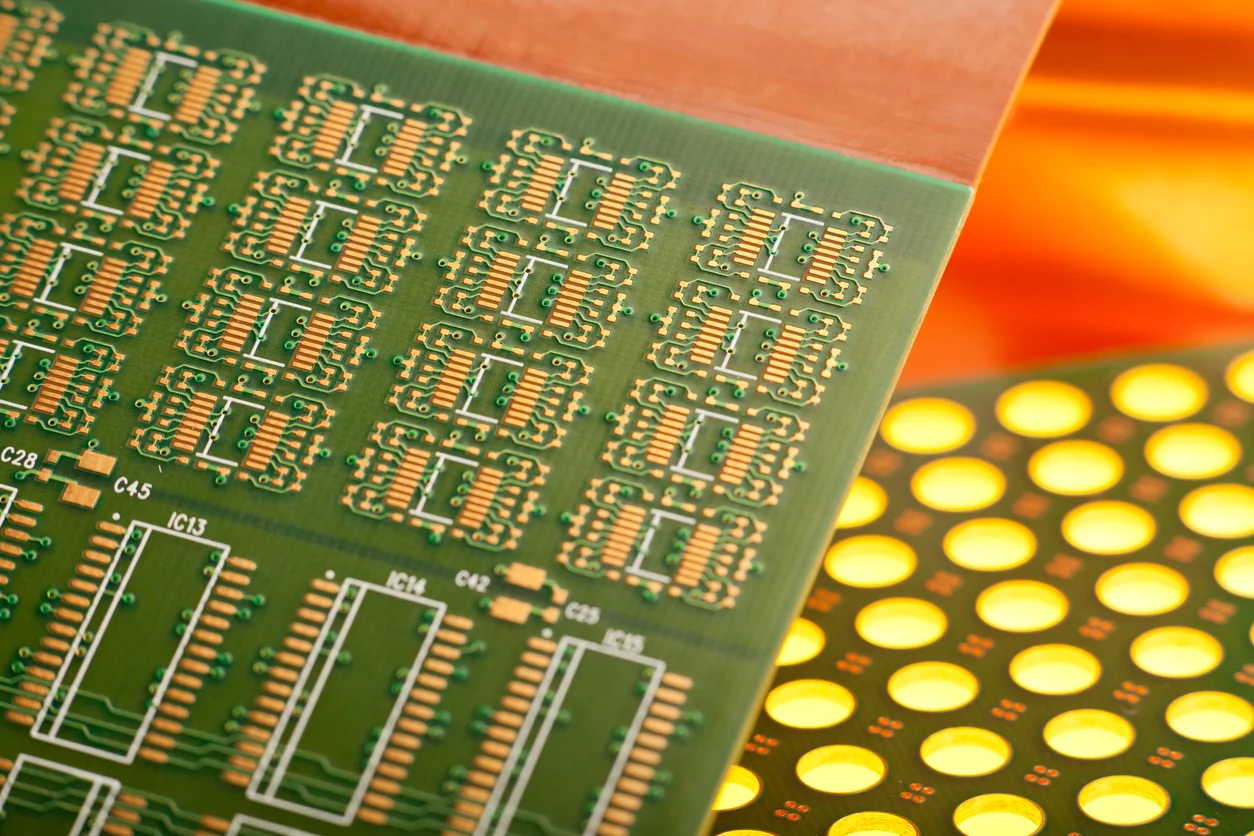
The deposit is porous at the microscopic scale, which is the source of both its advantages and its difficulties. The porosity allows the flux to reach the copper underneath during soldering and to clean it, which improves wetting. The same porosity allows the atmosphere to reach the copper during storage, which is why the shelf life is limited.
The thickness is controlled by the process and is usually quoted in the range of a fraction of a micrometre. A deposit that is too thin leaves copper exposed, and one that is too thick wastes material and can affect the appearance. The silver itself is soft, so a finish is not suitable for a surface that will be rubbed or probed repeatedly.
Shelf Life And Storage
The finish oxidises and tarnishes over time, and the tarnish reduces the wettability. The shelf life is quoted in months under a defined storage condition, often a sealed bag with desiccant, and it is shorter than that of a gold finish. Boards that are stored beyond the period may still solder, but the process window narrows and the yield becomes sensitive to the flux and the profile.
The packing matters as much as the time. A stack of boards in a cardboard box in a humid store room will deteriorate faster than the quoted shelf life, while the same boards in a sealed bag with a desiccant will reach the end of the period in good condition. Where a board has been stored for a long time, the wetting should be checked on a sample before a production run rather than discovered on the line.
Sulfur And Creep Corrosion
Silver reacts with sulfur compounds in the air to form silver sulfide, which is a dark, poorly conducting film. The reaction is the same one that tarnishes silverware, and it is accelerated in environments where rubber, lubricants or certain packaging materials release sulfur compounds.
Creep corrosion is the more serious form, in which the corrosion product migrates across the surface away from the pad and can bridge to a neighbouring conductor. It is a concern in humid environments where sulfur is present, such as certain industrial sites and areas with high pollution, and it is the reason the finish is often avoided in those applications. Where the product is used in such an environment, the assembly should be protected after soldering, and the measures described for board level protection are relevant.
Assembly Behaviour
During reflow the silver dissolves into the molten solder and the joint that forms is the same as the one that forms on any copper pad. The finish therefore has little effect on the final joint, and its contribution is to the wetting behaviour before and during the reflow.
The wetting is generally good, and the finish tolerates a range of profiles. Its weakness is the sensitivity to storage and to contamination, which shows up as a variation between lots rather than within one. A board that has been handled without gloves carries oils that reduce the wetting, and the effect is greater on silver than on gold because the surface is softer and more easily contaminated. Handling procedures are therefore part of the process control.
Where It Is The Right Choice
The finish suits a board that will be assembled within its shelf life, that is used in a benign environment, and that has fine pitch components requiring a flat surface. That covers a large part of consumer and communications equipment, and it is where the finish is most often found.
It is less suitable for a product with a long storage period before assembly, for equipment used in an environment with sulfur compounds, and for a board that will be probed repeatedly during test. In those cases a gold finish or the palladium variant is worth the additional cost. The choice interacts with the assembly process, and the plating chemistry that produces the finish is described under electroplating additives, with the fabrication sequence covered in PCB design and fabrication.
Additional Considerations for This Build
Practical attention to surface finish pays for itself here, because it decides whether the finished board behaves as the drawing intended. Where the requirement is not stated on the fabrication drawing or in the assembly notes, the shop has to assume a default, and that default is rarely the value the design was simulated with. Stating surface finish explicitly, together with the tolerance that applies, removes the assumption and keeps the result predictable from batch to batch.
Deliberate attention to solderability pays for itself here, because it decides whether the finished board behaves as the drawing intended. Where the requirement is not stated on the fabrication drawing or in the assembly notes, the shop has to assume a default, and that default is rarely the value the design was simulated with. Stating solderability explicitly, together with the tolerance that applies, removes the assumption and keeps the result predictable from batch to batch.
Process Control and Verification
On a design of this kind, immersion silver is the item that decides how the rest of the board is arranged. Reviewing the design before the data is released is cheaper than correcting it after the panel is in the tank, because every step downstream inherits the decision made at the front end. Documenting the assumption is part of the design work, and a short note on the drawing prevents a question that would otherwise arrive a day later and cost a day of schedule.
The process window is set by the narrowest step in the flow, so an improvement anywhere else shows up as margin rather than as yield until that step is addressed. A short note on the drawing about handling, storage or packaging is often worth more than an extra decimal place on a tolerance.
FAQ
Does the silver affect the final solder joint? Very little. The silver dissolves into the solder during reflow, so the joint that forms is the same as one on a bare copper pad that has been cleaned.
Why is the shelf life shorter than a gold finish? The deposit is porous, so the atmosphere reaches the copper underneath and the surface itself tarnishes. Gold is much less reactive and does not have the same problem.
What is creep corrosion? A corrosion product that migrates across the surface away from the pad and can bridge to an adjacent conductor. It is associated with sulfur compounds and humidity, and it is a reason to avoid the finish in those environments.