impedance PCB costPricing Factors: How to Get an Accurate Quote
As a specialized PCB product designed for specific signal transmission requirements, an impedance-controlled PCB is not priced simply based on board size. Its final cost depends on multiple factors, including material selection, manufacturing complexity, testing requirements, production volume, and delivery expectations.
Different combinations of technical parameters can result in significant price differences. During procurement, many customers experience problems such as inaccurate quotations or unexpected additional charges because they do not clearly define their requirements or overlook important cost factors.
Understanding the key elements that influence impedance PCB cost and knowing how to communicate requirements effectively can help customers obtain more accurate quotations and achieve better cost control.
1. Key Factors Affecting Impedance PCB Pricing
Material Selection: A Critical Factor in Base Cost
The substrate material is one of the most important components affecting impedance PCB pricing.
Different materials provide different electrical properties, thermal performance, and manufacturing difficulty.
For example:
- Standard FR-4 materials are widely used due to their balanced performance and relatively lower cost.
- High-frequency materials such as PTFE and PI provide superior signal performance but require more complex manufacturing processes, resulting in higher costs.
Material thickness also affects pricing. Extremely thin or thick dielectric materials may require customized processing, increasing manufacturing difficulty and production expenses.
In addition, dielectric constant stability is another important consideration. When customers require strict control over dielectric constant variation, manufacturers must use higher-precision materials and tighter process control, which increases overall cost.
Choosing the right material according to actual application requirements is essential for balancing performance and budget.
Learn more about our high-frequency PCB manufacturing capabilities for advanced signal transmission applications.
Manufacturing Complexity: The Main Driver of Price Differences
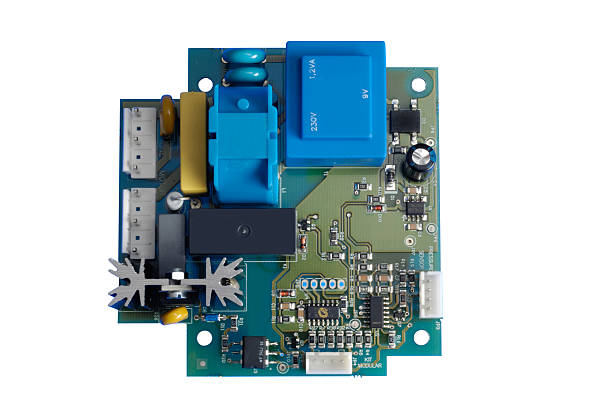
Compared with standard PCBs, impedance-controlled boards require much stricter manufacturing control.
One of the most important cost factors is impedance control accuracy.
For standard impedance requirements, the tolerance is usually within ±10%. However, if customers require tighter control, such as ±5% or better, manufacturers need:
- Additional impedance testing
- More precise process adjustments
- Enhanced production monitoring
- Higher-quality material control
These requirements increase manufacturing costs and may also increase the risk of material waste.
Layer structure is another important factor.
For multilayer impedance boards, manufacturers must carefully control:
- Layer alignment accuracy
- Dielectric thickness consistency
- Signal layer structure
- Lamination parameters
As layer counts increase, especially for boards with more than 12 layers or complex impedance distribution, production difficulty and cost increase significantly.
Additional special processes, such as:
- Blind vias
- Buried vias
- Step slots
- Counterbore holes
can further increase drilling, routing, and fabrication complexity.
For complex designs, selecting an experienced impedance PCB manufacturing partner can help optimize both performance and cost.
Explore our multilayer PCB manufacturing solutions for advanced PCB structures.
Production Volume and Delivery Time: Factors Affecting Price Flexibility
Production quantity has a direct impact on PCB unit cost.
For small prototype orders involving only dozens of pieces, manufacturers must separately prepare production processes, adjust equipment, and manage small-batch manufacturing. As a result, the cost per unit is usually higher.
For large-scale production involving thousands or tens of thousands of pieces, manufacturers can improve efficiency through:
- Better material utilization
- Optimized production scheduling
- Reduced setup costs
- Higher equipment utilization
Large-volume orders often achieve significant unit-cost reductions.
Delivery time also affects pricing.
Standard production cycles typically allow manufacturers to optimize scheduling. However, urgent orders requiring accelerated delivery may require:
- Priority production arrangements
- Additional labor resources
- Overtime manufacturing
These factors can increase the final quotation.
Customers should clearly define production quantity and delivery requirements when requesting a PCB quotation.
Compliance and Testing Requirements: Hidden Cost Factors
Compliance standards and testing requirements can also influence impedance PCB pricing.
Environmental requirements such as:
- RoHS 2.0 compliance
- Halogen-free materials
- Environmental testing
may require specialized materials and additional inspection procedures.
Testing requirements beyond standard impedance testing can also increase costs, including:
- Signal integrity testing
- High and low temperature reliability testing
- Dielectric withstand testing
- Third-party laboratory testing
If customers require certification documents such as SGS or UL reports, additional certification and documentation costs may apply.
Understanding these requirements in advance helps avoid unexpected expenses.
2. How to Get an Accurate Impedance PCB Quote
Prepare a Complete Requirement List Before Inquiry
The foundation of an accurate quotation is providing complete and detailed technical requirements.
Customers should clearly define:
Basic PCB Parameters
- Target impedance value (such as 50Ω or 90Ω)
- Impedance tolerance
- Layer count
- Material type and brand
- Board thickness
- PCB dimensions
Manufacturing Requirements
- Blind or buried vias
- Surface finish requirements
- Solder mask specifications
- Silkscreen requirements
Production Requirements
- Prototype or mass production quantity
- Required delivery time
- Packaging requirements
- Environmental standards
- Testing requirements
The more complete the information provided, the more accurately manufacturers can calculate costs and avoid missing items in the quotation.
Choose a Manufacturer with Professional Impedance PCB Experience
Selecting the right supplier is critical for obtaining a reliable quotation.
Customers should evaluate suppliers based on:
- Relevant manufacturing experience
- Quality certifications
- Previous industry projects
- Production equipment
- Testing capabilities
Professional manufacturers typically have:
- Dedicated impedance testing equipment
- Advanced lamination systems
- Experienced engineering teams
- Mature process control systems
They can also provide valuable suggestions, such as optimizing layer structures or adjusting design parameters to reduce costs.
A professional supplier should provide transparent quotations covering:
- Material costs
- Manufacturing process costs
- Testing costs
- Labor costs
- Other production expenses
This helps customers avoid unexpected additional charges.
Communicate Process Details and Cost Structure
During the quotation process, customers should actively discuss how different parameters affect pricing.
For example:
- Would changing impedance tolerance from ±5% to ±10% reduce cost?
- How much lower would the unit price become for mass production compared with prototypes?
- Are there alternative materials that meet performance requirements at lower cost?
This type of communication helps optimize product requirements while maintaining performance.
Customers should also request detailed quotation breakdowns to understand the cost structure and verify pricing transparency.
Confirm Quote Validity and Price Adjustment Conditions
After receiving a quotation, customers should confirm:
- Quotation validity period
- Material price adjustment rules
- Conditions for future price changes
- Cost impact of design modifications
Because raw materials such as copper foil and laminates may fluctuate in price, quotations are usually valid only for a limited period.
Clearly defining these conditions in quotation documents or contracts helps prevent future disputes.
Validate Prototypes Before Locking Mass Production Pricing
For larger projects, prototype validation is highly recommended before mass production.
During the prototype stage, customers can verify:
- Manufacturing capability
- Product quality
- Impedance performance
- Process stability
After successful validation, customers can negotiate a combined prototype and mass production agreement to lock in future pricing.
Long-term cooperation agreements can also define:
- Production costs
- Delivery schedules
- Quality standards
This provides better cost stability for future production.
Achieving the Right Balance Between Cost and Performance
Obtaining an accurate PCB quotation requires more than simply comparing prices.
Customers need to:
- Clearly define technical requirements
- Select experienced PCB suppliers
- Understand cost-driving factors
- Optimize production parameters
- Plan prototype and mass production strategies
The price difference between impedance PCBs is not simply about choosing a higher or lower quotation. It is about matching technical requirements with manufacturing costs.
Instead of pursuing the lowest price, companies should select suppliers that provide transparent pricing, reliable technology, and suitable manufacturing capabilities.
gopcba provides professional impedance PCB manufacturing solutions with advanced production technology, engineering support, and strict quality control.
By optimizing materials, processes, and production strategies, we help customers achieve the best balance between cost, performance, and reliability for high-speed electronic applications.