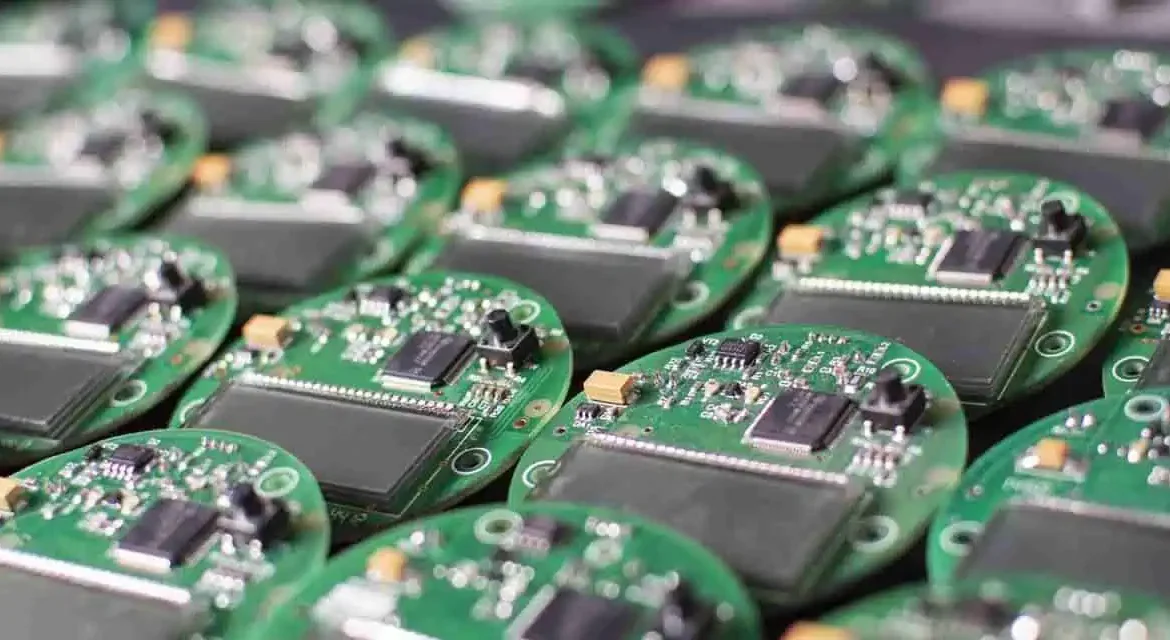
In modern electronics manufacturing, low-volume PCB assembly and prototype PCB assembly are much more than simply producing a small number of circuit boards. They provide a controlled environment where engineers can validate the electrical design, manufacturing process, component selection, inspection strategy, and functional testing before committing to large-scale production.
For OEMs, startups, and engineering teams, the progression from prototype PCB to low-volume PCB assembly and finally to mass production can significantly reduce design risk, manufacturing defects, inventory exposure, and potential field failures.
This staged approach is particularly valuable for reliability-critical applications such as medical electronics, automotive electronics, aerospace and defense systems, industrial automation, telecommunications, AI hardware, and advanced IoT products.
A well-managed small-batch production strategy helps engineering teams identify potential problems while they are still relatively inexpensive to correct. Instead of multiplying one design or process weakness across thousands of units, manufacturers can use early builds to collect real production data, optimize the process, and establish a stronger foundation for volume manufacturing.
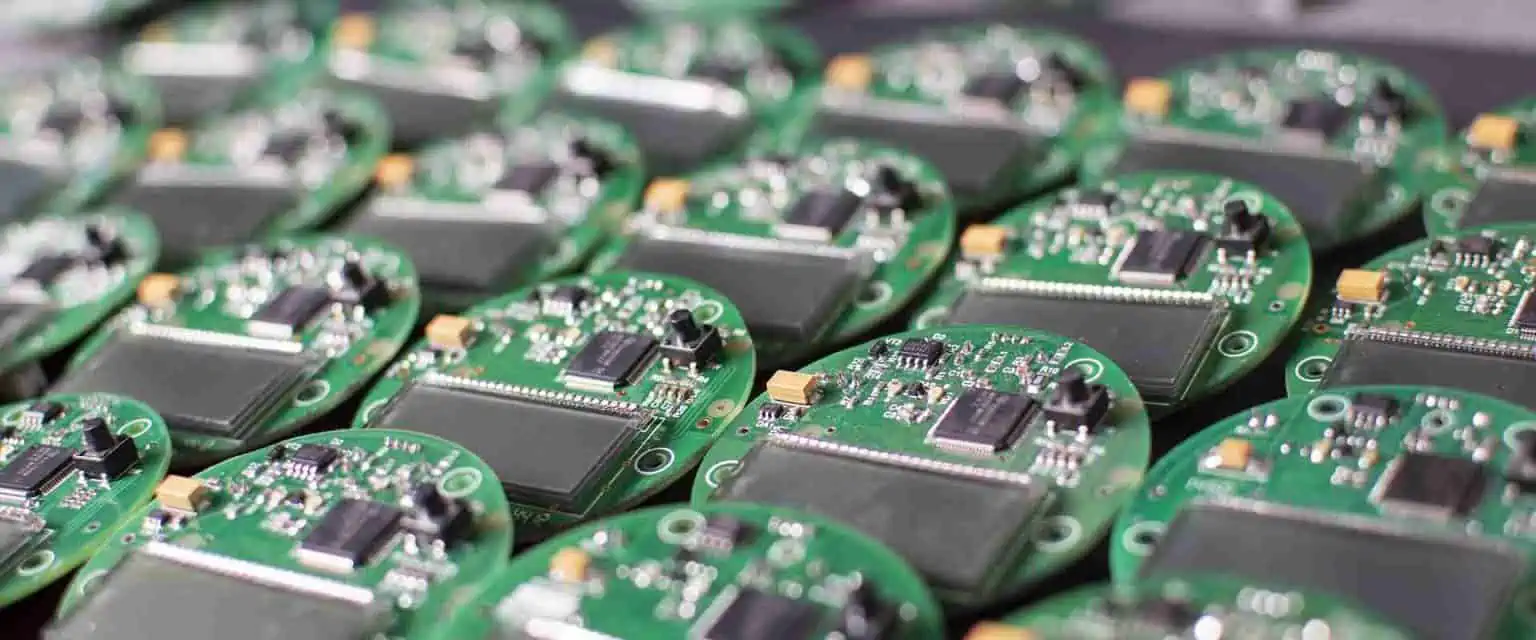
What Are Prototype PCB Runs and Low-Volume PCB Assembly?
Although the terms prototype PCB runs and low-volume PCB assembly are sometimes used interchangeably, they generally serve different purposes within the product-development lifecycle.
Prototype PCB Runs: Function and Design Validation
Prototype PCB assembly typically involves a small quantity of boards, ranging from a few units to several dozen depending on the project.
The primary objective is to determine whether the design works as intended.
Engineers can use prototype boards to validate:
- Electrical functionality
- Signal integrity
- Power distribution
- Thermal behavior
- Component compatibility
- Firmware integration
- Mechanical fit
- Interface performance
- Basic manufacturability
A prototype allows engineers to move from a schematic and simulation environment to actual hardware.
A typical development cycle is:
Design → Prototype → Test → Identify Issues → Redesign → Prototype Again → Validate
Several prototype iterations may be required before the design becomes stable enough for production-oriented manufacturing.
Low-Volume PCB Assembly: Manufacturing and Reliability Validation
Low-volume PCB assembly takes the next step by using production-oriented processes to manufacture a larger but still limited quantity of assembled boards.
Depending on the product and industry, low-volume production may range from dozens to several hundred, several thousand, or more units.
The purpose is not only to verify whether the circuit works, but also to determine whether it can be manufactured consistently.
A properly managed low-volume PCB build can validate:
- DFM (Design for Manufacturability)
- DFA (Design for Assembly)
- DFT (Design for Test)
- Soldering processes
- Stencil design
- Reflow profiles
- Component placement
- Inspection coverage
- Functional testing
- Production yield
- Supply-chain stability
This makes low-volume manufacturing an important bridge between engineering prototypes and high-volume PCB assembly.
Prototype PCB Assembly vs. Low-Volume PCB Assembly
| Feature | Prototype PCB Assembly | Low-Volume PCB Assembly |
|---|---|---|
| Primary objective | Design and functional validation | Manufacturing and reliability validation |
| Typical quantity | Few to dozens | Dozens to thousands |
| Process | Flexible prototype process | Production-oriented process |
| Main focus | Functionality and design refinement | Repeatability, yield, quality |
| DFM/DFA | Important | Critical |
| Testing | Functional and engineering testing | AOI, SPI, X-ray, ICT/FCT and production testing as required |
| Process validation | Limited | Extensive |
| Supply-chain validation | Initial | More meaningful |
| Transition to mass production | Preparation | Direct production-readiness stage |
Both stages are valuable, but they answer different engineering questions:
Prototype: Does the design work?
Low-volume build: Can the design be built reliably and repeatedly?
Why Small PCB Runs Improve Product Reliability
A product’s final reliability is influenced long before it reaches the mass-production line.
Small-batch manufacturing provides multiple opportunities to detect weaknesses before they become large-scale problems.
1. Early Detection of Design Flaws
Some problems do not appear during schematic review or simulation.
A physical prototype may reveal:
- Unexpected EMI
- Crosstalk
- Insufficient power decoupling
- Thermal hotspots
- Signal-quality degradation
- Connector interference
- Mechanical conflicts
- Component accessibility problems
Identifying these issues on a few dozen boards is significantly less expensive than discovering them after thousands of units have been manufactured.
This makes PCB prototyping an important risk-reduction step.
2. Manufacturing Process Validation
Electrical functionality alone does not guarantee manufacturing reliability.
During low-volume PCB assembly, manufacturers can evaluate whether the board can be produced consistently using real production processes.
Typical areas include:
- Solder paste printing
- Stencil aperture design
- Pick-and-place programming
- Reflow temperature profiles
- Component orientation
- Board support
- Panelization
- Depanelization
- Manual and automated assembly
- Cleaning and handling
Typical process-related defects include:
- Tombstoning
- Solder bridging
- Insufficient solder
- Excessive solder
- Voiding
- Component misalignment
- Warpage
- Cold solder joints
Correcting these issues before high-volume manufacturing can significantly improve production yield.
3. DFM, DFA and DFT Validation
A design may work perfectly in the laboratory but still be difficult to manufacture or test.
DFM — Design for Manufacturability
DFM evaluates whether the PCB can be fabricated reliably.
Typical checks include:
- Trace width
- Trace spacing
- Via dimensions
- Annular rings
- Copper-to-edge clearance
- Board thickness
- Stackup
- Surface finish
DFA — Design for Assembly
DFA focuses on the assembly process.
It considers:
- Component spacing
- Component orientation
- Footprint accuracy
- Solder access
- BGA/QFN placement
- Assembly sequence
- Rework accessibility
DFT — Design for Testing
DFT ensures the finished board can be efficiently tested.
It may include:
- Test points
- Probe access
- Programming interfaces
- ICT access
- Functional test connections
- Diagnostic features
Validating these three areas during small-batch production makes the transition to mass production much smoother.
4. Test Strategy and Coverage Validation
A reliable electronics product needs an effective test strategy.
Prototype and low-volume runs allow manufacturers and engineering teams to determine which inspection and testing methods provide the right balance between coverage, cost, and production efficiency.
Depending on product complexity, testing may include:
SPI → AOI → X-Ray → ICT → Flying Probe → FCT → Environmental Testing
SPI
Solder Paste Inspection (SPI) evaluates solder paste volume, alignment, and deposition quality before component placement.
AOI
Automated Optical Inspection (AOI) detects visible assembly defects such as:
- Missing components
- Incorrect orientation
- Misalignment
- Solder bridges
- Tombstoning
- Polarity errors
X-Ray Inspection
X-ray inspection is particularly useful for hidden solder joints such as those under:
- BGA
- QFN
- CSP
- LGA
It can reveal voids, insufficient solder, open joints, and other hidden defects.
ICT
In-Circuit Testing (ICT) evaluates electrical characteristics and connectivity at designated test points.
Functional Testing
Functional testing (FCT) verifies whether the assembled board performs its intended functions under representative operating conditions.
Testing these methods during low-volume production helps engineers refine test fixtures, software, coverage, and procedures before volume production.
5. Component and Supplier Quality Validation
A PCB can only be as reliable as the components used to build it.
Low-volume PCB assembly provides an opportunity to validate new component sources and suppliers before committing to larger quantities.
Engineers can monitor:
- Incoming quality
- Assembly yield
- Electrical performance
- Mechanical reliability
- Component consistency
- Lot-to-lot variation
- Supplier responsiveness
This is especially important for:
- BGA devices
- Connectors
- Sensors
- Power semiconductors
- RF components
- Precision components
- Long-lifecycle products
A component that appears acceptable on paper may still create unexpected manufacturing or reliability problems during real production.
Small runs provide a practical proving ground before the supply chain is scaled.
6. Environmental and Reliability Testing
Prototype and low-volume boards provide the physical hardware required for reliability qualification.
Depending on the application, testing may include:
- Thermal cycling
- Thermal shock
- High-temperature operation
- Low-temperature operation
- Humidity testing
- Vibration testing
- Mechanical shock
- EMC/EMI testing
- Burn-in
- Power cycling
These tests can reveal failure mechanisms that do not appear during normal laboratory operation.
For example, thermal cycling may expose:
- Solder-joint fatigue
- Delamination
- Component cracking
- Via reliability issues
- Mechanical expansion problems
The earlier these weaknesses are detected, the easier they are to correct.
Cost and Risk Advantages of Low-Volume PCB Assembly
The value of small production runs extends beyond engineering.
Lower Upfront Investment
Producing thousands of boards before design validation creates significant financial exposure.
A small build limits the amount of capital tied to an unproven design.
If an issue is discovered, fewer boards require:
- Rework
- Scrap
- Redesign
- Disposal
- Replacement
Faster Iteration
Small production runs are typically easier to schedule and modify.
Engineering teams can follow a rapid cycle:
Build → Test → Analyze → Improve → Rebuild
This shortens the feedback loop and enables more design improvements before mass production.
Lower Inventory Risk
Large inventories of unvalidated products create major business risks.
A design problem discovered after launch can result in:
- Product recalls
- Field repairs
- Warranty claims
- Inventory write-offs
- Customer dissatisfaction
- Brand damage
Using prototype PCB assembly and low-volume PCB production as quality gates reduces the number of units exposed to these risks.
Applications of Prototype and Low-Volume PCB Assembly
Small-batch PCB production is especially valuable in industries where product reliability, customization, or changing demand are important.
Medical Electronics
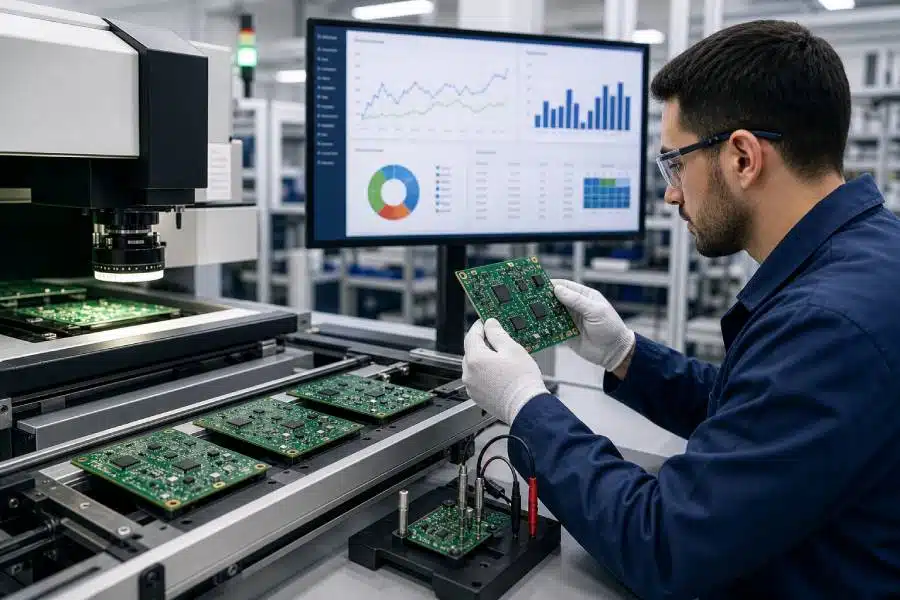
Medical equipment requires dependable electronic performance.
Prototype and low-volume builds support:
- Functional validation
- EMC evaluation
- Hardware/software integration
- Reliability testing
- Certification preparation
Examples include:
- Patient monitoring equipment
- Diagnostic instruments
- Medical imaging systems
- Portable medical devices
- Laboratory equipment
Aerospace and Defense
Aerospace and defense electronics often require extensive qualification before deployment.
Small PCB runs provide hardware for:
- Vibration testing
- Thermal cycling
- Environmental qualification
- Communication testing
- Mission-system integration
Automotive and EV Electronics
Automotive systems operate across challenging temperature, vibration, and electrical environments.
Prototype and low-volume PCB production supports applications such as:
- Battery management systems
- Power electronics
- ADAS
- Automotive controllers
- Infotainment
- Vehicle communication modules
Industrial Automation
Industrial products often require highly customized electronics with relatively modest production volumes.
Low-volume assembly is useful for:
- PLC systems
- Industrial controllers
- Robotics
- Machine vision
- Sensors
- Motor-control systems
Startups and Emerging Products
Startups rarely know their final market volume during the early stages.
Small-batch PCB assembly allows them to:
- Validate product concepts
- Conduct beta testing
- Support customer trials
- Collect field feedback
- Control initial investment
This approach reduces the risk of producing large quantities before market demand has been confirmed.
What to Look for in a Low-Volume PCB Assembly Partner
The choice of manufacturing partner has a direct influence on the value obtained from small-batch production.
Reliability-Critical Experience
Look for a manufacturer familiar with applications such as:
- Automotive
- Medical
- Aerospace
- Industrial
- Telecommunications
- AI and computing
Experience with these industries often indicates stronger process control and understanding of reliability requirements.
Production-Grade Equipment
Low-volume manufacturing should not mean low-quality manufacturing.
The supplier should be capable of using appropriate production-grade equipment for:
- SMT
- THT
- Reflow
- SPI
- AOI
- X-ray
- ICT
- FCT
This helps ensure that prototype and pilot-build results accurately represent future production conditions.
Strong Engineering Support
A capable supplier should provide more than assembly.
Useful engineering services include:
- DFM
- DFA
- DFT
- BOM review
- Component analysis
- Gerber review
- Stackup evaluation
- Manufacturing recommendations
This technical support can help identify problems before fabrication begins.
Integrated Prototype-to-Production Capability
Ideally, the same supplier should be able to support:
Prototype → Low Volume → Pilot Production → Mass Production
Keeping the manufacturing partner consistent allows valuable engineering knowledge, test data, process parameters, and quality records to carry forward.
This can reduce the risk associated with changing factories during production ramp-up.
How Kingda Supports Low-Volume and Prototype PCB Projects
For engineering teams, the best low-volume PCB assembly partner is one that can combine flexibility with production discipline.
Kingda provides a one-stop PCB and PCBA manufacturing solution, supporting PCB fabrication, component sourcing, prototype assembly, SMT/THT assembly, inspection, testing, and production scaling. This integrated approach helps customers avoid unnecessary supplier handoffs and maintain engineering continuity from prototype through production.
High-Mix, Low-Volume Manufacturing
Kingda supports projects with different board designs, component packages, and production volumes.
This is particularly useful for:
- Product development teams
- Startups
- Industrial electronics companies
- Medical-device developers
- Automotive electronics projects
- IoT and AI hardware companies
The ability to manage changing designs and smaller quantities helps engineering teams move through multiple validation cycles efficiently.
Engineering Review and DFM Support
Kingda provides engineering support including:
- Gerber review
- BOM verification
- DFM
- DFA
- DFT
- Pick-and-Place verification
- Component availability analysis
- Alternative-component recommendations
Early engineering review helps identify manufacturing and sourcing risks before they become costly production problems.
Production-Oriented Quality Control
Kingda applies structured quality-control methods to prototype and low-volume projects rather than treating them as informal builds.
Depending on the product requirements, inspection and testing can include:
IQC → SPI → SMT/THT Assembly → AOI → X-Ray → ICT/FCT → OQC
This makes the data generated during prototype and pilot production more meaningful when planning later manufacturing stages.
Broad Assembly Capability
Kingda supports both SMT and THT assembly, including advanced component packages such as:
- 01005
- 0201
- BGA
- QFN
- CSP
- LGA
- Fine-pitch ICs
This provides flexibility for both simple boards and advanced high-density designs.
Prototype-to-Mass-Production Continuity
One of Kingda’s important advantages is the ability to support different stages of the product lifecycle through an integrated manufacturing model.
Instead of transferring the project to a different supplier after prototyping, customers can continue from:
Prototype PCB → Low-Volume PCB Assembly → Pilot Production → High-Volume PCB Assembly
This continuity helps preserve manufacturing knowledge, quality requirements, process data, and test strategies as the product scales.
Quality Management and Certifications
Kingda states that it maintains ISO 9001, ISO 13485, IATF 16949, ISO 14001, and UL certification, and is an IPC member.
These quality systems provide a structured foundation for customers working on reliability-sensitive electronics.
A Practical Prototype-to-Production Workflow
For many products, the most effective manufacturing strategy is a staged progression:
Stage 1 — Engineering Prototype
Purpose: Validate the electrical and mechanical concept.
Typical output:
- Functional prototype
- Initial test data
- Design revisions
- Initial DFM feedback
Stage 2 — Low-Volume PCB Assembly
Purpose: Validate manufacturing repeatability.
Typical output:
- Production-oriented assembly data
- Yield data
- Process parameters
- Test coverage
- Supplier validation
- Reliability results
Stage 3 — Pilot Production
Purpose: Confirm production readiness.
Typical output:
- Standardized work instructions
- Finalized test procedures
- Production panelization
- Process capability data
- Supply-chain validation
Stage 4 — Mass Production
Purpose: Scale the validated product.
The final production process is based on engineering knowledge and manufacturing data collected during the earlier stages.
Conclusion
Low-volume PCB assembly and prototype PCB assembly play a critical role in developing reliable electronic products.
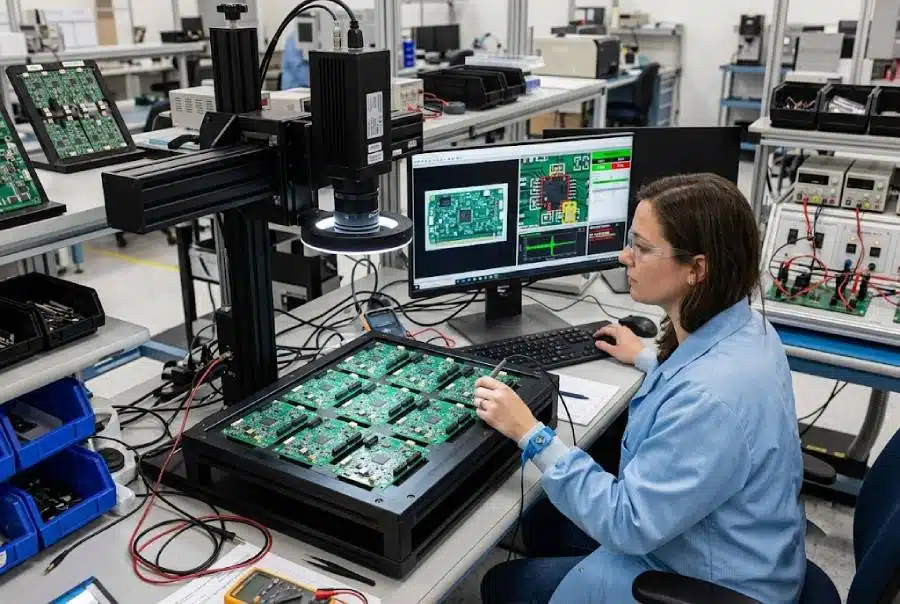
Their value extends far beyond producing a small quantity of circuit boards. Properly managed small-batch production provides a controlled environment for validating:
Design + Manufacturing + Components + Testing + Reliability + Supply Chain
Prototype builds answer whether the design works. Low-volume production determines whether the design can be manufactured consistently and reliably.
For OEMs, startups, and engineering teams, a disciplined progression from PCB prototype assembly to low-volume PCB assembly and then to mass production can reduce technical uncertainty, improve manufacturing yield, minimize inventory risk, and strengthen long-term product reliability.
Kingda combines PCB fabrication, component sourcing, prototype PCBA,low-volume PCB assembly, SMT/THT assembly, inspection, testing, and production scaling in a one-stop manufacturing model. This allows engineering teams to build, validate, optimize, and scale their products with greater continuity and manufacturing confidence.