Medical PCB Design: PCB Design, PCB Manufacturing & Medical Electronics Guide
Advances in electronics, medical engineering, and clinical research have enabled increasingly sophisticated medical devices for diagnosis, monitoring, treatment, and patient care. From patient monitoring systems and diagnostic equipment to wearable devices and implantable electronics, modern medical products depend heavily on reliable electronic hardware.
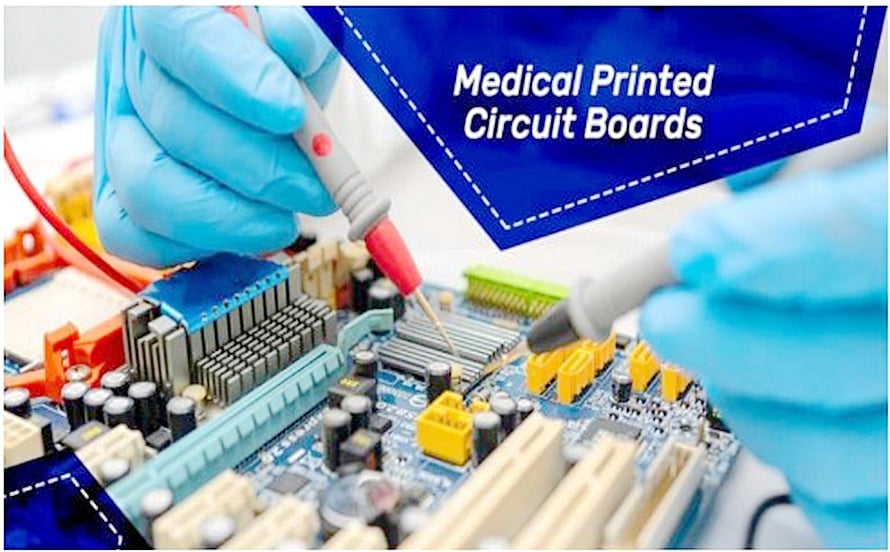
The Medical PCB is one of the fundamental building blocks of these electronic systems. It provides the electrical interconnections, mechanical support, power distribution, signal routing, and interfaces required for electronic components to work together.
Medical PCB applications range from relatively simple monitoring equipment to highly specialized systems such as imaging equipment, surgical instruments, patient monitors, blood glucose meters, wearable health devices, and implantable medical electronics. Each application has different requirements for reliability, electrical safety, mechanical design, environmental resistance, and regulatory compliance.
As a result, Medical PCB Design requires more than simply making a circuit smaller. Engineers must consider signal integrity, electromagnetic compatibility, power consumption, material selection, component lifecycle, manufacturability, testing, traceability, and the intended use environment from the beginning of the development process.
What Is a Medical PCB?
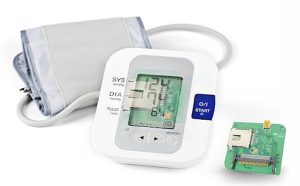
A medical PCB is a printed circuit board designed and manufactured for use in medical or healthcare-related electronic equipment.
Depending on the application, a medical PCB may support:
- Patient monitoring
- Diagnostic equipment
- Medical imaging
- Laboratory instruments
- Wearable healthcare devices
- Portable medical equipment
- Surgical equipment
- Infusion and drug-delivery systems
- Cardiac monitoring
- Blood glucose monitoring
- Implantable electronic systems
- Hospital communication and information equipment
Not every medical PCB has the same reliability or regulatory requirements. A disposable wearable sensor, for example, has a very different risk profile from an implantable device or a mains-powered patient-connected system.
Therefore, the intended use, patient contact, electrical architecture, risk classification, and applicable regulations should be established before the PCB design and manufacturing process begins.
Medical PCB Design Requirements
Medical electronics require careful consideration throughout the product lifecycle. Important requirements commonly include:
- High-density PCB design
- Flexible and rigid-flex PCB structures
- SMT assembly
- Appropriate substrate selection
- Component lifecycle management
- Low-power operation
- Wireless connectivity and IoT integration
- Signal integrity
- EMC and EMI control
- Testing and verification
- Simulation
- Traceability
- Long-term availability and maintainability
The exact requirements depend on the medical device’s intended use and applicable regulatory framework.
1. HDI and High-Density PCB Design
Medical equipment is increasingly becoming smaller while incorporating more sensors, processors, memory, communication interfaces, and power-management circuits.
This creates a need for high-density interconnection technologies.
HDI PCB technology can help engineers achieve greater routing density within a smaller board area through technologies such as:
- Microvias
- Blind vias
- Fine-pitch routing
- Fine-line structures
- Sequential lamination
- High-density component placement
HDI can be particularly useful for portable medical devices and compact wearable electronics.
However, HDI should not be adopted simply because it is technically advanced. The design team should determine whether its benefits justify the additional manufacturing complexity and cost.
Component Miniaturization
Smaller packages can reduce board size, but miniaturization also increases design and assembly challenges.
Engineers must carefully control:
- Component spacing
- Pad geometry
- Solder-mask registration
- Thermal distribution
- Inspection accessibility
- Assembly tolerances
- Rework requirements
A compact PCB should therefore be designed around the complete manufacturing and testing process rather than component density alone.
2. Flexible and Rigid-Flex Medical PCB Design
Flexible and rigid-flex PCBs can be useful when medical electronics must conform to curved surfaces, fit into constrained mechanical spaces, or connect multiple rigid circuit sections.
Applications may include:
- Wearable health monitors
- Portable medical devices
- Catheter-related electronics
- Compact sensors
- Medical instrumentation
- Patient monitoring equipment
Flexible circuits can reduce cable count and assembly space while allowing controlled bending.
Rigid-flex PCBs combine rigid sections for component mounting with flexible sections for electrical interconnection.
However, flexible PCB design requires careful control of:
- Bend radius
- Copper type
- Copper thickness
- Flex-layer stackup
- Stiffener placement
- Dynamic versus static bending
- Mechanical strain
- Connector interfaces
For medical applications, mechanical reliability should be validated under the expected use conditions.
3. Surface-Mount Technology
High-density medical electronics frequently use SMT Assembly because surface-mount components can provide high component density and support automated manufacturing.
SMT can help reduce:
- PCB area
- Component height
- Interconnect length
- Assembly space
Typical SMT production includes:
- Solder paste printing
- Solder paste inspection
- Component placement
- Reflow soldering
- AOI
- Electrical testing
- Functional testing
For medical products, process control is particularly important because defects must be detected and documented according to the product’s quality requirements.
It is also important to distinguish regulatory requirements. RoHS may apply depending on the product and market, but compliance with RoHS alone does not establish that a PCB or medical device is suitable for medical use. Applicable medical-device regulations, safety standards, EMC requirements, material requirements, and quality-management systems must also be considered.
4. Medical PCB Substrate Selection
Material selection is an important part of PCB Design.
FR-4 remains widely used for many medical electronic products because it provides a practical balance between electrical performance, mechanical strength, manufacturability, and cost.
However, specialized applications may require other materials.
Potential choices include:
- Standard FR-4
- High-Tg FR-4
- Low-loss laminates
- High-frequency materials
- Flexible polyimide
- Rigid-flex materials
- Ceramic substrates
- Metal-core PCB materials
The correct substrate depends on factors such as:
- Operating temperature
- Frequency
- Required dielectric properties
- Mechanical requirements
- Flexibility
- Thermal management
- Moisture exposure
- Patient-contact considerations
- Manufacturing process
For implantable or patient-contact applications, the safety and biocompatibility requirements apply to the complete device and relevant materials, not simply to whether a particular PCB laminate is marketed as “medical grade.”
5. Component Obsolescence and Lifecycle Management
Medical equipment often has a long service life.
This creates a significant challenge for component selection.
A consumer product may be redesigned every few years, while medical equipment may need to remain serviceable for substantially longer periods.
Engineers should therefore consider:
- Component lifecycle status
- Last-time-buy risk
- Manufacturer availability
- Approved alternatives
- Second-source options
- Long-term inventory
- Firmware compatibility
- PCB footprint compatibility
- Qualification requirements for substitutions
A component should not be replaced simply because another component has similar electrical specifications. Any replacement may require engineering review, verification, and, where applicable, regulatory or quality-system evaluation.
Lifecycle management should therefore begin during Medical PCB Design, rather than after an obsolete component becomes unavailable.
6. IoT and Wireless Connectivity
Connected medical devices increasingly rely on wireless communication and data processing.
Depending on the application, a medical device may use:
- Bluetooth Low Energy
- Wi-Fi
- Cellular communication
- NFC
- RFID
- Proprietary wireless protocols
Sensors can collect information such as:
- Heart rate
- Temperature
- Blood oxygen saturation
- Motion
- Pressure
- Glucose-related measurements
- Other physiological parameters
The data can then be processed locally or transmitted to another system for storage, analysis, or monitoring.
From a PCB design perspective, wireless functionality introduces additional requirements for:
- Antenna placement
- RF routing
- Ground planes
- Impedance control
- EMC
- Power integrity
- Shielding
- Battery management
Connectivity also creates cybersecurity and data-integrity considerations at the system level. Therefore, secure communication and software architecture should be considered alongside the PCB hardware design.
7. Low-Power PCB Design
Low power consumption is particularly important for battery-powered and wearable medical electronics.
For portable equipment, reducing power consumption can:
- Extend battery life
- Reduce charging frequency
- Reduce heat generation
- Reduce device size
- Improve user convenience
For battery-powered medical devices, engineers may use:
- Low-power microcontrollers
- Efficient voltage regulators
- Power gating
- Sleep modes
- Low-power wireless protocols
- Efficient sensor interfaces
- Optimized firmware
For implantable devices, power management can be even more critical. However, requirements vary significantly by device type, and not every medical PCB is intended for implantation.
8. Testing and Verification
Testing is one of the most important stages of medical electronics development.
A medical PCB may undergo several levels of verification, including:
- Design verification
- Electrical testing
- AOI
- X-ray inspection
- ICT
- Functional testing
- Environmental testing
- Thermal cycling
- Mechanical testing
- EMC testing
- Reliability testing
The exact test plan should be based on the product’s risk analysis, intended use, regulatory requirements, and quality system.
Test Points and Design for Testability
Test points should be incorporated during PCB layout whenever practical.
Good Design for Testability (DFT) can provide access for:
- Programming
- ICT
- Debugging
- Functional testing
- Voltage measurement
- Signal measurement
- Production diagnostics
Providing adequate test access can significantly simplify production testing and troubleshooting.
9. Simulation and Verification
Medical electronics can be expensive and time-consuming to prototype.
Simulation allows engineers to evaluate important design characteristics before manufacturing physical hardware.
Depending on the product, simulation may include:
- Signal integrity
- Power integrity
- Thermal analysis
- Electromagnetic behavior
- RF performance
- Mechanical stress
- Structural analysis
- Circuit behavior
Simulation cannot replace physical testing, but it can identify potential problems earlier and reduce unnecessary prototype iterations.
Major Challenges in Medical PCB Design
Medical PCB designers and manufacturers face several challenges because reliability and product safety can have a direct impact on patient care.
1. Signal Integrity
Modern medical electronics often combine analog sensors, digital processors, wireless communication, and power circuits on the same PCB.
This creates potential signal-integrity problems.
Common concerns include:
- Noise
- Crosstalk
- Ground bounce
- Electromagnetic interference
- Power-supply noise
- Reflections
- Impedance discontinuities
Sensitive analog signals can be particularly vulnerable to digital switching noise.
A well-designed stackup, controlled return path, appropriate grounding, careful component placement, and controlled impedance can help maintain signal integrity.
2. Electromagnetic Compatibility
Medical equipment may need to operate in environments containing numerous electronic devices.
At the same time, the medical device itself must not generate unacceptable electromagnetic interference.
Therefore, Medical PCB Design should consider EMC from the beginning.
Key techniques include:
- Short high-current loops
- Controlled return paths
- Appropriate grounding
- Power filtering
- Decoupling capacitors
- Shielding
- Differential signaling
- Careful connector design
- Separation of noisy and sensitive circuits
EMC should not be treated as a final-stage testing problem. It is much more effective to incorporate EMC considerations during schematic and PCB layout development.
3. Strict Accuracy and Reliability Requirements
Medical equipment can require highly repeatable electrical performance.
For example, a monitoring device may need stable analog measurements over time and across environmental conditions.
Reliability engineering therefore considers:
- Component tolerances
- Temperature drift
- Aging
- Power stability
- Signal noise
- Mechanical stress
- Thermal cycling
- Manufacturing variation
However, “maximum precision” is not always the correct design objective. The required accuracy should be derived from the device’s intended clinical or functional requirements and validated through appropriate testing.
4. Low Power Consumption
Battery-powered and implantable medical electronics can have stringent energy constraints.
Power optimization may involve the entire system rather than the PCB alone.
Engineers should evaluate:
- Active power
- Standby power
- Sleep current
- Peak current
- Battery characteristics
- Wireless transmission power
- Thermal effects
For implantable systems, power management must be considered together with the complete device architecture and applicable safety requirements.
5. Material Selection
Material selection becomes more complicated when a medical PCB operates in unusual environmental conditions or is integrated into a patient-contact or implantable system.
Engineers should consider:
- Electrical insulation
- Temperature resistance
- Moisture resistance
- Mechanical stability
- Chemical resistance
- Outgassing where relevant
- Biocompatibility where relevant
- Regulatory requirements
A PCB laminate that works well in ordinary industrial electronics may not automatically be appropriate for a particular medical application.
6. PCB Shape and Mechanical Constraints
Medical devices can have highly specialized mechanical structures.
The PCB may need to fit:
- Small handheld housings
- Wearable devices
- Curved enclosures
- Compact diagnostic instruments
- Catheter-related systems
- Portable monitoring equipment
Flexible and rigid-flex PCBs can provide additional mechanical freedom.
However, mechanical requirements should be defined together with the PCB stackup, component placement, connector design, and assembly process.
7. Traceability for Rework and Troubleshooting
Traceability is particularly important for medical electronics.
Manufacturing records may need to connect:
- PCB revision
- BOM revision
- Component lot
- PCB fabrication lot
- Assembly batch
- Inspection results
- Test results
- Rework history
- Firmware version
If a problem is discovered during production or field service, traceability can help identify affected units and support structured failure analysis.
A controlled revision-management system is therefore essential.
8. Manufacturing Cost
Medical PCB manufacturing can be more expensive than standard consumer electronics because of additional engineering, inspection, documentation, testing, and quality requirements.
Cost drivers may include:
- High layer counts
- HDI structures
- Specialized materials
- Fine-pitch components
- Flexible or rigid-flex construction
- Tight tolerances
- Advanced inspection
- Functional testing
- Traceability
- Low-volume production
- Long-term component management
The objective should not simply be to minimize the initial PCB price. Instead, engineers should consider total product cost, reliability, testing requirements, serviceability, and lifecycle costs.
Medical PCB Manufacturing Process
A typical medical PCB Manufacturing workflow may include the following stages:
1. Engineering Review
The manufacturer reviews the design package, BOM, PCB specifications, assembly requirements, and applicable quality requirements.
2. DFM and DFA Analysis
The design is evaluated for manufacturability and assembly feasibility.
Potential issues include:
- Minimum spacing
- Component clearance
- Pad geometry
- Via design
- Thermal constraints
- Assembly access
- Test-point placement
3. PCB Fabrication
The bare board is manufactured according to the approved fabrication data.
The process may include:
- Material preparation
- Imaging
- Etching
- Drilling
- Plating
- Lamination
- Solder mask
- Surface finish
- Silkscreen
- Electrical testing
4. Component Procurement
Components are sourced according to the approved BOM and procurement requirements.
For medical products, component traceability and lifecycle management may be especially important.
5. SMT and THT Assembly
Components are assembled using appropriate SMT, through-hole, or mixed-technology processes.
6. Inspection
Inspection may include:
- SPI
- AOI
- X-ray
- Visual inspection
7. Electrical and Functional Testing
The completed PCBA is tested according to the product’s requirements.
8. Final Quality Control
Production records, inspection results, labels, documentation, and test data are reviewed before shipment.
Standards and Regulatory Considerations
Medical electronics are subject to regulatory and safety requirements that vary according to the product, market, intended use, and risk classification.
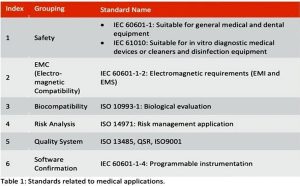
Important standards and frameworks may include:
- ISO 13485 for quality management systems for medical devices
- IEC 60601 series for medical electrical equipment safety and essential performance
- IEC 62304 for medical device software lifecycle processes
- IEC 62366 for usability engineering
- ISO 14971 for medical device risk management
- Applicable regional medical-device regulations
- RoHS and other environmental regulations where applicable
The exact requirements depend on the product and market.
It is also important to distinguish between a PCB manufacturer’s certification and the certification or regulatory clearance of the finished medical device. A PCB manufacturer supporting medical products does not, by itself, mean that the finished device is medically certified.
Medical PCB vs. Standard PCB
| Feature | Medical PCB | Standard PCB |
|---|---|---|
| Reliability requirements | Often stringent | Application-dependent |
| Traceability | Often extensive | Application-dependent |
| Testing | May require multiple test levels | Depends on product |
| Component lifecycle | Often important | Depends on product life |
| Material selection | Application-specific | Broad material options |
| EMC requirements | Often stringent | Application-dependent |
| Miniaturization | Common in portable/wearable products | Varies |
| Flexible PCB use | Common in selected applications | Application-dependent |
| Regulatory considerations | Often extensive | Depends on market/product |
| Manufacturing documentation | Typically detailed | Depends on application |
The term “medical PCB” covers a broad range of products. A PCB for a hospital monitor and a PCB for an implantable device should not be assumed to have identical requirements.
How to Choose a Medical PCB Manufacturer
Selecting the right medical PCB manufacturing partner requires evaluating both technical capabilities and quality processes.
PCB Design and Engineering Capability
Check whether the manufacturer can support:
- DFM/DFA
- HDI
- Flexible PCB
- Rigid-flex PCB
- High-density routing
- Controlled impedance
- Thermal management
- Design-for-testability
PCB Manufacturing Capability
Evaluate:
- Layer count
- Material options
- Copper thickness
- Surface finishes
- Minimum trace/space
- Via technology
- HDI capability
- Flexible materials
- Rigid-flex capability
PCB Assembly Capability
Consider whether the supplier can support:
- SMT
- THT
- Mixed-technology assembly
- Fine-pitch components
- BGA
- QFN
- Micro-components
- Programming
- Conformal coating where required
Testing and Inspection
A medical electronics supplier may need to provide appropriate:
- AOI
- SPI
- X-ray
- ICT
- Flying-probe testing
- Functional testing
- Electrical safety testing
- Environmental testing
The required combination should be established from the product’s risk and validation plan.
Quality and Traceability
Ask how the manufacturer manages:
- Lot traceability
- Component traceability
- PCB revision control
- Manufacturing records
- Nonconformance management
- Corrective actions
- Engineering changes
- Rework records
Why Choose Kingda for Medical PCB Manufacturing?
Medical PCB projects require close coordination between PCB Design, material selection, PCB fabrication, component sourcing, assembly, inspection, and testing.
Kingda can support customers seeking an integrated PCB manufacturing and assembly workflow for medical and healthcare electronics. Before production, the project should be evaluated according to the PCB specifications, application environment, BOM, assembly technology, testing requirements, and applicable quality requirements.
For demanding medical electronics, the manufacturing partner should be involved early in the development process. Early DFM review, component lifecycle analysis, test planning, and manufacturing validation can help reduce avoidable redesigns and production risks.
Customers should also define the required regulatory and quality framework before production so that the manufacturing process, documentation, inspection, and traceability system can be aligned with the overall medical-device development plan.
Conclusion
Medical electronics are becoming smaller, smarter, and more connected, creating increasingly demanding requirements for Medical PCB Design and PCB Manufacturing.
HDI technology, flexible and rigid-flex circuits, SMT assembly, low-power architectures, wireless connectivity, advanced simulation, and comprehensive testing can help engineers develop compact and reliable medical electronics.
At the same time, medical PCB development requires careful attention to signal integrity, EMC, material selection, component lifecycle management, traceability, manufacturability, and regulatory requirements.
The most appropriate PCB technology depends on the medical device’s intended use and risk profile. A wearable health monitor, diagnostic instrument, hospital system, and implantable device can have very different requirements.
For this reason, successful medical PCB development should begin with a clear understanding of the application and continue through controlled PCB Design, engineering verification, PCB Manufacturing, assembly, testing, validation, and lifecycle management.
Article Summary
Medical PCBs are essential components in modern healthcare electronics, including patient monitors, diagnostic systems, wearable devices, laboratory equipment, and specialized medical equipment. Medical PCB design requires careful consideration of HDI, flexible and rigid-flex structures, SMT assembly, material selection, low-power operation, wireless communication, signal integrity, EMC, component lifecycle, testing, simulation, and traceability. Unlike ordinary consumer electronics, medical PCB projects must also consider the intended use of the device and applicable regulatory and quality requirements. A structured approach to PCB design, manufacturing, assembly, verification, and lifecycle management helps create reliable electronics for demanding medical applications.