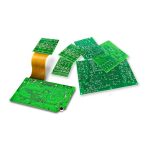
How Multilayer Design Shortens PCB Lead Time
Multilayer boards are slower to build than two-layer boards, so it is counter-intuitive that a well-planned multilayer design can shorten the total delivery time. The saving does not come from the fabrication process; it comes from removing the queue time, the re-quote and the revision that a poorly planned design creates. This guide explains where multilayer design decisions affect lead time.
Where Lead Time Is Actually Spent
It helps to separate controllable from uncontrollable delay. Material procurement and the physical process time cannot be compressed, while engineering queries, re-quotes and design revisions can be eliminated by better preparation. A project that genuinely shortens delivery is one that removes the second category rather than negotiating the first.
Total lead time has three parts: the front-end engineering, the fabrication sequence and the queue in front of each process. The fabrication sequence is largely fixed by the layer count and the material. The engineering and the queue are the parts that a design can influence, and on a complex board they can easily exceed the process time itself.
Front-end engineering includes a design rule review, a stackup confirmation, a drill programme and often an impedance calculation. Every question that the fabricator has to ask the designer adds a day. A package that answers those questions in advance removes most of that delay.
How Layer Planning Reduces Queue Time
Queue time is driven by how many process steps require a specific machine. A board that can be built on a standard line waits only for the line to be free, while a board that needs a sequential lamination for blind vias waits for a specialised press and a specific operator. Reducing the number of special steps therefore reduces the wait more than it reduces the work.
That is the practical argument for choosing a simpler layer stackup when the design allows it. A board that avoids blind and buried vias and stays with through-holes can be scheduled on far more capacity, and schedule flexibility is what protects the delivery date.

Standard Stackups and Fewer Lamination Cycles
Material availability is a schedule risk that is easy to overlook. A laminate that is not held in stock has to be ordered, and that purchase can take a week before the panel is even started. Standard cores and prepregs avoid the risk because they are already on the shelf.
A symmetric stackup built from standard cores and prepregs is easier to schedule than a bespoke one, because the material is on the shelf and the press parameters are already proven. A special dielectric may have to be ordered, and that procurement time sits entirely in front of the fabrication sequence.
Lamination cycles multiply the effect. Each additional cycle adds a press operation and a registration step, and both introduce the possibility of a queue. A design that keeps the layer count to the minimum the routing requires, and that confines blind vias to the places where they are genuinely needed, is faster to build as well as cheaper.
Panel Utilisation and Batch Efficiency
Panels are processed in batches, so a board that fills a standard panel efficiently can be run with fewer panels and fewer process loads. That does not make each step faster, but it makes the order smaller on the floor, and small orders move through a busy line more predictably than large ones.
Good panel utilisation also reduces the chance of a partial load being held until more work arrives. On a specialised process, a partially loaded batch may wait for another job with the same requirements, and that waiting is invisible in the quotation but very visible in the delivery date.

Design Rules That Avoid a Re-Quote
A design that violates the supplier’s standard capability is not rejected; it is re-quoted. The re-quote is a conversation about tolerance, price and often stackup, and it typically costs two or three days before the order is even accepted. Holding to the standard rules avoids that conversation entirely.
Applying design for manufacturability rules at layout stage is therefore a schedule measure as well as a cost measure. The most common violations are a minimum annular ring that is too small, a solder mask dam that is too narrow and a copper-to-edge clearance that is below the process minimum.
Documentation Quality and CAM Time
A short written note covering intent also removes ambiguity. If a minimum feature sits close to the process limit because a specific reason requires it, saying so lets the fabricator plan the panel rather than query the design. Intent is as useful to a CAM engineer as data.
CAM engineering is where the order either starts moving or stops. A complete package contains the Gerber data, the drill file, the stackup drawing, the impedance requirement and the finish specification. A package missing any of those generates a query, and a query generates a delay that is entirely avoidable.
The stackup drawing is the most frequently omitted item on a multilayer board. Without it, the fabricator has to infer the layer order and the dielectric thicknesses, which is exactly the information that determines impedance. Providing it turns a two-day clarification into a scheduled start.
Prototype Sequencing
A prototype order should confirm the fabrication process as well as the circuit. Building the first article on the production stackup, with the production finish and the production panel layout, verifies everything at once and removes the second iteration that a simplified prototype would otherwise create.
Sequencing also matters for prototype requirements and for assembly. Ordering the stencil with the boards rather than after them removes a week of waiting, and it costs nothing to plan. Anything that can be ordered in parallel should be ordered in parallel.
Practical Steps That Shorten Delivery
Start with the stackup: choose a standard construction, keep it symmetric, and avoid special materials unless the loss budget requires them. Then simplify the vias, since each additional lamination cycle is both a cost and a queue. Finally, confirm the panel layout with the assembly process that will run it.
Then improve the package. A complete data set, a stackup drawing and a written acceptance criterion remove the front-end delay, and a rolling forecast removes the queue delay. Between them, those two measures do more for delivery than any negotiation on the fabrication time itself.
Process Control and Verification
Reviewing the design before the data is released is far cheaper than correcting it after the panel is in the tank, because every step downstream inherits the decision made at the front end. Where a value sits close to a process limit, the drawing should say so, since the shop can then open the process window rather than working to a nominal figure that carries no tolerance.
The measurements that matter are the repeatable ones: conductor width and spacing, annular ring, finished hole size, plating thickness and surface finish are all verifiable on a coupon that travels with the panel. Documenting the assumption is part of the design work, and a short note on the drawing prevents a question that would otherwise arrive a day later and cost a day of schedule.
Where a value sits close to a process limit, the drawing should say so, since the shop can then open the process window rather than working to a nominal figure that carries no tolerance. Running a first article through the same checks as the production panel confirms that the two agree, and that comparison is the cheapest form of process control available at prototype stage.
FAQ
Does a higher layer count always mean a longer lead time? It lengthens the fabrication sequence and narrows the number of lines that can build the board, so it usually does. The effect is largest when the extra layers also require sequential lamination or a special material.
Can lead time be shortened after the order is placed? Only at a price, and only by moving the order ahead of others in the queue. Removing a special process step is sometimes possible and is far cheaper than buying priority, but it requires the designer’s agreement.
What single document most often delays a multilayer order? The stackup drawing. Without it the fabricator cannot confirm the dielectric thicknesses, and impedance cannot be calculated, so the order waits for a clarification that the designer could have supplied with the data.