Online vs Offline AOI Inspection in PCB Assembly
In modern electronics manufacturing, inspection is an essential part of maintaining consistent assembly quality. AOI Inspection (Automated Optical Inspection) is widely used to identify component placement and soldering defects during PCB assembly.
Depending on the production requirements, AOI systems can generally be deployed as Online AOI integrated directly into the production line or as Offline AOI operated independently for engineering validation, sampling, troubleshooting, and reinspection.
Although both systems use optical inspection technology, they serve different purposes and provide different advantages. Understanding these differences helps manufacturers select the right inspection strategy for each PCB assembly project.
What Is Online AOI Inspection?
Online AOI is integrated directly into an SMT production line. The system automatically inspects PCBs after component placement or reflow soldering without requiring operators to manually move boards to a separate inspection station.
The main objective is to detect defects as early as possible and prevent defective assemblies from moving to subsequent production stages.
Key Features of Online AOI
Online AOI can inspect a large number of boards continuously while maintaining a consistent inspection process.
Typical defects that can be detected include:
- Missing components
- Incorrect components
- Component misalignment
- Incorrect polarity
- Solder bridges
- Insufficient solder
- Excessive solder
- Soldering appearance defects
- Lead and pad-related abnormalities
Because inspection takes place directly within the manufacturing line, production personnel can respond quickly when abnormal conditions are identified.
For manufacturers looking for an integrated PCB Assembly workflow, GOPCBA PCB Assembly Services can integrate SMT, through-hole, inspection, and testing processes according to project requirements.
Advantages of Online AOI
Real-time inspection:
Boards can be inspected immediately after the relevant SMT process, reducing the time between production and defect detection.
High inspection efficiency:
Automated systems can inspect large production volumes without relying entirely on manual visual inspection.
Early defect interception:
Potentially defective boards can be identified before they proceed to subsequent manufacturing stages, reducing unnecessary rework.
Process feedback:
Inspection results can help engineers identify recurring process problems related to solder paste printing, component placement, or reflow soldering.
What Is Offline AOI Inspection?
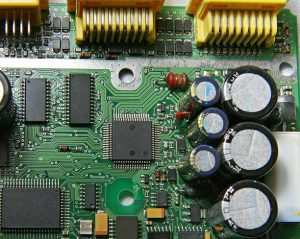
Offline AOI operates independently from the main SMT production line. Instead of inspecting every board as part of continuous production, engineers or quality personnel can move selected boards to a dedicated inspection station.
This configuration provides greater flexibility and is particularly useful for new product introduction, prototype builds, engineering verification, low-volume production, troubleshooting, and reinspection.
Typical Applications of Offline AOI
Offline AOI can be used in several situations:
- New product introduction (NPI)
- Prototype PCB inspection
- Small-batch production
- Process validation
- Engineering analysis
- First-article inspection
- Reinspection after repair
- Failure analysis
- Process optimization
This flexibility makes offline inspection useful when production engineers need to investigate a specific problem in greater detail.
For prototype projects, rapid PCBA prototyping can help manufacturers identify design and assembly issues before products move into larger production volumes.
Advantages of Offline AOI
Greater flexibility:
Inspection can be performed whenever needed without modifying the main production line.
Suitable for engineering analysis:
Engineers can use offline AOI to investigate specific defects, compare different production conditions, or verify design changes.
Useful for low-volume production:
For smaller production quantities, a standalone inspection system may provide an efficient alternative to continuously integrating inspection into the production line.
Convenient for reinspection:
Boards that have been repaired can be inspected again before returning to the next manufacturing stage.
Online AOI vs Offline AOI: Key Differences
Although both systems rely on automated optical inspection, their primary differences are related to workflow, production integration, flexibility, and inspection objectives.
| Feature | Online AOI | Offline AOI |
|---|---|---|
| Production integration | Integrated into SMT line | Independent inspection station |
| Inspection timing | During continuous production | After boards are transferred to inspection |
| Throughput | High | Generally lower |
| Flexibility | Moderate | High |
| Real-time process feedback | Excellent | More limited |
| Prototype applications | Possible | Particularly suitable |
| Mass production | Highly suitable | Less suitable for 100% inspection |
| Engineering analysis | Limited by production workflow | Highly flexible |
| Reinspection | Possible | Very convenient |
The right solution depends on the production volume, product complexity, quality requirements, and purpose of inspection.
How AOI Supports PCB Assembly Quality Control
AOI should not be considered an isolated inspection step. Its greatest value comes from integrating inspection results with other manufacturing and testing processes.
A comprehensive PCBA Quality Control strategy can combine:
- Solder paste inspection
- AOI
- X-Ray inspection
- Electrical testing
- Functional testing
- Visual inspection
- Process monitoring
- Material traceability
- Engineering analysis
SPI and AOI Work Together
SPI (Solder Paste Inspection) evaluates solder paste deposition before components are placed. AOI then checks component placement and soldering results after assembly.
Using these inspection technologies together can help engineers distinguish between different defect sources.
For example, if AOI identifies insufficient solder on multiple pads, SPI data can help determine whether the problem originated from solder paste printing rather than component placement or reflow.
X-Ray for Hidden Solder Joints
Optical inspection cannot directly see solder joints hidden underneath packages such as BGA and certain QFN devices.
X-Ray inspection can provide internal images of these solder joints and help identify issues such as voiding, bridging, insufficient solder, and other hidden defects.
This makes X-Ray particularly valuable for assemblies containing high-density or bottom-terminated components.
AOI in SMT and Through-Hole Assembly
AOI is most commonly associated with SMT manufacturing, but inspection requirements can extend across the complete assembly process.
Modern electronic products frequently combine surface-mount components with through-hole components. In these cases, manufacturers need to coordinate SMT inspection with subsequent through-hole assembly and soldering operations.
Through-Hole PCB Assembly is particularly important for assemblies containing connectors, large components, transformers, power devices, and other through-hole components.
After SMT and through-hole assembly, additional inspection and testing can be performed to verify soldering quality and electrical performance.
AOI and DFM: Preventing Defects Before Production
Inspection technology can identify defects, but preventing defects at the design stage is even more effective.
PCB layout problems such as inadequate component spacing, unsuitable pad dimensions, difficult-to-access solder joints, and poor thermal balance can create manufacturing challenges that no inspection system can completely eliminate.
A DFM review evaluates the design before production and identifies potential manufacturing risks.
Using PCB Design and Layout Services can help optimize component placement, PCB layout, manufacturability, and assembly reliability before boards enter production.
This creates a more complete quality strategy:
Design optimization → Process control → AOI inspection → Electrical testing → Final verification
Choosing Online or Offline AOI
The choice between online and offline inspection should be based on the actual production environment.
Choose Online AOI When:
- Production volume is high
- Continuous SMT manufacturing is required
- Fast defect detection is important
- Automated production lines are already established
- Real-time process feedback is needed
- Consistent inspection coverage is a priority
Choose Offline AOI When:
- Production volume is relatively low
- Products are still in development
- Engineering verification is required
- Prototype boards need inspection
- Specific defects require detailed investigation
- Repaired boards need to be rechecked
For many manufacturers, the best strategy is not necessarily to choose only one system. Online AOI can provide continuous production inspection, while offline AOI can support engineering analysis, prototypes, troubleshooting, and reinspection.
Building a Complete AOI Quality System
AOI delivers the greatest value when it is part of a broader manufacturing quality system.
A comprehensive workflow may include:
- PCB design and DFM review
- Material and component verification
- Solder paste inspection
- SMT component placement
- Reflow soldering
- Online AOI
- X-Ray inspection when required
- Through-hole assembly
- Electrical and functional testing
- Final quality verification
This approach moves quality control from simple end-of-line inspection toward defect prevention and continuous process improvement.
For manufacturers requiring integrated production and quality management, GOPCBA PCBA Capabilities provides a broader view of PCB assembly and manufacturing capabilities.
Conclusion
Online and offline AOI serve different but complementary roles in electronics manufacturing.
Online AOI is optimized for continuous production, rapid inspection, and real-time defect detection. It is particularly valuable for medium- and high-volume SMT manufacturing where production efficiency and immediate process feedback are critical.
Offline AOI provides greater flexibility for prototypes, engineering validation, low-volume production, troubleshooting, and repaired-board inspection.
Neither approach should be viewed as a replacement for all other quality-control methods. The most effective strategy combines AOI with SPI, X-Ray, electrical testing, DFM analysis, process control, and material traceability.
By integrating these technologies into a structured PCB Assembly process, manufacturers can detect defects earlier, improve process stability, reduce rework, and build more reliable electronic products.