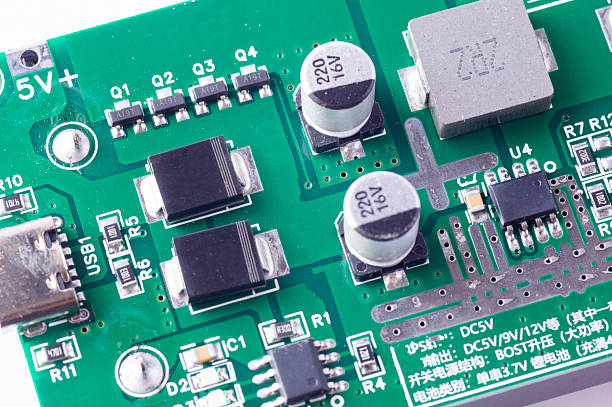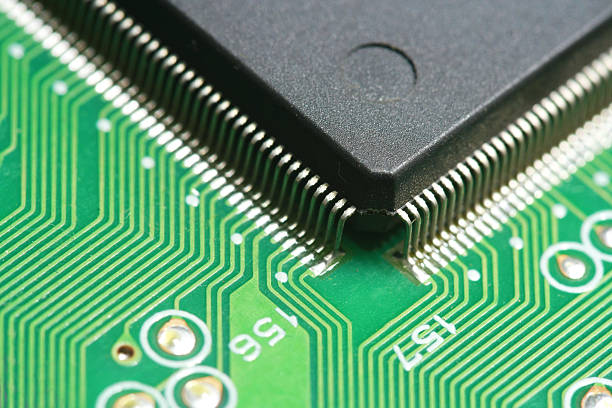
PCB Prototype Cost Breakdown for Engineers and Buyers A prototype quotation often arrives as a long list of line items. Setup charges, material fees, drilling costs and test charges sit beside one another with little explanation. Without a clear view of what each line covers, it is hard to judge…
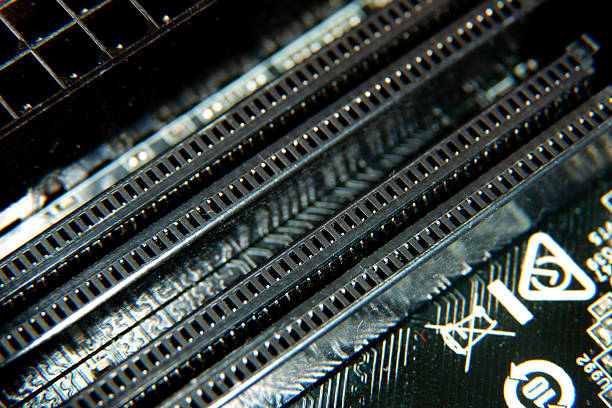
Heavy Copper PCB for Industrial Power Supplies Industrial power supplies deliver high current for long periods, often in hot cabinets and vibrating frames. Standard copper foil can run out of cross-section before the design runs out of current. A heavy copper board answers that gap by adding metal where the…
Metallized Half-Hole PCB Manufacturing: Process Control A metallized half-hole board carries plated connections on the cut edge of the panel. The plated cavity lets one board solder directly onto another, which saves connectors and shortens the signal path. This construction appears in high-frequency modules, precision instruments, and compact industrial control…
How to Choose a Reliable Factory for Low Volume PCB Assembly Low-volume PCB assembly covers prototypes, engineering samples, pilot builds and small production runs. The order size is modest, but the risk is not. A single process drift can scrap a whole lot when only a few boards exist. Buyers…
Lead Times for Low-Volume PCB Assembly Low-volume assembly rarely fails because a machine is slow. It fails because information arrives late, materials are missing, or nobody checks the schedule until the promised date has passed. A small batch still passes through stencil printing, placement, reflow, inspection, and test. Each step…
Small-Batch PCB Production Cost: 5 Practical Ways to Reduce Costs Small-batch PCB production carries a cost structure that volume orders do not share. Setup work, tooling, programming and engineering review are spread over fewer boards, so each unit absorbs more of the fixed burden. Buyers often compare quotations on unit…
How to Find a Short Circuit on a PCB: Step-by-Step Troubleshooting Guide A Printed Circuit Board (PCB) is the foundation of almost every modern electronic device, from smartphones and consumer electronics to industrial control systems and automotive equipment. However, even a well-designed and properly manufactured circuit board can develop faults…
How to Generate Gerber Files for PCB Manufacturing: A Complete Guide If you have ever designed a printed circuit board (PCB), you may know that you usually cannot send the original CAD design file directly to a PCB manufacturer and expect production to begin immediately. Manufacturers typically need a set…
Double-Sided PCB: Design, Structure, Benefits, Applications, and Manufacturing Guide Printed circuit boards (PCBs) are at the heart of almost every modern electronic product, from smartphones and consumer electronics to aerospace systems, industrial controllers, automotive electronics, and communication equipment. A single-sided PCB is suitable for relatively simple circuits because all conductive…
Press-Fit PCB Technology: Design, Benefits, Applications, and Reliability As modern electronic products continue to become smaller, more powerful, and more highly integrated, reliable interconnection between components, connectors, and subassemblies has become increasingly important. Integrating numerous components and functional modules onto a compact platform creates greater challenges for electrical connectivity, mechanical…