Depaneling: Preparation, Placement and Process Control
A panel exists so that the assembly line has something large enough to handle, and the boards have to be separated again before the product is finished. The separation step is where a surprising amount of damage is done, because the operation that breaks a board out of a panel applies a mechanical load to a board that already carries soldered components.
The methods available differ in the amount of stress they transmit, the quality of the edge they leave, and the tooling they require. This article compares them and sets out how to choose, with the electrical and mechanical consequences of each made explicit.
Why The Panel Has To Be Separated Carefully
Every separation method applies a force, and the force has to go somewhere. In a V score the board is bent until the remaining material fractures, and the bending propagates into the board itself. In tab routing the tabs are cut or snapped, and the snap sends a shock through the board. In laser cutting the material is removed without mechanical load, and the heat is the concern instead.
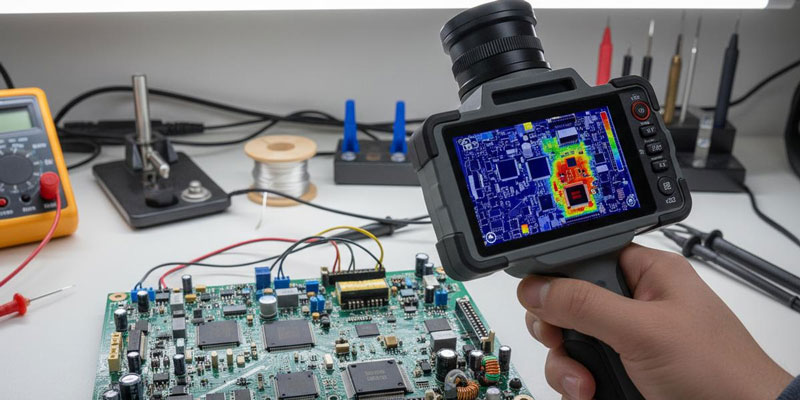
The consequence of stress is a cracked solder joint, a delaminated pad, or a ceramic capacitor that is fractured internally and fails in the field. These defects are not always visible at the edge where the force was applied, which is why the method has to be chosen from the components on the board as well as from the shape of the outline.
V Score And Its Limits
A V score cuts a groove along both faces of the panel with a rotating blade, leaving a controlled web of material that snaps when the board is bent. It is fast, it needs no special tooling beyond the blades, and it produces an edge that is straight and clean. It is also the least tolerant of components near the break line.
The groove has to run the full length of the separation line, so the outline must be a straight line without internal cutouts. The remaining web is typically a third of the board thickness, and the bending force needed to break it is carried by the panel either side of the line. A component placed within a few millimetres of the score line sees that bending, and a brittle component in that position is at risk.
Tab Routing And Breakaway Tabs
Tab routing mills a slot along the outline with a small cutter and leaves a number of tabs that hold the board in place. The tabs are then cut or snapped, either by hand or in a fixture. The method allows any outline shape, because the cutter follows a programmed path, and it leaves more material around the board than a V score does.
Tab routing is the usual choice where the outline is complex or where components must be placed close to the edge. The tabs can be positioned deliberately in quiet areas of the board, and a small hole at each end of the tab, known as a mouse bite, concentrates the stress so that the break is cleaner. The cost is the routing time and the wear on the cutter, and the dust that has to be removed afterwards.
Laser Cutting And Its Place
A laser removes material by vaporising it, so there is no mechanical load at all. That makes it the right answer for a board that carries a component which cannot tolerate any bending, such as a bare die or a thin ceramic, or for a board so small or so densely populated that no mechanical method is safe.
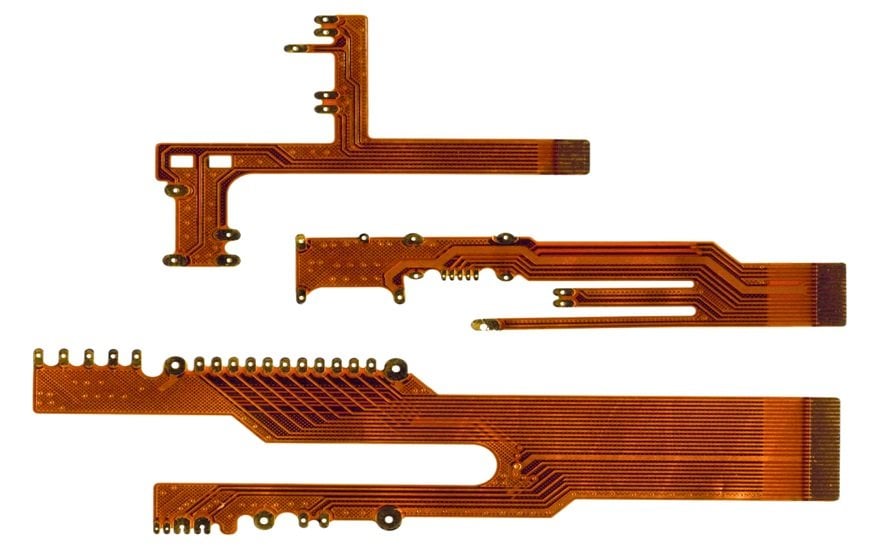
The concerns are thermal and economic. The laser leaves a heat affected zone along the cut edge, and the debris has to be extracted rather than allowed to settle on the board. The process is slower than a mechanical method, so it is usually applied to high value assemblies where the cost of a cracked component exceeds the cost of the cutting time. It is also the only practical method for some thin flex and ceramic substrates.
Stress, Burrs And Component Damage
The measurable criterion is the strain that reaches the components, and it can be checked directly by attaching a strain gauge to the board near the break line and separating the panel. Limits for the strain that a ceramic capacitor or a ball grid array can tolerate are published, and a method that exceeds them is unsuitable regardless of how clean the edge looks.
Edge quality is the second criterion. A V score leaves a slightly bevelled edge that is generally acceptable, a routed edge may carry burrs that have to be removed, and a laser leaves a charred zone. Where the board edge is part of a connector interface or has to fit a chassis, the edge quality becomes a functional requirement rather than an appearance issue, and the tolerance on the edge should be stated.
Choosing A Method For A Product
The decision sequence starts with the outline, then the components, then the volume. A rectangular outline with no components near the edge and a high volume points to a V score. A complex outline or components close to the edge points to tab routing. A board with a component that cannot see any bending, or a substrate that cannot be scored, points to laser cutting.
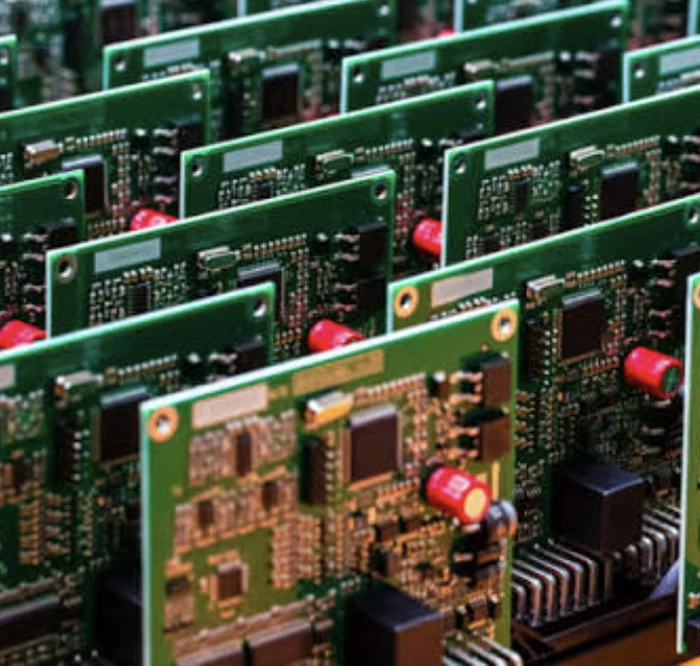
Panel utilisation is the fourth factor and it interacts with all of the others, because the space left for the rails and the tabs is board area that cannot be used. A layout that increases the number of boards per panel by a few percent may be worth a change of method, and the calculation should include the yield of each method rather than the material cost alone. The manufacturing constraints that drive these decisions are collected in design guidelines for manufacturability, and the space required for rails and tooling is part of board outline and mounting design. The way those decisions affect the production flow is described under layout decisions that affect production.
Process Control and Verification
On a design of this kind, panel utilisation is the item that decides how the rest of the board is arranged. Running a first article through the same checks as the production panel confirms that the two agree, and that comparison is the cheapest form of process control available at prototype stage. Keeping a sample from the panel turns a dispute into a measurement, because the same coupon can be re-examined by both parties without rebuilding the batch.
FAQ
Is a V score always cheaper than routing? It is faster and needs less tooling, so it is cheaper where the outline allows it. It cannot follow a curved outline or handle a board with components close to the break line.
How close can a component be to a scored edge? There is no fixed distance. The limit depends on the component and on the bending it can tolerate, and it is best established by measuring the strain on a sample rather than by a rule of thumb.
Does laser depaneling eliminate stress entirely? It eliminates mechanical stress, but it introduces a heat affected zone and debris. The component sees no bending, which is the reason to choose it.