PCB Production Files: Types, Manufacturing Requirements, and Quality Control
What Are PCB Production Files?
From raw materials to finished circuit boards, PCB Production Files serve as the technical language that connects PCB design with manufacturing. These files contain the essential information required to define board geometry, drilling parameters, manufacturing processes, testing requirements, and quality standards.
A complete and accurate production data package helps manufacturers translate design intent into repeatable manufacturing operations. Whether the project involves standard multilayer boards, HDI structures, high-frequency circuits, or other advanced PCB technologies, production files provide the information required by engineering, production, and quality teams.
For manufacturers, effective production file management is essential for maintaining process consistency, reducing communication errors, and improving manufacturing efficiency. Customers can also benefit from working with a manufacturer that has a clearly defined process for reviewing and validating incoming design data.
For projects that require professional fabrication support, PCB Manufacturing services can help convert validated design data into production-ready circuit boards.
Key Types of PCB Production Files
PCB production data is not limited to a single document. A typical manufacturing package consists of multiple files, each serving a specific purpose during fabrication and inspection.
Gerber Files
Gerber files are among the most important manufacturing files in PCB production. They describe the graphical information required to manufacture different PCB layers, including copper layers, solder mask, silkscreen, and other relevant artwork.
A complete Gerber package should clearly define:
- Copper layer graphics
- Solder mask openings
- Silkscreen information
- Board outline
- Layer identification
- Aperture or graphic definitions
- Accurate coordinates and dimensions
Incorrect, missing, or ambiguous Gerber information can result in problems such as incomplete traces, incorrect solder mask openings, misplaced graphics, or manufacturing delays.
Before fabrication begins, the manufacturer should review the data package to identify potential conflicts between layers and confirm that the supplied files correspond to the intended board structure.
PCB Drill Files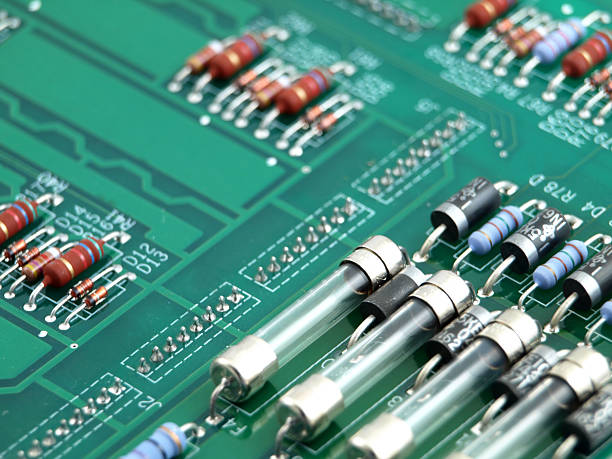
PCB Drill Files provide the information required for hole fabrication. They normally specify hole coordinates, hole diameters, quantities, and hole classifications.
Depending on the PCB structure, drilling data may include:
- Through holes
- Plated through holes
- Non-plated holes
- Blind vias
- Buried vias
- Mechanical holes
- Tooling holes
Drill accuracy is especially important for multilayer and HDI boards because the hole position directly affects interlayer connectivity. A coordinate error or incorrect hole size can result in poor registration, unreliable electrical connections, or even board rejection.
For advanced designs, the drill data must be evaluated together with the layer stack-up and via structure rather than being treated as an isolated manufacturing file.
Fabrication Notes and Process Requirements
In addition to Gerber and drill data, many PCB projects require fabrication notes that define special manufacturing requirements.
These notes may specify:
- Finished board thickness
- Copper thickness
- Layer stack-up
- Surface finish
- Solder mask requirements
- Controlled impedance
- Special plating requirements
- Via filling or resin plugging
- Edge plating
- Dimensional tolerances
- Special material requirements
For example, a board requiring heavy copper may need different plating and etching parameters from a conventional PCB. Likewise, designs using resin-filled vias or other advanced structures require clearly defined process requirements.
Clear fabrication notes reduce uncertainty during engineering review and help ensure that production personnel follow the intended manufacturing process.
How Production Files Affect PCB Manufacturing
The quality of production data has a direct influence on manufacturing efficiency and process accuracy.
Engineering Preparation
Before production begins, the engineering team analyzes the supplied manufacturing data and converts the design information into appropriate production instructions.
Engineers may evaluate:
- Layer configuration
- Trace and spacing requirements
- Hole dimensions
- Board thickness
- Copper distribution
- Impedance requirements
- Manufacturing tolerances
- Special process requirements
If information is missing or contradictory, production may need to stop while engineers communicate with the customer for clarification. This can increase lead time and create unnecessary engineering costs.
A structured PCB Manufacturing Data review process helps identify potential problems before materials enter production.
For customers developing a new board, professional PCB Design and Layout support can also help improve manufacturability before final production files are released.
Production Operations
During fabrication, production files function as the manufacturing reference for different process stages.
For example, copper imaging and etching operations rely on layer artwork to produce the intended circuit pattern. Drilling equipment uses hole data to determine tool locations and drilling parameters. Solder mask and silkscreen processes rely on corresponding artwork to define openings and markings.
Surface finishing also depends on the specified manufacturing requirements. Depending on the project, manufacturers may apply finishes such as ENIG, HASL, or other specified surface treatments.
When production information is incomplete or unclear, operators may interpret requirements differently. This can lead to manufacturing defects, additional rework, or production delays.
Production Files Improve Cross-Department Collaboration
PCB manufacturing involves multiple departments, including engineering, production planning, fabrication, quality control, and testing.
Standardized production documentation gives these departments a common technical reference.
Production planning can use the manufacturing requirements to estimate process complexity and allocate equipment capacity. Engineering teams can use the same data to define manufacturing parameters. Quality personnel can use the specified requirements to determine inspection criteria.
This reduces unnecessary communication and helps establish consistent manufacturing standards across the entire production process.
For projects requiring both fabrication and assembly, integrating manufacturing data with an appropriate assembly workflow can further simplify project management. Prototype PCB Assembly is particularly useful when production files need to be validated through an initial prototype before volume manufacturing.
The Role of Production Files in PCB Quality Control
PCB Quality Control depends on clearly defined technical requirements. Production files provide the reference against which actual manufacturing results can be compared.
In-Process Inspection
During manufacturing, quality personnel can use production specifications to inspect critical parameters such as:
- Board thickness
- Copper thickness
- Hole size
- Hole position
- Layer registration
- Trace width
- Trace spacing
- Solder mask alignment
- Surface finish condition
For multilayer boards, layer registration is particularly important because small alignment errors can affect vias, pads, traces, and electrical connectivity.
Electrical Testing
Electrical testing verifies whether the finished PCB meets the specified electrical requirements.
Depending on the board and application, testing may include:
- Continuity testing
- Isolation testing
- Net verification
- Short-circuit detection
- Open-circuit detection
The testing requirements should be clearly defined within the production or test documentation so that inspection personnel understand which criteria must be applied.
Visual and Automated Inspection
Visual inspection can identify surface defects such as solder mask damage, silkscreen errors, scratches, contamination, or other visible abnormalities.
Automated optical inspection (AOI) can compare manufactured circuit patterns against reference data and identify many types of pattern-related defects.
For more demanding boards, additional methods such as X-ray inspection or cross-sectional analysis may be used to evaluate internal structures and plated holes.
PCB Production Files and Traceability
Another important function of production documentation is manufacturing traceability.
When a quality issue is identified after delivery, manufacturers need sufficient production records to determine:
- Which production data version was used
- Which materials were processed
- Which manufacturing parameters were applied
- Which inspections were completed
- Whether the finished boards passed electrical testing
Version control is especially important when a customer modifies a PCB design during development. Manufacturing an outdated version of the design can create significant quality and inventory problems.
A controlled document-management system should therefore clearly distinguish between current production data, previous revisions, and obsolete files.
Best Practices for Managing PCB Production Files
A reliable PCB manufacturing workflow should include systematic file management from design release through final inspection.
1. Validate Files Before Production
Manufacturers should review the incoming files for missing layers, inconsistent dimensions, incorrect drill information, and other obvious data problems.
2. Maintain Version Control
Every revision should have a clear identifier. Engineering and production teams should be able to determine which file package represents the current approved design.
3. Standardize Manufacturing Documentation
Using consistent naming conventions and documentation formats reduces confusion between departments and production batches.
4. Define Special Requirements Clearly
Requirements such as impedance control, special copper thickness, via filling, unusual surface finishes, or tight dimensional tolerances should be explicitly documented.
5. Connect Manufacturing and Assembly Data
When PCB fabrication and assembly are managed as separate processes, inconsistent revisions can create additional risks. A coordinated workflow helps ensure that the fabricated board and assembly data correspond to the same design revision.
For customers seeking an integrated manufacturing solution, Turnkey PCB Assembly can combine PCB production, component sourcing, and assembly into a more unified workflow.
PCB Production Files for Prototype and Volume Manufacturing
Production data requirements can vary depending on project volume and development stage.
For prototypes, engineering teams may need to review design files more frequently because the board is still undergoing design validation. Changes to component placement, routing, stack-up, or mechanical dimensions may result in multiple production revisions.
For low-volume production, accurate version management remains important because manufacturing quantities may not justify extensive inventory buffers.
For high-volume production, process stability and documentation consistency become even more important. A small error in production data can potentially affect a large number of boards.
A controlled transition from prototype to production helps maintain consistency as project volume increases. For larger production requirements, High Volume PCB Assembly can support a structured path from validated prototypes to repeatable production.
Common Problems Caused by Incorrect PCB Production Files
Poor-quality production data can create several manufacturing problems.
Missing Layers
A missing copper, solder mask, or silkscreen layer can make the production package incomplete and prevent manufacturing from proceeding correctly.
Incorrect Drill Data
Incorrect hole sizes or coordinates may cause connectivity failures, mechanical interference, or registration problems.
Conflicting Specifications
Different documents may specify different board thicknesses, copper weights, surface finishes, or tolerances. These conflicts must be resolved before production.
Outdated Revisions
Using an obsolete version of the production package can result in boards that do not match the customer’s latest design.
Ambiguous Special Requirements
Requirements that are not clearly documented may be interpreted differently by engineering, production, and quality teams.
These issues demonstrate why production file review should be treated as an important manufacturing-control process rather than a simple administrative step.
How to Prepare a Complete PCB Production Package
Customers can improve manufacturing efficiency by preparing a complete and consistent production package before submitting an order.
A typical package may include:
- Gerber files
- Drill files
- Board outline
- Stack-up information
- Fabrication notes
- Material requirements
- Surface finish requirements
- Impedance specifications
- Special process instructions
- Electrical testing requirements
- Assembly documentation when applicable
The exact file set depends on PCB complexity and manufacturing requirements. Advanced boards may require additional documentation for controlled impedance, sequential lamination, HDI structures, or specialized materials.
Conclusion
PCB Production Files are the foundation connecting PCB design requirements with actual manufacturing operations. Gerber files define board graphics, drill files control hole fabrication, fabrication notes specify process requirements, and testing documentation establishes quality criteria.
Accurate production data can improve engineering efficiency, reduce manufacturing errors, support consistent quality control, and simplify traceability. As PCB designs become more complex, structured file validation and version management become increasingly important.
A professional manufacturing workflow should therefore treat production files as controlled technical data throughout the entire product lifecycle—from design review and prototype fabrication to assembly and volume production.
For companies developing reliable electronic products, selecting a manufacturing partner with strong engineering review, controlled production processes, and integrated fabrication and assembly capabilities can help reduce production risk and create a more predictable path from PCB design to finished electronics.