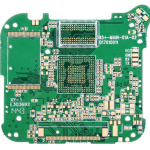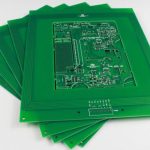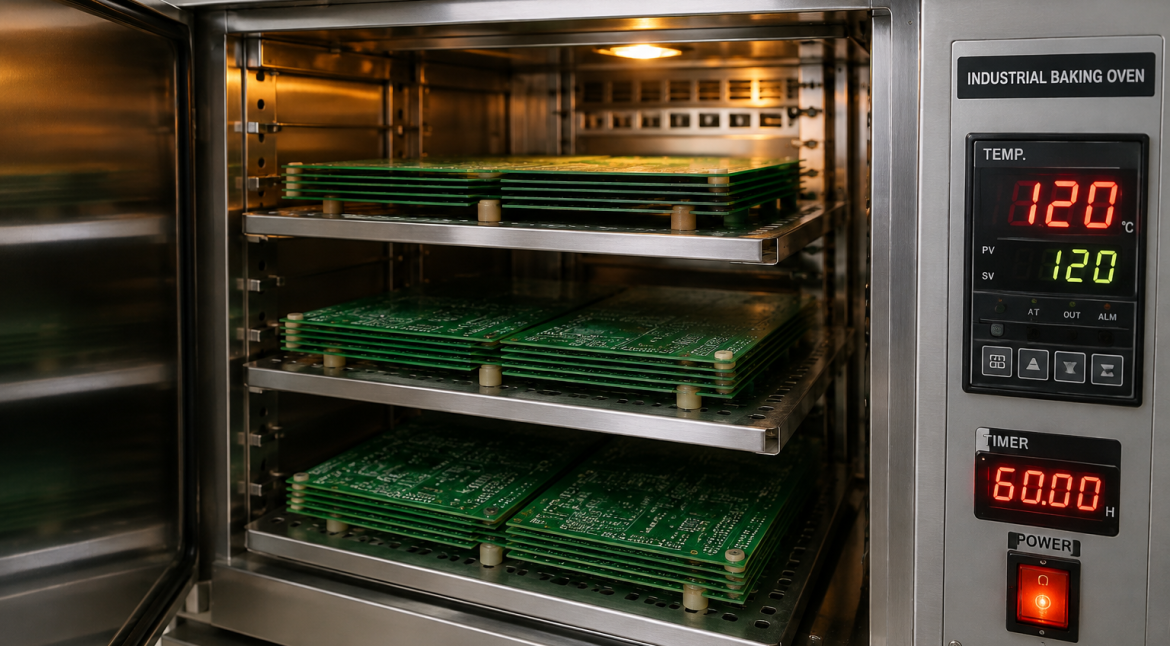
How long can a PCB be stored after manufacturing? When should a PCB be baked before SMT assembly, and what temperature and baking time should be used?
These are important questions for PCB Storage and PCB Assembly. Improper storage can allow PCBs to absorb moisture from the environment. If moisture-sensitive boards are exposed to high temperatures during reflow soldering, the absorbed moisture can expand rapidly and increase the risk of delamination, blistering, or other reliability problems.
For this reason, manufacturers need an appropriate PCB Shelf Life and moisture-control procedure covering packaging, storage, exposure time, pre-baking, and assembly.
However, there is no single baking temperature or storage period that applies to every PCB. The appropriate conditions depend on the laminate material, surface finish, board construction, packaging method, environmental conditions, and the PCB manufacturer’s specifications.
The following guidelines provide a practical framework for managing PCB storage and baking before assembly.
Why PCB Storage Time Matters
After PCB Manufacturing is completed, the board should be stored under controlled environmental conditions.
Moisture can enter the PCB through:
- The surrounding air
- Damaged or improperly sealed packaging
- Long-term storage
- High humidity
- Repeated opening and closing of packaging
- Improper handling
Multilayer PCBs can be particularly sensitive because moisture may be absorbed into the dielectric materials.
During reflow soldering, rapid heating can cause absorbed moisture to expand. If the internal vapor pressure becomes sufficiently high, it may contribute to:
- Delamination
- Blistering
- Internal cracking
- Barrel cracking
- Pad or trace damage
- Surface defects
Therefore, PCB Storage should be considered part of the overall reliability-control process rather than simply an inventory-management activity.
PCB Shelf Life and Storage Conditions
The storage period of a PCB depends on several factors.
Important variables include:
- PCB material
- Surface finish
- Board thickness
- Layer count
- Packaging condition
- Moisture-barrier packaging
- Storage temperature
- Relative humidity
- Time after package opening
- Manufacturer’s storage recommendations
A properly sealed PCB stored under controlled conditions can generally maintain its usability for longer than a board that has been exposed to ambient humidity.
Therefore, the manufacturing date alone should not be used as the only criterion for deciding whether baking is necessary.
PCB Unpacking and Storage Control
A practical storage-control system should record the following information:
- PCB manufacturing date
- Lot number
- Packaging date
- Package opening date
- Storage environment
- Surface finish
- Exposure time after opening
- Baking history
- Assembly date
Once a moisture-barrier package is opened, the exposure time should be tracked.
A simple first-in-first-out inventory system can also help prevent PCBs from remaining in storage unnecessarily.
For moisture-sensitive materials, manufacturers should follow the applicable moisture-control requirements and the PCB supplier’s specifications.
Does Every PCB Need to Be Baked?
No.
PCB Baking should not automatically be performed simply because a PCB has been stored for a certain period.
The need for baking depends on:
- Whether the PCB packaging remained properly sealed
- How long the PCB has been exposed to ambient conditions
- Storage temperature and humidity
- PCB material
- Board thickness
- Surface finish
- Manufacturer’s recommendations
- Assembly process requirements
If a PCB has been properly packaged and stored within the specified conditions, baking may not be necessary.
On the other hand, boards that have exceeded their allowable exposure time may require moisture removal before reflow.
PCB Baking Temperature
The appropriate PCB Baking Temperature depends on the specific PCB construction and material system.
A temperature around 120°C is commonly used as a production reference for certain conventional rigid PCB structures. However, 120 ± 5°C should not be treated as a universal requirement for all PCBs.
Before baking, engineers should confirm:
- Laminate manufacturer’s recommendations
- Surface-finish limitations
- Solder mask requirements
- Maximum allowable temperature
- Board thickness
- Material construction
- Number of previous thermal cycles
Some PCB types may require lower-temperature or controlled drying conditions.
This is particularly important for specialized materials, flexible circuits, advanced HDI constructions, and certain surface finishes.
PCB Baking Time
PCB Baking Time should be determined according to the PCB’s moisture condition and material construction.
As a general production reference, some conventional rigid PCBs may use baking conditions such as:
| Storage / Exposure Condition | Example Baking Reference |
|---|---|
| Properly sealed and within specified storage conditions | Baking may not be required |
| Short-term exposure beyond the recommended handling window | Controlled baking may be considered |
| Extended exposure | Longer controlled baking may be required |
| Long-term storage | Material and manufacturer-specific evaluation recommended |
The commonly used reference of approximately 120°C for 1–4 hours may be suitable for certain PCB materials, but it should not be applied indiscriminately.
A longer baking time does not necessarily mean better moisture removal. Excessive thermal exposure may affect the PCB, solder mask, surface finish, or dimensional stability.
Example of a Production Baking Procedure
For conventional rigid PCBs, a production control procedure may establish different baking durations according to storage history.
For example, a manufacturer may define a procedure such as:
- Short exposure: no baking or a short controlled bake after evaluation
- Moderate exposure: approximately 1–2 hours
- Extended exposure: approximately 2–4 hours
- Very long storage: material-specific evaluation before assembly
If a customer or material supplier specifies a different temperature or time, that specification should take priority.
The purpose of such a procedure is to establish a controlled process window rather than create a universal baking rule.
PCB Baking Method
The physical arrangement of PCBs inside the oven can affect heating uniformity.
Boards should be positioned so that air can circulate effectively around the panels.
Avoid excessive stacking that restricts airflow.
For larger boards, horizontal placement may help maintain mechanical stability, while smaller boards may be arranged according to the oven manufacturer’s loading requirements.
Important considerations include:
- Oven capacity
- Air circulation
- PCB thickness
- Board size
- Stack height
- Material construction
- Support method
The goal is to ensure that the actual PCB reaches the required temperature uniformly.
PCB Cooling After Baking
After PCB Baking, the boards should be cooled under controlled conditions before assembly.
Opening the oven immediately and exposing very hot PCBs to a humid environment can allow moisture to be reabsorbed.
A controlled cooling procedure is therefore preferable.
Depending on the production environment, PCBs may be:
- Cooled inside the oven
- Transferred to a controlled dry environment
- Cooled in a low-humidity area
- Placed directly into controlled storage after cooling
The PCB should not remain unnecessarily exposed to ambient humidity after baking.
PCB Baking and Surface Finish
The surface finish is an important consideration when establishing a PCB Baking procedure.
Common PCB surface finishes include:
- OSP
- ENIG
- ENEPIG
- Immersion tin
- Immersion silver
- HASL
- Lead-free HASL
These finishes have different characteristics and storage requirements.
For example, OSP is designed primarily to protect exposed copper and maintain solderability. Excessive or repeated heating may affect the protective coating and should therefore be avoided unless the process has been validated.
For this reason, engineers should not apply a generic high-temperature baking procedure to every surface finish.
OSP PCBs Require Special Attention
OSP-treated PCBs require particular attention because the organic protective coating can be affected by repeated thermal exposure and environmental conditions.
If an OSP PCB has been stored within the manufacturer’s specified conditions and packaging remains intact, unnecessary baking should generally be avoided.
If baking is considered necessary, the process should be validated against the OSP supplier’s recommendations and the intended assembly process.
This helps maintain solderability while avoiding unnecessary thermal exposure.
PCB Storage in High-Humidity Environments
Regional climate can have a significant influence on PCB Storage.
In areas with high temperature and humidity, PCBs may absorb moisture more quickly after packaging is opened.
This is particularly important during seasonal periods of high humidity.
The appropriate response is not necessarily to shorten the storage period to a fixed number of hours. Instead, manufacturers should control:
- Relative humidity
- Temperature
- Package integrity
- Exposure time
- Moisture-barrier packaging
- Dry storage conditions
When the environmental conditions are stable and controlled, PCB storage can be managed more consistently regardless of geographical location.
PCB Storage in Dry Environments
In relatively dry environments, moisture uptake may occur more slowly.
However, this does not mean that PCBs can be stored indefinitely without environmental control.
Long-term storage can still introduce:
- Oxidation
- Contamination
- Surface-finish degradation
- Moisture absorption
- Packaging deterioration
Therefore, appropriate packaging and inventory management remain important even in low-humidity environments.
Moisture-Sensitive PCB Materials
Some PCB materials require more careful moisture management than conventional FR-4.
These may include:
- High-Tg laminates
- High-frequency materials
- HDI build-up materials
- Flexible PCB materials
- Very thin PCBs
- Thick multilayer boards
- Specialized low-loss materials
The material supplier’s storage and preconditioning recommendations should be followed for these products.
For critical applications, moisture exposure and thermal history should be recorded throughout the manufacturing and assembly process.
PCB Baking Before SMT Reflow
The primary reason for baking a moisture-sensitive PCB before PCB Assembly is to reduce moisture-related risk during subsequent thermal processing.
The board may be subjected to a reflow profile with peak temperatures significantly higher than the baking temperature.
If absorbed moisture remains inside the PCB, rapid heating can create internal stress.
Potential consequences include:
- Delamination
- Blistering
- Internal separation
- Via reliability issues
- Dimensional instability
Therefore, moisture management should be integrated into the complete SMT process.
Avoid Excessive PCB Baking
Although baking can reduce moisture content, repeated or excessive baking is not necessarily beneficial.
Potential concerns include:
- Surface-finish degradation
- OSP degradation
- Solder-mask aging
- Material oxidation
- Dimensional changes
- Unnecessary thermal stress
- Increased manufacturing time
Therefore, PCB Baking Time should be optimized rather than maximized.
If a PCB has already been baked several times, its cumulative thermal history should also be considered.
What to Do With PCBs Stored for More Than One Year?
For PCBs stored for very long periods, simply applying a fixed 120°C baking cycle may not be sufficient to determine whether the board is suitable for assembly.
The manufacturer should first evaluate:
- Packaging condition
- Storage environment
- Surface finish
- Material system
- PCB appearance
- Oxidation
- Solderability
- Moisture exposure
- Previous thermal history
For critical products, additional testing may be appropriate before assembly.
If solderability or surface-finish quality has deteriorated, baking alone cannot restore the original condition.
PCB Storage and Baking Checklist
Before sending stored PCBs to the SMT line, manufacturers can use the following checklist:
1. Check the manufacturing date.
2. Check whether the original packaging remains sealed.
3. Verify the storage temperature and humidity.
4. Record the package opening date.
5. Calculate the actual ambient exposure time.
6. Confirm the PCB material and surface finish.
7. Check the manufacturer’s storage requirements.
8. Determine whether baking is actually required.
9. Select an appropriate baking temperature and time.
10. Control the oven temperature and airflow.
11. Cool the PCB under controlled conditions.
12. Minimize exposure after baking before SMT assembly.
This approach is more reliable than using manufacturing date alone as the basis for baking decisions.
Kingda’s Approach to PCB Storage and Baking
At Kingda, PCB storage and pre-assembly conditioning are managed according to material characteristics, surface finish, environmental exposure, and manufacturing requirements.
For stored PCBs, engineering teams can evaluate the condition of the packaging, storage history, PCB construction, surface finish, and intended assembly process before determining whether baking is necessary.
Where baking is required, the process should be established according to the specific material supplier’s recommendations and validated production conditions.
This approach helps prevent unnecessary thermal exposure while reducing the risk of moisture-related defects during PCB Assembly.
Conclusion
The storage life of a PCB cannot be determined by a single universal number. PCB Shelf Life depends on the laminate system, surface finish, packaging condition, storage environment, moisture exposure, and manufacturer’s requirements.
Similarly, there is no single PCB Baking Temperature or PCB Baking Time that is suitable for every PCB.
A temperature around 120°C and a baking period of 1–4 hours may serve as a reference for certain conventional rigid PCBs, but these conditions should always be verified against the material and surface-finish specifications.
Effective PCB Storage management should focus on moisture control, sealed packaging, environmental monitoring, exposure-time tracking, and appropriate pre-assembly conditioning.
By establishing a controlled PCB Baking procedure and avoiding unnecessary thermal exposure, manufacturers can reduce moisture-related defects and improve PCB reliability during SMT reflow and subsequent assembly.