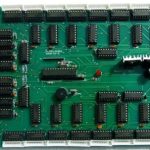
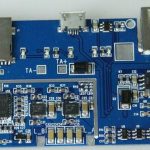
As electronic products continue to become smaller and more integrated, PCB Assembly density is increasing significantly. At the same time, the clearance between components, the PCB surface, and surrounding structures is becoming smaller. These trends place higher demands on PCB Surface Quality, manufacturing consistency, and overall product reliability.
In high-density electronic assemblies, even minor defects on the PCB surface can affect solderability, electrical performance, component mounting, and long-term reliability. Therefore, controlling the PCB surface throughout the manufacturing and assembly processes is essential.
Kingda provides integrated PCB Manufacturing and PCB Assembly services with strict process controls designed to maintain stable board quality and reliable assembly performance.
Why PCB Surface Quality Matters
The surface of a printed circuit board is directly involved in several critical manufacturing processes, including soldering, component placement, copper plating, surface finishing, and inspection.
Poor surface quality may result in:
- Poor solderability
- Solder voids or insufficient solder joints
- Surface oxidation
- Plating defects
- Blistering
- Poor adhesion
- Electrical leakage
- Reduced PCB Reliability
- Assembly and rework difficulties
As component pitch becomes smaller, manufacturing defects become more difficult to tolerate. A surface condition that may have been acceptable on an older, low-density board could become a significant reliability risk in a modern high-density assembly.
Major Factors Affecting PCB Surface Quality
Several factors during PCB Manufacturing can affect the final surface condition of a circuit board. The most important include substrate processing, contamination control, surface preparation, copper plating, and surface finish.
1. PCB Substrate Processing
The PCB Substrate provides the mechanical and electrical foundation of the circuit board. Its dimensional stability, mechanical strength, thermal characteristics, and surface condition all influence subsequent manufacturing processes.
Thin PCBs require particular attention during processing. When the board thickness is relatively low, mechanical brushing or other aggressive surface-treatment processes may cause deformation or damage if the process parameters are not properly controlled.
For example, excessive mechanical pressure may:
- Deform the board
- Damage the copper surface
- Affect hole geometry
- Create uneven surface conditions
- Reduce manufacturing consistency
Therefore, the mechanical strength and thickness of the PCB Substrate should be considered when selecting surface preparation parameters.
2. Contamination During PCB Manufacturing
Contamination is another important factor affecting PCB Surface Quality.
During processes such as drilling, lamination, routing, and milling, the PCB surface may come into contact with dust, oil, processing residues, and other contaminants.
If these contaminants are not properly removed, they may interfere with subsequent processes such as:
- Copper plating
- Solder mask application
- Surface Finish
- Soldering
- Component assembly
Surface contamination can reduce adhesion and create localized defects. In high-density PCB Assembly, even small particles may become trapped between closely spaced pads or components.
For this reason, effective cleaning, handling, and contamination-control procedures are essential throughout production.

3. Copper Surface Preparation and Plating
Proper surface preparation is particularly important before copper plating.
During mechanical brushing or surface treatment before copper deposition, excessive pressure can damage the copper surface or alter the geometry around drilled holes.
Possible consequences include:
- Deformed hole edges
- Inconsistent copper coverage
- Poor plating adhesion
- Localized plating defects
- Blistering during subsequent processing
- Soldering-related reliability issues
To avoid these problems, manufacturers should carefully control brushing pressure, conveyor speed, abrasive conditions, and other process parameters.
Process verification methods such as brush-mark inspection and water-break testing can help determine whether the surface has been prepared consistently.
4. Surface Treatment and Surface Finish
PCB Surface Treatment plays an important role in protecting exposed copper and ensuring good solderability.
Depending on the application, PCB manufacturers may use surface finishes such as:
- HASL
- Lead-free HASL
- ENIG
- ENEPIG
- Immersion tin
- Immersion silver
- OSP
Each Surface Finish has different characteristics regarding solderability, flatness, oxidation resistance, cost, storage requirements, and application suitability.
For example, ENIG provides a relatively flat surface and is widely used for fine-pitch and high-density components. OSP provides a thin organic protective layer over copper and can be suitable for many lead-free SMT applications.
The appropriate surface finish should be selected according to component pitch, soldering process, storage conditions, electrical requirements, and product reliability requirements.
PCB Surface Quality and Fine-Pitch Assembly
As electronic products become smaller, component pitch continues to decrease. This creates increasingly strict requirements for PCB surface flatness and cleanliness.
Fine-pitch components have smaller distances between solder pads and adjacent conductive structures. Contamination, oxidation, uneven plating, or excessive surface roughness can therefore have a greater impact on soldering quality.
For high-density PCB Assembly, manufacturers should pay particular attention to:
- Pad flatness
- Surface cleanliness
- Copper oxidation
- Surface finish uniformity
- Solderability
- Pad dimensions
- Solder mask registration
- Component-to-component clearance
These factors directly affect assembly yield and long-term PCB Reliability.
PCB Assembly Reliability and Environmental Factors
Environmental conditions can also influence the reliability of electronic assemblies.
Temperature, humidity, dust, chemical contamination, and thermal cycling may affect both the PCB and assembled components. As the spacing between conductive structures becomes smaller, environmental contamination can create a greater risk of electrical leakage or electrochemical migration.
Therefore, reliable PCB Assembly requires more than simply achieving acceptable solder joints during production. The board must also maintain its electrical and mechanical performance throughout its intended service life.
For demanding applications, manufacturers may need to consider:
- Moisture resistance
- Thermal cycling
- Surface insulation resistance
- Ionic cleanliness
- Corrosion resistance
- Solder joint reliability
- Mechanical durability

PCB Cleaning and Contamination Control
Modern electronic assemblies increasingly require effective contamination control.
Flux residues are a particular concern because their impact depends on the flux chemistry, assembly process, product environment, and required reliability level.
When the spacing between pads and components becomes very small, residues or particles can remain trapped in narrow gaps. Under conditions of humidity, voltage bias, or contamination, these residues may contribute to electrical leakage or electrochemical migration.
Therefore, PCB cleaning should be evaluated based on the specific manufacturing process rather than being treated as a universal requirement for every assembly.
A suitable cleaning strategy may include:
- Selecting an appropriate flux system
- Controlling soldering parameters
- Preventing contamination during handling
- Cleaning when required
- Performing cleanliness verification
- Controlling storage and packaging conditions
This approach helps manufacturers maintain consistent PCB Surface Quality and improve product reliability.
Temperature Sensors and PCB Applications
Temperature sensors are widely used in modern electronic systems, particularly as industrial automation, automotive electronics, smart devices, and consumer electronics continue to develop.
One common technology is the thermistor. An NTC thermistor changes its electrical resistance as temperature changes, allowing the electronic system to detect and monitor temperature.
Temperature sensing circuits may be integrated into:
- Industrial control systems
- Battery management systems
- Automotive electronics
- Home appliances
- Medical equipment
- Consumer electronics
- IoT devices
The PCB supporting these circuits must provide stable electrical connections and appropriate environmental reliability.
Capacitive Touch and PCB Assembly
Capacitive touch technology is another important application in modern electronic products.
A capacitive touch interface detects changes in capacitance caused by the presence of a conductive object, such as a finger. Unlike mechanical buttons, capacitive touch interfaces can provide a cleaner appearance and more flexible industrial design.
Advantages include:
- Improved human-machine interaction
- Reduced mechanical wear
- Flexible product appearance
- Integration with glass or other insulating surfaces
- Support for compact product designs
However, capacitive touch systems also require careful PCB layout and electrical design. Factors such as grounding, shielding, trace routing, parasitic capacitance, noise, and environmental conditions can affect touch sensitivity and system reliability.
How Kingda Controls PCB Quality
Maintaining consistent PCB Surface Quality requires process control at multiple stages rather than relying only on final inspection.
Kingda focuses on controlling critical manufacturing parameters throughout the production process, including:
- Substrate preparation
- Drilling
- Mechanical surface treatment
- Cleaning
- Copper plating
- PCB Surface Treatment
- Solder mask processing
- Surface finish
- Electrical testing
- Visual inspection
- Final quality inspection
By combining process monitoring with inspection and testing, manufacturers can identify potential problems earlier and reduce the risk of defects reaching the assembly stage.
Conclusion
As electronic products become smaller and component density increases, PCB Surface Quality has become increasingly important to successful PCB Assembly and long-term product reliability.
Substrate processing, contamination control, copper plating, surface preparation, and Surface Finish selection can all influence solderability and electrical performance. At the same time, environmental factors and increasingly narrow component spacing make cleanliness and process consistency more important than ever.
A reliable PCB manufacturer should therefore control surface quality throughout the complete PCB Manufacturing process rather than treating it as a final-stage inspection item.
With integrated PCB fabrication, assembly, inspection, and quality-control capabilities, Kingda can support customers in developing reliable PCB solutions for consumer electronics, industrial equipment, automotive applications, communication systems, and other demanding electronic products.