Railway Signal PCB | High Reliability Rail Transit PCB: A Factory-Floor Review
Rail transportation is a critical part of modern urban and intercity mobility, and operational safety depends heavily on reliable signaling and control systems. As the physical platform for signal acquisition, processing, communication, and control, the PCB plays an essential role in railway electronics. The reliability of a Railway Signal PCB directly affects the stability, accuracy, and long-term performance of the entire signaling system.
Modern high-speed rail and metro systems integrate automatic train protection, automatic train operation, automatic train supervision, interlocking, track detection, onboard communication, and monitoring functions. These systems require circuit boards capable of maintaining stable electrical and mechanical performance under demanding operating conditions.
GOPCBA provides advanced PCB Manufacturing Services for transportation electronics and other demanding applications, supporting multilayer, HDI, high-speed, high-frequency, controlled-impedance, and other advanced PCB technologies.
Core Applications of Railway Signal PCBs
A Railway Signal PCB can be found throughout multiple critical modules of modern railway signaling and train control systems. Its role extends beyond simply providing electrical connections. The PCB must support reliable signal transmission, precise control logic, communication interfaces, monitoring functions, and power distribution within a compact and robust structure.
Automatic Train Control Systems
Automatic train control systems typically integrate functions such as automatic train protection, automatic train operation, and automatic train supervision.
Automatic train protection systems monitor operating speed and provide safety-related protection against conditions such as excessive speed. Signal acquisition, processing, logic control, and communication circuits all depend on reliable PCB structures.
Automatic train supervision systems monitor train locations, operating conditions, and network status. Their data-processing and communication modules require stable circuit connections and consistent signal transmission to support accurate real-time monitoring.
Interlocking Systems
Interlocking systems are responsible for controlling routes and preventing conflicting train movements. They interact with track circuits, signals, switches, and other railway infrastructure.
The PCB assemblies used in these systems must accurately process input signals and transmit control commands. Stable electrical connections and reliable signal processing are essential because failures in these functions can affect the safe operation of the railway network.
Track Detection and Onboard Electronics
Track circuits and other train-detection technologies rely on electronic modules to determine whether a track section is occupied. Signal transmission, reception, filtering, and processing circuits are commonly implemented on PCBs.
Onboard railway electronics also contain PCB-based modules for speed sensing, communication, display control, monitoring, and train-to-ground data exchange. These applications place significant demands on PCB reliability, signal integrity, and environmental resistance.
Why High Reliability Matters in Rail Transportation
Railway electronics operate in environments that can be considerably more demanding than conventional commercial electronics. Ground-based equipment may experience temperature changes, humidity, dust, electromagnetic interference, and atmospheric contamination, while onboard electronics must additionally withstand continuous vibration, mechanical shock, and power fluctuations.
A High Reliability PCB must therefore maintain consistent electrical performance and mechanical integrity throughout its service life.
If a PCB experiences connection failure, signal distortion, insulation degradation, or other electrical problems, the resulting malfunction could affect communication, monitoring, control commands, or safety-related functions. For this reason, PCB reliability must be considered from material selection and stack-up design through fabrication, inspection, and final testing.
GOPCBA supports advanced PCB Capabilities for demanding electronic applications, including multilayer structures, HDI, controlled impedance, high-frequency materials, heavy copper, and other specialized PCB technologies.
Environmental Resistance
Railway equipment can be exposed to significant temperature variations depending on geographic location and operating conditions. PCB materials and construction must therefore provide sufficient thermal stability to reduce the risk of warpage, delamination, dimensional changes, and electrical degradation.
Humidity and condensation can also affect PCB reliability. Appropriate material selection, solder mask protection, surface finishing, and other manufacturing processes can help improve resistance to environmental exposure.
Vibration and Mechanical Shock Resistance
Train acceleration, braking, track irregularities, and continuous operation generate mechanical stress. A reliable PCB structure should provide sufficient rigidity and interlayer bonding strength to reduce the risk of cracking, delamination, and connection failure.
Board thickness, copper distribution, layer structure, material selection, and mechanical mounting should be considered together when developing PCBs for railway equipment.
Multilayer PCB Technology for Complex Railway Electronics
Modern railway signaling systems integrate increasingly sophisticated control, communication, monitoring, and safety functions. As the number of circuits increases, conventional low-layer-count boards may not provide sufficient routing capacity or electrical isolation.
A carefully engineered Multilayer PCB provides additional routing layers while allowing signal, power, and ground structures to be organized more effectively.
Optimized Layer Stack-Up
The PCB stack-up has a direct influence on signal integrity, electromagnetic compatibility, power distribution, and mechanical reliability.
A well-designed multilayer structure can separate sensitive signal paths from power circuits, establish stable reference planes, and create predictable transmission paths for high-speed signals.
For railway communication and control equipment, the stack-up should be developed according to data rate, impedance requirements, material properties, copper thickness, routing density, thermal requirements, and manufacturing capability.
HDI and High-Density Interconnection
Space restrictions and increasing electronic integration can create significant routing challenges. HDI technology provides additional routing flexibility through microvias, blind vias, buried vias, and sequential lamination.
For railway electronics using fine-pitch components or dense BGA packages, HDI structures can help increase routing density while maintaining compact board dimensions.
GOPCBA supports advanced HDI structures and precision multilayer fabrication for complex electronic applications, helping engineers balance density, electrical performance, reliability, and manufacturability.
Controlled Impedance for Railway Communication Systems
As railway communication and control systems increasingly adopt high-speed digital interfaces, signal integrity becomes more important.
A Controlled Impedance PCB maintains a defined electrical impedance by coordinating trace width, copper thickness, dielectric thickness, dielectric properties, and PCB stack-up geometry.
Stable impedance helps reduce signal reflections, distortion, crosstalk, and transmission inconsistencies. This is particularly important for communication interfaces and synchronized signaling systems where signal quality can affect system-level performance.
Key Factors Affecting Impedance
Controlled impedance depends on multiple physical parameters rather than trace width alone. Important factors include:
- Trace width and spacing
- Copper thickness
- Dielectric thickness
- Dielectric constant
- Stack-up configuration
- Reference plane position
- Via geometry
- Material characteristics
- Manufacturing tolerances
For high-speed railway electronics, impedance requirements should be defined during the engineering stage and then maintained throughout PCB fabrication.
GOPCBA provides engineering support for High-Speed PCB Manufacturing, including stack-up engineering, impedance control, material selection, fabrication process control, and inspection.
Advanced Manufacturing Technologies for Rail Transit PCBs
A modern Rail Transit PCB may require a combination of advanced manufacturing processes to meet electrical, mechanical, and environmental requirements.
Depending on the design, manufacturing technologies can include:
- Laser direct imaging
- Precision mechanical drilling
- Laser drilling
- Sequential lamination
- Microvia fabrication
- Blind and buried vias
- Via filling
- Fine-line circuit fabrication
- Controlled impedance
- Multilayer lamination
- Automated optical inspection
- Electrical testing
These technologies must be carefully coordinated because PCB performance depends on the interaction between material properties, layer registration, drilling accuracy, copper plating, etching, lamination, and final inspection.
Precision Layer Registration
Complex multilayer and HDI boards require accurate registration between internal and external layers. Poor registration can affect trace geometry, via connectivity, pad dimensions, impedance, and overall manufacturing yield.
Precise imaging, drilling, lamination, and inspection processes are therefore essential for demanding rail electronics.
Copper Plating and Via Reliability
Reliable plated-through holes and microvias are particularly important in multilayer railway PCBs because they establish electrical connections between different circuit layers.
Copper thickness, hole-wall quality, plating uniformity, and via structure must be controlled to reduce the risk of intermittent connections, cracking, and long-term reliability problems.
Quality Control for High-Reliability Railway PCBs
Quality management is a critical part of manufacturing a High Reliability PCB for transportation applications. Because railway electronics may remain in service for extended periods, manufacturing consistency is just as important as initial electrical performance.
A comprehensive inspection program may include:
- Automated optical inspection
- Visual inspection
- Dimensional inspection
- Cross-section analysis
- Copper thickness measurement
- Board thickness measurement
- Impedance testing
- Electrical testing
- Material verification
- Solder mask inspection
- Surface-finish inspection
These controls help identify manufacturing defects before boards proceed to assembly or system integration.
Manufacturing Traceability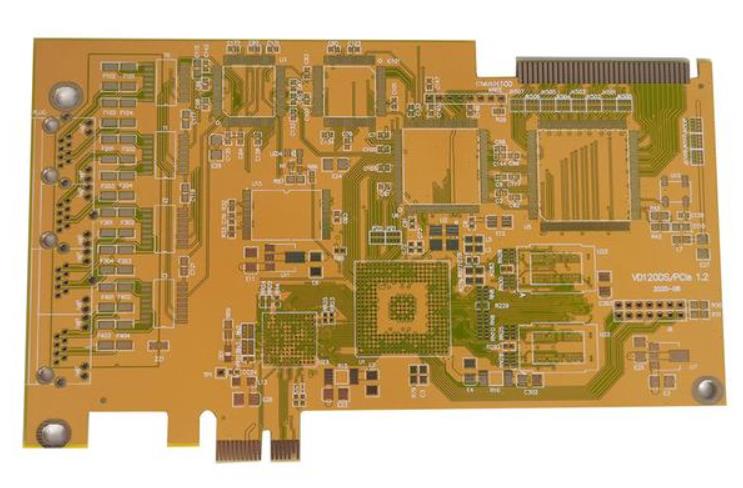
Traceability is particularly valuable for railway electronics because it provides a structured record of materials, production parameters, inspection results, and engineering changes.
A controlled manufacturing process can help manufacturers identify potential process deviations, improve production consistency, and support long-term quality management.
Environmental Compliance
PCB materials and manufacturing processes should comply with the applicable environmental requirements of the target market.
The use of compliant materials and controlled production processes helps reduce restricted substances while supporting environmentally responsible electronics manufacturing.
Engineering Support for Rail Transit PCB Development
Developing a reliable Rail Transit PCB requires coordination between electrical design, mechanical requirements, thermal considerations, signal integrity, and manufacturing processes.
Engineering review should begin before fabrication rather than waiting until production problems occur.
PCB Stack-Up Optimization
Stack-up design affects signal integrity, impedance, electromagnetic compatibility, power distribution, thermal performance, and manufacturability.
Engineers should evaluate the relationship between signal layers, ground planes, power planes, dielectric materials, copper thickness, and component placement when developing complex railway electronics.
DFM Engineering Review
Design-for-manufacturing analysis can identify potential production risks before fabrication begins.
Typical DFM review items include:
- Trace width and spacing
- Via dimensions
- Hole-to-hole clearance
- Copper distribution
- Layer registration
- Stack-up configuration
- Board thickness
- Component clearances
- Impedance requirements
- Material availability
- Manufacturing tolerances
Early engineering review can reduce redesign cycles, improve manufacturing yield, and simplify the transition from prototype production to volume manufacturing.
High-Speed Signal Integrity
Railway communication and control systems increasingly use high-speed digital interfaces. As signal rise times become shorter, PCB geometry has a greater influence on system performance.
Engineers should consider:
- Transmission-line impedance
- Return-current paths
- Reference planes
- Via structures
- Trace spacing
- Crosstalk
- Dielectric properties
- Copper surface characteristics
A properly engineered PCB combines electrical design requirements with controlled manufacturing processes to maintain predictable signal performance.
Reliable PCB Solutions for Modern Rail Transportation
The development of high-speed rail, metro systems, intelligent transportation networks, and automated train control is increasing the demand for reliable electronic hardware.
A modern Railway Signal PCB must balance electrical performance, mechanical stability, environmental resistance, manufacturing precision, and long-term reliability.
For high-density applications, HDI technology can improve routing efficiency and support compact electronic structures. For high-speed communication systems, controlled impedance and carefully engineered multilayer stack-ups can help maintain signal integrity.
GOPCBA provides advanced PCB solutions covering multilayer, HDI, high-speed, high-frequency, high-TG, rigid-flex, heavy-copper, and controlled-impedance technologies. These capabilities support demanding applications ranging from railway signaling and train control to industrial automation, telecommunications, energy systems, and other high-reliability electronics.
Process Notes at a Glance
These are the process and quality details worth confirming before release.
1. Core Applications of Railway Signal PCBs: check the drawing, process sheet and inspection plan before release.
2. Why High Reliability Matters in Rail Transportation: treat this as a repeat-order checkpoint and keep the result with the lot record.
3. Multilayer PCB Technology for Complex Railway Electronics: review the production data and close any deviation before the next build.
4. Controlled Impedance for Railway Communication Systems: confirm the requirements, process settings and inspection records at first-article approval.
5. Advanced Manufacturing Technologies for Rail Transit PCBs: record the agreed limits and verify them again in the production lot.
6. Quality Control for High-Reliability Railway PCBs: check the drawing, process sheet and inspection plan before release.
7. Engineering Support for Rail Transit PCB Development: treat this as a repeat-order checkpoint and keep the result with the lot record.
8. Reliable PCB Solutions for Modern Rail Transportation: review the production data and close any deviation before the next build.
Conclusion
A reliable Rail Transit PCB is an important hardware foundation for modern high-speed rail and metro signaling systems. Its performance depends on much more than circuit layout alone.
Material selection, multilayer construction, impedance control, precision fabrication, environmental protection, inspection, testing, and engineering support must work together to achieve consistent PCB performance.
For railway signaling, train control, communication, monitoring, and other transportation electronics, GOPCBA provides PCB manufacturing and engineering support from design review and prototyping through production manufacturing. By combining advanced fabrication technologies with controlled manufacturing processes, GOPCBA helps electronics manufacturers develop reliable PCB solutions for the increasingly sophisticated requirements of modern rail transportation.