High Railway PCB Manufacturing for Railway Control Systems: Key Process and Quality Checks
Rail transportation depends on electronic systems that must operate continuously and reliably under demanding environmental and operational conditions. From high-speed rail to metro networks, railway signaling and control systems perform critical functions including train monitoring, communication, speed control, route management, and safety protection.
At the hardware level, the Railway PCB provides the electrical foundation for these systems. It connects electronic components, transmits control and communication signals, distributes power, and supports real-time data processing. Because a failure in a railway electronic system can affect operational safety and service continuity, PCB manufacturing for rail applications requires much tighter control than conventional consumer electronics.
A reliable railway circuit board must combine electrical performance, mechanical stability, environmental resistance, manufacturing consistency, and comprehensive inspection. Proper material selection, multilayer construction, impedance control, precision drilling, copper plating, electrical testing, and process management all contribute to long-term PCB reliability.
PCB Applications in Railway Signaling and Control Systems
Railway signaling systems contain multiple electronic modules that rely on PCBs for signal acquisition, processing, communication, and control.
One important application is the train control system. Modern train control architectures may integrate automatic train protection, automatic train operation, and automatic train supervision functions. These systems require stable electronic hardware to collect operating data, process control commands, communicate with other systems, and trigger safety-related responses.
The PCB provides the physical interconnection platform for processors, communication interfaces, sensors, power circuits, and other electronic components. Stable circuit routing and reliable signal transmission are essential for maintaining accurate system responses.
Railway interlocking systems are another important application. Interlocking equipment coordinates signals, switches, track circuits, and route information to prevent unsafe train movements. PCB assemblies within these systems must provide reliable signal acquisition and control outputs while maintaining stable operation over long service periods.
Onboard railway equipment also uses PCBs in communication modules, speed monitoring systems, display controllers, diagnostic units, and other electronic subsystems. As railway systems become more connected and automated, PCB designs increasingly need to support higher signal density, faster communication, and more sophisticated control functions.
For this reason, a Railway Signal PCB must be engineered around the electrical, mechanical, and environmental requirements of the specific railway application rather than treated as a standard circuit board.
Why High-Reliability PCBs Are Essential for Railway Electronics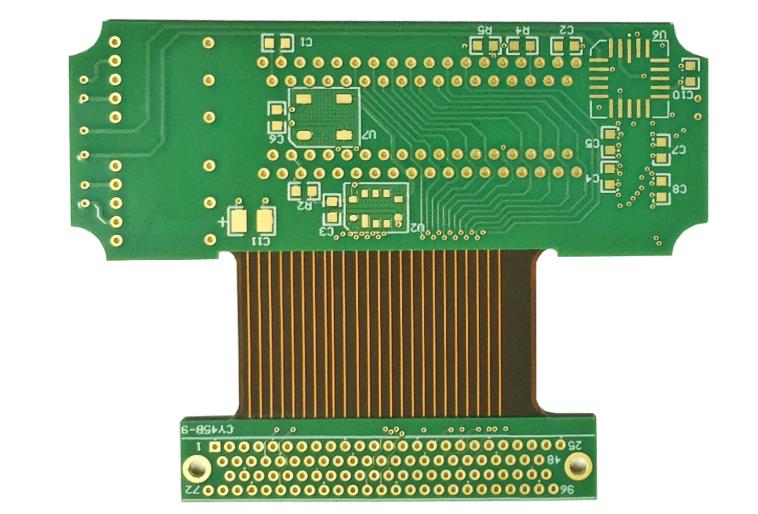
Railway electronics operate in environments that can expose circuit boards to temperature fluctuations, humidity, vibration, mechanical shock, dust, electromagnetic interference, and long operating cycles.
A High-Reliability PCB must therefore maintain stable electrical and mechanical performance throughout its expected service life.
Material selection is one of the first factors to consider. Standard FR-4 materials may be suitable for many applications, while high-TG laminates or specialized materials can be considered when greater thermal stability or demanding operating conditions are involved. For high-speed communication circuits, low-loss and high-frequency materials may also be required.
The PCB structure itself is equally important. Copper distribution, dielectric thickness, layer arrangement, via construction, board thickness, and lamination quality can all influence reliability.
For railway applications, manufacturing consistency is particularly important because small variations in PCB dimensions or electrical characteristics can accumulate into larger system-level risks. A professional PCB manufacturer should therefore control materials, process parameters, dimensional accuracy, copper thickness, drilling quality, lamination, solder mask, surface finish, and final inspection.
GOPCBA’s published high-reliability PCB manufacturing approach emphasizes material selection, thermal and mechanical reliability, process control, DFM review, inspection, and quality management for demanding applications.
Precision Manufacturing for Railway Signal PCBs
The performance of a railway circuit board depends not only on the circuit design but also on the accuracy and consistency of the manufacturing process.
Fine-Line Circuit Fabrication
Modern railway control systems may integrate multiple functions into a limited PCB area. Fine-line circuit fabrication allows designers to increase routing density without unnecessarily increasing board dimensions.
Trace width and spacing must be selected according to the required electrical performance, copper thickness, material system, layer structure, and manufacturer’s validated manufacturing capability.
Accurate imaging and etching processes are essential for maintaining the intended circuit geometry. Manufacturing defects such as opens, shorts, excessive copper removal, or line-width deviations can compromise the final board.
Multilayer PCB Construction
Complex railway electronic systems often require multiple layers for signal routing, power distribution, grounding, and electromagnetic compatibility.
A properly engineered Multilayer PCB can separate different electrical functions while providing controlled signal paths and efficient use of board space. The stack-up must be carefully designed to control dielectric thickness, impedance, return-current paths, and layer-to-layer registration.
During manufacturing, precise lamination is essential. Inconsistent dielectric thickness or layer misalignment can affect impedance, signal integrity, mechanical strength, and overall reliability.
For complex railway electronics, multilayer manufacturing may also be combined with HDI, blind and buried vias, controlled impedance, and other advanced PCB technologies. GOPCBA lists multilayer, HDI, blind and buried vias, high-frequency, high-TG, heavy-copper, and controlled-impedance technologies among its PCB manufacturing capabilities.
Controlled Impedance
High-speed communication and digital signaling require careful control of transmission-line characteristics.
A controlled-impedance PCB maintains a specified electrical impedance through coordinated control of trace geometry, copper thickness, dielectric thickness, dielectric constant, and stack-up structure.
Proper impedance control can reduce signal reflections, distortion, and transmission inconsistencies. This becomes increasingly important as railway communication systems adopt faster digital interfaces and more sophisticated data transmission architectures.
Advanced PCB Technologies for Railway Applications
Railway electronics may require advanced manufacturing structures to achieve higher integration and improved electrical performance.
Depending on the application, PCB manufacturers may employ:
- HDI structures
- Microvias
- Blind and buried vias
- Sequential lamination
- High-TG materials
- High-frequency laminates
- Controlled-impedance structures
- Heavy-copper technology
- High-layer-count multilayer construction
HDI technology can increase routing density while reducing the space required for interconnections. Blind and buried vias can help optimize routing between internal layers, while sequential lamination supports more complex buildup structures.
For high-speed railway communication systems, high-frequency materials and controlled-impedance construction may be necessary to maintain signal integrity.
The appropriate technology should always be selected according to the electrical requirements, mechanical constraints, operating environment, expected service life, and manufacturing process capability.
Quality Control and Testing for High-Reliability Railway PCBs
Quality control must cover the entire PCB manufacturing process rather than relying exclusively on final inspection.
During production, manufacturers may use automated optical inspection to identify circuit pattern defects, dimensional deviations, opens, shorts, and other manufacturing problems.
For complex boards, additional inspection and testing may include:
- Dimensional measurement
- Copper thickness verification
- Board thickness measurement
- Cross-section analysis
- Impedance testing
- Electrical continuity testing
- Insulation testing
- Material verification
- Surface-finish inspection
- Final visual inspection
Electrical testing is particularly important because it verifies circuit connectivity before the PCB enters assembly or system integration.
A structured quality management system also helps maintain consistency between prototype, pilot production, and volume manufacturing. Material traceability, process records, inspection data, engineering change control, and production monitoring can all contribute to long-term reliability.
For railway applications, these controls help reduce the risk of manufacturing-related failures entering critical electronic systems.
Engineering Considerations for Railway PCB Development
Successful railway PCB development requires close coordination between circuit design and manufacturing engineering.
Before fabrication, engineers should evaluate:
- PCB layer count
- Stack-up configuration
- Trace width and spacing
- Via dimensions
- Copper thickness
- Board thickness
- Impedance requirements
- Material selection
- Thermal conditions
- Mechanical constraints
- EMI/EMC considerations
- Manufacturing tolerances
A DFM review can identify potential manufacturing risks before production begins. For example, unsuitable via dimensions, excessive copper imbalance, insufficient spacing, difficult stack-up configurations, or unrealistic manufacturing tolerances may create production challenges.
Early engineering review can therefore reduce redesigns, improve manufacturability, and create a smoother transition from prototype to production.
For high-speed railway electronics, signal integrity should also be evaluated during PCB design. Transmission-line impedance, return-current paths, reference planes, via structures, crosstalk, dielectric properties, and trace geometry can all influence high-speed signal performance.
Environmental Reliability for Railway Electronics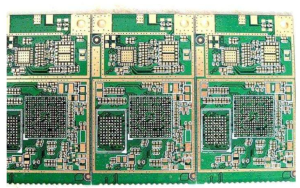
Railway PCBs may experience continuous vibration and mechanical stress during operation. Onboard equipment can also encounter temperature cycling, humidity, dust, and electrical disturbances.
The PCB structure must therefore be designed and manufactured to withstand its intended operating environment.
Material stability helps prevent excessive dimensional changes under temperature variations. Reliable lamination reduces the risk of delamination, while appropriate surface finishes and solder mask systems provide additional protection against environmental degradation.
Mechanical design is also important. Board thickness, mounting points, copper distribution, hole structure, and component placement should be considered together to reduce mechanical stress.
When the PCB is installed inside a moving train, mechanical reliability becomes especially important because repeated vibration and shock can gradually affect solder joints, vias, connectors, and board structures.
Reliable PCB Manufacturing for Modern Rail Transportation
Railway systems are becoming increasingly digital, connected, and automated. Signal control, train communication, monitoring, passenger information, onboard control, and safety systems all depend on reliable electronic hardware.
As system complexity increases, PCB requirements are moving beyond conventional circuit fabrication. Modern railway applications may require high-density routing, multilayer construction, controlled impedance, high-speed signaling, specialized materials, advanced via structures, and comprehensive quality control.
A reliable PCB Manufacturing partner should therefore provide more than basic fabrication. Engineering review, material selection, stack-up optimization, DFM analysis, process control, testing, and production consistency are all important factors when developing mission-critical railway electronics.
GOPCBA provides PCB manufacturing solutions covering multilayer, HDI, high-frequency, rigid-flex, high-TG, heavy-copper, and controlled-impedance PCB technologies, supporting demanding electronic applications from engineering development through production.
Key Manufacturing Takeaways
Keep these items visible during design review and first-article approval.
1. PCB Applications in Railway Signaling and Control Systems: confirm the requirements, process settings and inspection records at first-article approval.
2. Why High-Reliability PCBs Are Essential for Railway Electronics: record the agreed limits and verify them again in the production lot.
3. Precision Manufacturing for Railway Signal PCBs: check the drawing, process sheet and inspection plan before release.
4. Advanced PCB Technologies for Railway Applications: treat this as a repeat-order checkpoint and keep the result with the lot record.
5. Quality Control and Testing for High-Reliability Railway PCBs: review the production data and close any deviation before the next build.
6. Engineering Considerations for Railway PCB Development: confirm the requirements, process settings and inspection records at first-article approval.
7. Environmental Reliability for Railway Electronics: record the agreed limits and verify them again in the production lot.
8. Reliable PCB Manufacturing for Modern Rail Transportation: check the drawing, process sheet and inspection plan before release.
Conclusion
A high-quality Railway PCB is an essential hardware foundation for modern train signaling, communication, monitoring, and control systems. Its reliability depends on the combined performance of materials, circuit structure, manufacturing processes, inspection systems, and engineering design.
From fine-line fabrication and multilayer construction to impedance control, precision drilling, copper plating, environmental protection, and electrical testing, every stage can influence the final performance of the PCB.
For demanding rail transportation projects, selecting a PCB manufacturing partner with appropriate engineering capabilities and advanced fabrication technologies can help reduce production risks and improve long-term product reliability.
As railway systems continue to move toward higher speeds, greater automation, and increased connectivity, high-reliability PCB manufacturing will remain an important foundation for safer, more efficient, and more dependable rail transportation electronics.