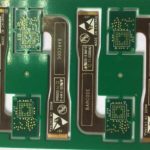
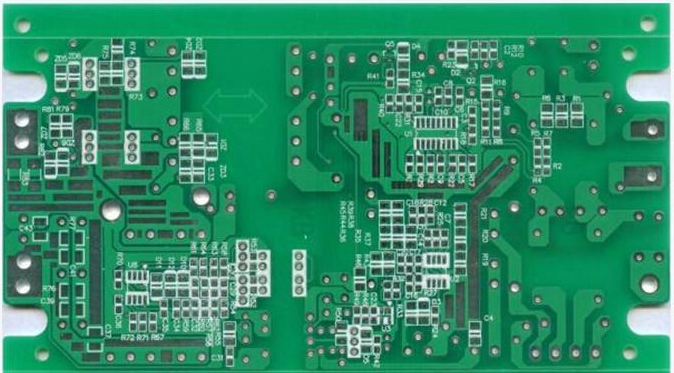
As electronic devices become smaller, thinner, and more integrated, fingerprint recognition PCB technology is increasingly used in smartphones, access-control systems, smart locks, automotive electronics, and other intelligent devices. These applications often require compact circuit structures and reliable operation under varying environmental conditions.
For fingerprint recognition modules that use a rigid-flex PCB, protecting the circuit from moisture, dust, chemicals, corrosion, and mechanical stress is particularly important. One of the commonly used protection methods is applying a conformal coating, also known as a three-proof coating.
A properly applied coating forms a thin protective film over exposed PCB surfaces and components. This coating helps improve PCB reliability, electrical insulation, and resistance to environmental contamination while maintaining the compact design advantages of rigid-flex technology.
What Is Conformal Coating?
Conformal coating is a specialized protective material applied to the surface of a PCB and its components. After curing, it forms a thin, continuous protective layer that conforms to the shape of the underlying circuit and components.
The term three-proof coating traditionally refers to protection against three major environmental factors:
- Moisture and humidity
- Salt spray and corrosion
- Mold and fungal growth
Modern conformal coatings can provide protection against a broader range of environmental stresses, including dust, chemicals, temperature fluctuations, condensation, and electrical contamination.
Depending on the coating material, the cured film can provide excellent:
- Electrical insulation
- Moisture resistance
- Corrosion resistance
- Chemical resistance
- Dust resistance
- Anti-mold protection
- Thermal resistance
- Dielectric performance
- Resistance to electrical leakage
- Mechanical and environmental protection
These properties make conformal coating particularly valuable for compact electronic assemblies exposed to demanding operating environments.
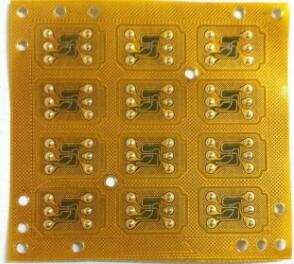
Why Does a Fingerprint Recognition PCB Need Conformal Coating?
Fingerprint recognition modules may operate in environments where humidity, sweat, dust, cleaning chemicals, temperature changes, and other contaminants are present. Without adequate surface protection, these factors can gradually affect PCB performance.
For a fingerprint recognition PCB, environmental contamination can cause:
- Copper corrosion
- Surface oxidation
- Leakage currents
- Electrical shorts
- Insulation degradation
- Component corrosion
- Mold growth
- Intermittent electrical failures
- Reduced service life
This becomes even more important when a rigid-flex PCB is used because the board combines rigid and flexible sections within the same assembly. The flexible section may be exposed to additional mechanical movement or environmental stress.
Applying a suitable three-proof coating creates a protective barrier between the PCB surface and the surrounding environment. This helps reduce the risk of moisture penetration, corrosion, contamination, and electrical failure.
For manufacturers such as Kingda, coating selection and application should therefore be considered as part of the overall PCB manufacturing and reliability-control process rather than as an isolated finishing operation.
Key Benefits of Conformal Coating for Rigid-Flex PCBs
Improved Moisture and Corrosion Resistance
Humidity and condensation can create conductive paths between adjacent conductors. In severe conditions, this may result in leakage current or short circuits.
A properly cured conformal coating helps isolate exposed conductors from moisture and contaminants, reducing the possibility of corrosion and electrical leakage.
This is particularly useful in fingerprint recognition equipment installed in environments such as:
- Smart locks
- Access-control systems
- Outdoor electronic equipment
- Automotive applications
- Industrial control equipment
- Consumer electronics
Better Protection Against Dust and Contaminants
Small particles can accumulate on PCB surfaces and around components. In combination with moisture, dust and contaminants can contribute to leakage currents and corrosion.
A uniform coating helps cover exposed PCB areas and reduces direct contact between the circuit and environmental contaminants.
Enhanced Electrical Insulation
As PCB dimensions become smaller, conductor spacing may also decrease. Conformal coating can provide an additional layer of electrical insulation between exposed conductive structures.
This can support higher-density circuit layouts while reducing the risk of surface leakage under contaminated or humid conditions.
However, coating should not be regarded as a substitute for appropriate PCB clearance and creepage design. Electrical spacing must still comply with the applicable design and safety requirements.
Improved Long-Term PCB Reliability
Environmental stress is one of the important factors affecting electronic product lifetime. By protecting the PCB surface from moisture, chemicals, salt spray, and contamination, a three-proof coating can help improve the long-term PCB reliability of fingerprint recognition modules.
Conformal Coating Process Requirements
The coating process must be carefully controlled to achieve consistent protection without affecting connectors, test points, sensors, or other areas that must remain exposed.
1. Coating Thickness
Coating thickness should be determined according to the coating material, application method, PCB structure, and product requirements.
As a general production reference, a wet-film thickness of approximately 50–150 μm may be used for some coating processes, while the resulting dry-film thickness is typically lower and must follow the coating manufacturer’s specifications.
The exact target should not be standardized across all products. Kingda recommends establishing the coating thickness according to the material supplier’s technical data sheet and the actual reliability requirements of the finished assembly.
2. Secondary Coating
For products requiring enhanced environmental protection, a second coating application may be considered after the first layer has adequately cured.
Secondary coating can improve coverage in selected applications, but the additional layer should not interfere with connectors, contact areas, sensors, or mechanical interfaces.
3. Inspection and Repair
After coating and curing, the PCB should undergo visual inspection to verify:
- Uniform coating coverage
- Appropriate coating thickness
- Absence of bubbles and pinholes
- No exposed areas where coating is required
- No coating contamination on protected areas
- No cracking, peeling, or delamination
If coating accidentally reaches a connector pin, test point, or other protected area, the unwanted coating should be carefully removed using an appropriate cleaning method.
Repair operations should be performed carefully to avoid damaging the PCB surface, solder mask, components, or normal coating film.
4. Component Replacement and Rework
If a component must be replaced after the coating has cured, the coating around the repair area may need to be carefully removed before soldering.
A typical rework sequence includes:
- Remove the coating around the repair area using an appropriate method.
- Desolder and remove the defective component.
- Clean the soldering area.
- Install the replacement component.
- Inspect the solder joint.
- Reapply conformal coating to the repaired area.
- Allow the coating to cure according to the manufacturer’s specified conditions.
The repair coating should blend properly with the surrounding protective film.
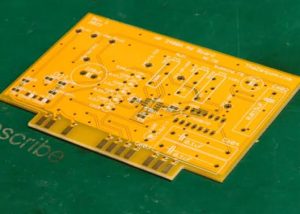
Operating Requirements for the Coating Process
Because coating materials may contain volatile organic compounds or other chemical substances, the coating workplace should be properly controlled.
Clean and Ventilated Environment
The coating area should be:
- Clean and substantially dust-free
- Well ventilated
- Properly organized
- Protected from unnecessary contamination
- Restricted to authorized personnel
Good environmental control helps prevent dust and particles from becoming trapped in the wet coating.
Personal Protective Equipment
Operators should use appropriate personal protective equipment according to the coating manufacturer’s Safety Data Sheet (SDS), which may include:
- Protective gloves
- Chemical-resistant safety glasses
- Suitable respiratory protection when required
- Protective clothing
The specific PPE requirements should always be determined by the chemical composition and workplace risk assessment.
Tool and Container Management
After the coating operation is completed, tools should be cleaned promptly using the recommended cleaning method.
Containers should be tightly sealed after use to prevent contamination, evaporation, and deterioration of the coating material.
ESD Protection and PCB Handling
Fingerprint recognition rigid-flex PCB assemblies should be handled with appropriate electrostatic discharge (ESD) protection.
During coating:
- Use suitable ESD-safe workstations and equipment.
- Avoid stacking untreated or freshly coated boards.
- Keep boards horizontally positioned when required by the coating process.
- Prevent physical contact with wet coating surfaces.
- Avoid bending or folding flexible sections unnecessarily.
- Use appropriate fixtures when necessary to maintain board position.
Special attention should be paid to flexible sections. Excessive bending or mechanical stress during coating and curing can affect the flexible circuit and potentially reduce its long-term reliability.
Quality Requirements for Conformal Coating
A high-quality three-proof coating should provide a smooth, continuous, and uniform protective film.
1. No Runs or Drips
The surface of the fingerprint recognition PCB should not show obvious coating runs, dripping, pooling, or uneven accumulation.
Special care should be taken around connectors, contact areas, sensors, and other regions that require coating exclusion.
2. Uniform Film Coverage
The coating should have consistent coverage and thickness across the intended protection areas.
The coating should properly protect exposed conductors and components without excessively accumulating around component leads or other critical structures.
3. No Visible Coating Defects
The cured coating should be free from unacceptable:
- Bubbles
- Pinholes
- Cracks
- Wrinkles
- Craters
- Dust particles
- Foreign matter
- Powdering
- Peeling
- Delamination
The specific acceptance criteria should be defined according to the product specification and applicable coating standards.
Operators should also avoid touching the coating before it has sufficiently cured.
4. Protected Areas Must Remain Free of Coating
Certain areas must remain uncoated, including:
- Connectors
- Contact fingers
- Test points
- Switch contacts
- Sensor surfaces
- Certain grounding or assembly interfaces
- Areas specified by the component manufacturer
Masking and selective coating techniques may be used to ensure these areas remain clean.
Special Considerations for Rigid-Flex PCB Coating
Compared with conventional rigid boards, rigid-flex PCB assemblies require additional consideration during coating.
The flexible section must maintain its mechanical flexibility after coating. An unsuitable coating material or excessive coating thickness can increase stiffness and potentially affect bending performance.
Therefore, coating selection should consider:
- Flexing requirements
- Bend radius
- Number of bending cycles
- Flexible-section thickness
- Copper thickness
- Coating flexibility
- Curing temperature
- Chemical compatibility
- Adhesion to polyimide and other substrate materials
For dynamic-flex applications, the coating material must be selected carefully to prevent cracking or delamination during repeated movement.
How Kingda Supports Reliable PCB Protection
For fingerprint recognition products and other compact electronic assemblies, coating quality is closely related to overall PCB reliability.
Kingda can integrate material selection, PCB fabrication, rigid-flex construction, surface protection, inspection, and manufacturing-process control into a comprehensive production approach.
The appropriate coating process should be selected according to the PCB structure, operating environment, component requirements, flexing conditions, and reliability targets.
A well-designed conformal coating process not only protects the circuit surface but also supports stable electrical performance and longer product service life.
Conclusion
As fingerprint recognition technology continues to develop, circuit assemblies are becoming smaller, denser, and more integrated. Environmental protection is therefore an increasingly important part of PCB manufacturing and product reliability.
For fingerprint recognition applications using a rigid-flex PCB, conformal coating can provide effective protection against moisture, corrosion, dust, salt spray, chemical contamination, and electrical leakage.
However, coating performance depends on more than simply applying a protective layer. Material selection, coating thickness, masking, application method, curing conditions, inspection, and rework procedures must all be properly controlled.
By combining appropriate three-proof coating technology with sound PCB design and manufacturing practices, Kingda helps customers build more reliable fingerprint recognition modules and other advanced electronic products for demanding operating environments.